


Imagine a world where your surroundings are not a static stage but a dynamic, interactive canvas. Where the blank wall in your living room transforms into a sprawling, high-definition virtual workspace; where historical figures materialize in your classroom to explain the events they shaped; where repair instructions hover directly over the malfunctioning engine part you’re trying to fix. This is not a distant science fiction fantasy. It is the emerging reality being painted by one of the most transformative technologies of our time: the augmented reality background. This digital layer, seamlessly superimposed onto our physical world, is poised to revolutionize everything from how we work and learn to how we connect and create, fundamentally reshaping our perception of reality itself.
Beyond the Filter: Defining the Augmented Reality Canvas
To understand the power of an augmented reality background, we must first move beyond the perception of it as a mere playful filter on a social media app. At its core, an augmented reality background is a digitally generated environment or set of contextual information that is anchored to and interacts with the user's physical space in real-time. Unlike Virtual Reality (VR), which seeks to replace the real world with a simulated one, Augmented Reality (AR) aims to augment and enhance it.
The magic lies in the sophisticated technology stack that makes this possible. It begins with a complex array of sensors—cameras, LiDAR scanners, accelerometers, and gyroscopes—that constantly map the physical environment. This process, known as simultaneous localization and mapping (SLAM), allows the device to understand the geometry of a space, the position of surfaces, and the location of objects within it. Once this detailed 3D map is created, the AR system can then render digital content—the augmented reality background—with astonishing precision, ensuring that virtual objects appear to obey the laws of physics, occluding correctly behind real-world objects and maintaining their position as the user moves.
The Engine Room: How AR Backgrounds Are Constructed
The creation of a convincing and interactive augmented reality background is a feat of modern engineering. It relies on several key technological pillars working in concert.
Computer Vision: The Eyes of the System
Advanced computer vision algorithms are the first critical component. They analyze the video feed from the camera to identify planes (floors, walls, tables), track features, and understand the scene's lighting conditions. This allows the digital overlay to cast appropriate shadows and exhibit accurate reflections, a crucial detail for achieving a believable blend between the real and the virtual.
Depth Sensing and Spatial Mapping
Technologies like LiDAR (Light Detection and Ranging) project a grid of invisible infrared dots into a room, measuring the time it takes for the light to return to the sensor. This creates a highly accurate depth map of the environment, providing the precise spatial data needed to anchor digital objects firmly in place. This is why a virtual piece of furniture placed in your room via an AR app doesn’t slide around or float aimlessly; it sits exactly where you put it, because the device knows the exact dimensions of the room.
Powerful Processing and Rendering
Generating high-fidelity 3D graphics in real-time requires immense processing power. Modern processors and dedicated graphics units are capable of rendering complex AR backgrounds with detailed textures, smooth animations, and realistic physics, all while maintaining a high frame rate to prevent user discomfort or nausea.
Transforming the Professional Landscape
The practical applications of dynamic augmented reality backgrounds are already disrupting numerous professional fields, moving from novelty to necessity.
The Remote Workspace Reimagined
The era of the static, often awkward, video call background is ending. Augmented reality offers a paradigm shift. Instead of merely blurring your messy office or displaying a static image, imagine being able to project a full-scale, interactive 3D model of a new architectural design during a meeting. Your entire team, wearing AR glasses, could walk around the model as if it were physically in the room, examining it from every angle, making annotations that hover in space, and making collaborative decisions with a shared sense of presence that flat screens cannot provide. This shared spatial context eliminates the friction of traditional remote collaboration.
Revolutionizing Design and Prototyping
Industries from automotive design to interior decorating are leveraging AR backgrounds. A car designer can project a full-scale hologram of a new vehicle prototype into an empty garage, inspecting the lines and proportions in real space. An interior designer can place virtual furniture, lighting, and art into a client’s actual living room, allowing them to "try before they buy" with perfect accuracy, avoiding costly mistakes and ensuring customer satisfaction.
Supercharging Manufacturing and Maintenance
On the factory floor or in the field, AR backgrounds become a powerful hands-free guidance system. A maintenance technician wearing AR glasses can look at a complex machine and see a digital overlay highlighting the specific component that needs inspection. Animated repair instructions can be superimposed directly onto the machinery, guiding the technician through each step. This reduces errors, slashes training time, and dramatically improves efficiency and safety.
Redefining Social Connection and Entertainment
The social and entertainment implications of pervasive AR backgrounds are profound, promising to make our digital interactions more immersive and personal.
The Future of Communication
Video calls will evolve into holographic calls. Rather than seeing a grid of faces on a screen, you could have life-sized, volumetric holograms of your colleagues or family members sitting across from you on your couch, sharing your physical space. The sense of shared presence and emotional connection would be exponentially greater than it is today, making geographical distance feel less significant.
Immersive Gaming and Storytelling
Gaming will escape the confines of the television and explode into your home. Your living room could become a dungeon to explore, a puzzle room to escape, or a racetrack for virtual cars that zoom around your furniture. Storytelling will become an interactive experience where narratives unfold around you, with digital characters interacting with your physical environment. This creates a deeply personal and unforgettable form of entertainment.
Experiential Retail and Try-Before-You-Buy
Online shopping will be transformed. Instead of looking at pictures of a product, you will be able to see it in your space at its true scale. Trying on clothes virtually will be perfected, with AR mirrors accurately simulating the fit, drape, and movement of fabric on your body. This bridges the gap between the convenience of e-commerce and the confidence of an in-store experience.
Navigating the Uncharted: Challenges and Ethical Considerations
As with any powerful technology, the proliferation of augmented reality backgrounds brings a host of challenges that society must proactively address.
The Privacy Paradox
AR devices, by their very nature, are data collection powerhouses. They have continuous, intimate access to our environments, recording the layout of our homes, the objects we own, and potentially even our interactions. This data is incredibly sensitive. Robust frameworks must be established to ensure user data is anonymized, encrypted, and never exploited without explicit, informed consent. The question of who owns the digital map of your home is a novel and critical legal frontier.
The Blurring Line of Reality
As AR content becomes more convincing, the potential for deception and misuse grows. Malicious actors could create convincing AR overlays that hide real-world hazards, provide false information, or manipulate perceptions. The concept of "augmented vandalism"—where defacement is digital but the experience is real—is a new form of crime that law enforcement and platforms will need to combat.
Access and the Digital Divide
High-quality AR experiences currently require expensive hardware, from advanced smartphones to dedicated headsets. There is a significant risk that the benefits of this technology will be accessible only to a privileged few, exacerbating existing social and economic inequalities. Ensuring equitable access and preventing a new "AR divide" is a crucial societal challenge.
The Invisible Interface: What Lies Ahead
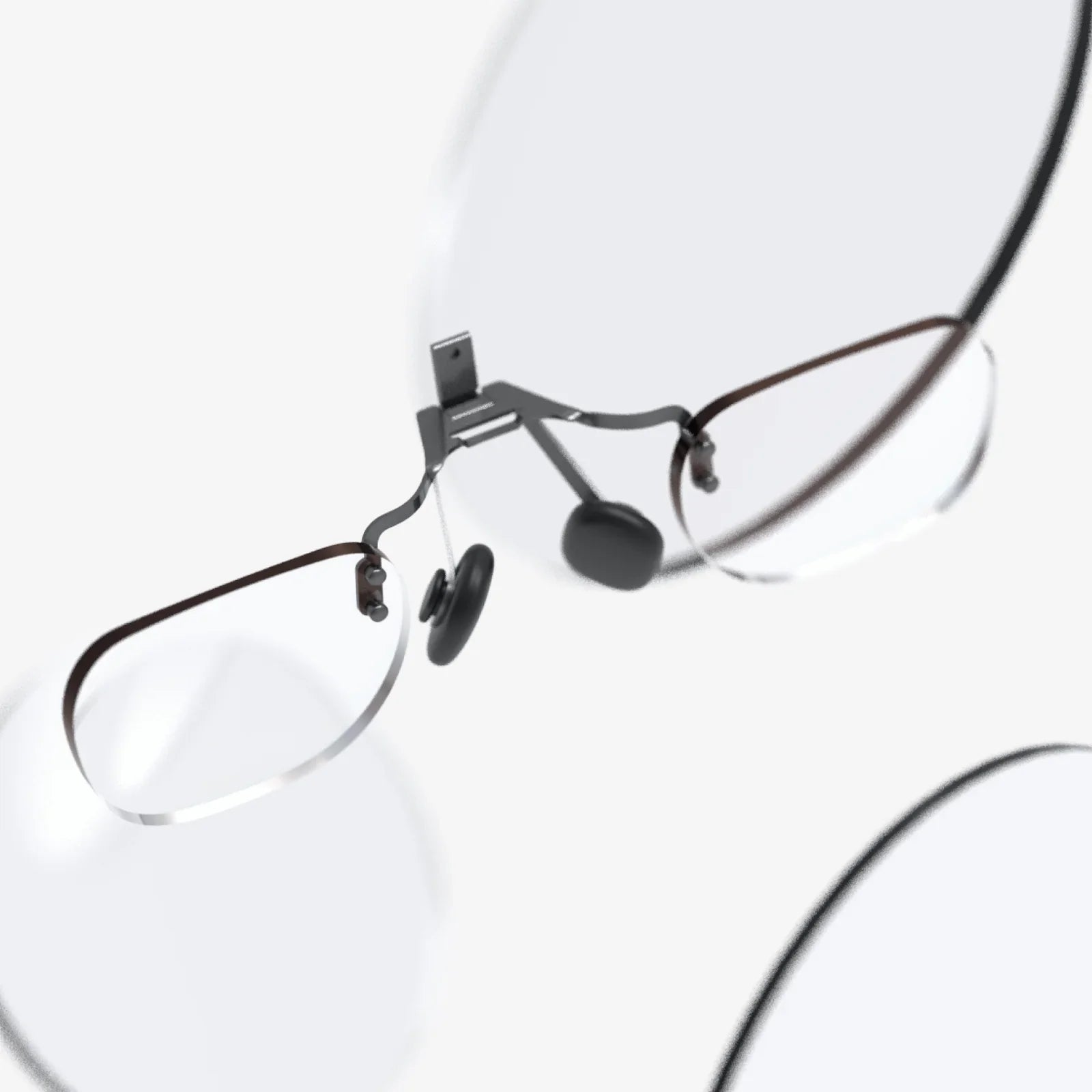
The trajectory of augmented reality is toward invisibility. The goal is to move from holding up a slab of glass to view the digital world to wearing lightweight, socially acceptable glasses, and eventually to contact lenses or even direct neural interfaces that project the augmented reality background directly onto our retinas. The technology will fade into the background itself, leaving only the magic of the enhanced experience.
In this future, information will be contextual and immediate. Look at a landmark to see its history unfold around you. Look at a restaurant to see its menu and reviews. Look at a person (with permission) to see their professional profile or shared interests. The world itself will become its own user interface, an infinite canvas waiting to be annotated, shared, and experienced in new dimensions. We are standing at the precipice of this new layer of reality, a seamless blend of atoms and bits that promises to redefine human experience in ways we are only beginning to imagine.
The world around you is about to wake up. The blank walls, empty desks, and open spaces you see every day are not empty at all—they are dormant canvases, waiting for the spark of augmented reality to transform them into portals for work, windows to other worlds, and stages for connection. This isn't just a new feature; it's a fundamental rewiring of our relationship with reality, and it’s already loading all around you. The only question left is, what will you create on your new canvas?
Share:
Top 10 Augmented Reality Apps That Are Reshaping Our Digital World
AI Glasses Connectivity on the Go: The Future of Seamless Mobile Interaction