


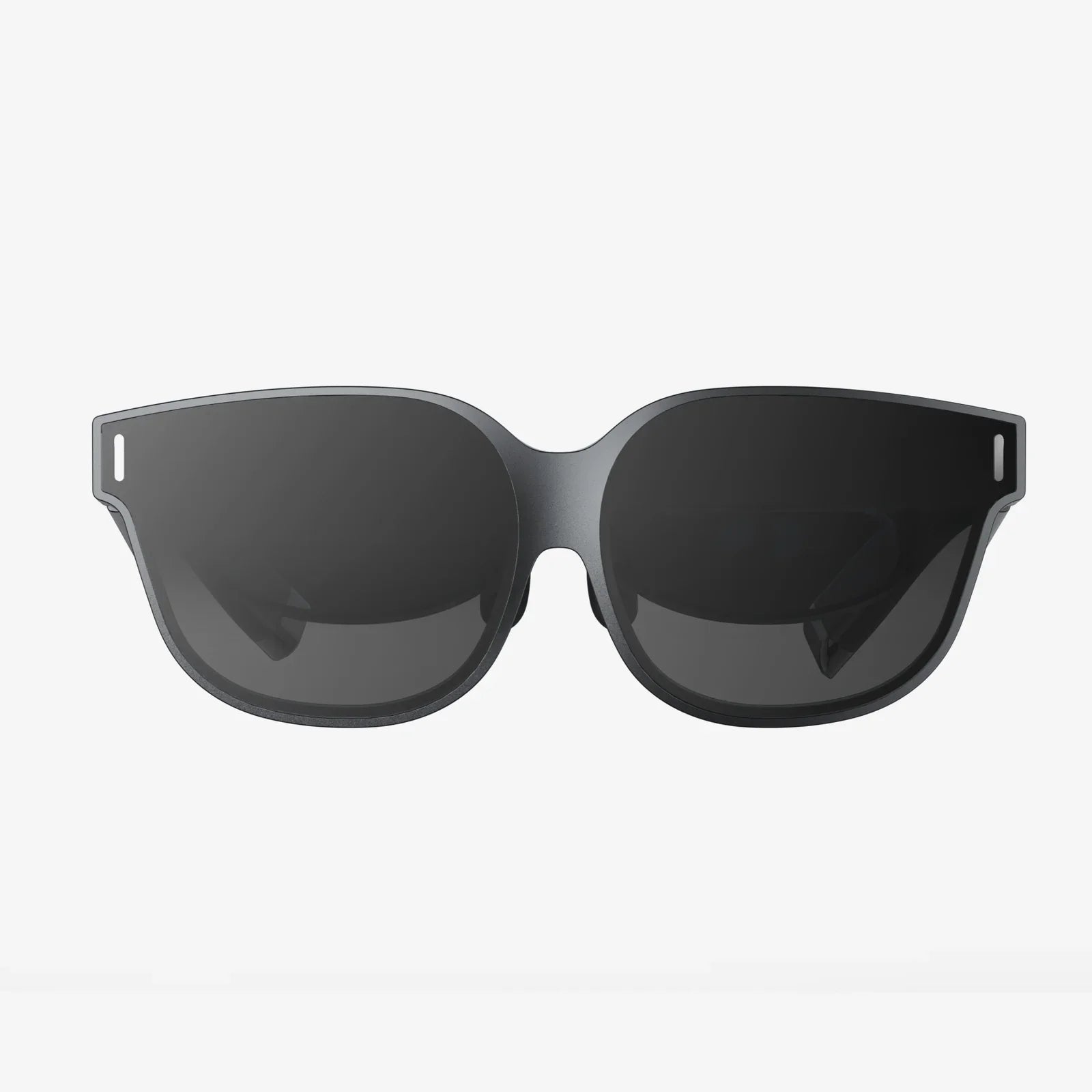
Imagine a world where information doesn't live on a screen in your pocket but floats effortlessly in your field of vision, where language barriers dissolve with a whisper, and where the world around you is annotated with a digital layer of context and understanding. This is not a distant science fiction fantasy; it is the imminent reality promised by a revolutionary new class of wearable technology. The journey to understanding this future begins with a single, crucial step: establishing a clear and comprehensive AI glasses definition.
Deconstructing the Term: More Than Just Smart Glasses
At its most fundamental level, the AI glasses definition describes a wearable headset, in the form of eyeglasses, that is equipped with a combination of sensors, a micro-display, and onboard processing power, all orchestrated by sophisticated artificial intelligence algorithms. Unlike their predecessors, often called 'smart glasses,' which primarily focused on displaying notifications or capturing photos, AI glasses are defined by their ability to perceive, interpret, and act upon their environment in real-time.
The key differentiator is the presence of a contextual, intelligent agent. While smart glasses show you data, AI glasses understand the context of that data. They don't just display the weather; they see the dark clouds gathering overhead and suggest you grab an umbrella before you leave. They don't just translate text; they read a restaurant menu in a foreign language and overlay the translations directly onto your view of the physical menu itself. This shift from passive display to active, contextual assistance is the core of the modern AI glasses definition.
The Core Components: The Anatomy of Intelligence
To fully grasp the AI glasses definition, one must understand the symphony of hardware and software that makes them function. This technological ecosystem can be broken down into several key components.
Sensors: The Digital Senses
AI glasses perceive the world through a suite of sensors that act as their digital eyes and ears. These typically include:
- High-Resolution Cameras: These are the primary visual input, capturing the world in front of the user. They are used for object recognition, text capture, and visual search.
- Depth Sensors and LiDAR: These components measure distance and create a 3D map of the environment, allowing the glasses to understand spatial relationships and precisely place digital objects in physical space.
- Inertial Measurement Units (IMUs): Comprising accelerometers and gyroscopes, IMUs track the head movement and orientation of the user, ensuring the digital overlay remains stable and locked to the real world.
- Microphones: An array of microphones enables voice command reception and, crucially, advanced audio processing like beamforming to isolate the user's voice from background noise.
Processing: The Brainpower
The raw data from the sensors is meaningless without interpretation. This is where the artificial intelligence comes in. A specialized processing unit, often called an NPU (Neural Processing Unit) or APU (AI Processing Unit), is dedicated to running complex machine learning models efficiently and with low power consumption. This onboard AI is responsible for:
- Computer Vision: Identifying objects, people, text, and scenes in the camera feed.
- Natural Language Processing (NLP): Understanding and generating human language for voice commands and real-time translation.
- Augmented Reality Rendering: Fusing digital content with the real world seamlessly.
Display: The Window to Augmented Reality
How information is presented is just as important as how it is gathered. AI glasses use micro-display technologies, such as waveguide optics or MicroLED projectors, to beam images directly onto the user's retinas or onto the lenses themselves. This creates the illusion that text, images, and 3D models are part of the physical environment, a phenomenon known as augmented reality (AR).
Connectivity and Power
While powerful, the onboard processor often works in tandem with cloud-based AI models for more complex tasks, requiring robust connectivity like Wi-Fi and 5G. All of this demands a significant amount of energy, making battery technology and power management a critical, albeit challenging, part of the design, often housed in a separate unit within the frame or attached via a cable.
How They Work: The Symphony of Perception and Action
The magic of AI glasses lies in the seamless integration of these components. The operational loop can be broken down into a continuous cycle:
- Perception: The sensors continuously gather data about the environment—visual, auditory, and spatial.
- Processing & Analysis: The onboard AI processes this data in real-time. It identifies the objects in view, transcribes spoken words, and understands the user's location and context.
- Decision & Generation: Based on the analysis, the AI decides what action to take. This could be retrieving information, generating a translation, or pulling up relevant data from the cloud.
- Presentation: The result is presented to the user through the micro-display (visual) or bone conduction speakers (audio), integrated naturally into their perception of the world.
This entire process, from seeing a word to displaying its translation, happens in milliseconds, creating a fluid and intuitive user experience that feels like a natural extension of one's own cognition.
Applications: Transforming Industries and Daily Life
The true power of the AI glasses definition is revealed in its practical applications, which stretch across every facet of professional and personal life.
Accessibility and Inclusion
This is perhaps the most profound and immediate impact. AI glasses can act as a real-time assistive tool for individuals with visual or auditory impairments. They can read text aloud from a book or a street sign, describe scenes and identify people, and amplify or transcribe conversations for those who are hard of hearing, granting a new level of independence.
Enterprise and Industrial Use
In fields like manufacturing, logistics, and field service, AI glasses are revolutionizing workflows. A technician repairing complex machinery can see schematics and step-by-step instructions overlaid directly on the equipment they are fixing. A warehouse worker can see optimal picking routes and instantly verify items without consulting a handheld scanner, dramatically increasing efficiency and reducing errors.
Healthcare and Medicine
Surgeons can access vital signs, MRI scans, and other critical patient data without looking away from the operating table. Medical students can learn anatomy through interactive 3D models. These devices can also provide real-time support for complex procedures and remote consultations, allowing expert surgeons to guide others from across the globe.
Navigation and Travel
Imagine walking through a foreign city where directional arrows are painted onto the sidewalk in your vision, historical buildings are annotated with their stories, and conversations with locals flow smoothly thanks to real-time, natural language translation appearing as subtitles in the air. This transforms travel from a potentially disorienting experience into an immersive, educational journey.
The Ethical and Societal Implications: A Double-Edged Sword
With such transformative power comes significant responsibility. A complete AI glasses definition must address the serious ethical dilemmas this technology introduces.
Privacy in a World of Constant Sensing
The most pressing concern is privacy. Glasses with always-on cameras and microphones represent a fundamental shift in surveillance capabilities. The potential for unauthorized recording, facial recognition, and data harvesting is unprecedented. Robust regulations, clear user consent protocols, and obvious indicators of when recording is active are non-negotiable requirements for societal acceptance.
The Digital Divide and Accessibility
If AI glasses become essential tools for work, education, and social interaction, a new form of inequality could emerge between those who can afford them and those who cannot. Ensuring this technology does not exacerbate existing social divides is a critical challenge.
Reality Blur and Mental Health
As the digital layer becomes richer and more compelling, what happens to our shared sense of reality? Will we become addicted to the augmented world, preferring it to the unadorned physical one? The long-term psychological effects of perpetually mediating our experience through a digital filter are unknown and warrant careful study.
The Future Trajectory: Where Do We Go From Here?
The current AI glasses definition is just a snapshot of a technology in its infancy. The future trajectory points toward several key developments:
- Miniaturization: Components will shrink, moving toward a form factor indistinguishable from regular eyewear.
- Advanced AI and Contextual Awareness: The AI will evolve from a reactive assistant to a proactive companion, anticipating needs based on a deep understanding of context, routine, and user intent.
- Neural Interfaces: The ultimate goal is a seamless brain-computer interface, moving beyond voice and gesture to control the glasses with thought alone, truly merging human and artificial intelligence.
We are standing at the precipice of a new era of human-computer interaction. The clear takeaway from this deep dive into the AI glasses definition is that we are not merely building a new gadget; we are architecting a new layer of human experience. The choices we make today—in design, in ethics, and in policy—will determine whether this powerful technology becomes a tool that empowers humanity or one that divides it. The future is not just something we enter; it's something we build, and it's being built right before our eyes.
The boundary between the digital and the physical is not just blurring; it's vanishing altogether. This ultimate fusion promises to redefine human potential, offering a cognitive extension that could make us smarter, more connected, and more capable than ever before. The question is no longer if this future will arrive, but how prepared we are to step into it and shape it responsibly. The next time you put on a pair of glasses, you might not just be correcting your vision—you might be upgrading your entire reality.
Share:
What Is AR and VR Stand For: A Deep Dive Into Our Digital Future
Augmented Reality Forecast: Navigating the Next Decade of Digital Integration