


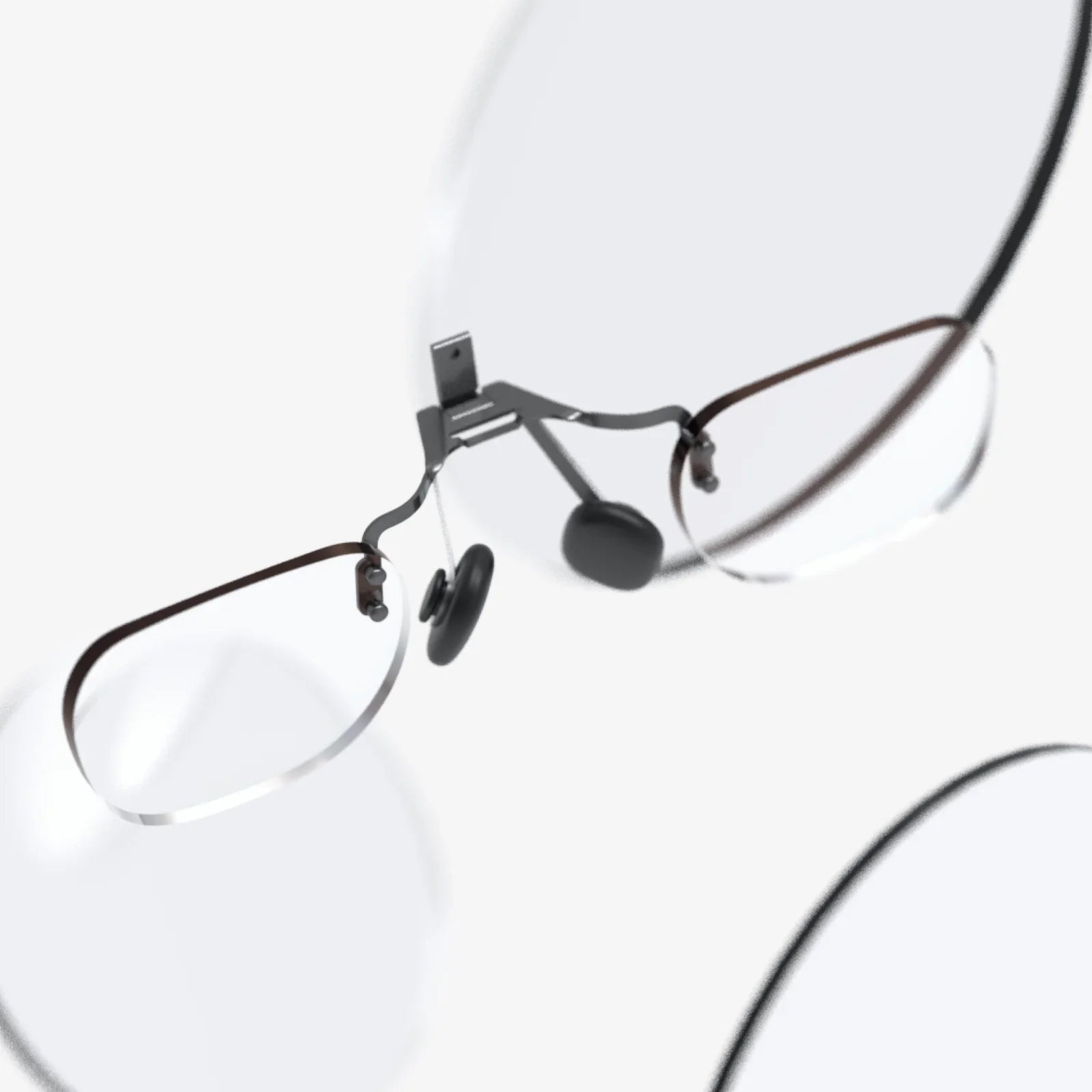
Imagine leaning into a sharp turn on the rain-slicked streets of a futuristic metropolis, feeling the digital spray on your face, and hearing the roar of a pursuing hovercar not just from the sides, but from precisely behind your left ear. This isn't a distant dream; it's the imminent future promised by AI glasses for immersive gaming, a technology poised to shatter our screens and transport our consciousness directly into the game world. This is more than an upgrade; it's a paradigm shift, a fundamental reimagining of what it means to play.
Beyond the Screen: Escaping the Rectangular Prison
For decades, the quest for immersion has been a linear path: bigger screens, higher resolutions, faster refresh rates. We've surrounded ourselves with monitors, mounted powerful speakers, and strapped bulky headsets to our skulls. Yet, a fundamental barrier remains—the screen itself. It is a window, a boundary separating us from the digital worlds we wish to inhabit. We peer into these worlds but are never truly of them. Our physical reality—the room, the couch, the distractions—constantly intrudes, breaking the spell.
Virtual Reality (VR) headsets made a valiant attempt to solve this by blocking out our surroundings entirely. However, they often create a new form of isolation, disconnecting us completely from our physical environment. They can be cumbersome, induce motion sickness, and require dedicated, cleared space. They are, in essence, a replacement reality, not an enhanced one.
This is the core innovation of AI-powered glasses: they don't seek to replace our reality but to augment it. They aim to seamlessly weave digital elements into the fabric of our physical space, allowing the game to happen all around us, on our walls, on our tables, and out in the world. The goal is not isolation, but integration.
The Architectural Pillars of Intelligent Immersion
The magic of these devices isn't just in the displays but in the sophisticated artificial intelligence that powers them. This intelligence is built upon several key technological pillars that work in concert to create a believable and responsive experience.
Advanced Spatial Mapping and Computer Vision
At the heart of the system lies a deep understanding of the player's environment. Using a combination of high-resolution cameras, depth sensors, LiDAR, and infrared projectors, the glasses continuously scan and map the room in real-time. They don't just see a flat surface; they understand its geometry, texture, and dimensions.
This allows for persistent digital content that interacts realistically with the physical world. A virtual character can truly sit on your real couch, its weight causing a slight digital deformation of the cushion. A monster can crash through your virtual wall, with the debris scattering and coming to rest accurately on your actual floor. This flawless anchoring of digital objects in physical space is the first and most crucial step toward true immersion, eliminating the "holograms floating in space" effect of earlier technologies.
On-Device AI Processing and Neural Engines
The sheer volume of visual and spatial data required for this feat is immense. To process it with the ultra-low latency necessary for gaming (where milliseconds matter), powerful AI processors and neural engines are embedded directly into the glasses' frame. This on-device processing is non-negotiable; sending data to the cloud and back would introduce fatal lag, shattering the illusion.
These dedicated chips handle the immense computational load of simultaneous localization and mapping (SLAM), object recognition, and rendering complex graphics. They are the brains of the operation, making billions of calculations per second to ensure the digital overlay remains perfectly locked to our world, even as we move our heads and walk around.
Precision Audio Beamforming and Spatial Sound
Immersion is more than half audio. Next-generation spatial audio technology, driven by AI, will be a cornerstone of the experience. Tiny, advanced speakers will use beamforming and psychoacoustic algorithms to project sound so precisely that it seems to emanate from specific points in the room.
You'll hear the whisper of an ally from exactly where their digital avatar is standing across the table. The creak of a floorboard will sound from a specific spot behind you, allowing for pinpoint accuracy in tactical games without the need for headphones. This 3D audio canvas completes the sensory illusion, making the unseen feel present and tangible.
Biometric Integration and Adaptive Gameplay
This is where the AI truly earns its namesake. Subtle sensors will monitor the player's physiological responses: pupil dilation, heart rate via micro-light sensors, and even slight facial micro-expressions captured by inward-facing cameras. The game's AI can then use this data to dynamically adapt the experience in real-time.
- Dynamic Difficulty Adjustment (DDA) 2.0: If the system detects heightened stress and a rising heart rate during a boss fight, it might subtly ease the challenge to prevent frustration. Conversely, if it senses boredom or a drop in engagement, it could spawn additional enemies or make puzzles more complex.
- Emotional Narrative Branching: A character in the game might notice your avatar's (your) expression of doubt and change their dialogue accordingly, building a deeper, more empathetic connection to the story.
- Accessibility Revolution: For players with physical limitations, the game could adapt control schemes or puzzle solutions based on observed behavior and intent, creating a more inclusive experience.
Genres Transformed: A New Playground for Game Design
The advent of AI glasses won't just enhance existing genres; it will birth entirely new ones and fundamentally transform others.
Strategy and God Games Reborn
Imagine playing a real-time strategy game on your actual living room floor. Your coffee table becomes a topographical map of the battlefield. You physically lean in to command units with gesture-based controls, pinching battalions to move them and tapping on terrain to set waypoints. The scale is tangible and immense, transforming abstract miniatures into living, breathing armies fighting across your home.
Hyper-Realistic Augmented Reality Adventures
Mystery and puzzle games will thrive. Your entire home becomes an escape room. Clues are hidden in augmented reality on the spines of your real books. A secret message is revealed only when you view a specific painting under a specific (digital) light spectrum. The barrier between game and life dissolves completely, creating a pervasive sense of wonder and discovery.
Persistent World and Location-Based Experiences
The game world doesn't pause when you take off the glasses. With persistent cloud-based AI, the game state continues to evolve. Perhaps a resource you left mining in a corner of your room is ready to be collected when you log back in. Furthermore, taking the glasses outside opens up location-based gaming that makes previous attempts look primitive. Historical battles could be re-fought on the very streets where they occurred, with AI characters providing context and commentary based on your GPS location.
Navigating the Labyrinth: Challenges on the Horizon
For all its promise, the path to mainstream adoption is fraught with significant hurdles that developers and manufacturers must overcome.
The Form Factor Conundrum
The ultimate challenge is design. To be adopted for daily use and long gaming sessions, the glasses must be lightweight, comfortable, and socially acceptable. They cannot be the bulky, tethered, and power-hungry prototypes we often see today. The technology needs to be miniaturized to the point of near-invisibility, fitting into a form factor comparable to premium sunglasses. Battery life is a related battle, requiring immense power efficiency to support high-fidelity graphics and AI processing for hours on end.
The Privacy Imperative
A device that sits on your face, sees what you see, and hears what you hear is a privacy advocate's nightmare. The collection of biometric and environmental data must be handled with extreme care. Clear, transparent, and user-centric data policies are essential. On-device processing will be a key selling point, ensuring that sensitive data like video feeds of a user's home never leaves the device, being processed locally for immediate use and then discarded.
Establishing a New Design Language
Game developers will need to learn a new vocabulary for design. UI elements can't just be plastered on a screen; they must be integrated into the environment. How do you display a health bar without breaking immersion? How do you design for a playspace that is different in every single user's home? This requires a fundamental rethink of game design principles, moving from screen-based thinking to spatial and contextual design.
The line between spectator and player is about to vanish. With AI glasses, you won't just watch someone play a game; you'll see the world through their eyes, witnessing the digital dragons and futuristic cities they see overlaid on their reality. This isn't the next step in gaming evolution; it's the leap to a new species of entertainment altogether, and the door is now open.
Share:
4 Advantages of Virtual Office: Revolutionizing the Modern Workspace
4 Advantages of Virtual Office: Revolutionizing the Modern Workspace