


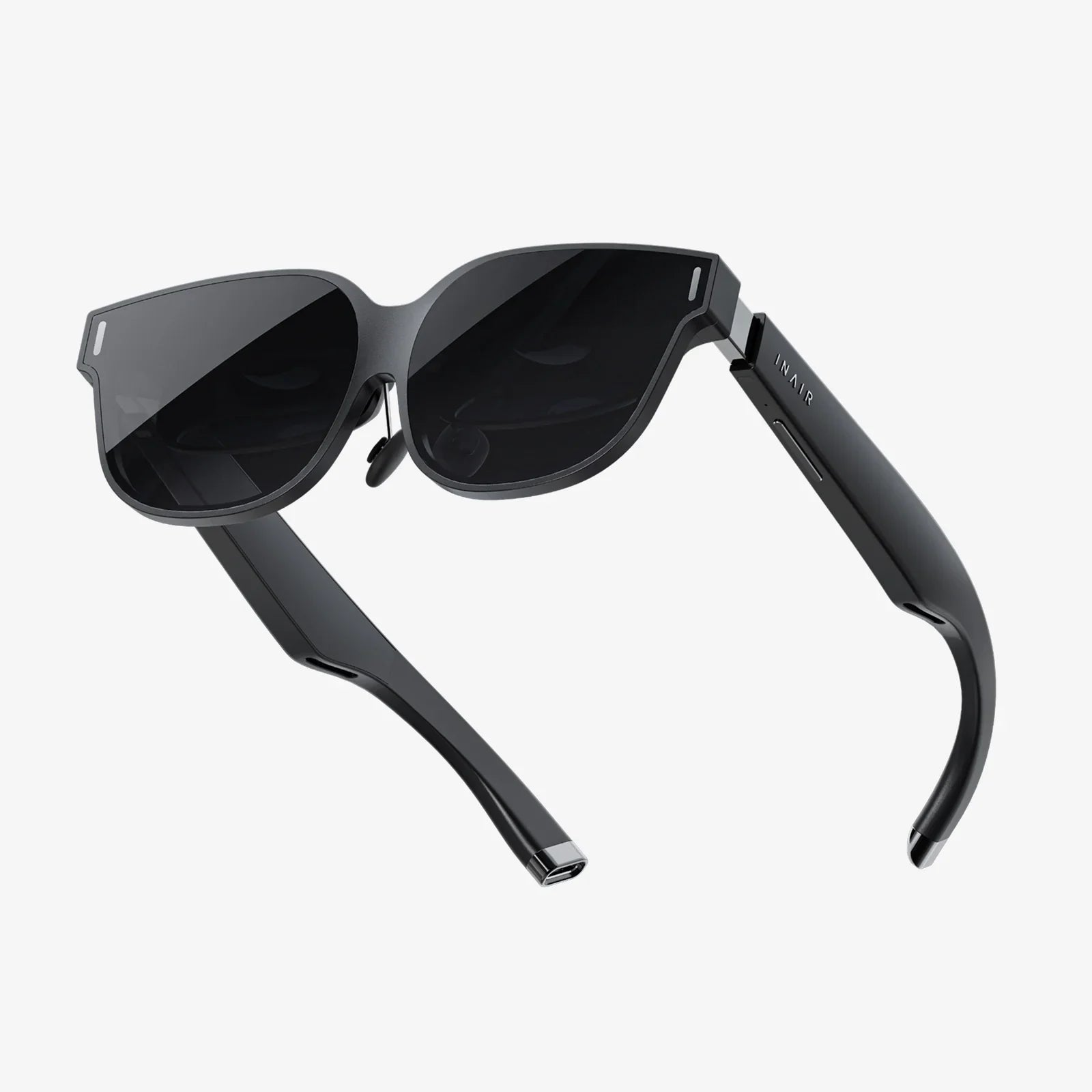
Imagine a world where information flows as effortlessly as sight, where digital overlays enhance your perception of reality, and a powerful, intelligent assistant is literally always in your field of view. This is no longer the stuff of science fiction; it is the promise delivered by the AI glasses latest models now emerging onto the consumer and enterprise stages. These devices represent a monumental leap from their clunky, conceptual predecessors, offering a glimpse into a future where our physical and digital lives are inextricably and seamlessly fused. The next era of human-computer interaction is not on your desk or in your palm; it’s on your face.
The Evolution from Novelty to Necessity
The journey to today's sophisticated AI eyewear has been a long one, marked by ambitious prototypes and valuable lessons learned from early missteps. Initial iterations were often burdened by limited battery life, intrusive designs, and a lack of compelling use cases beyond niche applications. They were seen as fascinating experiments rather than essential tools. However, rapid advancements in several key technological domains have converged to make the current generation not just viable, but revolutionary.
The most significant shift is in their form factor. The AI glasses latest models prioritize wearability and social acceptance. Engineers and designers have worked tirelessly to create frames that are lightweight, comfortable, and, crucially, indistinguishable from high-end traditional eyewear. This is a critical design philosophy: the technology must recede into the background, becoming an invisible conduit for augmentation rather than a distracting barrier to normal human interaction. The goal is for the wearer to look like someone wearing stylish glasses, not a cyborg.
Deconstructing the Technology: What Powers Modern AI Glasses?
The magic of these devices lies in a sophisticated symphony of hardware and software components, all miniaturized to fit within the slender arms and frames of a pair of glasses.
The Hardware Suite
At the heart of every model is a powerful, low-energy processor specifically designed for on-device AI computations. This is crucial for tasks like real-time translation and object recognition, ensuring speed and privacy by minimizing reliance on cloud servers.
Advanced micro-display technology projects information directly onto specially engineered lenses, which then reflect the imagery onto the user's retina. This creates the illusion of a transparent, floating screen that exists in the real world, a technology known as augmented reality (AR). The quality of these displays has improved dramatically, offering brighter, sharper, and more vibrant visuals that are easily visible even in direct sunlight.
Surrounding the user is an array of sensors that act as the eyes and ears of the device. This typically includes:
- High-Resolution Cameras: For capturing first-person perspective images and video, and for computer vision tasks.
- Microphones: Often an array of them, for beamforming and accurately capturing voice commands and ambient sound while filtering out noise.
- Inertial Measurement Units (IMUs): Gyroscopes and accelerometers that track head movement and orientation, ensuring the digital content stays locked in place in the real world.
- Depth Sensors: In some advanced models, these sensors map the environment in 3D, understanding the geometry of a room to allow digital objects to interact realistically with physical surfaces.
Finally, bone conduction audio speakers are a common feature, transmitting sound through the user's cheekbones. This allows the wearer to hear audio prompts, music, and calls clearly without earbuds, while still being aware of sounds in their environment—a critical feature for safety and situational awareness.
The Intelligent Software Brain
Hardware is nothing without intelligent software. The true "AI" in AI glasses is powered by a stack of sophisticated algorithms and models.
Computer Vision: This is the capability that allows the glasses to "see" and understand the world. It enables features like instant text translation, where the device can recognize text in the environment, translate it, and overlay the new language directly onto the user's view of a sign or menu. It can identify objects (“find my keys”), recognize faces (with appropriate privacy controls), and scan barcodes for product information.
Natural Language Processing (NLP) and Voice AI: The assistant within the glasses is far more advanced than the simple voice helpers on smartphones. Powered by large language models, it can engage in contextually aware, conversational dialogue. You can ask complex, multi-part questions based on what you’re seeing or doing, and receive intelligent, synthesized responses without ever touching a device.
On-Device Learning and Personalization: The most advanced models are designed to learn from the user. They can understand your routines, preferences, and frequently accessed information, proactively surfacing relevant data. For instance, they might learn your daily commute and alert you to traffic delays as you walk out the door, or remind you to pick up milk when you pass a grocery store.
A World of Applications: Beyond the Gimmick
The power of this technology is best understood through its practical, transformative applications across various facets of life and work.
Revolutionizing Professional Fields
In enterprise and industrial settings, AI glasses are proving to be a game-changer. Field technicians can have complex repair manuals, schematic diagrams, and live video feeds from remote experts overlaid directly onto the machinery they are fixing. This provides hands-free, contextual guidance, drastically reducing errors and training time. Surgeons can visualize patient vitals and 3D anatomical models during procedures without looking away from the operating table. Architects and engineers can walk through full-scale 3D holograms of their digital building models, making design decisions in context.
Transforming Accessibility
The potential for enhancing the lives of individuals with disabilities is profound. For the visually impaired, AI glasses can audibly describe surroundings, read text aloud, identify currency, and recognize faces. For those who are hard of hearing, real-time speech-to-text transcription can be displayed in their field of view, turning conversations into captioned experiences. This technology has the power to create a more inclusive and navigable world.
Redefining Social and Daily Interaction
For the general consumer, the applications are both practical and magical. Imagine traveling in a foreign country and having street signs, menus, and conversations translated instantly in real-time. Imagine never forgetting a name at a networking event, as a discreet prompt reminds you of the person you’re shaking hands with. Cooking becomes effortless with a recipe projected step-by-step onto your countertop. Navigation arrows are painted onto the street in front of you, guiding you to your destination. The smartphone, once the center of our digital lives, begins to fade into the background.
The Ethical Landscape: Navigating a New Frontier
With such powerful capabilities come significant ethical dilemmas and societal questions that we are only beginning to grapple with.
Privacy and Surveillance: The most pressing concern is the potential for perpetual, first-person surveillance. A device that sees and hears everything you do raises alarming questions about data collection, consent, and security. Who has access to the continuous video and audio feed? How is this data stored, used, and protected? The possibility of unauthorized recording in private spaces or the use of facial recognition in public without consent creates a chilling effect on society. Robust, transparent data policies and clear, physical indicators when recording are non-negotiable prerequisites for widespread adoption.
The Digital Divide and Accessibility: As with any transformative technology, there is a risk that it will initially be available only to the wealthy, creating a new kind of digital divide—an "information divide." Those who can afford AI glasses would have instant access to knowledge and translation, potentially granting them significant social and economic advantages. Ensuring this technology benefits all of humanity, not just a privileged few, is a critical challenge.
Social Dynamics and Etiquette: How will the presence of always-on, recording-capable devices change how we interact in social settings? Will people be hesitant to speak freely if they know they might be recorded? The norms around using this technology in conversations, meetings, and public places are yet to be established. It has the potential to create new forms of social anxiety and distrust.
Over-reliance and Cognitive Offloading: There is a legitimate concern about the impact on human memory and cognitive skills. If we become accustomed to having every piece of information instantly available, will we lose the ability to remember things, navigate, or solve problems independently? The technology should augment human intelligence, not replace it.
Gazing into the Future: What Comes Next?
The current generation of AI glasses is impressive, but it is merely the foundation. The trajectory points toward even more seamless integration. Future iterations will likely feature holographic waveguides that eliminate the need for any physical lenses, further shrinking the form factor. Advances in neural interfaces could eventually allow for control via subtle eye movements or even thought. Battery technology will improve, moving toward all-day life and new charging paradigms like solar or kinetic energy. Ultimately, the endpoint is a device so lightweight, powerful, and intuitive that it becomes as ubiquitous as the smartphone is today.
The AI glasses latest models are more than just a new gadget; they are a portal. They represent a fundamental shift in how we perceive and interact with reality itself. They promise to make us more knowledgeable, more connected, and more capable. But they also demand a new level of responsibility—a conscious and collective effort to guide their development with a strong ethical compass. The future they offer is not predetermined; it is a vision we must build carefully, ensuring that the world we augment is one we all want to live in.
We stand at the precipice of a new sensory paradigm, one where the line between the user and the interface dissolves completely. The next time you put on a pair of glasses, you might not just be correcting your vision—you might be upgrading your entire reality. The question is no longer if this future will arrive, but how quickly we can adapt to its immense possibilities and profound responsibilities.
Share:
AI Powered Putting Glasses: The Ultimate Guide to Revolutionizing Your Short Game
AI Glasses Privacy: The Unseen Battle for Your Personal Data