


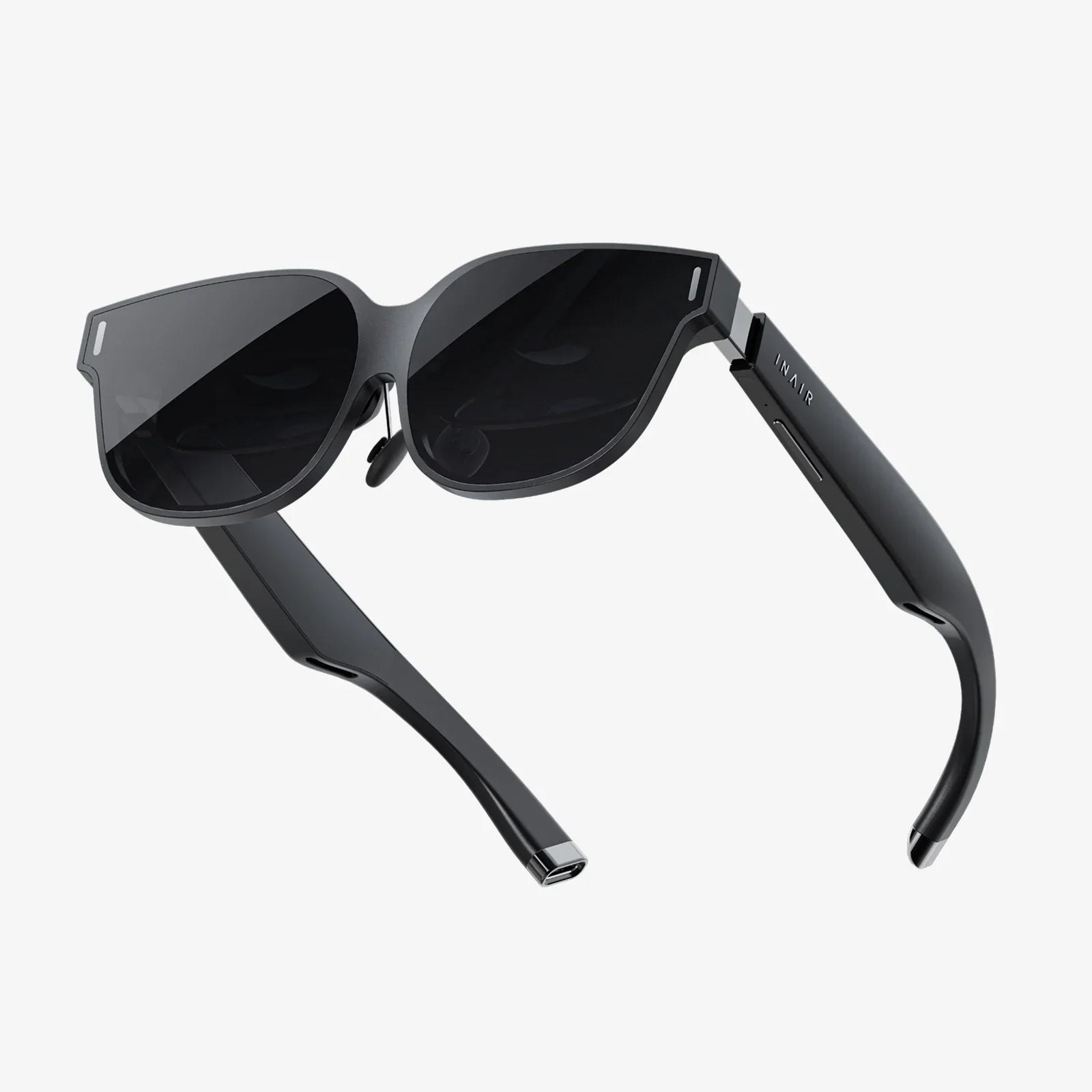
Imagine a world where your most private thoughts can summon information, your glance can translate a street sign, and a stranger’s face reveals not just a name but a shared interest, all without you ever reaching for a device. This is not a scene from a science fiction novel; it is the promised reality of 2025, brought to you by the rapid evolution of artificial intelligence integrated directly into the frames perched on our noses. The question is no longer if this technology will arrive, but how it will integrate into the fabric of our daily existence. Will these sophisticated portals to a digital layer of reality be coveted as the ultimate luxury, a status symbol for the connected elite? Or will they become as fundamental to navigating modern life as the smartphone is today, a necessity we can scarcely imagine living without? The answer, it seems, is a complex and fascinating blend of both, heralding a future where the line between accessory and essential tool is irrevocably blurred.
The Architectural Leap: From Prototype to Polished Product
The journey to 2025’s AI glasses has been one of relentless miniaturization and computational refinement. Early iterations were often clunky, battery-dependent, and socially awkward, limiting their appeal to tech enthusiasts and specific industrial applications. The breakthrough lies in the convergence of several key technologies. First, the development of ultra-low-power, high-performance processors capable of on-device AI inference means data can be processed locally, enhancing speed, privacy, and battery life. These chips are small enough to be seamlessly embedded within the arms and bridge of a pair of glasses, eliminating the need for a bulky external pack.
Second, advancements in micro-display technology are solving the quintessential problem of how to present information without obstructing the user’s natural field of view. Waveguide optics, laser beam scanning, and holographic film are creating bright, high-resolution displays that appear to float in the user’s periphery or directly overlay the real world. These displays are coupled with sophisticated sensors—high-resolution cameras, LiDAR scanners, depth sensors, and microphones—that act as the eyes and ears of the AI, constantly feeding it contextual data about the environment.
Finally, the evolution of power systems is critical. New solid-state battery technologies and innovative energy harvesting methods, such as converting solar energy or kinetic movement from the wearer into small amounts of power, are extending operational time from hours to days. This trifecta—powerful embedded computing, immersive yet unobtrusive displays, and all-day power—forms the technical bedrock upon which the 2025 vision is built.
The Luxury Proposition: Exclusivity, Craftsmanship, and Hyper-Personalization
For a significant segment of the market, AI glasses in 2025 will be the definitive luxury item. This perspective frames them not as mere gadgets, but as the pinnacle of personalized technology and high fashion. The luxury argument rests on three pillars: bespoke design, exclusive functionality, and status.
Luxury brands and high-end eyewear makers are already positioning themselves to enter this space. Their offerings will likely feature handcrafted frames made from premium materials like titanium, acetate, gold, or even sustainable exotic materials. The technology inside will be presented as an exquisite, hidden layer of functionality—a secret power for the discerning individual. The user experience will be meticulously curated, offering services that cater to a rarefied lifestyle. Imagine glasses that can identify a vintage wine label and pull up its provenance and optimal tasting notes at a Michelin-starred restaurant, or that can discreetly display the bidding history of a piece at a high-stakes art auction.
This hyper-personalization extends beyond software to the physical fit and digital interface. Biometric sensors could monitor stress levels and suggest a moment of mindfulness, or adjust the ambient noise cancellation based on the user’s heart rate. In this context, AI glasses become the ultimate concierge, a silent, intelligent partner that enhances a life of privilege and convenience. The high cost of these early, premium models will inherently limit their ownership, making them a powerful symbol of technological and financial attainment. They are a statement: not just that you can afford the technology, but that you value a seamless, integrated, and exceptionally crafted experience.
The Necessity Argument: Accessibility, Safety, and Augmented Living
Conversely, a compelling case can be made that by 2025, AI glasses will shed their luxury skin and reveal themselves as a genuine necessity. This argument is driven not by desire, but by demonstrable utility that solves real-world problems for a broad population. The necessity paradigm is built on the foundations of accessibility, enhanced safety, and profound productivity gains.
Consider the transformative impact for individuals with disabilities. For the visually impaired, AI glasses could describe scenes, read text aloud, identify currency, and navigate obstacles with unprecedented detail. For the hearing impaired, real-time speech-to-text transcription overlayed onto the speaker’s face could make conversations fluid and effortless. This assistive technology has the potential to grant a new level of independence and engagement with the world, moving far beyond a luxury into the realm of essential aid.
For the general public, safety enhancements are a powerful driver. Integrated navigation could guide users with directional arrows painted onto the street, eliminating the need to look down at a phone while walking or driving. Real-time translation could break down language barriers in both personal and professional settings, fostering global connection. Hands-free access to information could make complex tasks—from repairing machinery to following a recipe—safer and more efficient. In professional settings, from healthcare to engineering, technicians could see schematics or patient data overlaid on the equipment or person in front of them, reducing errors and improving outcomes.
As the technology matures and economies of scale drive down production costs, a base model of AI glasses could become as commonplace as a mid-tier smartphone. The utility they provide in managing daily tasks, staying connected, and accessing information contextually could make them indispensable, relegating the smartphone to a secondary, backup device. When a technology demonstrably improves safety, accessibility, and efficiency for millions, it transitions from a want to a need.
The Societal Crossroads: Privacy, the Digital Divide, and Etiquette
The widespread adoption of AI glasses, whether as luxury or necessity, does not come without significant societal challenges that must be addressed by 2025. The most pressing among these is the issue of privacy. A device that is always on, always watching, and always listening presents an unprecedented surveillance capability. The potential for constant recording, facial recognition, and data harvesting raises alarming questions. Will we need new digital etiquette rules and legal frameworks to prevent a society where every interaction is potentially being recorded and analyzed? Establishing clear visual and auditory indicators that the device is active, along with robust data ownership laws that give users control over their information, will be paramount to gaining public trust.
Furthermore, the advent of AI glasses risks exacerbating the digital divide. If they become essential for navigating job markets, accessing certain services, or even engaging in social circles, a new class of “information haves and have-nots” could emerge. The cost barrier, even for basic models, could leave significant portions of the population at a severe disadvantage, unable to participate fully in an increasingly augmented society. Policymakers and technology companies will face immense pressure to ensure this technology is inclusive and does not become a new vector for inequality.
The Hybrid Future: The Blurring Line and the New Normal
By the close of 2025, the binary debate of “luxury or necessity” will likely seem simplistic. The market will have naturally stratified, much like the automotive or smartphone markets today. There will exist a spectrum of products catering to different needs and budgets. At the high end, luxury AI glasses will serve as bespoke fashion statements and powerful professional tools for those who can afford them. In the middle, reliable, utilitarian models will offer core functionality that many come to depend on for work, navigation, and communication. At the more accessible end, simpler models may focus on specific necessity-driven applications, like assisted living for the elderly or translation for frequent travelers.
The true sign of their integration will be their invisibility. The ultimate success of this technology lies not in its ostentatiousness, but in its seamless fade into the background of our lives. We won’t marvel at the glasses themselves, but at the effortless way we can recall a forgotten fact, understand a foreign language, or connect with a piece of art on a deeper level. They will become a lens through which we perceive and interact with a richer, more informed world.
The path to 2025 is being paved with lines of code and microscopic circuits, but its destination is profoundly human. It’s about enhancing our capabilities, bridging our limitations, and redefining our connection to information. The frames we choose to wear will tell a story not just about our style, but about how we choose to see the world—and how we allow the world to see us, in return. The future is looking directly back at us, and it’s wearing a pair of intelligent glasses.
Share:
The Primary Difference Between AR and VR: A Deep Dive Into Digital Realities
How Has the Eyewear Industry Embraced Technology? A Digital Revolution