


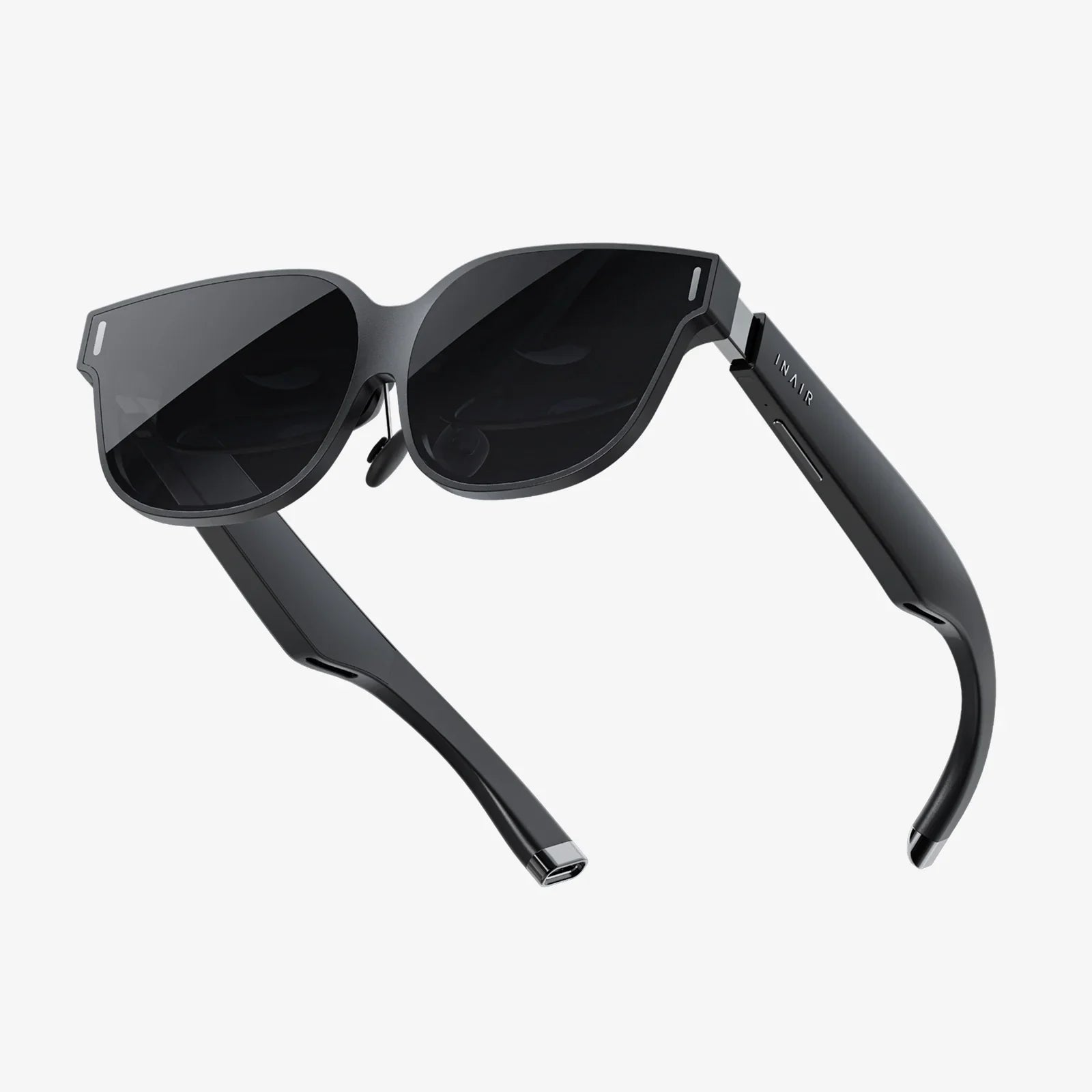
Imagine a world where information doesn't live on a screen in your hand but is seamlessly painted onto the canvas of your reality. Where language barriers dissolve before your eyes, where complex data is intuitively understood at a glance, and where the line between your memory and a digital assistant becomes beautifully blurred. This is no longer the realm of science fiction; it is the promise being delivered by the latest wave of AI glasses, and the news today suggests this future is arriving faster than anyone anticipated.
The Evolution from Novelty to Necessity
The journey of smart eyewear has been a turbulent one, marked by early missteps and public skepticism. Initial iterations were often bulky, expensive, and offered limited functionality that failed to justify their intrusion into daily life. They were solutions in search of a problem. However, the news today tells a fundamentally different story. The convergence of several critical technologies has finally created the perfect storm for AI glasses to transition from a geeky curiosity to a potentially transformative tool.
The miniaturization of processors, the leap in battery efficiency, and most importantly, the staggering advances in artificial intelligence and machine learning have been the true game-changers. Modern AI glasses are powered by sophisticated neural processing units (NPUs) capable of handling complex computer vision and natural language processing tasks locally, on the device itself. This shift from cloud-dependent processing to on-board intelligence is crucial. It means lower latency, greater reliability, and enhanced privacy—your visual and auditory data doesn't need to be sent to a remote server to be understood.
Breaking Down the Latest Breakthroughs
The news cycle today is dominated by several key areas of development that are defining the next generation of AI eyewear.
Real-Time Visual Translation: A World Without Language Barriers
One of the most immediately impactful applications is real-time augmented reality translation. Imagine walking through a foreign airport, looking at a departure board, and seeing the gate information seamlessly overlaid in your native language. Or having a conversation with someone speaking a different language, where subtitles of their translated speech appear in your field of view, almost as if they were speaking your language. This technology, once a fantastical idea, is now a demonstrable reality in several prototypes. Advanced optical character recognition (OCR) combined with neural machine translation engines working at incredible speeds makes this possible. The implications for travel, international business, and cultural exchange are nothing short of revolutionary.
Contextual Awareness and Information Overlays
Beyond translation, AI glasses are becoming profoundly context-aware. Using a combination of cameras, sensors, and AI, they can identify objects, people, and environments to provide relevant information exactly when and where it's needed.
- Navigation: Instead of looking down at a phone map, directional arrows and pathways can be projected onto the street in front of you.
- Learning and Memory: Look at a complex piece of machinery, and a schematic highlighting its parts and functions could appear. Meet someone at a conference, and a discreet pop-up with their name and recent work (pulled from public profiles you've permitted) could help jog your memory.
- Accessibility: For individuals with visual impairments, AI glasses can describe scenes, read text aloud, identify currency, and recognize faces, offering a new level of independence.
The Invisible Assistant: Multimodal AI Integration
The most advanced AI glasses news today revolves around the integration of powerful multimodal AI models. These are not mere voice assistants; they are ambient, always-available companions that see what you see and hear what you hear. You can simply mutter, "Where did I leave my keys?" and the glasses, analyzing the last few minutes of your first-person view, can highlight them on the coffee table. You can look at a restaurant menu and ask, "What's the best dish for someone with a gluten intolerance?" and get an immediate, informed response. This creates a form of intelligence amplification, effectively merging the vast knowledge of the internet with your immediate perceptual reality.
The Architectural Shift: From Cloud to Edge
A critical piece of news often overlooked in consumer reports is the architectural revolution powering these devices. Early smart glasses were notoriously laggy because every query required a round trip to the cloud. Today's devices leverage powerful, efficient processors that perform the vast majority of AI inference directly on the device—a concept known as "edge computing."
This has three monumental benefits:
- Speed: Responses are near-instantaneous, which is critical for overlaying information onto a real-time view of the world.
- Privacy: Sensitive visual and audio data can be processed without ever leaving the device. You can analyze a confidential document or have a private conversation without feeding that data into a corporate server.
- Reliability: Functionality remains intact even in areas with poor or no internet connectivity.
The Inevitable Challenges and Ethical Quandaries
With great power comes great responsibility, and the rise of AI glasses is fraught with complex questions that society is only beginning to grapple with.
The Privacy Paradox
This is the single biggest hurdle. A device that sees and hears everything you do is a privacy advocate's nightmare. The news today is filled with debates about how to implement these technologies ethically. Key concerns include:
- Consent: How do we ensure people are aware they are being recorded or analyzed by someone wearing AI glasses?
- Data Security: How is the immense amount of collected data stored, secured, and potentially used by manufacturers or third parties?
- Bystander Rights: What rights do individuals have when they inadvertently enter the field of view of a stranger's always-on recording device?
The Social Contract and Etiquette
Early adopters of these glasses have reported social awkwardness. Is it rude to wear them during a conversation? Is someone truly present if they are simultaneously receiving information from an AI? The social norms around this new technology are yet to be written, and its widespread adoption will require a new etiquette for human interaction.
The Digital Divide 2.0
As with any transformative technology, there is a risk of exacerbating existing inequalities. If AI glasses become a powerful tool for productivity, learning, and navigation, what happens to those who cannot afford them? They could create a new class of "augmented" individuals with significant advantages over those who are not.
What the News Today Says About Tomorrow
The current trajectory points towards a future where AI glasses become smaller, more powerful, and more socially accepted. The goal for many developers is to achieve "normalcy"—designs that are indistinguishable from regular eyeglasses. Advances in holographic waveguide displays and ultra-low-power chips are making this increasingly feasible.
Furthermore, the integration with the broader Internet of Things (IoT) ecosystem will deepen. Your glasses could communicate with your smart home, your car, and your city's infrastructure, providing a unified and intuitive interface for your entire digital life. The smartphone, rather than being replaced, may evolve into a companion compute puck, providing raw processing power that the glasses themselves access wirelessly, allowing the eyewear to remain lightweight and elegant.
The news today is clear: we are standing on the precipice of a new era of computing. The age of staring down at a slab of glass and metal is giving way to a world where computing is ambient, contextual, and seamlessly integrated into our perception. The technology is moving from the palm of our hand to the periphery of our vision, and ultimately, it will fade into the background altogether, becoming an invisible yet indispensable extension of our own cognition. The revolution won't be televised; it will be seen through a pair of intelligent lenses, quietly enhancing our reality one glance at a time.
Share:
Best XR Glasses for Productivity: The Ultimate Guide to a Virtual Workspace
What Is an Example of Augmented Reality in Events: Transforming Attendee Engagement