


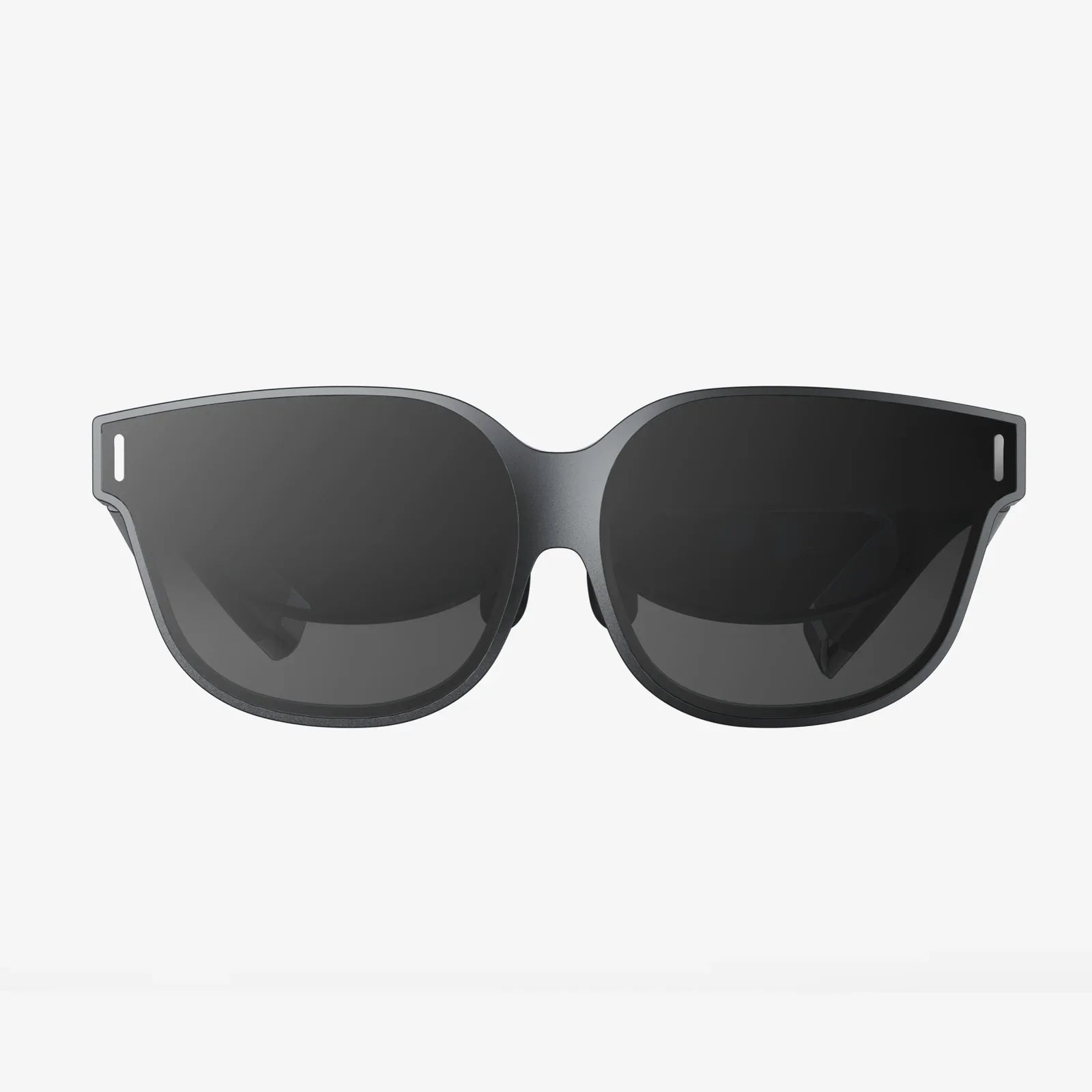
Imagine a world where the line between the digital and the physical doesn't just blur—it vanishes. Where information doesn't live on a screen you have to pull from your pocket, but floats effortlessly in your field of vision, responding to your gaze, your voice, and even your unspoken intentions. This isn't a scene from a science fiction film; it's the imminent future being built today, and it’s being delivered through the latest generation of AI glasses and smart glasses. This new wave of wearable technology is poised to break into the mainstream, promising to fundamentally alter our relationship with technology and with each other.
The Evolution from Novelty to Necessity
The concept of computerized eyewear is not new. For years, the market saw clunky, expensive prototypes that offered more in concept than in practical, daily utility. They were often dismissed as niche gadgets for tech enthusiasts or developers. The failure of early, high-profile attempts cast a long shadow, creating a perception that the technology was ahead of its time. However, beneath the surface, a quiet revolution was brewing. Advances in micro-electronics, battery technology, and most critically, artificial intelligence, have converged to create a perfect storm of innovation.
The key differentiator for the latest models is a shift in philosophy. Earlier iterations tried to be full computers on your face, attempting to replace the smartphone. The new approach is subtler, smarter, and far more powerful. Instead of replacement, the goal is seamless augmentation. The latest AI glasses are designed to complement your phone, your laptop, and your life, not interrupt it. They act as an intelligent interface, a bridge between your digital self and the physical world, powered by ambient computing and on-device AI that understands context and intent.
Demystifying the Core Technologies
So, what exactly makes this new generation tick? The magic lies in the sophisticated fusion of several cutting-edge technologies.
The Power of On-Device AI and Machine Learning
At the heart of every modern pair of smart glasses is a powerful AI engine. Unlike earlier models that relied heavily on cloud connectivity for processing, the latest devices leverage specialized neural processing units (NPUs) and advanced algorithms directly on the glasses themselves. This on-device AI is a game-changer for several reasons:
- Speed and Responsiveness: Tasks like real-time language translation, object identification, and navigation happen instantaneously, with no lag waiting for a cloud server response.
- Privacy and Security: Sensitive data, such as live audio and video feeds from your perspective, can be processed locally without ever being transmitted to a remote server, addressing a major concern of earlier designs.
- Contextual Awareness: The AI continuously learns from your environment and habits. It can proactively surface relevant information—like reminding you of a person's name at a networking event or alerting you to a landmark's history as you walk past it.
Advanced Display Systems: Bringing AR to Life
How digital information is projected onto your view of the real world is one of the most critical engineering challenges. The latest technologies have moved far beyond the dim, low-resolution displays of the past.
- Waveguide and holographic optics: These technologies use microscopic structures on a clear lens to bend light from a tiny projector at the temple of the glasses, painting high-resolution, bright images directly onto your retina. This allows for digital overlays that appear to exist in the real world while keeping the lenses relatively clear and normal-looking.
- MicroLED Projectors: These incredibly small, bright, and efficient light sources are key to creating vivid images while minimizing power consumption and device size.
Sensor Fusion: The Glasses' Senses
To understand the world, these glasses need a suite of sensors that act as their eyes and ears. This typically includes:
- High-resolution cameras for computer vision.
- Depth sensors and LiDAR scanners to map the environment in 3D.
- Inertial Measurement Units (IMUs) for tracking head movement and orientation.
- Multiple microphones for beamforming audio—picking out a specific voice in a noisy room—and for voice assistant control.
- Advanced bone conduction or miniature directional speakers for private audio delivery.
The data from all these sensors is fused together in real-time by the AI to build a rich, contextual understanding of the user's surroundings.
Transformative Applications Across Industries
The true potential of AI glasses is realized not in their specifications, but in their applications. They are poised to become indispensable tools across numerous fields.
Revolutionizing the Workplace
In industrial and field service settings, the impact is profound. A technician repairing a complex piece of machinery can have schematics, step-by-step instructions, and live video support from an expert overlayed directly onto their view of the equipment. Their hands remain free, and their workflow remains uninterrupted. In logistics and warehousing, workers can see optimal picking routes, item locations, and inventory data, dramatically increasing efficiency and reducing errors.
Redefining Accessibility and Navigation
For individuals with visual or auditory impairments, AI glasses can act as a powerful assistive device. They can identify and read aloud text from signs, menus, or documents, describe scenes, recognize faces and expressions, and amplify specific sounds while dampening background noise. For everyone else, navigation can be transformed with arrows and directions painted onto the street in front of you, rather than having to constantly glance down at a phone.
The Future of Social Connection and Content Creation
Imagine attending a conference where the name and professional background of everyone you meet appears subtly next to their face, having been recognized by the AI. Or traveling in a foreign country where spoken language is instantly translated into subtitles in your vision. For content creators, the first-person perspective offered by smart glasses provides an incredibly immersive and hands-free way to capture life, from vlogging to recording tutorials.
Navigating the Inevitable Challenges
Despite the exciting potential, the path to widespread adoption is not without significant hurdles that developers and society must address.
- The "Glassholes" Problem: The social stigma from earlier attempts lingers. The fear of being recorded without consent or of someone being mentally "elsewhere" during a conversation is real. The latest designs are focusing on clear visual indicators—like a light that shows when recording is active—and intuitive controls that keep the user engaged with their environment, not divorced from it.
- Privacy and Data Security: This remains the single biggest concern. The industry must adopt a privacy-first approach with transparent data policies, robust encryption, and a commitment to on-device processing for sensitive tasks to build public trust.
- Battery Life and Form Factor: Balancing all-day battery life with powerful computing in a package that looks and feels like regular eyewear is the ultimate engineering challenge. Progress is rapid, but it remains a key constraint.
The Road Ahead: An Invisible Interface
The trajectory is clear: the technology will continue to shrink, becoming lighter, more powerful, and more energy-efficient. The AI will grow more sophisticated, transitioning from reactive tools to proactive assistants that anticipate needs. The most successful devices will be those that achieve technological invisibility—where the hardware fades into the background and the augmented experience becomes the foreground.
We are moving towards a "glanceable" computing paradigm, where information is presented ambiently and consumed in microseconds, freeing us from the tyranny of the screen. The smartphone will not disappear overnight, but its role will evolve, potentially becoming a powerful brain in our pocket that our glasses connect to, handling the heavier computational loads.
The next decade will be defined by this battle for our eyeline. The companies that can successfully merge cutting-edge AI with elegant, socially-acceptable design and an ironclad commitment to user privacy will not just win a market—they will define the next platform for human-computer interaction. The age of staring down at a slab of glass is ending; the age of looking up and out into a world enhanced by intelligence is beginning.
The future isn't in your hand; it's right before your eyes. The latest AI smart glasses are finally making the promise of augmented reality feel not just possible, but inevitable—transforming every walk down the street, every task at work, and every interaction into a canvas for seamless, intelligent, and profoundly useful digital enhancement. The revolution will be visualized.
Share:
What Are the Risks of Augmented Reality? Navigating the Hidden Dangers of Our Digital Overlay
Augmented Reality Market Projections: A Deep Dive into the Next Digital Frontier