


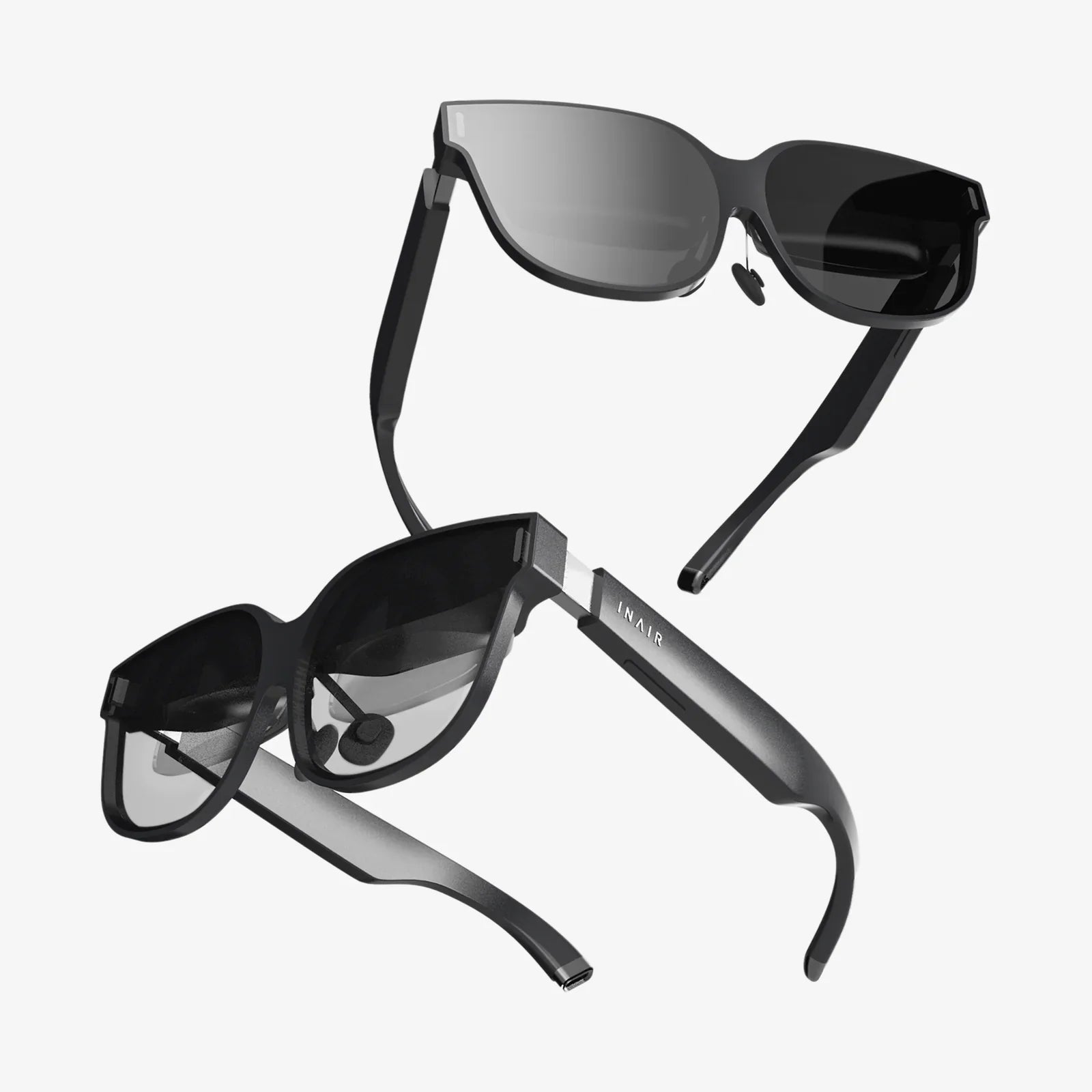
Imagine walking through a bustling city street, a foreign airport, or a library stacked with centuries of knowledge, and having the world’s written word whispered directly into your ear. The signs, the menus, the documents, the headlines—all instantly accessible, not through a screen you have to hold up, but through a pair of sleek, intelligent glasses. This is the promise and the rapidly materializing reality of AI glasses that read text, a technology poised to shatter barriers and redefine human capability. This isn't just a incremental step in wearable tech; it's a fundamental leap toward a more integrated, accessible, and empowered existence for millions, blending the physical and digital worlds in a profoundly personal way.
The Engine Behind the Lenses: How AI Sees and Speaks
At first glance, the concept seems straightforward: a camera sees text, and a computer reads it aloud. But the technological symphony happening within the frame of these sophisticated devices is a marvel of modern engineering and artificial intelligence. The process can be broken down into a seamless, multi-stage pipeline executed in near real-time.
The journey begins with computer vision. A miniature, high-resolution camera embedded in the frame, often discreetly positioned near the bridge or temple, continuously captures the user's field of view. This raw visual data is the first critical input. The AI's first colossal task is to identify which parts of this complex visual stream actually contain text—a process known as text detection. It must distinguish text from background patterns, foliage, faces, and other environmental noise with incredible accuracy.
Once text is detected, the system performs optical character recognition (OCR). This is where the AI interprets the pixelated image of the text and converts it into actual machine-encoded characters. Modern OCR, supercharged by deep learning, is remarkably robust. It can handle a vast array of fonts, sizes, and colors. It can correct for distortions, poor lighting, glare, and even curved surfaces like the label on a soda can.
But the magic doesn't stop there. The raw text output from OCR is often just the beginning. This is where natural language processing (NLP) enters the stage. The AI doesn't just see the characters "W-A-S-H-I-N-G" next to an arrow; it understands the semantic context. It can parse grammar, infer meaning, and determine the most relevant information to relay. This layer of intelligence allows the system to ignore incidental text (like a copyright date on a poster) and focus on the primary message (the movie title and showtime).
Finally, the processed text is converted into clear, synthetic speech through a text-to-speech (TTS) engine. Advanced TTS systems now produce voices that are remarkably natural, with appropriate intonation, pacing, and even emotional nuance. This audio is then delivered to the user through a discreet bone-conduction speaker that rests near the ear, allowing ambient environmental sounds to still be heard for safety, or through tiny, directional speakers that create a private listening experience.
All this complex computation—capturing, detecting, recognizing, processing, and speaking—happens in a matter of milliseconds, powered by a combination of on-device processors and cloud-based AI, creating an experience that feels intuitive and instantaneous.
A New Dawn for Accessibility: Restoring Independence
The most immediate and profound impact of AI reading glasses is on the lives of the blind and visually impaired community. For this audience, the technology is not a convenience; it is a powerful tool for independence, safety, and social inclusion.
- Navigating the World Confidently: Imagine the challenge of navigating an unfamiliar building. With AI glasses, users can instantly identify room numbers, restroom signs, elevator buttons, and exit placards. This restores a level of autonomy in public spaces that was previously difficult to achieve without human assistance.
- Everyday Product Identification: Something as simple as distinguishing a can of beans from a can of soup becomes effortless. Pointing the glasses at a pantry shelf allows a user to identify every item, read cooking instructions, and check expiration dates. This extends to personal care products, medications, and clothing labels.
- Accessing Printed Media: The world of printed text—from mail and bills to books, magazines, and restaurant menus—is instantly unlocked. A user can sit in any café and hear the menu read to them, preserving their privacy and dignity. They can sort their own mail, read a bedtime story to a child, or enjoy a newspaper without needing a dedicated braille version or a human reader.
- Digital Screen Reading: While screen readers for computers and phones are mature technologies, these glasses extend that capability to any screen in the environment: a thermostat display, a microwave panel, a colleague's computer monitor during a meeting, or the departure board at a train station.
This technology represents a significant leap beyond traditional assistive tools like magnifiers or canes. It provides dynamic, contextual information about the environment, effectively acting as a visual prosthesis that describes the text-based layer of the world.
Beyond Disability: The Broader Applications for Everyone
While the accessibility benefits are paramount, the utility of AI text-reading glasses extends far beyond the visually impaired community. They are poised to become a powerful productivity and convenience tool for a wide range of users and professions.
- Language Translation on the Fly: For travelers and global businesspeople, these glasses can act as a real-time interpreter. Point them at a street sign, menu, or document in a foreign language, and the AI can not only read the text but translate it instantly into the user's native tongue and speak it aloud. This breaks down language barriers in a profoundly intuitive way.
- Enhanced Learning and Productivity: Students could benefit immensely. Imagine walking through a museum and having exhibit descriptions read aloud, allowing you to absorb information while keeping your eyes on the artifact. Researchers could quickly scan and digest large volumes of physical books and documents in a library without ever taking notes. A technician could have complex repair manual instructions read to them while their hands are busy working on equipment.
- Professional and Industrial Use: In warehouse settings, workers locating items could have labels and inventory codes read to them, streamlining logistics. Quality control inspectors could verify tiny printed information on components hands-free. Healthcare professionals could quickly confirm medication labels and dosages, adding a layer of safety checks.
- Hands-Free Information Access: For anyone whose hands are occupied—a mechanic under a car, a chef in a busy kitchen, a parent holding a child—the ability to access written information without stopping to pull out a phone is a significant efficiency boost.
In this context, the glasses evolve from an assistive device into a general-purpose cognitive augment, enhancing human perception and freeing up cognitive load for more critical tasks.
The Flip Side: Ethical Considerations and Societal Challenges
As with any powerful technology, especially one that involves continuous environmental capture and audio recording, AI reading glasses come with a host of ethical dilemmas and societal implications that must be carefully navigated.
- Privacy and Surveillance: The most pressing concern is privacy. A device with a always-on camera, even one focused on text, inherently raises the specter of surveillance. How is the visual data processed? Is it stored on the device, in the cloud, or by the company? Could it be used to inadvertently capture and record private information of people nearby, like their phone screens or confidential documents on a desk? Robust data encryption, strict on-device processing policies, and clear, transparent user controls are non-negotiable.
- Social Etiquette and Dependency: The social norms around using such devices are yet to be established. Is it considered rude to wear them during a conversation? Will over-reliance on the technology lead to a degradation of innate skills like reading or navigation? Finding a balance between augmentation and addiction will be a personal and societal challenge.
- The Digital Divide: As a premium piece of technology, cost is a significant barrier. There is a risk that such powerful augmentative tools could become available only to the wealthy, creating a new kind of divide between those who can afford enhanced perception and those who cannot. Ensuring affordability and insurance coverage for those who need it for medical reasons is crucial.
- Accuracy and Reliability: A misinterpreted word by the OCR or a mispronunciation by the TTS could have minor or serious consequences. Misreading a medication dosage or a critical warning sign could be dangerous. The technology must achieve an exceptionally high degree of accuracy and reliability, especially for critical applications.
Addressing these challenges requires a collaborative effort from technologists, policymakers, ethicists, and the public to establish frameworks that maximize benefit while minimizing harm.
The Future is Clear: What's Next for AI Vision
The current generation of text-reading AI glasses is just the beginning. The trajectory of this technology points toward even deeper integration and intelligence. We can anticipate glasses that don't just read text but describe entire scenes, identifying objects, people (with permission), and actions. They could offer contextual information—imagine looking at a historical monument and hearing a summary of its significance, or looking at a complex graph in a business meeting and having the key trends and data points summarized for you.
Advancements in battery technology, processor miniaturization, and AI model efficiency will make the devices lighter, less obtrusive, and capable of all-day use. The line between a specialized medical or productivity device and a mainstream consumer product will continue to blur. The ultimate goal is a seamless, ambient, and invisible interface that provides information exactly when and where it's needed, empowering users without overwhelming them.
The development of AI glasses that read text is a watershed moment, demonstrating a practical and powerful application of artificial intelligence that directly and positively impacts human lives. It represents a convergence of multiple advanced technologies into a form factor that is personal, portable, and profoundly useful. As the technology matures and becomes more ubiquitous, it has the potential to create a world where information is not trapped on pages or behind screens, but is freely available to all, regardless of ability, creating a more informed, independent, and inclusive global community.
The quiet hum of progress is no longer just a metaphor; it's the sound of a pair of glasses reading the world to someone who needs to hear it, and in doing so, they are building a bridge to a future where our environment is not a barrier to be overcome, but a conversation to be had. The next time you struggle to read a faded label or squint at a tiny font, remember, the solution is already taking shape, not in your hand, but right before your eyes.
Share:
Japan Augmented Reality Market: A Cultural and Technological Renaissance
Augmented Reality Applications for PC: A Deep Dive into the Digital Overlay Revolution