


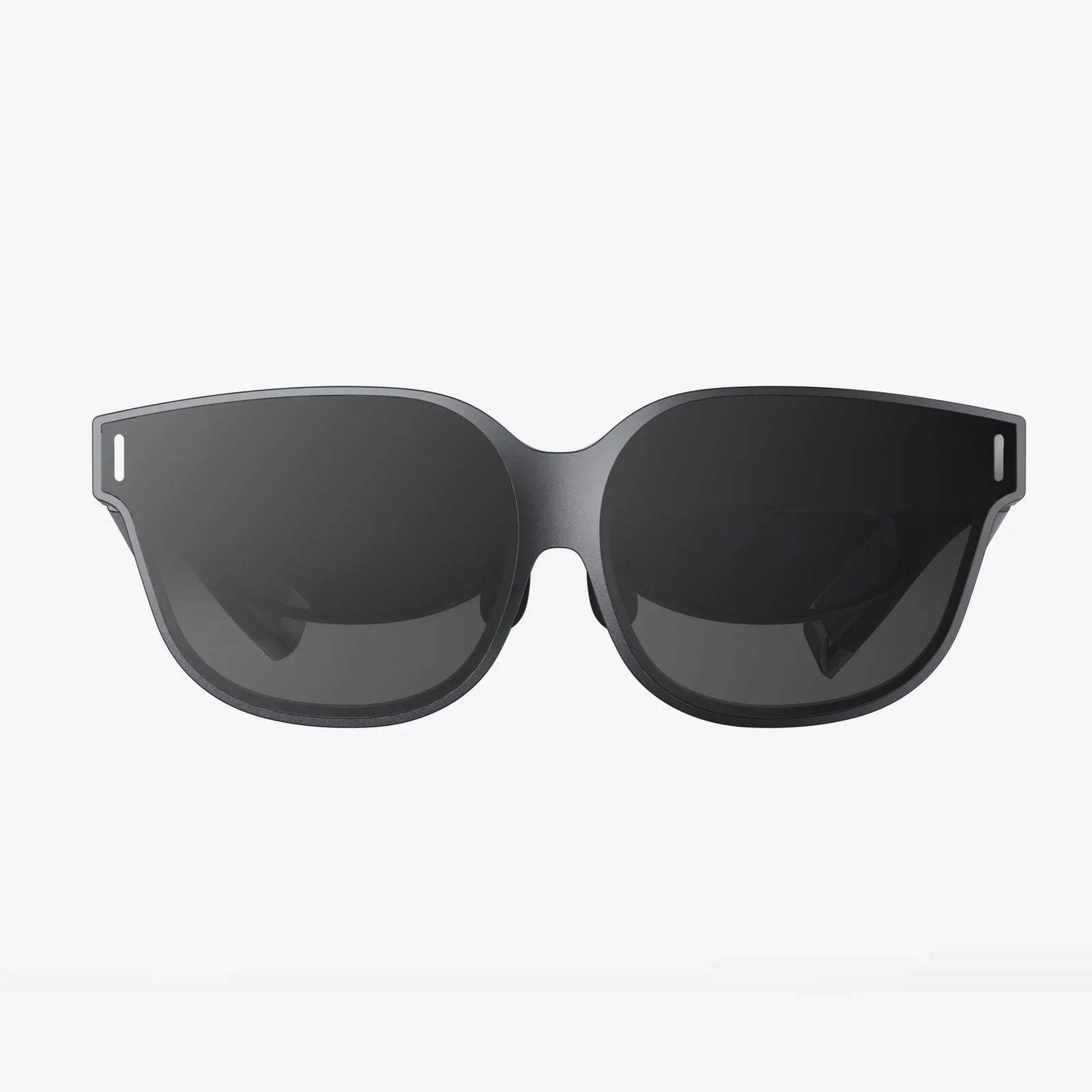
- by wangfred
AI Glasses Try On: The Future of Eyewear Shopping is Here and It's Virtual
- by wangfred
Imagine finding the perfect pair of glasses without ever stepping into a store, without the awkward pressure of a salesperson, and without the frustrating guesswork. This is no longer a futuristic fantasy—it’s the reality offered by AI glasses try-on technology, a revolutionary leap that is fundamentally reshaping how we shop for eyewear. This digital transformation merges the precision of artificial intelligence with the immersive power of augmented reality, creating a seamless bridge between the online and offline shopping experience. It’s a development that promises not just convenience, but a new era of confidence and personalization for consumers worldwide.
At its core, AI glasses try-on technology is a sophisticated dance between two powerful digital disciplines: augmented reality (AR) and machine learning (ML). While they work in concert, their roles are distinct and crucial.
Augmented reality acts as the delivery mechanism, the visual engine that overlays digital content onto the real world. Using the camera on a smartphone, tablet, or computer, AR software maps the user's face, identifying key landmarks like the corners of the eyes, the bridge of the nose, the tip of the ears, and the contour of the jawline. This creates a precise 3D mesh of the user’s face, a digital double that serves as the foundation. The selected pair of virtual glasses is then rendered onto this mesh in real-time, adjusting for perspective, lighting, and even the subtle movements of the head. The result is a shockingly realistic preview that allows you to tilt your head, turn from side to side, and see exactly how the frames look from every angle.
Artificial intelligence is the brain behind this operation. Machine learning algorithms, trained on vast datasets of facial images, are what enable the software to accurately detect and track facial features with remarkable precision. This is far more complex than simply placing a static image of glasses on a picture of a face. AI accounts for occlusion—understanding when an arm of the glasses should disappear behind an ear. It adjusts the scale and fit based on the unique proportions of each individual's face, ensuring that a pair of oversized frames looks appropriately large on one person and not on another. More advanced systems even use AI to recommend frames based on facial shape, skin tone, and personal style preferences, analyzing your features to curate a selection of options most likely to flatter you.
Virtual try-ons are not an entirely new concept. Earlier iterations, however, were often clunky and unconvincing, leading to consumer skepticism. These primitive versions typically relied on static photos. A user would upload a forward-facing picture, and the software would digitally paste an image of the frames onto it. The results were frequently comical: glasses that floated eerily in front of the face, failed to align with the eyes, ignored perspective, and bore no resemblance to how they would actually fit. This lack of realism led to high return rates and a general reluctance to purchase eyewear online.
The integration of modern AI and real-time AR has obliterated these shortcomings. The transition from a 2D photo to a live 3D model is the critical difference. Today’s technology accounts for depth and spatial awareness, ensuring the glasses sit naturally on the nose and curve around the head. The rendering quality of the frames themselves has also improved dramatically, with accurate representations of materials—from the sheen of acetate to the gleam of metal—and translucency for tinted lenses. This leap in fidelity is what builds trust; when the virtual experience closely mirrors the physical one, consumers feel empowered to make a purchase decision.
The advantages of AI try-on technology extend far beyond the obvious perk of shopping in your pajamas. It is enriching the entire consumer journey in profound ways.
The most immediate benefit is convenience. Consumers are no longer constrained by store hours, geographic location, or inventory limitations. You can try on dozens, even hundreds, of frames from multiple collections in a single sitting—a task that would be physically exhausting and incredibly time-consuming in a traditional store. This "endless aisle" phenomenon means access to a vastly wider selection than any physical boutique could possibly hold.
This technology moves away from a one-size-fits-all approach to a truly personalized experience. As you try on different frames, the AI can learn your preferences. It can note which styles you linger on, which ones you immediately reject, and use that data to refine its future recommendations. Furthermore, by analyzing your facial geometry, it can automatically suggest frames that complement your unique features, introducing you to styles you might never have considered on your own. This guided discovery is like having a personal stylist who knows your face intimately.
Purchasing eyewear online has traditionally been a gamble. AI try-on technology significantly de-risks this decision. The ability to see a realistic simulation of how the glasses will look on your own face dramatically increases confidence in the purchase. This leads to higher customer satisfaction, fewer returns, and stronger brand loyalty. The psychological barrier of the unknown is removed, replaced by a clear and convincing preview of the final product.
For individuals with mobility issues, social anxieties, or those living in remote areas with limited access to optical stores, this technology is transformative. It democratizes access to fashion and vision care, ensuring everyone has the opportunity to explore and find eyewear they love without facing physical or social hurdles.
Despite its impressive capabilities, AI glasses try-on is not without its challenges. Technical limitations still exist. The accuracy of the experience is highly dependent on hardware; a low-resolution camera or poor lighting can degrade the quality of the facial mapping. While AI is excellent, it can sometimes struggle with extreme facial expressions, very long hair that obscures features, or certain accessories like headscarves or large hats.
A more significant concern lies in the realm of privacy and data security. This technology requires processing highly sensitive biometric data—the precise contours of your face. Responsible companies must be transparent about how this data is used, stored, and protected. Users deserve clear opt-in policies and guarantees that their unique facial data is not being harvested for other purposes, such as unauthorized surveillance or building out facial recognition databases. Robust cybersecurity measures are non-negotiable to prevent this personal information from being breached.
Finally, the virtual experience cannot yet perfectly replicate the physical sensation of wear. Factors like the weight of the frames on the nose, the grip of the arms on the temples, and the exact fit behind the ears are still aspects that require physical interaction. However, detailed product descriptions, accurate measurements (like lens width, bridge width, and temple length), and generous return policies help mitigate this final hurdle.
The evolution of this technology is already moving beyond simple frame visualization. The future points toward a deeply integrated ecosystem for eyewear and eye care. We are beginning to see the convergence of try-on tech with vision care applications. Imagine using your device’s camera not just to try on frames, but to conduct a preliminary eye exam or measure your pupillary distance (PD) with AI-guided precision from the comfort of your home.
Furthermore, the concept of the "digital wardrobe" is emerging. As our lives become increasingly hybrid, with time spent in virtual meetings and digital spaces, your virtual eyewear could become a key part of your online avatar and identity. The same pair of glasses you purchase for the physical world could be rendered as a digital asset for use in virtual reality environments and metaverse platforms.
For retailers, this technology provides an invaluable trove of analytics. Data on which frames are tried on most frequently, which are purchased after being tried, and how different demographics interact with styles provides unprecedented insight into consumer behavior, informing everything from inventory management to future frame design.
The integration of AI glasses try-on is not a fleeting trend; it is the new bedrock of the eyewear industry. It represents a perfect synergy of human need and technological innovation, solving real-world problems with elegant digital solutions. It has broken down the barriers between the digital and physical realms, creating a shopping experience that is more informed, more personal, and more empowering than ever before.
Gone are the days of squinting at a small product image and hoping for the best. The power to discover your perfect look is now literally at your fingertips, offering a crystal-clear vision of your future style before you ever click 'buy.' This is more than a feature—it's the new standard, transforming hesitation into certainty and reshaping not just how we see glasses, but how we see ourselves.
Share:
How Virtual Reality Uses Data: The Invisible Engine Powering Immersive Worlds
Augmented Reality Software: The Invisible Layer Reshaping Our World