


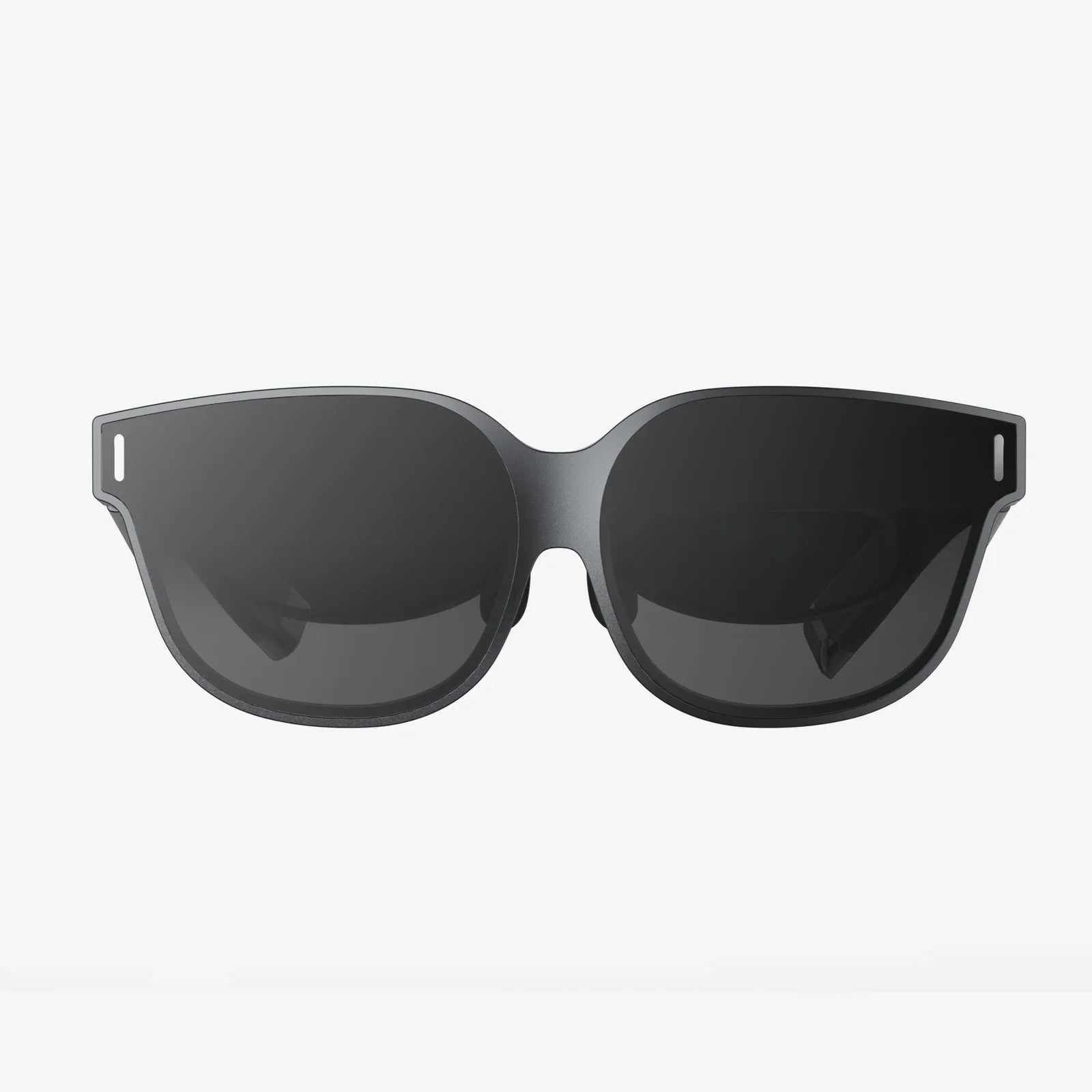
- by wangfred
AI Glasses What Can They Do: A Deep Dive Into The Future On Your Face
- by wangfred
Imagine a world where information flows seamlessly into your field of vision, where language barriers dissolve before your eyes, and where your surroundings become an interactive, intelligent canvas. This is not a distant science fiction fantasy; it is the emerging reality being built today, one pair of AI glasses at a time. These sophisticated wearables are rapidly evolving from clunky prototypes into sleek, powerful companions, promising to fundamentally alter our perception of reality and redefine our relationship with technology. The question on everyone's mind is no longer if they will arrive, but what incredible feats they are truly capable of achieving right now.
To understand what AI glasses can do, one must first appreciate the intricate symphony of hardware and software working in concert. These are not merely screens attached to frames. At their heart lies a sophisticated array of components: micro-displays that project images directly onto specially designed lenses or into the user's retina, high-resolution cameras that act as digital eyes, an array of microphones for capturing audio, and a suite of sensors including accelerometers, gyroscopes, and magnetometers for precise spatial awareness. This sensory data is the raw fuel. The real magic, however, happens with the onboard or cloud-connected artificial intelligence. This AI engine is a powerhouse of machine learning, computer vision, and natural language processing algorithms. It is this brain that interprets the visual and auditory world, understands context, retrieves relevant information, and generates helpful responses in real-time, overlaying a layer of digital intelligence onto our physical reality.
One of the most immediately impactful and awe-inspiring applications of this technology is real-time translation. Imagine walking through a foreign market, looking at a menu, or conversing with someone from another country. AI glasses equipped with optical character recognition (OCR) can scan printed text—a street sign, a document, a ingredient list—and instantly overlay the translation directly onto your view of the text. Simultaneously, advanced speech-to-text and text-to-speech algorithms can transcribe a conversation and display subtitles for what the other person is saying, or even speak translated audio into an earpiece. This effectively creates a world without language barriers, fostering deeper cultural exchange, streamlining international business, and empowering travelers and immigrants alike. It is a profound step toward a truly connected global village.
For individuals with visual impairments, AI glasses represent a monumental leap in accessibility and independence. Through detailed auditory descriptions generated by AI, these glasses can narrate the world. They can identify and read aloud text from any source—books, screens, product labels, or mail. They can recognize and name faces of friends and family, describe scenes (“a busy street corner with a red car turning left”), identify currency denominations, and even detect obstacles and changes in elevation on a path. This technology goes beyond simple magnification; it provides a rich, contextual understanding of the environment, offering a new level of autonomy and enriching daily experiences for millions of people.
For every user, AI glasses serve as an unparalleled contextual information hub. Point your gaze at a restaurant, and reviews, ratings, and the day's specials might pop up. Look at a landmark, and a brief history or architectural details materialize. This concept, often called augmented reality browsing, turns the entire world into a hyperlink. Navigation is transformed from looking down at a phone screen to seeing digital arrows and pathways overlaid onto the actual street, guiding you turn-by-turn with intuitive visual cues. In professional settings, a technician could look at a complex piece of machinery and see diagnostic data, repair instructions, or a live feed from a remote expert annotating their field of view. This seamless fusion of data and reality dramatically enhances efficiency, learning, and situational awareness.
The built-in cameras in AI glasses enable a new paradigm for capturing moments: first-person perspective, hands-free, and always available. This allows for immersive photography and videography that captures life exactly as you experience it, without the barrier of a device held in front of your face. Beyond simple recording, the AI can help curate these memories, automatically creating highlight reels, identifying the best shots, or even transcribing and summarizing meetings and conversations. It acts as a personal memory aid, allowing you to be fully present in a moment while knowing you can effortlessly recall the details later.
The potential for entertainment is vast. AI glasses can project a massive, private virtual screen for watching movies, playing games, or browsing the web, all while sitting on a plane or a couch. Social interactions could be revolutionized through immersive video calls where participants appear as avatars or holograms in your environment, creating a powerful sense of presence and shared space. Gamers could experience tabletop games come to life on their actual coffee table or engage in location-based adventures that blend the real world with digital challenges and characters.
With the integration of biometric sensors, AI glasses could continuously and unobtrusively monitor key health metrics. Subtle sensors could track pupil dilation, blink rate, and eye movement to gauge focus and cognitive load. Others might measure UV exposure to warn of sunburn risk. While not a replacement for medical devices, this constant passive monitoring could provide valuable insights into sleep patterns, stress levels, and overall wellness trends, offering personalized recommendations to improve your health based on real-world data collected throughout your day.
The power of AI glasses is undeniably accompanied by significant ethical and societal questions. The ability to record audio and video discreetly raises profound privacy concerns for both wearers and non-wearers. The constant collection of incredibly personal visual and auditory data necessitates robust security measures to prevent hacking and misuse. Societies will need to establish new norms and potentially new laws regarding recording in public and private spaces. Furthermore, the potential for distraction and the further blurring of lines between the digital and physical worlds present challenges for social interaction and mental presence. Addressing these issues transparently and proactively is not just advisable; it is critical for the responsible and accepted adoption of this transformative technology.
The current generation of AI glasses is merely the preface to a much longer story. Future iterations will feature even more miniaturized components, longer battery life, and more powerful, efficient AI models capable of deeper understanding and anticipation. We can expect advancements in brain-computer interfaces that allow for control through thought or subtle gestures. The line between the technology and the human user will continue to fade, moving from a wearable device to a truly integrated cognitive extension. This evolution will unlock applications we can scarcely imagine today, from revolutionizing education and complex design to enabling new forms of art and storytelling.
The true potential of AI glasses lies not in replacing reality, but in augmenting it—enhancing human capability, deepening understanding, and forging connections in ways previously impossible. They promise to make us more knowledgeable, more efficient, and more connected to a globalized world. The journey ahead is as much about perfecting the technology as it is about thoughtfully shaping the world it will help create. The future is not something we simply enter; it is something we build, and it is coming into focus right before our eyes.
Share:
AR VR Glasses Price: A Comprehensive Guide to Cost, Value, and the Future
How to Create an Augmented Reality Image: A Comprehensive Guide for Beginners and Pros