


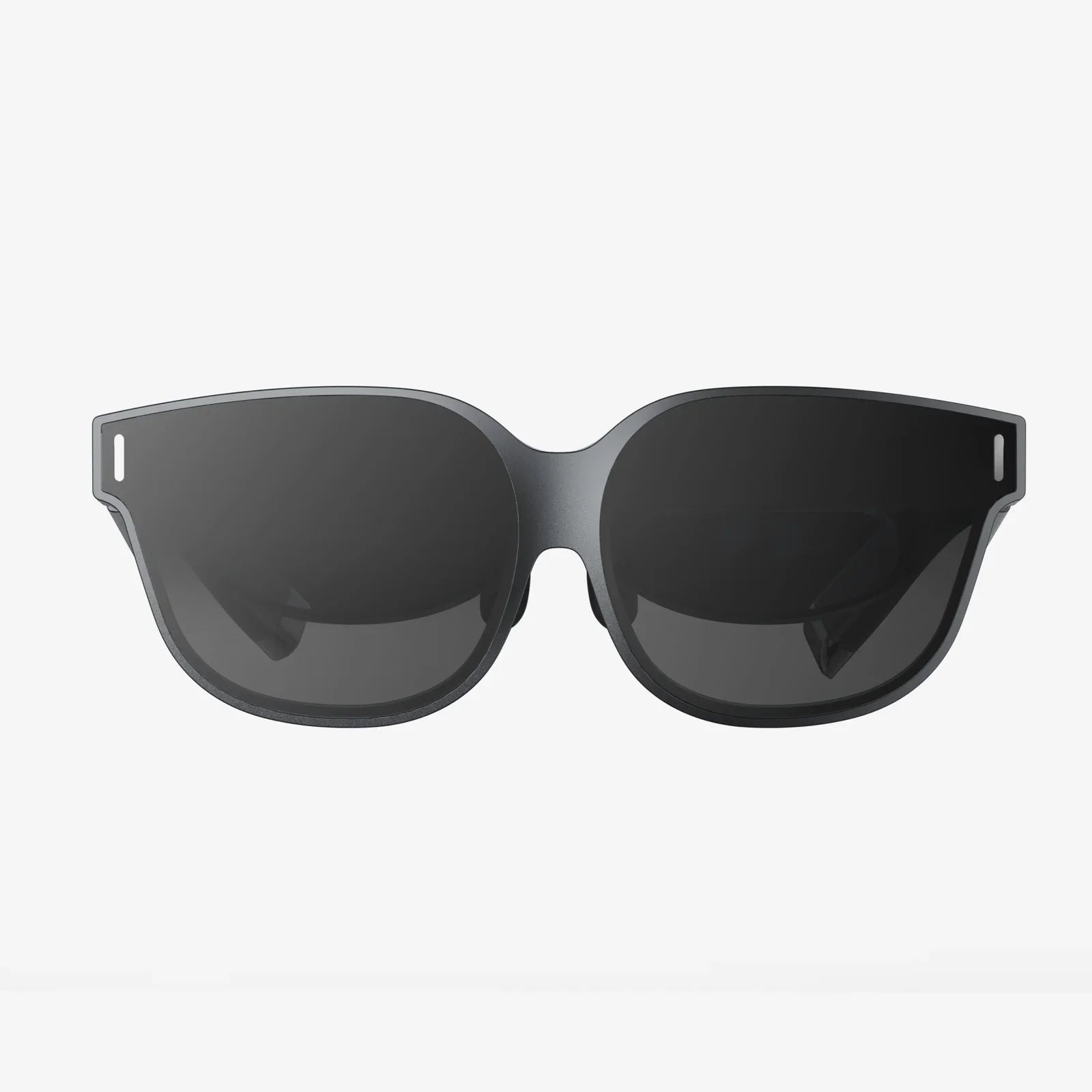
- by wangfred
AI Glasses What Do They Do: A Deep Dive Into The Future On Your Face
- by wangfred
Imagine a world where information doesn't just live on a screen in your pocket but is seamlessly woven into the very fabric of your perception. A world where language barriers dissolve in real-time, where you can instantly identify constellations in the night sky, receive subtle navigational cues overlaid onto the street before you, and access a wealth of knowledge about anything you lay your eyes on, all without ever reaching for your phone. This is not a distant science fiction fantasy; it is the imminent reality being built today, and it arrives in the form of a sleek, increasingly powerful pair of AI glasses. The question on everyone's mind is simple yet profound: what do they actually do?
At their essence, AI glasses are a wearable computer for your face. They are a sophisticated convergence of hardware and software designed to augment your reality by processing the world visually and auditorily through on-board artificial intelligence. Unlike their predecessor, smart glasses, which primarily focused on displaying notifications and basic data, AI glasses are defined by their proactive, context-aware intelligence. They don't just show data; they understand your environment and your intentions within it to deliver relevant, actionable insights.
The magic lies in their integrated suite of technologies. Typically, they incorporate:
So, what does this technological symphony enable? The applications are vast and continually expanding, but they can be categorized into several core functionalities.
One of the most immediately impactful features is real-time language translation. Imagine traveling abroad and looking at a restaurant menu, a street sign, or a train schedule in a foreign language. With AI glasses, the text can be instantly translated and overlaid in your native language directly onto your lens. This extends to spoken conversation as well. As someone speaks to you in another language, you can see subtitles of their translated speech in real-time, and you can speak back, with the glasses translating your words for the other person to hear. This functionality isn't just for travel; it can revolutionize international business, diplomacy, and accessibility for deaf and hard-of-hearing individuals by providing live transcription of conversations.
This is perhaps the closest thing to having a superpower. By simply looking at an object, landmark, or person (with privacy safeguards), the AI can identify it and provide a wealth of contextual information. Look at a famous painting in a museum, and see a biography of the artist and details about its creation appear next to it. Look at a complex piece of machinery, and see an annotated diagram explaining its parts. Look at a plant in your garden, and instantly get its species and care instructions. This "visual search" capability turns the entire world into a hyperlink, satisfying curiosity and providing practical knowledge on demand.
While smartphone maps require you to look down at a small screen, AI glasses project navigation directly into your world. Arrows, pathways, and points of interest can be painted onto the street in front of you, guiding you turn-by-turn while keeping your head up and your awareness on your surroundings. This is invaluable for walking in a new city, navigating a large airport, or even finding a specific product on a crowded supermarket shelf. It offers a more intuitive, immersive, and safer way to navigate.
The potential for AI glasses to serve as powerful assistive devices is enormous. For individuals with low vision, the glasses can identify obstacles, read text aloud from documents or signs, describe scenes, and recognize faces, providing greater independence. For those with memory or cognitive conditions, they could offer subtle reminders, identify objects to aid in daily tasks, or help recall names and connections.
In professional settings, AI glasses can be a game-changer. Field technicians can have schematics and instructions overlaid onto the equipment they are repairing, all while keeping their hands free. Surgeons could access patient data and imaging during procedures. Warehouse workers can see inventory information and picking instructions without consulting a handheld device. The ability to access and interact with digital information without interrupting physical workflow dramatically boosts efficiency and safety.
The user experience is designed to be seamless, but behind the scenes, a complex process is underway. It begins with data acquisition: the cameras and microphones capture the raw sights and sounds of the environment. This data is then processed. Initially, much of this heavy lifting was done by sending data to powerful cloud servers for analysis. However, the trend is moving fiercely toward on-device AI processing.
Dedicated neural processing units (NPUs) embedded within the glasses themselves can now perform tasks like object recognition, translation, and audio processing without a constant internet connection. This is crucial for several reasons: it drastically reduces latency (making interactions feel instantaneous), conserves battery life by minimizing data transmission, and, most importantly, enhances user privacy by keeping sensitive visual and auditory data on the device. The results of this analysis are then rendered onto the display, perfectly aligned with the user's field of view to create a cohesive augmented experience.
Such a powerful technology does not arrive without significant questions and potential pitfalls. The very feature that makes AI glasses so compelling—their ability to continuously see and hear the world from the user's perspective—also makes them a focal point for ethical concerns.
The current generation of AI glasses is merely the foundation. The future trajectory points toward devices that are lighter, more powerful, and more deeply integrated into our lives. We can expect advancements in battery technology, display clarity, and AI model efficiency. The user interface will evolve beyond voice commands to include more subtle interactions like gesture control and even neural input via non-invasive sensors.
The ultimate goal is a device that feels less like a tool and more like a natural extension of our own cognition—an always-available, intelligent assistant that enhances our abilities without intruding on our humanity. They have the potential to democratize information, break down barriers of communication and ability, and transform how we work, learn, and explore our world.
The true power of AI glasses lies not in replacing reality, but in enriching it, offering a layer of understanding and capability that allows us to engage with our environment more deeply, intelligently, and meaningfully than ever before. The lens through which we see the world is about to get a lot smarter, and it’s inviting us to take a look.