


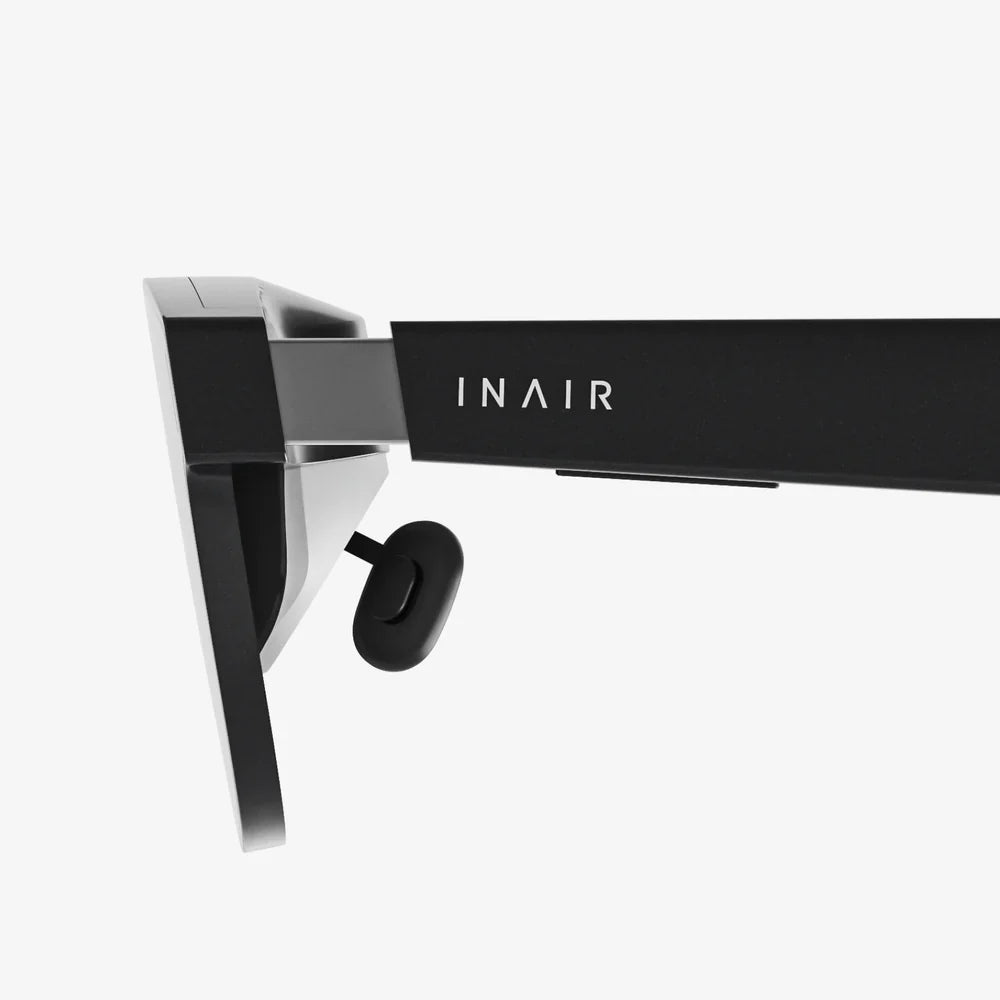
Imagine a world where your most mundane daily tasks are enhanced by a digital layer of intelligence, where your field of vision becomes a canvas for information, creativity, and connection. This is not a distant science fiction fantasy; it is the imminent reality being crafted by the rapid evolution of AI glasses with camera technology. The integration of sophisticated artificial intelligence with advanced, interchangeable optical systems is poised to redefine our relationship with technology, moving it from our pockets and onto our faces, seamlessly blending the physical and digital worlds. This convergence promises to be one of the most transformative technological shifts of the coming decade, offering a glimpse into a future where our eyewear is not just for seeing, but for understanding.
The Architectural Marvel: More Than Meets the Eye
At first glance, a pair of these advanced spectacles might appear deceptively simple. However, beneath a sleek and socially acceptable design lies a dense ecosystem of cutting-edge hardware. The core of this system is a sophisticated array of sensors, with the camera module being the most critical. Unlike a single, static smartphone camera, the true power of these devices is unlocked through the use of different lenses. This modular approach to vision is what separates a simple heads-up display from a truly intelligent visual assistant.
The hardware suite typically includes:
- Ultra-Wide-Angle Lenses: Designed to capture a expansive field of view, these lenses are perfect for immersive content creation, allowing the wearer to record their entire perspective without missing a moment. They are also crucial for environmental mapping, helping the AI understand the broader context of a room or outdoor space.
- Telephoto Lenses: For moments that demand detail from a distance, telephoto options provide optical zoom capabilities. This is invaluable for professionals needing to inspect hard-to-reach infrastructure, travelers admiring architectural details, or even for automatically translating text on a faraway sign.
- Macro Lenses: These specialized lenses unlock a world of minute details invisible to the naked eye. Imagine a technician identifying a nearly invisible hairline crack in a material, a botanist examining the vein structure of a leaf, or a jeweler inspecting the clarity of a gemstone—all hands-free and in real-time.
- Standard and Low-Light Sensors: A high-quality primary sensor, often coupled with computational photography software, handles everyday photography and videography. More advanced models incorporate dedicated low-light or night vision sensors, using larger pixels and advanced software processing to see clearly in near darkness, offering capabilities for security, wildlife observation, or simply navigating a dark campsite.
This optical flexibility is paired with a silent orchestra of supporting technology: inertial measurement units (IMUs) for tracking head movement, microphones for voice commands and audio capture, bone conduction speakers for private audio feedback, and a powerful on-board processor that acts as the brain of the entire operation. All of this must be powered by a battery efficient enough for all-day wear, representing a monumental feat of miniaturization and engineering.
The Invisible Engine: Artificial Intelligence and Machine Learning
Hardware is merely the vessel; artificial intelligence is the soul. The raw visual data captured by the cameras is meaningless without sophisticated AI to interpret, analyze, and act upon it. This is where the magic happens. Machine learning models, often running both on-device for speed and privacy and in the cloud for immense processing power, turn pixels into understanding.
The AI capabilities are vast and varied, including:
- Real-Time Translation: Look at a menu, sign, or document in a foreign language, and the AI will instantly overlay the translation onto your field of view. This breaks down language barriers in a fundamentally more intuitive way than holding up a phone.
- Object and Scene Recognition: The glasses can identify products on a shelf, providing price comparisons and reviews. They can recognize landmarks and offer historical context during a tour. For a mechanic, they could highlight a specific engine part and display the repair manual. For a chef, they could identify ingredients and suggest recipes.
- Visual Search and Augmented Memory: Cannot recall a person's name at a networking event? The AI, with appropriate privacy permissions and user consent, can recognize faces and discreetly display their name and where you met. Lost your keys? The glasses could remember the last visual location where they were seen.
- Accessibility Enhancements: For the visually impaired, this technology is revolutionary. AI can describe scenes, read text aloud, identify currency denominations, recognize faces, and warn of obstacles, granting a new level of independence and spatial awareness.
- Contextual Information Overlay: The classic augmented reality promise: walking through a city and seeing navigation arrows painted onto the sidewalk, restaurant ratings floating above doorways, or the history of a building displayed next to it—all information that is contextually relevant to your location and gaze.
A Spectrum of Applications: Transforming Industries and Hobbies
The potential applications for AI glasses with swappable lenses are as diverse as human endeavor itself. They are not a one-trick pony but a versatile platform that can be customized for countless professional and personal uses.
Professional and Industrial Use Cases:
- Healthcare: Surgeons could stream their perspective for remote mentoring or receive vital patient statistics and imaging data in their periphery during procedures. EMTs could have hands-free access to medical protocols and receive guided assistance for complex triage situations.
- Field Service & Manufacturing: Technicians repairing complex machinery can have schematic diagrams and step-by-step instructions overlaid directly onto the equipment they are fixing. Remote experts can see exactly what the on-site worker sees and annotate their view with arrows and notes to guide them, drastically reducing downtime and errors.
- Design and Architecture: Architects and interior designers can project 3D models of their designs onto a physical empty space, allowing clients to "walk through" a building before a single brick is laid. This immersive presentation is far more powerful than a screen-based rendering.
Creative and Consumer Applications:
- Content Creation: Vloggers and journalists can capture a true first-person perspective (POV) with incredibly high quality, choosing the perfect lens for the shot—wide-angle for action sports, telephoto for capturing candid moments, macro for detail shots—all without ever lifting a traditional camera.
- Fitness and Coaching: A personal trainer could watch a client's form in real-time from across the world and provide corrective feedback. Golfers or tennis players could record their swing and have the AI analyze their biomechanics to suggest improvements.
- Travel and Exploration: Tourists become their own guided tour, with historical facts and stories triggered by their gaze. Hikers can identify flora and fauna, track their path, and get information about terrain and weather conditions overlayed onto the trail ahead.
Navigating the Minefield: Privacy, Security, and Social Acceptance
This powerful technology does not arrive without significant challenges, the most profound of which is privacy. The concept of a wearable device that can continuously record audio and video raises legitimate and serious concerns about a panopticon society. The potential for surreptitious recording in private spaces, unauthorized facial recognition, and the constant harvesting of biometric data is a dystopian possibility that must be addressed head-on.
Manufacturers must prioritize privacy by design. This includes clear, physical indicators like LED lights that show when recording is active, ensuring users cannot be secretly recorded. It requires robust on-device processing so that sensitive data never needs to leave the glasses, and strict, transparent data policies that give users complete control over their information. Legislation will need to evolve to create clear rules of the road, establishing digital boundaries and norms for this new form of interaction.
Beyond privacy, social acceptance is the other major hurdle. Google Glass's initial failure was largely due to the "Glasshole" stigma—the social unease caused by someone who could be recording others without their knowledge. For this technology to succeed, it must be designed to be unobtrusive, fashionable, and, most importantly, used in a respectful and consensual manner. The industry must learn from past mistakes and focus on building trust before building features.
The Road Ahead: A Glimpse into the Next Decade
The current generation of AI glasses is merely the prototype, the crude beginning of a much longer journey. The future will see these devices become lighter, more powerful, and more seamlessly integrated into our lives. We can expect advancements like holographic waveguides that project images directly onto the retina, creating brighter and more vivid AR experiences without bulky displays. Battery technology will improve, perhaps leveraging solar or kinetic energy harvesting to enable true all-day, untethered use.
The AI itself will become more anticipatory and contextual, moving from simple recognition to deep understanding and prediction. Your glasses will not just tell you what something is, but what you might want to do with that information. The line between the device and the user will blur, creating a true cognitive extension—a partnership between human intuition and machine intelligence.
The ultimate destination is a shift from smartphones to what experts call "spatial computing." Instead of looking down at a small screen, we will interact with a computing environment layered over our world, controlled by our gaze, voice, and gestures. AI glasses with advanced, multi-lens camera systems are the key that will unlock this door, transforming how we work, learn, create, and connect with each other and the world around us. The future is not in your hand; it's on your face, and it's looking back at the world with a smarter, more perceptive eye.
We stand at the precipice of a new sensory paradigm, where our vision is augmented not just with light, but with knowledge. The humble pair of glasses, a tool centuries old, is being reborn as the most personal computer you will ever own. The question is no longer if this future will arrive, but how quickly we will adapt to its profound possibilities and navigate its complex challenges. The next time you put on a pair of glasses, consider what they might soon be capable of seeing for you.
Share:
2D Video to 3D Video: The Revolutionary Conversion Process Reshaping Visual Media
AR Experiments: Blending Reality and Imagination to Redefine Our World