


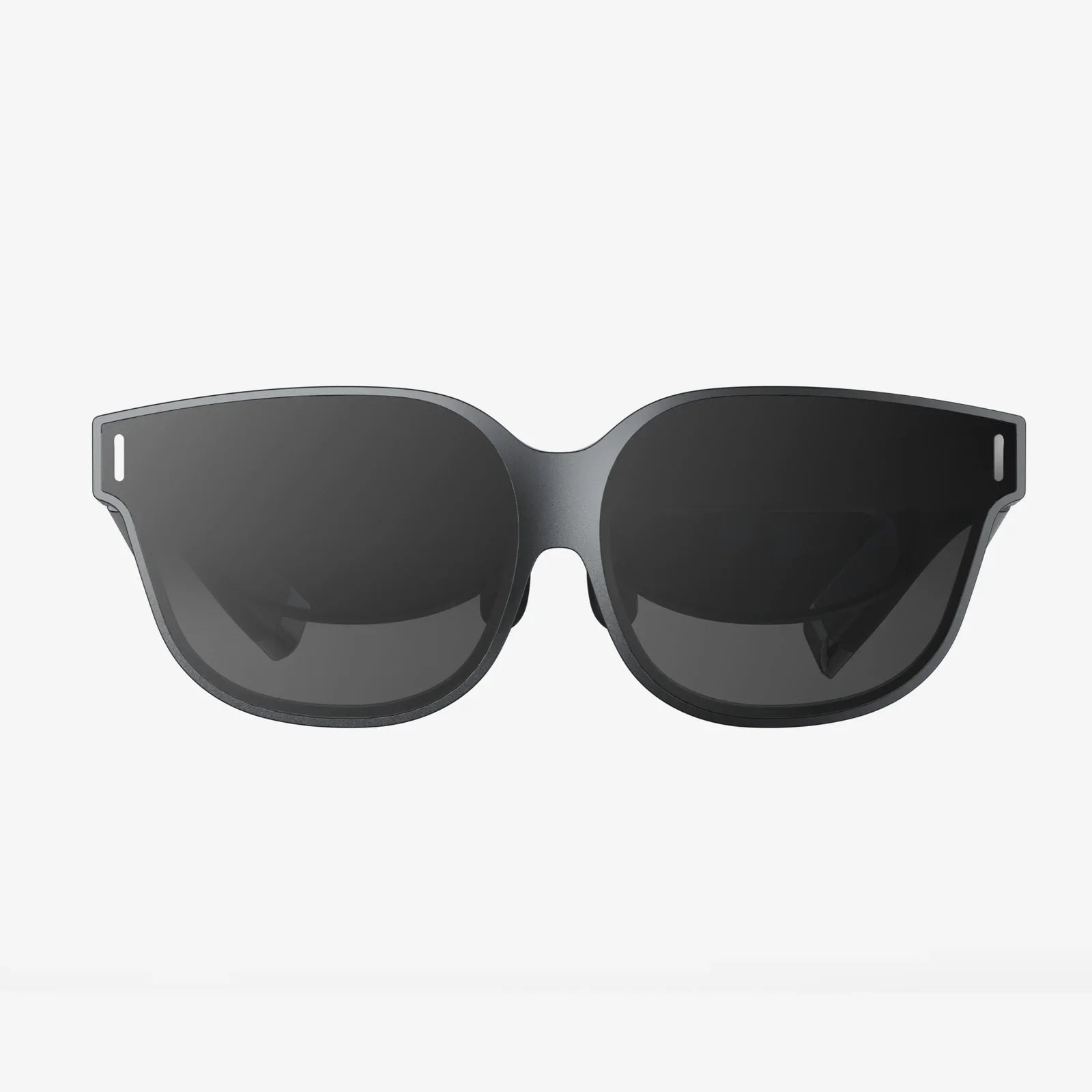
Imagine a world where information doesn't live on a device in your pocket but floats effortlessly in your field of vision, where digital assistants don't just listen but also see what you see, and where the line between the physical world and the digital realm becomes beautifully, usefully blurred. This is the transformative promise of AI glasses with a screen, a piece of technology that is rapidly evolving from science fiction fantasy into a tangible, world-altering reality. This isn't just an incremental upgrade to existing gadgets; it's a fundamental shift in how we will compute, communicate, and comprehend the world around us.
The Architectural Marvel: Deconstructing the Technology
At its core, this category of wearable device is a symphony of miniaturized advanced technologies working in perfect harmony. Understanding the components is key to appreciating the engineering feat they represent.
The Visual Engine: Screens and Waveguides
The most critical and challenging component is the display system. Unlike a traditional screen you stare at, these displays must project images directly onto the user's retina or into their field of view without obstructing it. Two primary technologies dominate:
- Micro-OLED Displays: These are incredibly small, high-resolution, and bright screens, often the size of a pencil eraser. They offer exceptional color and contrast but require an optical system to reflect the image to the eye.
- Waveguides: This is the true magic. These are transparent, glass-like components that use diffraction gratings or other microscopic structures to "bend" light from the micro-display and project it onto the retina. This allows the user to see a bright, sharp digital overlay while still clearly seeing the real world through the glasses. The quality and efficiency of the waveguide are paramount to achieving a wide field of view and a natural visual experience.
The Intelligent Core: Sensors and Processing
For the digital overlay to be contextually relevant and spatially aware, the glasses must perceive the world as you do. This is achieved through a suite of sophisticated sensors:
- Cameras: High-resolution cameras capture the user's first-person perspective, while depth-sensing cameras (like time-of-flight sensors) map the environment in 3D, understanding the distance and dimensions of objects.
- Inertial Measurement Units (IMUs): These gyroscopes and accelerometers track the precise movement and orientation of the user's head in real-time, ensuring the digital content remains locked in place in the real world.
- Microphones: An array of microphones enables clear voice commands and active noise cancellation, allowing the AI to hear the user accurately in noisy environments.
- Onboard AI Processor: This is the brain. A dedicated neural processing unit (NPU) handles the immense computational load of computer vision, object recognition, and natural language processing instantly and privately, without needing a constant cloud connection. This low-latency processing is essential for a seamless and responsive experience.
The Power and Connectivity Backbone
All this technology demands power. Advanced battery technology, often distributed in the arms of the frames for balance, is crucial for all-day usability. Efficient power management and low-power displays are non-negotiable. Furthermore, seamless connectivity via Wi-Fi, Bluetooth, and 5G ensures the glasses can offload heavier computations and stay synced with other devices in the user's ecosystem.
A World Remixed: Transformative Applications Across Industries
The true potential of AI glasses is unlocked not in what they are, but in what they enable. Their hands-free, eyes-forward nature makes them a powerful tool for professional and personal use.
Revolutionizing the Workplace
In field service and repair, a technician can see schematics, instruction manuals, or a live video feed from a remote expert overlaid directly onto the malfunctioning machinery they are fixing. This reduces errors, improves first-time fix rates, and dramatically shortens training times.
In healthcare, a surgeon could have vital signs, ultrasound data, or pre-operative plans visible without ever looking away from the patient. Medical students could observe procedures from the surgeon's point of view, with anatomical labels and notes appearing in their vision during dissection.
In logistics and manufacturing, warehouse workers can see optimized picking routes, inventory information, and shipping instructions overlaid on the physical boxes, streamlining complex fulfillment processes and reducing fatigue.
Redefining Social and Personal Interaction
Imagine walking through a foreign city where translated street signs and menus automatically appear in your native language. The glasses' AI could recognize landmarks and provide a historical commentary, acting as a personal tour guide.
For social connectivity, live captions for conversations could be displayed for those with hearing impairments. You could share your literal point of view with a friend remotely, watching a concert or fixing a car together as if you were side-by-side.
On a personal level, the glasses could act as a perfect memory aid, discreetly reminding you of a person's name when you meet them or noting where you last placed your keys by remembering what the camera saw.
Navigating the Uncharted: Ethical and Social Considerations
With such a powerful and pervasive technology comes a host of profound questions that society must grapple with before widespread adoption.
The Privacy Paradox
This is the most significant hurdle. Devices with always-on cameras and microphones present a legitimate privacy nightmare. The potential for unauthorized recording in changing rooms, private meetings, or public spaces is a serious concern. Robust, hardware-level privacy features—like a prominent recording LED light that cannot be disabled, clear physical shutters for cameras, and transparent data policies—are essential to build trust. Society will need to establish new norms and potentially new laws regarding recording in public and private spaces.
The Digital Divide and Accessibility
Will this technology become a necessity for full participation in society, thereby creating a new class of "haves" and "have-nots"? Conversely, it also holds immense promise for enhancing accessibility for people with disabilities, from auditory assistance for the deaf to visual navigation for the blind. Ensuring it is developed as an inclusive, empowering tool rather than an exclusive luxury is a critical challenge for developers and policymakers.
The Erosion of Attention and Reality
Smartphones already distract us from the physical world. Will a constant stream of digital information permanently degrade our ability to be present and engage in uninterrupted, real-world interaction? There is a risk of creating a new form of digital addiction. Furthermore, the ability to alter and filter reality could lead to a society where individuals increasingly inhabit personalized, algorithmically-curated bubbles, potentially weakening shared experiences and common understanding.
The Road Ahead: From Prototype to Paradigm Shift
Current iterations of this technology are still in their relative infancy, often hampered by limitations in battery life, field of view, social acceptance, and cost. The path forward will be defined by breakthroughs in several key areas.
We need more efficient and compact battery technology, perhaps leveraging new chemistries or even kinetic energy harvesting. Display technology must advance to offer a wider, more natural field of view that is indistinguishable from the real world. The social "glasshole" stigma must be overcome through better, more fashionable design that makes the technology look and feel like ordinary eyewear.
Most importantly, the killer application—the "spreadsheet" or "word processor" for this new platform—has yet to be universally discovered. It might be a revolutionary social app, an indispensable enterprise tool, or something entirely unforeseen. The ecosystem of developers will be the ones who ultimately unlock the full, transformative potential of this platform.
The journey of AI glasses with screens is just beginning. They represent not the end of the smartphone era, but the beginning of a more intuitive, contextual, and immersive age of computing. They promise to weave intelligence into the very fabric of our daily perception, offering a lens through which we can not only see the world as it is but also envision what it could be.
We stand on the precipice of a fundamental rewiring of human-machine interaction, where the device itself fades into the background, leaving only its enhanced capabilities seamlessly integrated into our lives. The question is no longer if this future will arrive, but how quickly we can adapt to its immense possibilities and navigate its complex challenges to build a future that is not only more technologically advanced but also more human-centric and empowering for all.
Share:
What Are The Best AI Glasses? A Deep Dive Into The Future On Your Face
Why Augmented Reality is the Next Fundamental Shift in Human-Computer Interaction