


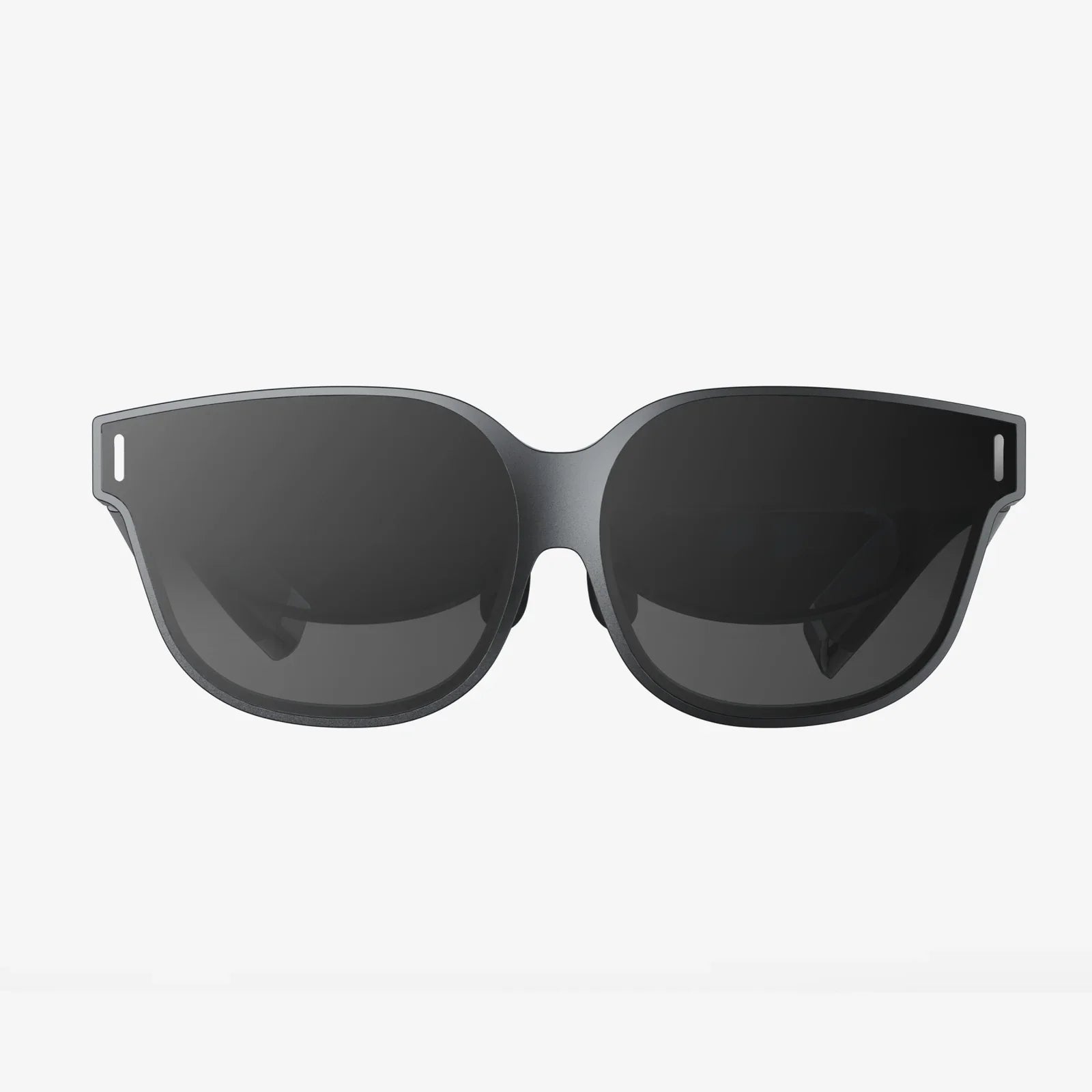
Imagine a world where your vision is perpetually perfect, where your glasses do more than just correct your sight—they enhance it, understand it, and adapt to your life in real-time. This is not a scene from a science fiction novel; it is the imminent future being crafted by the emergence of AI powered adaptive glasses. This revolutionary technology promises to shatter the static, one-size-fits-all paradigm of traditional eyewear, replacing it with a dynamic, intelligent visual assistant that sits on the bridge of your nose. The implications are staggering, reaching far beyond simple convenience and into the very fabric of how we perceive reality, interact with information, and navigate our daily lives. We are standing on the precipice of a sensory revolution, and it all begins with a simple, yet profoundly powerful, pair of lenses.
The Limitations of Static Vision Correction
For centuries, the solution to impaired vision has been remarkably consistent: a piece of ground glass or plastic, shaped to a specific prescription. Whether spectacles, contact lenses, or more recently, surgical procedures, the goal has been to provide a static correction—a fixed focal point that compensates for the eye's specific imperfection. While effective for many, this approach is fundamentally limited. Our visual needs are not static; they are fluid and constantly changing throughout the day.
Consider the modern professional: squinting at a computer screen for hours, then shifting focus to a colleague across the room in a meeting, followed by a drive home requiring sharp distance vision, and finally relaxing with a book in dim evening light. Each of these scenarios demands a different visual acuity. Traditional glasses offer a single, compromised solution. Reading glasses are useless for distance, bifocals create a disorienting jump in vision, and progressive lenses require the wearer to learn and awkwardly tilt their head to find the "sweet spot." This constant compromise leads to eye strain, headaches, and fatigue—a collection of symptoms now so common they have their own name: digital eye strain. Our environment has evolved dramatically, but our primary tool for seeing it has remained stubbornly archaic.
The Core Technology: A Symphony of Sensors and Intelligence
AI powered adaptive glasses represent a quantum leap forward by addressing this core problem of dynamic need. They are not merely glasses; they are a sophisticated wearable computing platform. The magic happens through a seamless integration of several advanced technologies working in concert.
Advanced Sensor Fusion
Embedded within the frame of these smart glasses are a suite of miniature, unobtrusive sensors. These typically include:
- High-resolution micro-cameras: To continuously analyze the scene in front of the wearer, identifying objects, text, people, and estimating depth and distance.
- Eye-tracking sensors: To monitor precisely where the wearer is looking, the pupil's dilation, and the convergence of the eyes. This data is crucial for understanding user intent.
- Inertial Measurement Units (IMUs): Accelerometers and gyroscopes that track head movement, tilt, and orientation, providing context for what the user is doing (e.g., walking, reading, looking down at a phone).
- Ambient light sensors: To measure the luminosity of the environment, from a bright sunny day to a dark restaurant.
The AI Brain: Real-Time Processing and Decision Making
The raw data from these sensors is fed into a powerful, low-energy microprocessor embedded within the glasses. This is where the artificial intelligence comes to life. A sophisticated machine learning algorithm, often trained on millions of hours of visual data, processes this information in real-time. It doesn't just see; it understands the context.
Is the user's gaze focused on a nearby smartphone screen? The AI detects the activity, the distance, and the ambient light, and instantly calculates the optimal focal power and contrast needed for that specific task. Did the user just look up to speak to someone entering the room? The AI recognizes the shift in gaze and the presence of a new person, automatically adjusting the lenses for clear distance vision. This continuous loop of sensing, processing, and actuating creates a fluid and intuitive experience where the technology anticipates need rather than reacting to command.
Adaptive Optics: The Liquid Crystal Revolution
The final, and most visible, piece of the puzzle is the lens technology itself. Many prototypes utilize liquid crystal layers sandwiched between thin glass or polymer. These crystals can change their orientation and optical properties when a small electrical current is applied—a concept similar to a transparent LCD screen. By precisely controlling the voltage across different sections of the lens, the system can dynamically alter the focal power, creating a seamless transition from near to far vision without any distinct lines or zones. Other approaches involve using tiny, microscopic actuators to physically change the shape of a flexible lens membrane. The result is the same: a lens whose corrective properties are as malleable as software.
Transformative Applications Across Society
The potential applications for this technology extend far beyond correcting common refractive errors like myopia and presbyopia. They promise to redefine accessibility, safety, and performance across numerous fields.
Revolutionizing Accessibility
For individuals with low vision or more significant visual impairments, AI powered adaptive glasses can act as a powerful assistive device. The AI can be trained to recognize and highlight specific obstacles like curbs, stairs, or approaching objects, providing auditory or haptic feedback to guide the user. It can instantly magnify text on a menu or a street sign, overlay high-contrast edges onto the real world to improve depth perception, or even read text aloud. This offers a new level of independence and interaction with the world that traditional aids cannot match.
Enhancing Professional and Recreational Performance
Imagine a surgeon whose glasses can automatically enhance the contrast and detail of a surgical field, or an engineer who can see schematic overlays and micro-measurements on the machinery they are repairing. For hobbyists, a carpenter could have measurements projected onto their workpiece, and a photographer could have their glasses simulate different filter effects on the landscape in real-time. In sports, they could provide real-time data and trajectory analysis. The professional and recreational enhancements are limited only by the software developed for the platform.
Improving Safety and Navigation
For drivers and cyclists, adaptive glasses could integrate with navigation systems, projecting turn-by-turn directions directly into their field of vision without requiring them to look away from the road. They could detect oncoming headlights at night and automatically dim specific sections of the lens to reduce glare, or warn of potential hazards detected by the onboard cameras. This seamless integration of contextual information dramatically improves situational awareness and safety.
Navigating the Challenges: Privacy, Design, and Adoption
Despite the exciting potential, the path to widespread adoption of AI powered adaptive glasses is fraught with significant challenges that must be thoughtfully addressed.
The Privacy Paradigm
A device that records everything you see presents arguably one of the most intimate privacy challenges of any wearable technology. The continuous capture of visual data raises critical questions. Where is this data processed—on the device itself or on a remote cloud server? Who has access to it? How is it stored and used? Could it be used for targeted advertising or, more worryingly, surveillance? For this technology to succeed, manufacturers must prioritize on-device processing, implement robust end-to-end encryption, and establish transparent, user-centric data policies. The glasses must be designed as a trusted assistant, not a monitoring device.
The Form Factor and Power Dilemma
Currently, the technology requires processors, batteries, and sensors that can be bulky. The ultimate goal is to create glasses that are indistinguishable in weight and style from a fashionable pair of traditional frames. This requires monumental advances in miniaturization and battery technology. Consumers will not adopt a clunky, uncomfortable device, no matter how intelligent it is. The battery life must also last a full day on a single charge to be practical. Overcoming these engineering hurdles is essential for moving from a compelling prototype to a must-have consumer product.
Shifting the Cultural Perception
Previous attempts at smart glasses have often been met with social skepticism, sometimes pejoratively referred to as "glassholes" due to concerns about rudeness and covert recording. Rebranding this technology away from a gadget for tech enthusiasts and towards a healthcare and wellness device is crucial. Emphasizing their primary function as a medical device for vision correction first, and a smart computer second, could be the key to gaining widespread social acceptance and even insurance coverage.
The Future Vision: A Platform for Human Augmentation
Looking further ahead, AI powered adaptive glasses are likely to become the primary hardware platform for augmented reality (AR). While current AR headsets are often large and isolating, adaptive glasses offer a path to a truly seamless and socially acceptable AR experience. The same sensors and AI that adjust focus could power immersive digital overlays—virtual screens floating in your living room, interactive translations of foreign street signs, or virtual tutors appearing right beside you as you learn a new skill.
This evolution will see the glasses become a central hub for personal computing, replacing smartphones as our main interface with the digital world. They will connect to a ecosystem of other IoT devices, providing contextual information and control right before our eyes. The line between correcting vision and enhancing it will blur entirely, opening the door to experiences we can currently only imagine.
The journey of AI powered adaptive glasses is just beginning, but its destination is clear: a world where our technology sees what we see, understands our intent, and effortlessly bends light to serve our every need. It is a fusion of biology and technology, a tool that promises to not only restore imperfect vision but to unlock a new layer of human potential and connection with the world around us. The way we see everything is about to change forever.
Share:
VR Headset Price Japan: A Complete Guide to Costs and Buying in 2024
VR Headset Price Japan: A Complete Guide to Costs and Buying in 2024