


- by wangfred
AI Powered Sunglasses Are Redefining Reality and How We Interact With It
- by wangfred
Imagine a world where your sunglasses do more than just shield your eyes from the sun; they whisper the name of a distant constellation as you gaze at the night sky, translate a street sign in a foreign language in real-time, and alert you to a potential hazard you hadn't even noticed. This is not a glimpse into a distant future; it is the burgeoning reality being shaped by AI powered sunglasses, a convergence of wearable technology and artificial intelligence that promises to fundamentally alter our perception of and interaction with the world around us. This technology is poised to move from a niche novelty to a transformative force, augmenting human capability in ways we are only beginning to understand.
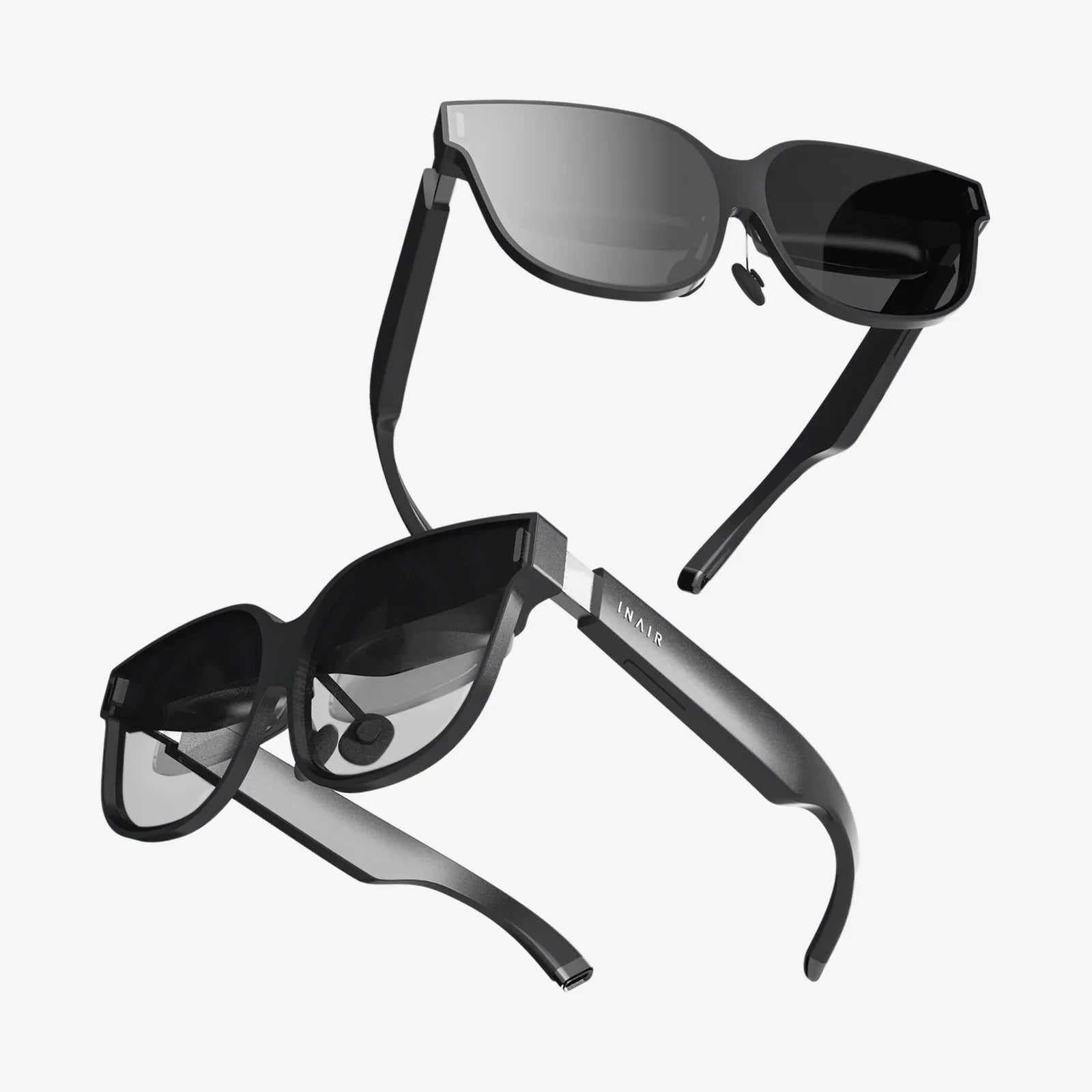
At first glance, a pair of AI powered sunglasses might look deceptively similar to a high-end pair of traditional shades. The true magic, however, lies in the sophisticated hardware and software architecture miniaturized within the frames. This system is a symphony of coordinated components, each playing a critical role in creating a seamless augmented experience.
The foundation of this system is its array of sensors. Tiny, high-resolution cameras act as the device's eyes, continuously capturing the user's field of view. Microphones serve as its ears, picking up ambient sound and voice commands. Inertial Measurement Units (IMUs), including accelerometers and gyroscopes, track head movement and orientation with precision, allowing the AI to understand context—whether the user is nodding, shaking their head, or simply walking down the street.
This constant stream of multi-modal data is the lifeblood of the system. But raw data is meaningless without processing. This is where the onboard processing unit comes into play. This miniaturized computer, often a System-on-a-Chip (SoC), is responsible for the initial data crunching. It handles tasks like basic image processing, noise cancellation for audio, and preparing the data for the most crucial component: the neural processing unit (NPU) or a dedicated AI accelerator.
This specialized chip is the brain of the operation. It's engineered to run complex machine learning models with extreme efficiency, maximizing performance while minimizing power consumption. It is here that the real-time magic happens: object recognition, facial analysis, natural language processing, and scene understanding. By running these models directly on the device (a concept known as edge computing), these sunglasses can achieve the low latency necessary for a believable augmented reality overlay—information appears instantly over the objects you look at, without a disorienting delay.
Finally, the output is delivered to the user through micro-displays. These are often small projectors that beam information onto the lenses themselves, which act as waveguides, or through tiny screens positioned at the periphery of vision. This creates a heads-up display (HUD) that superimposes digital information—text, graphics, arrows—onto the real world. All of this is powered by a compact but high-density battery, a constant challenge for engineers balancing power, performance, and form factor. Voice assistants and bone conduction speakers (which transmit sound through vibration in the skull bones, leaving the ears open to ambient noise) provide auditory feedback without isolating the user from their environment.
The potential applications for this technology extend far beyond novelty. They are poised to become powerful tools across numerous facets of daily life, professional environments, and recreational activities.
Forget fumbling with a phone for directions. AI powered sunglasses can project turn-by-turn navigation arrows directly onto the pavement in front of you, highlighting the correct path to take. They can recognize points of interest—a restaurant, a historical monument, a subway entrance—and display relevant information like ratings, historical facts, or operating hours simply by you looking at them. For tourists, real-time translation overlays can instantly translate menus, signs, and documents, breaking down language barriers in a truly immersive way.
In fields where hands-free operation is critical, these devices could be revolutionary. A technician repairing complex machinery could see schematics and step-by-step instructions overlaid on the equipment itself. A surgeon could have vital patient statistics and imaging data visible without looking away from the operating table. In logistics and warehousing, workers could see inventory information and optimal picking routes projected onto shelves, dramatically improving efficiency and accuracy.
Perhaps one of the most impactful use cases lies in accessibility. For individuals with visual impairments, the sunglasses could amplify the world. They could identify and announce the presence of obstacles, read text aloud from books or product labels, and even recognize and name friends and family members as they approach. For those with hearing impairments, real-time speech-to-text transcription could be displayed on the lenses, making conversations fluid and effortless.
The fitness industry would be transformed. Runners and cyclists could have their heart rate, pace, route, and altitude displayed in their line of sight. Personal trainers could provide virtual, interactive coaching sessions. The technology could even analyze a golfer's swing or a tennis player's form by overlaying biomechanical data and suggesting improvements in real-time.
With such transformative power comes a profound responsibility. The widespread adoption of AI powered sunglasses opens a Pandora's box of ethical and societal dilemmas that must be addressed proactively, not reactively.
The most pressing concern is privacy, both for the user and for everyone they encounter. A device that is always-on, always-watching, and always-listening represents the ultimate surveillance tool. The potential for constant recording and facial recognition raises terrifying prospects of a society where anonymity is extinct. How do we prevent the creation of permanent, searchable records of every person and every interaction? Legislation will struggle to keep pace with this technology. Clear, stringent rules must be established regarding data collection, storage, and usage. Features like recording indicators—a prominent light or sound that signals when the camera is active—must be mandatory and impossible to disable.
Data security is another monumental challenge. The personal data collected by these devices—where you go, who you meet, what you look at, what you say—is incredibly sensitive. A breach of this data would be catastrophic. Manufacturers must implement bank-level encryption for data both at rest and in transit, and users must be given transparent control over their information.
Beyond privacy, there are deeper philosophical questions about the human experience. Will constant augmentation enhance our reality or detach us from it? If we are always receiving information about a tree's species and age, do we lose the simple, profound experience of just appreciating its beauty? There is a risk of cognitive overload, where our attention is constantly fractured by digital notifications overlaying the physical world. Furthermore, the "digital divide" could evolve into an "augmentation divide," creating a new class of enhanced individuals with significant advantages over those who cannot afford or choose not to use such technology.
The current generation of AI powered sunglasses is still in its relative infancy. Challenges remain in perfecting battery life, display brightness in direct sunlight, achieving a socially acceptable form factor, and developing truly intuitive user interfaces. However, the trajectory is clear. Advancements in semiconductor technology will lead to more powerful and efficient chips. Breakthroughs in battery technology, such as solid-state batteries, will promise longer usage times. Display technology will become brighter, sharper, and more energy-efficient.
The true evolution will be in the intelligence of the software. Future iterations will move beyond simple object recognition to deep contextual understanding. The AI will not just see a car; it will analyze its speed and trajectory to assess potential danger. It won't just translate a language; it will capture cultural nuance and idiom. It will evolve from a reactive tool to a proactive assistant, anticipating needs and providing information before it's even asked for.
This technology will not exist in a vacuum. It will converge with other advancements, such as 5G and 6G connectivity for cloud-based processing and the development of the broader metaverse, creating a hybrid physical-digital existence. The sunglasses could become our primary portal into these layered digital worlds.
The path forward must be navigated with careful consideration. It will require close collaboration between engineers, ethicists, policymakers, and the public to establish a framework that fosters innovation while fiercely protecting fundamental human rights. The goal should not be to create a world where we live inside our devices, but to use this powerful technology to enhance our connection to the real world, to empower individuals, and to deepen our understanding of the universe we inhabit.
The dawn of seamless, contextual, and intelligent augmentation is here, and it's being framed not on your phone screen, but right before your eyes. The question is no longer if this future will arrive, but how we will choose to shape it—and whether we will be wise enough to wear this powerful new technology without letting it blind us to what truly matters.
Share:
Extended Reality Market Forecast 2025: A Deep Dive into the Future of Immersive Technology
What Can You Do With VR on iPhone - A Deep Dive Into Mobile Virtual Worlds