


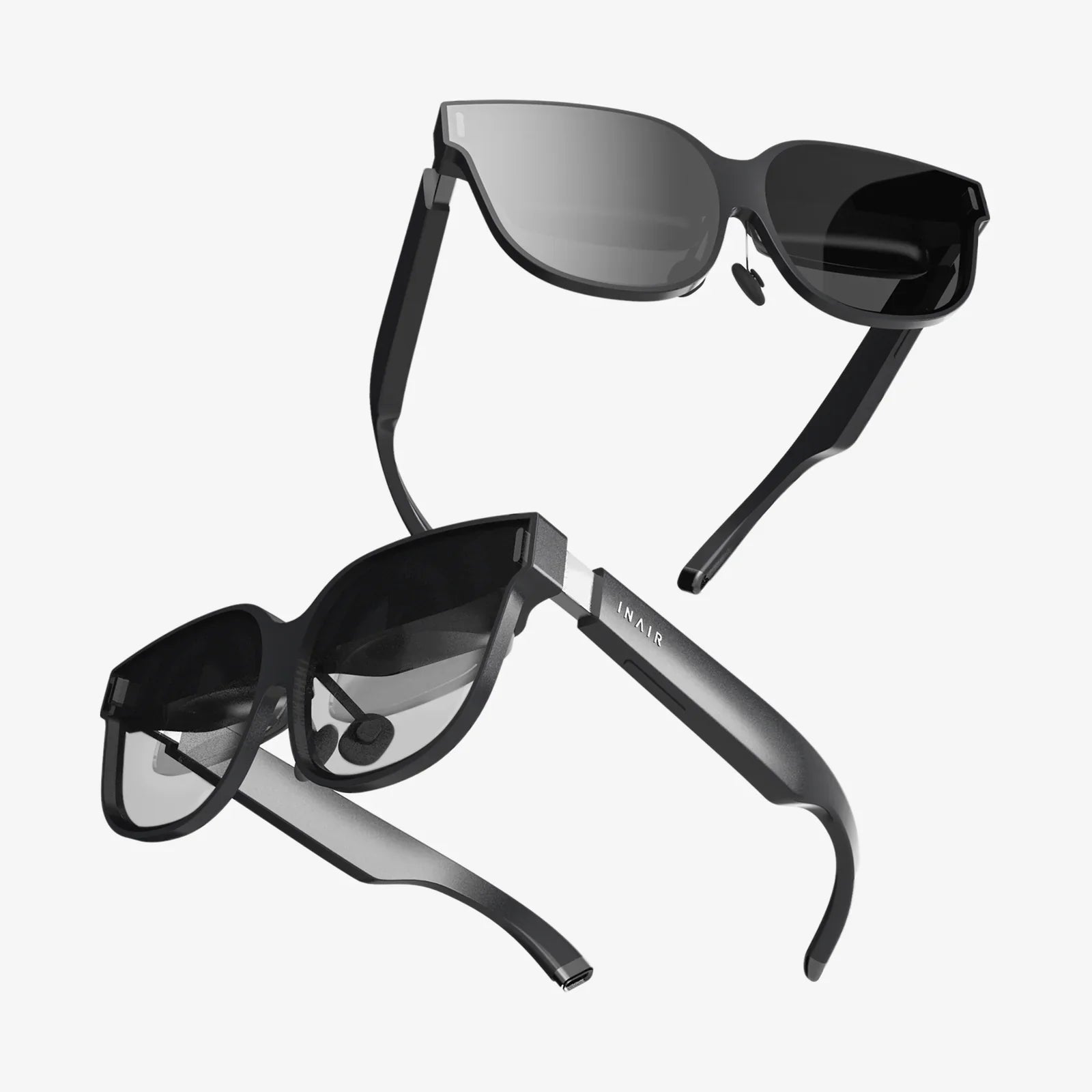
Imagine a world where your environment anticipates your needs, where global supply chains self-optimize in real-time, and medical diagnoses are delivered with superhuman accuracy before symptoms even arise. This isn't the distant future of science fiction; it is the emerging reality of our AI-powered present, an invisible revolution quietly weaving itself into the fabric of our daily existence, from the mundane to the miraculous.
The Engine Room: What Does "AI-Powered" Truly Mean?
At its core, "AI-powered" signifies a fundamental shift from programmed instruction to learned capability. Traditional software operates on a strict set of if-then rules, meticulously coded by human hands. An AI-powered system, by contrast, is not explicitly told how to achieve a goal. Instead, it is trained on vast quantities of data, learning to identify patterns, make correlations, and generate predictions or decisions autonomously.
This training often happens through a subset of AI known as machine learning (ML), and more specifically, deep learning. These systems utilize artificial neural networks—complex, layered algorithms inspired by the human brain's structure. By processing millions of data points, from images and text to sensor readings and user interactions, these models iteratively improve their performance. The "power" in AI-powered comes from this ability to continuously learn and adapt, often discovering insights and efficiencies that would be impossible for humans to manually derive.
This transformative capability is fueled by a convergence of three critical elements: massive datasets (big data), increasingly sophisticated algorithms, and immense computational power, primarily through cloud computing and specialized hardware. This trifecta has moved AI from academic theory to practical tool, enabling the revolution we see unfolding today.
The Transformation of Everyday Life
The most tangible impact of the AI-powered revolution is in the technologies we interact with daily. It has become the invisible hand guiding our digital experiences.
The Smartphone in Your Pocket
Your mobile device is a powerhouse of AI. The camera uses computational photography—powered by AI—to enhance images in real-time, recognizing scenes, optimizing lighting, and applying professional-grade effects. Your keyboard app predicts your next word and corrects your typos using language models. The digital assistant that sets reminders, plays music, or answers questions is a sophisticated interplay of natural language processing (NLP) and machine learning.
The Content You Consume
Streaming services have become masters of curation through AI. Their recommendation engines analyze your viewing history, compare it to millions of other users, and predict what you might want to watch next with astonishing accuracy. This same technology powers the music you discover and the news articles that appear in your social media feed, creating a highly personalized, albeit sometimes isolating, digital ecosystem.
The Way We Communicate
Real-time translation apps that break down language barriers, email services that filter out spam, and video call platforms that suppress background noise and keep you centered in the frame—all are commonplace applications of AI-powered algorithms, making global communication smoother and more accessible.
Revolutionizing Industries: From Factories to Farms
Beyond consumer gadgets, AI is driving a paradigm shift in major sectors of the global economy, optimizing operations, reducing costs, and unlocking new possibilities.
Healthcare and Medicine
Perhaps the most profound application of AI is in saving and improving lives. In medical imaging, AI-powered diagnostic tools can analyze X-rays, MRIs, and CT scans, detecting anomalies like tumors or fractures with a speed and accuracy that can surpass trained radiologists, acting as a powerful second opinion. Researchers are using AI to accelerate drug discovery, simulating how molecules interact to find potential new therapies in years instead of decades. Furthermore, AI is paving the way for personalized medicine, where treatment plans are tailored to an individual's unique genetic makeup and lifestyle data.
Manufacturing and Logistics
The industrial world is being reborn as the AI-powered smart factory. Predictive maintenance systems analyze data from machinery sensors to forecast failures before they happen, preventing costly downtime. Computer vision systems on assembly lines perform quality control inspections with microscopic precision, 24/7. In logistics, AI algorithms optimize entire supply chains, determining the most efficient routes for delivery trucks, managing inventory levels in warehouses autonomously, and streamlining port operations.
Agriculture
Modern farming is being transformed by AI and precision agriculture. Drones equipped with multispectral cameras fly over fields, and AI analyzes the imagery to assess crop health, identify pest infestations, and monitor soil conditions. This allows farmers to apply water, fertilizer, and pesticides only where needed, boosting yields while promoting sustainability.
Finance and Security
The financial sector relies on AI to detect fraudulent transactions in real-time, scanning millions of events to identify patterns indicative of crime. Algorithmic trading systems execute complex, high-frequency trades based on market data analysis. Banks use AI for risk assessment, analyzing countless data points to make more informed lending decisions.
The Human in the Loop: Augmentation, Not Replacement
A common fear surrounding AI is the specter of widespread job displacement and human obsolescence. While certain repetitive tasks will undoubtedly be automated, the more likely and powerful outcome is human-AI collaboration—augmentation.
An AI-powered tool can process information and provide recommendations, but it lacks human context, creativity, empathy, and ethical reasoning. The radiologist uses the AI's analysis to inform their final diagnosis. The designer uses an AI tool to generate initial concepts before applying their unique creative vision. The farmer interprets the AI's field data to make strategic decisions about their land.
The future of work will increasingly involve "knowledge workers" partnering with AI assistants. These digital colleagues will handle data-intensive grunt work, freeing up humans to focus on higher-level strategy, innovation, and interpersonal relationships—the very skills that define our humanity. The goal is not to replicate human intelligence but to complement it, creating a symbiotic relationship where the whole is greater than the sum of its parts.
The Ethical Imperative: Navigating the Challenges
The immense power of AI is not without its significant risks and ethical dilemmas. As we build these systems, we must do so with careful intention and robust guardrails.
Bias and Fairness
The famous computer science adage "garbage in, garbage out" is critically relevant to AI. If an algorithm is trained on historical data that contains human biases (e.g., in hiring, lending, or policing), it will learn, amplify, and automate those biases. Creating fair, transparent, and accountable AI systems is one of the most urgent challenges for developers and policymakers alike.
Privacy and Surveillance
AI's hunger for data raises serious privacy concerns. The line between helpful personalization and intrusive surveillance is thin. The use of facial recognition technology by governments and corporations, for example, presents a profound threat to personal freedom and anonymity if left unregulated.
Accountability and Control
As AI systems become more complex and self-directed, a question emerges: who is responsible when something goes wrong? If a self-driving car is involved in an accident or an AI-powered diagnostic tool makes a fatal error, establishing liability is incredibly difficult. The concept of "algorithmic explainability"—the ability to understand and trace an AI's decision-making process—is crucial for maintaining human oversight and control.
The Future is a Partnership
Looking ahead, the trajectory of AI-powered innovation points toward even deeper integration. We are moving towards anticipatory computing, where systems will not just react to our commands but predict our intentions. The convergence of AI with other transformative technologies like robotics, the Internet of Things (IoT), and quantum computing will unlock capabilities we can scarcely imagine today, from managing complex climate models to exploring the far reaches of space.
The ultimate destination is not a world run by machines, but a world where human intelligence is exponentially amplified by artificial intelligence. The promise of this technology is a future with less disease, more efficient use of planetary resources, personalized education, and the automation of tedious labor, allowing humanity to focus on creativity, connection, and exploration. The AI-powered revolution is not about building a new master; it's about forging the most powerful tool in human history, and our greatest responsibility is to wield it with wisdom, foresight, and an unwavering commitment to bettering the human condition. The algorithm is writing the next chapter, but we are the ones who must hold the pen.
Share:
What Is Wearable Technology Definition - The Ultimate Guide to Wearables
What Is AI Used For: The Comprehensive Guide to Modern Applications