


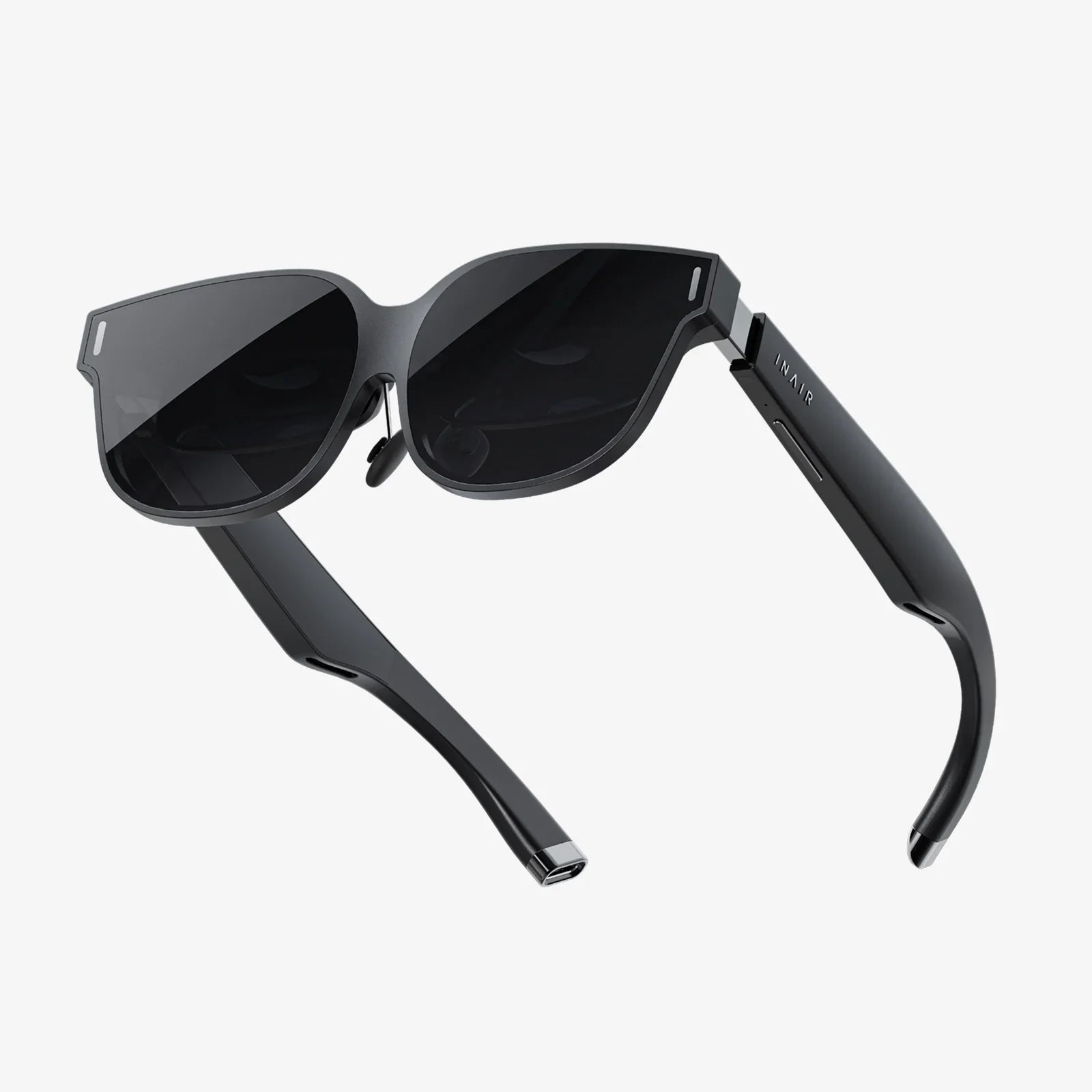
Imagine a world where your glasses don't just correct your vision but understand it, adapting seamlessly to your environment, your needs, and even predicting your visual requirements before you do. This isn't a scene from a science fiction movie; it's the emerging reality of AI prescription glasses, a technological leap poised to fundamentally transform how we see the world and how we care for our most precious sense: sight.
The Convergence of Optics and Intelligence
For centuries, the fundamental principle of corrective lenses remained largely unchanged: a carefully ground piece of glass or plastic designed to bend light rays in a specific way to compensate for refractive errors like myopia (nearsightedness), hyperopia (farsightedness), astigmatism, and presbyopia. The process, while refined, has been largely static. An individual receives a prescription based on a snapshot of their vision at a given moment, and that prescription is locked into the lenses until their next examination, which might be a year or more later. This static nature ignores the dynamic reality of human vision, which can fluctuate based on fatigue, lighting conditions, and the task at hand.
The advent of artificial intelligence is shattering this centuries-old paradigm. AI prescription glasses represent the powerful convergence of advanced optics, sophisticated sensor technology, and machine learning algorithms. They are not merely visual aids; they are intelligent systems designed to interact with and respond to the user's visual ecosystem in real-time. This integration marks a shift from passive correction to active vision enhancement, creating a personalized visual experience that was previously unimaginable.
How Do AI-Powered Lenses Actually Work?
The magic of these advanced spectacles lies in a sophisticated feedback loop of data collection, analysis, and physical adjustment. The system is typically comprised of three core components:
1. The Sensory Layer: Perceiving the World
Embedded within the frame of the glasses are a suite of miniature, often imperceptible, sensors. These can include micro-cameras that capture what the user is looking at, ambient light sensors that measure the brightness and color temperature of the environment, and even eye-tracking technology that monitors where the user's gaze is focused, how long their eyes stay on a point, and pupillary response. This constant stream of data provides a rich, contextual understanding of the user's visual journey throughout the day.
2. The Computational Brain: Making Sense of the Data
The raw data from the sensors is fed into a miniaturized processing unit, often located in the temple pieces of the frames. This is where the AI and machine learning algorithms come to life. These algorithms are trained on vast datasets of visual scenarios and human visual responses. They analyze the incoming data in milliseconds, identifying patterns. Is the user squinting at a screen? Are they struggling to read a menu in a dimly lit restaurant? Are they driving at night and being blinded by oncoming headlights? The AI interprets these contextual clues to understand the user's immediate visual challenge.
3. The Adaptive Optic Layer: The Physical Response
This is where the analysis becomes action. Based on the AI's commands, the lenses themselves physically change. Several cutting-edge technologies enable this:
- Liquid Crystal Layers: Similar to technology found in some smart windows and displays, these lenses have a layer of liquid crystals that can change their orientation when a small electrical current (directed by the AI) is applied. This change alters the way light passes through the lens, effectively changing its optical power to add more magnification for reading or to reduce glare.
- Micro-Optical Elements: Some designs use arrays of tiny, adjustable optical elements on the lens surface. The AI can control these elements to collaboratively bend light, creating a dynamic focal plane that can shift from distance to near vision seamlessly.
- Electro-Active Optics: These advanced materials change their refractive properties—their ability to bend light—in response to electrical stimulation, allowing the AI to fine-tune the prescription on the fly.
The result is a continuous, automated cycle: sense, analyze, adapt. The glasses become a proactive partner in vision, constantly optimizing clarity and comfort without the user ever needing to push a button or consciously make an adjustment.
Beyond 20/20: The Multifaceted Benefits
The applications for AI prescription glasses extend far beyond convenience, offering profound benefits for health, safety, and quality of life.
Unprecedented Personalization
Traditional prescriptions are a one-size-fits-all solution for a user's day. AI glasses acknowledge that your visual needs at your desk are different from those on a hiking trail or in a grocery store. They can automatically provide the optimal correction for every specific task, distance, and lighting condition, reducing eye strain and fatigue significantly. For individuals with complex vision issues or those who have struggled with progressive lenses, this represents a monumental improvement in daily comfort.
A New Era for Presbyopia
The condition known as presbyopia, the age-related loss of near focus, has traditionally been addressed with bifocals, trifocals, or progressive lenses, all of which require the user to learn how to aim their gaze through the correct part of the lens. AI glasses solve this problem elegantly by automatically providing the necessary magnification the moment the user looks down to read a phone or a book, and instantly clearing for distance vision when they look up, creating a natural, seamless visual experience.
Enhanced Safety and Assistance
Imagine glasses that can enhance contrast in low-light conditions, making night driving safer by better defining the road edges and potential hazards. They could identify and highlight tripping hazards on a path for an elderly user or provide subtle visual cues for individuals with limited peripheral vision. The potential to augment reality with contextual information—like highlighting a specific street sign or translating text in real-time—further blurs the line between vision correction and vision enhancement.
Continuous Health Monitoring
The same sensors that track visual activity can also serve as a powerful health monitoring platform. By analyzing pupillary response, blink rate, and gaze patterns, the AI could detect early signs of fatigue, drowsiness, or even neurological conditions like concussions or the onset of certain diseases. This data, anonymized and aggregated, could also provide optometrists and ophthalmologists with unprecedented insights into a patient's real-world visual behavior, moving beyond the clinic's snapshot to a continuous movie of their ocular health.
Navigating the Challenges: Privacy, Access, and Human Touch
As with any transformative technology, the path forward is not without its significant hurdles and ethical considerations.
The Privacy Paradox
AI glasses, by their very nature, are data collection devices. They process a continuous stream of visual and environmental data from the user's perspective. This raises critical questions about data ownership, storage, and usage. Who has access to this intimate data? How is it secured? Could it be used for targeted advertising or by insurance companies? Robust, transparent data governance and encryption standards are not just a feature but an absolute necessity for this technology to gain public trust. Users must have complete control over their data.
Bridging the Accessibility Gap
The advanced technology and complex manufacturing processes involved suggest that the initial cost of AI prescription glasses will be high. There is a very real risk of creating a two-tiered system of eye care: enhanced vision for the wealthy and standard correction for everyone else. For this technology to fulfill its promise of revolutionizing vision, strategies must be developed to make it accessible and affordable through insurance partnerships and scalable production.
The Role of the Eye Care Professional
Does AI make the optometrist obsolete? Quite the opposite. While the glasses handle real-time adjustments, the role of the eye care professional will evolve into something even more critical. They will become the interpreters of the rich data streams generated by the glasses, diagnosing underlying conditions, calibrating the AI systems, and providing the human expertise, empathy, and care that a machine cannot replicate. The technology will be a tool that empowers professionals, not replaces them.
The Road Ahead: A Vision of the Future
The development of AI prescription glasses is still in its relative infancy, but the pace of innovation is rapid. We can anticipate several key trends in the coming years. The technology will become smaller, more power-efficient, and more seamlessly integrated into stylish frames that consumers will want to wear. AI algorithms will become more sophisticated, moving from reactive adjustments to predictive ones, anticipating user needs based on time of day, location, and habit. Furthermore, integration with broader health and smart home ecosystems will allow your glasses to interact with your other devices, creating a truly connected and responsive personal environment.
We are standing at the precipice of a new era in ocular health and human-machine interaction. AI prescription glasses promise to redefine not just how clearly we see, but how we interact with the world around us. They represent a future where technology doesn't isolate us from our reality but enhances our most fundamental connection to it. They are the next great step in a journey that began with the first piece of curved glass held up to the eye—a journey toward perfect, personalized, and intelligent sight.
The dream of eyewear that thinks for itself, eliminating blurry text, blinding glare, and the constant search for the right pair of readers, is rapidly materializing. This isn't just an upgrade to your current frames; it's a fundamental reimagining of vision itself, offering a glimpse into a future where our sight is not just corrected but truly optimized for every moment of our lives.
Share:
Smartglasses News: The Invisible Revolution Reshaping Our Digital and Physical Worlds
AR VR Headset: The Ultimate Guide to the Future of Immersive Technology