


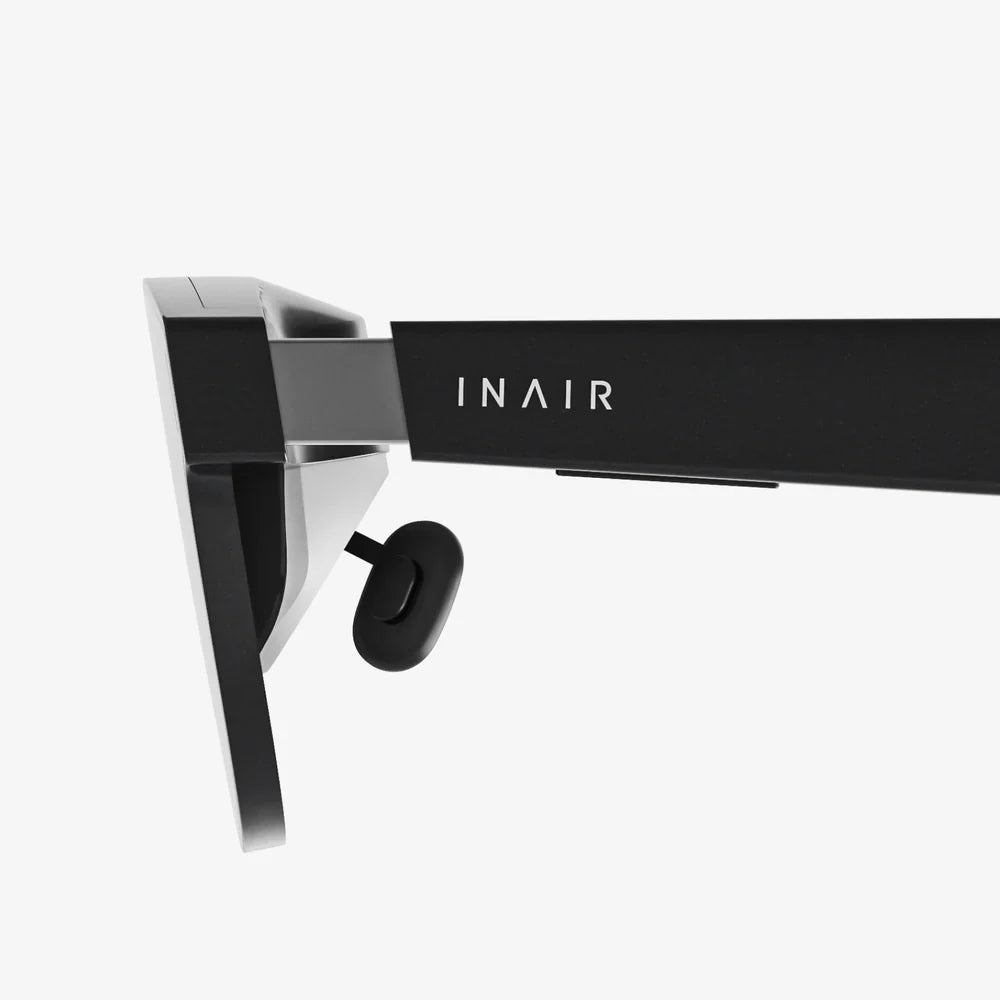
Imagine a security guard on patrol, but their vision is superhuman. They don't just see a crowded lobby; they see a real-time analysis of every individual. A subtle, translucent halo around a person pulses green, indicating a cleared employee. Another glows a soft amber, flagging a visitor whose appointment is verified but whose access is temporarily restricted to the first floor. A flicker of red highlights a door left ajar by a careless cleaner, an anomaly instantly detected against its scheduled 'closed' status. This isn't a scene from a futuristic film; this is the operational reality being forged today by the powerful synergy of artificial intelligence and augmented reality, delivered through a new class of wearable technology: AI security is working reality goggles.
The Convergence of Two Revolutionary Technologies
To understand the profound impact of this technology, we must first dissect its two core components. For decades, security, both physical and cyber, has relied on a reactive model. Alarms sound after a breach, cameras record footage after an incident, and intrusion detection systems flag threats after they have potentially already penetrated the network. Artificial Intelligence, particularly its machine learning and deep learning subsets, has begun to shift this paradigm towards a predictive and proactive model. AI algorithms can analyze vast datasets—from access logs and network traffic patterns to live video feeds—to identify subtle anomalies, predict potential threats, and automate responses at a speed and scale impossible for humans.
Parallel to this, Augmented Reality (AR) has evolved from a novelty into a powerful interface. Unlike Virtual Reality, which creates a fully digital environment, AR overlays digital information onto the user's view of the real world. This is typically achieved through specialized head-mounted displays or goggles. The power of AR lies in its ability to provide contextual information without overwhelming the user or forcing them to look away from their environment to a separate screen.
The fusion of these two technologies is what creates the revolutionary product. The AI acts as the brain—a powerful, unseen engine of analysis and prediction. The AR goggles serve as the eyes and the visual cortex—the interface that translates the AI's insights into an intuitive, immediately actionable visual layer superimposed on reality. This symbiosis creates a seamless flow of information: the goggles feed real-world data to the AI, and the AI feeds enhanced intelligence back to the goggles' display.
How AI-Powered Goggles Transform Security Operations
The practical applications of this technology are vast and are already being deployed in various sectors to address critical security challenges.
Enhanced Physical Security and Access Control
For personnel guarding critical infrastructure, corporate campuses, or large events, these goggles are a force multiplier. Facial recognition algorithms, processed locally on the device or via secure low-latency networks, can instantly identify individuals against watchlists or authorized personnel databases. This isn't about memorizing thousands of faces; it's about the technology flagging the one face in ten thousand that warrants attention. The guard's focus is directed not by guesswork, but by data-driven intelligence.
- Anomaly Detection: The AI can be trained to recognize unusual behaviors—loitering in a sensitive area, a vehicle circling a block repeatedly, or an abandoned package—and immediately highlight it within the security personnel's field of view.
- Biometric Overlays: Beyond simple recognition, advanced systems can analyze micro-expressions or gait patterns for signs of stress or deception, providing an additional layer of screening.
- Guided Response: In the event of an incident, the goggles can overlay the fastest evacuation route for civilians or the safest approach path for first responders, all while avoiding real-time threats.
The Frontline of Cybersecurity in the Physical Realm
Perhaps the most innovative application is the bridging of the cyber-physical divide. Network administrators and cybersecurity analysts can use these goggles to visualize the digital infrastructure of a building. By pointing the goggles at a server rack, a network switch, or even an employee's computer, the system can display a real-time stream of data.
- Network Traffic Visualization: See a glowing, pulsating web of connections above hardware. Normal traffic might flow as steady blue lines, while a sudden, massive data exfiltration to an unknown external IP could manifest as a violent, red pulsar, instantly pinpointing the compromised device.
- Hardware Status Monitoring: A quick glance at a server can reveal its current CPU load, temperature, and network status without touching a terminal. A server nearing overheating could have a warning symbol hovering above it.
- Threat Triage: During an incident, a security operations center (SOC) analyst can walk through a data center and physically see which machines are infected, isolated, or communicating with malicious domains, making containment efforts dramatically more efficient.
Training and Simulation
The technology is also a powerful tool for preparation. Security teams can train in their actual environment using AR simulations. A guard can practice responding to a virtual active shooter scenario or a cyber-physical attack drill overlaid onto their real-world patrol route, receiving real-time feedback and performance metrics without any actual risk.
Overcoming the Challenges: Privacy, Bias, and Practicality
As with any powerful technology, the deployment of AI security goggles is not without significant challenges that must be thoughtfully addressed.
Privacy Concerns: The ability to continuously identify and track individuals raises profound privacy questions. The specter of a perpetual, automated police state is a legitimate fear. Responsible deployment requires strict governance: clear policies on data collection, storage, and usage; transparency with the public about when and how the technology is being used; and robust encryption to protect the data gathered. Anonymization of non-relevant individuals in a crowd must be a standard feature, not an afterthought.
Algorithmic Bias: AI models are only as good as the data they are trained on. If historical data contains biases, the AI will perpetuate and potentially amplify them. A facial recognition system trained primarily on one demographic will be less accurate on others, leading to false positives and discriminatory outcomes. Mitigating this requires diverse training datasets, continuous auditing of AI decisions for fairness, and human-in-the-loop oversight to confirm critical alerts before action is taken.
Technical and Practical Hurdles: The current generation of hardware faces limitations in battery life, processing power, field of view, and comfort for extended wear. Processing complex AI algorithms requires significant compute resources, which can lead to a choice between onboard processing (draining battery) or cloud processing (introducing latency and connectivity dependencies). Furthermore, user acceptance is key; the technology must be intuitive and provide genuine utility without becoming a distraction or a hindrance.
The Future Vision: Where Do We Go From Here?
The technology we see today is merely the foundation. The future trajectory of AI security goggles points towards even deeper integration and intelligence.
- Predictive Threat Modeling: Future systems will move beyond recognizing immediate threats to predicting them. By analyzing patterns across physical and digital domains, the AI could warn of a high probability of a social engineering attempt on a specific employee based on recent digital activity and their current physical location.
- Multi-Sensor Fusion: Goggles will incorporate more than just cameras. Thermal imaging, LiDAR for precise 3D mapping, and air quality sensors could provide a holistic view of the environment, detecting chemical leaks, heat signatures hidden behind walls, or precise measurements for emergency response.
- Swarm Intelligence: A team of security personnel equipped with goggles could form a mesh network, sharing threat data and sensor readings seamlessly. An anomaly detected by one officer could be instantly and silently communicated to the entire team, along with the subject's location and direction of travel.
- Integration with Smart Environments: The goggles will become a node in a larger Internet of Things (IoT) ecosystem, communicating directly with smart locks, drones, alarm systems, and autonomous security robots, orchestrating a unified and automated response to incidents.
The era of passive security is ending. The marriage of AI and AR through reality goggles is creating a new active, intelligent, and immersive layer of defense. It empowers human personnel with capabilities once reserved for superheroes, allowing them to see the unseen and know the unknown. While the ethical and practical challenges are substantial, the potential to create safer environments for everyone—from the corporate employee to the public event attendee—is immense. The digital shield is no longer a concept; it's being woven directly into our perception of reality, and it's changing the very nature of protection.
Share:
Best Bluetooth Headphones: The Ultimate Guide to Wireless Audio Freedom
AR Headsets 3D Object Manipulation Support 2025: The Dawn of a New Digital Craftsmanship