


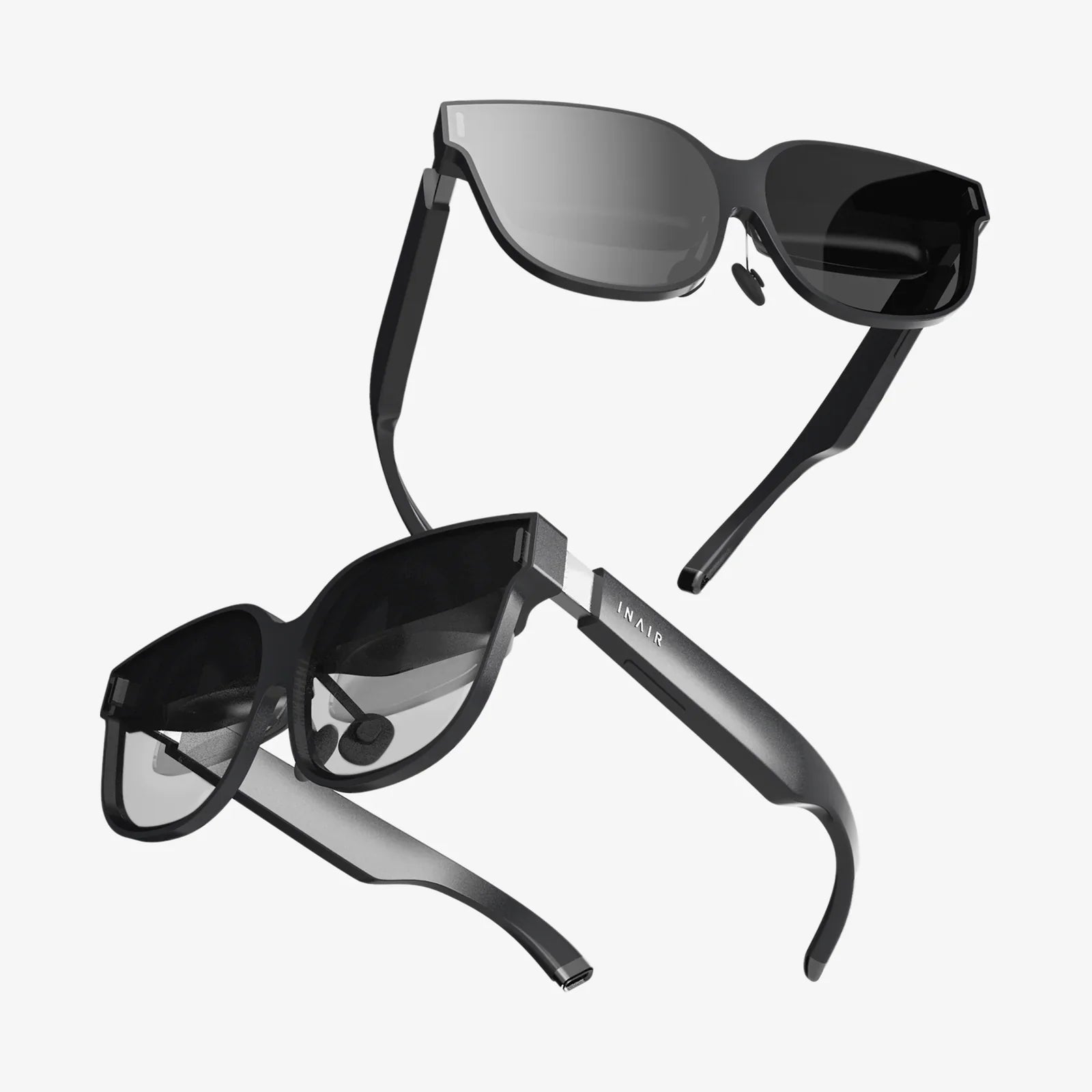
Imagine a world where information floats effortlessly in your periphery, where language barriers dissolve with a whisper, and the digital world is not confined to a screen in your hand but is woven into the very fabric of your vision. This is the dazzling promise of AI smart glasses, a next-generation wearable poised to redefine our interaction with technology. Yet, for all their futuristic potential, a stubbornly terrestrial problem keeps pulling them back to earth: the relentless, unforgiving drain on their battery. The pursuit of all-day power is not just an engineering spec; it is the single greatest obstacle between a niche gadget and a mainstream revolution.
The Anatomy of a Power-Hungry Device
To understand the battery life challenge, one must first appreciate the immense computational burden these devices carry. Unlike their simpler predecessors, which may have offered basic camera functions or audio playback, true AI smart glasses are packed with a suite of sophisticated technologies, each a significant drain on precious energy reserves.
The Visual Processing Unit (VPU) and Neural Processing Unit (NPU): The heart of the AI system. This specialized chip is in a constant state of high alert, performing trillions of operations per second to enable real-time object recognition, text translation overlay, and scene understanding. This continuous, heavy computational load is arguably the largest consumer of power.
High-Resolution Cameras and Sensors: To see the world and understand it, these glasses are equipped with one or more cameras, depth sensors, and LiDAR scanners. Keeping these sensors active, especially for persistent AR overlays, demands a steady and significant current.
Always-On Microphones and Audio Processors: For voice-activated AI assistants and real-time translation, the microphones must be always listening for a wake word. This requires a dedicated, low-power audio chip to be perpetually active, but the moment full audio processing kicks in for natural language commands, power consumption spikes dramatically.
Wireless Connectivity: Constant connection to the cloud via Wi-Fi or cellular networks is often necessary for offloading complex AI tasks that are too intensive for the onboard processor. Maintaining this link, especially with a strong signal, is a notorious battery killer.
Displays: Whether using micro-LED, Laser Beam Scanning, or other waveguide technologies to project images onto the lenses, illuminating these displays, particularly in bright environments, requires considerable energy. The brighter the environment, the more power needed for the image to remain visible.
Individually, each of these components has a power appetite. Combined into a single, sleek device meant to be worn on the face, they create a perfect storm of energy consumption, forcing users into a constant dance of battery anxiety.
The User Experience Compromise: Functionality vs. Duration
The battery limitation directly dictates and severely compromises the user experience. Manufacturers are forced to make difficult trade-offs, often crippling the very features that make the glasses compelling.
The “Camera-Only” Mode: Many current devices can only sustain their most basic functions, like taking photos or recording short video clips, for a handful of hours. The moment users engage the flagship AI features—persistent AR navigation, real-time transcription, or object recognition—the battery life plummets, sometimes to less than 60 minutes.
Thermal Management: All this processing generates heat. A device on your face cannot get uncomfortably warm. Therefore, systems must be designed to throttle performance aggressively to manage thermals, which in turn reduces processing speed and effectiveness to conserve energy and prevent overheating, creating a frustrating loop of diminished returns.
The Charging Ritual: This leads to a paradigm where users cannot treat these glasses like ordinary eyewear. They become another device to be meticulously managed. Did you remember to charge them after your two-hour morning use? Will they last through the afternoon meeting? This constant need to connect to a power source defeats the purpose of seamless, always-available ambient computing. It breaks the immersion and reintroduces the friction that wearable technology aims to eliminate.
The Engineering Battle on Three Fronts
The industry is not idly watching this challenge. A massive research and development effort is underway, attacking the problem from three critical angles: hardware efficiency, software intelligence, and battery chemistry itself.
1. Hardware Efficiency: Doing More with Less
The most promising advances are coming from semiconductor design. Companies are creating increasingly specialized chips, like Application-Specific Integrated Circuits (ASICs), tailored exclusively for the low-power tasks required by smart glasses. These chips are designed to handle specific AI inference models with extreme efficiency, dramatically reducing the energy required for tasks like computer vision compared to a general-purpose processor.
Furthermore, display technology is evolving rapidly. New micro-LED designs offer higher brightness with lower power draw. Innovations in holographic optics and light guides aim to maximize the amount of light from the projector that actually reaches the user’s eye, reducing waste and the need for a brighter, more power-hungry light source in the first place.
2. Software and AI Optimization: The Art of Laziness
If hardware is the muscle, software is the brain, and a smart brain knows when to rest. Developers are implementing sophisticated power-gating techniques and context-aware computing.
This means the software learns user behavior. If the glasses are sitting on a desk, every non-essential component enters an ultra-low-power sleep state. When worn, the system can intelligently decide which sensors need to be active. Does the user need object recognition right now, or is audio passthrough sufficient? By using smaller, more efficient on-device AI models for common tasks and only engaging larger cloud-based models when absolutely necessary, software can make monumental strides in preserving battery life without the user ever noticing.
3. The Battery Itself: The Quest for Energy Density
The fundamental issue remains the physical battery. The space within the temple arms of a pair of glasses is incredibly constrained. Current lithium-ion batteries are nearing their theoretical energy density limits. The search for a successor technology is intense.
Solid-state batteries offer a glimmer of hope, promising higher energy density in a safer, potentially more flexible package. Beyond that, research into alternative chemistries like lithium-sulfur or even miniature fuel cells continues, though these solutions remain years away from commercial viability in consumer electronics. For now, the focus is on improving charge efficiency and integrating power management systems that can precisely control the discharge to every component, minimizing waste.
Alternative and Supplemental Strategies
While the core battery technology evolves, companies are exploring creative supplemental solutions to extend usage.
External Battery Packs: A common but clunky solution is a separate battery pack that connects via a wire to the glasses, stored in a user’s pocket. This provides extra hours of use but reintroduces a tether, undermining the elegance and freedom of the device.
Solar and Light Charging: Some prototypes are experimenting with transparent photovoltaic cells integrated into the lenses or frames. These can trickle-charge the battery from ambient indoor light or sunlight, potentially adding minutes of usage for every hour worn. While not a primary solution, it could be a valuable supplement for extending longevity throughout the day.
Kinetic and Thermal Energy Harvesting: More futuristic concepts involve capturing energy from user movement (kinetic) or the difference in temperature between the body and the environment (thermal). The power generated from these methods with current technology is minuscule, but every little bit helps in the brutal arithmetic of wearable power budgets.
The Societal and Design Implications
This technical challenge has broader implications. Battery life will directly influence the design language of this entire product category. Will consumers accept heavier, thicker frames if it means more battery capacity? Or will they prioritize a lightweight, discreet form factor, accepting limited functionality as a trade-off?
Furthermore, the “have” and “have-not” divide could extend to power access. In a world where AI glasses become essential tools for work and social interaction, being constantly anxious about battery life or needing to be near an outlet creates a new dimension of digital inequality. The true potential of this technology as an equalizing tool can only be realized if it is truly untethered and always available, regardless of one’s daily routine or access to charging infrastructure.
The battery life challenge is more than a technical hurdle; it is a design philosophy, a user experience cornerstone, and a commercial gatekeeper. It forces honesty upon an industry often driven by hype. The companies that succeed will be those that understand that the ultimate feature is not the most dazzling AR effect, but the freedom to forget the device is there at all. They will win not by boasting about teraflops of processing power, but by delivering a product that works from sunrise to sunset on a single charge, seamlessly integrating into the rhythm of human life without demanding constant attention and maintenance. The race is on, and the prize is nothing less than the future of personal computing on our faces.
Solving the power paradox will not come from a single silver bullet, but from a relentless, multi-disciplinary siege—a thousand tiny optimizations in silicon, software, and chemistry converging to create a device that finally lives up to its promise. The day we can strap on a pair of intelligent glasses and not give a single thought to the battery meter is the day the revolution will truly begin, unlocking a world of potential that currently remains, quite literally, powerless.
Share:
3D VR Headset for iPhone: Your Ultimate Portal to Immersive Entertainment
AR Says Headset Coming Year Power: The Next Leap in Augmented Reality