


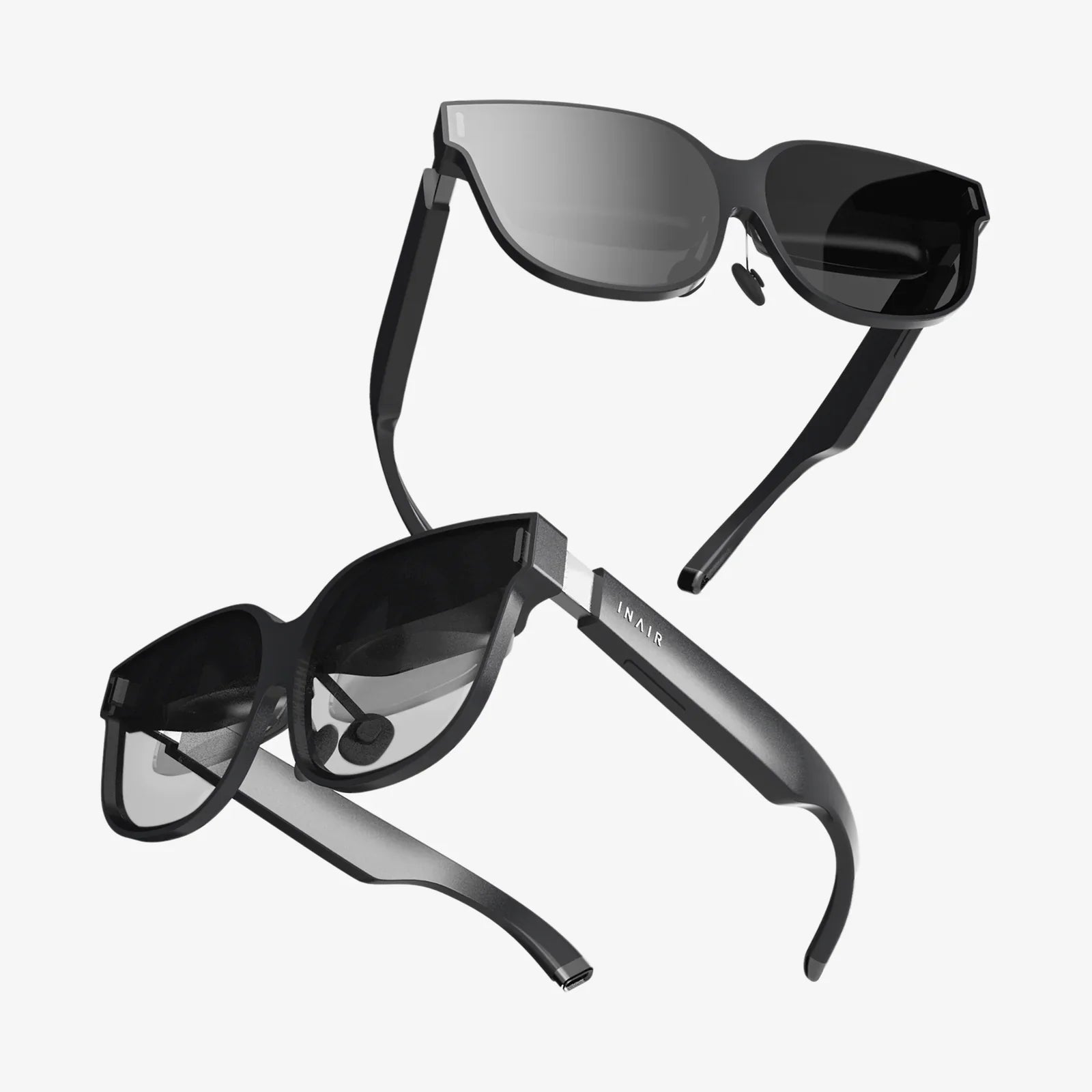
Imagine a world where the line between the digital and the physical not only blurs but disappears entirely. Where information isn't confined to a screen in your hand but is seamlessly woven into the fabric of your reality, accessible with a glance, a word, or a thought. This is the promise, and increasingly the reality, of AI smart glasses. They are not merely a new gadget; they are a portal to a new way of interacting with technology, information, and each other. This emerging technology is poised to transform everything from how we work and learn to how we navigate our cities and manage our health.
The Anatomy of Intelligence: Deconstructing the Technology
At their core, AI smart glasses are a sophisticated convergence of several advanced technologies. They are wearable computers, but their power lies in the harmonious integration of their physical components and the intelligent software that drives them.
The Hardware: More Than Meets the Eye
The frame of smart glasses houses a miniaturized technological marvel. Tiny, high-resolution displays, often using waveguide or microLED technology, project images directly onto the lenses. These images appear to float in the user's field of view, overlaying text, graphics, or 3D models onto the physical world. This is the fundamental magic of augmented reality (AR).
To understand the environment, these glasses are equipped with a suite of sensors. Cameras act as the eyes, capturing the world in real-time. Inertial Measurement Units (IMUs), including accelerometers and gyroscopes, track the precise movement and orientation of the user's head. Depth sensors, like LiDAR or time-of-flight sensors, map the environment in three dimensions, allowing digital objects to interact realistically with physical surfaces—a virtual coffee cup can sit stably on your real desk.
All this data is processed by an onboard chipset, a compact but powerful computer. For complex AI tasks, the glasses often connect wirelessly to a smartphone or cloud computing resources, harnessing far greater processing power. Audio is delivered through miniature bone conduction speakers or directional speakers that send sound directly into the ear without blocking ambient noise, crucial for maintaining situational awareness. A microphone array allows for voice commands and clear communication.
The Artificial Intelligence: The Brain Behind the Lenses
Hardware provides the senses, but artificial intelligence is the brain. It is the AI that transforms raw sensor data into meaningful, contextual, and actionable information.
Computer Vision: This is perhaps the most critical AI function. The glasses' cameras feed a constant video stream to machine learning models trained to recognize objects, people, text, and scenes. They can identify a product on a shelf, translate a street sign instantly, or recognize a colleague and display their name and recent projects.
Natural Language Processing (NLP): Integrated AI assistants, powered by large language models, understand and respond to voice commands conversationally. You can ask complex questions, dictate messages, or control other smart devices in your home, all without touching a thing.
Contextual Awareness: The true genius of AI in these devices is its ability to synthesize data. It combines your location (from GPS), what you're looking at (from computer vision), and your calendar to offer proactive suggestions. For instance, walking into a airport might trigger your boarding pass to appear in your periphery, while glancing at a foreign menu could instantly overlay translations.
Beyond Novelty: The Practical Applications Transforming Industries
The potential of AI smart glasses extends far beyond consumer novelty. Their hands-free, information-rich interface is proving to be a powerful tool in professional and specialized fields.
Revolutionizing the Frontline Workforce
In industrial and field service settings, smart glasses are a game-changer. A technician repairing a complex machine can have schematics, instruction manuals, or a live video feed from a remote expert superimposed directly onto their view of the equipment. This eliminates constant looking down at a tablet or manual, increasing efficiency and drastically reducing errors. Similarly, in logistics and warehousing, workers can see optimal picking routes and inventory information, streamlining fulfillment processes.
A New Dimension for Healthcare and Medicine
Surgeons can benefit from vital patient statistics, ultrasound data, or 3D anatomical models projected into their surgical field of view, keeping their focus on the patient. Medical students can learn anatomy through interactive, life-sized holograms. Furthermore, for individuals with visual impairments, AI glasses can act as a powerful assistive tool, describing scenes, reading text aloud, and identifying obstacles or people.
Redefining Collaboration and Remote Work
The concept of "remote assistance" is elevated to a new level. An architect can walk a client through a 3D model of a building design as if it were physically present on the empty lot. Colleagues across the globe can collaborate on a virtual 3D prototype, seeing each other's annotations and manipulations in real-time within a shared augmented space.
The Consumer Experience: From Navigation to Gaming
For everyday users, the applications are vast. Turn-by-turn navigation arrows can be painted onto the street itself. Recipes can be followed without getting a smartphone screen dirty. Live sports data and player stats can appear while watching a game. Social interactions can be enhanced with real-time translation of conversations. The realm of gaming moves from the living room into the entire world, creating immersive experiences that blend digital characters and objectives with physical parks and streets.
Navigating the Obstacle Course: Challenges and Societal Hurdles
Despite the exciting potential, the path to widespread adoption of AI smart glasses is fraught with significant technical, social, and ethical challenges.
The Form Factor Conundrum
A persistent hurdle has been creating a device that is both powerful and socially acceptable to wear. Early prototypes were often bulky, obtrusive, and drained battery life quickly. The ultimate goal is a pair of glasses that are indistinguishable from regular eyewear—lightweight, stylish, with all-day battery life. Achieving this requires incredible advancements in miniaturization, battery technology, and low-power computing.
The Privacy Paradox
This is arguably the most significant barrier. Devices with always-on cameras and microphones understandably raise profound privacy concerns. The idea of being recorded in public or private spaces without consent is a major societal fear. Robust, transparent, and user-controlled privacy features are non-negotiable. This includes physical LED indicators that show when recording is active, clear data usage policies, and on-device processing for sensitive information to avoid unnecessary data transmission.
Digital Addiction and the Attention Economy
If smartphones fractured our attention, smart glasses threaten to shatter it. The potential for a constant, inescapable stream of notifications and information overlays could lead to increased digital distraction and a further withdrawal from immediate physical surroundings. Designing for intentional, context-aware notifications that augment rather than interrupt human experience will be critical.
Safety and Security in an Augmented World
Walking around with a display in front of your eyes presents obvious safety concerns, particularly when navigating traffic or crowded areas. Furthermore, as with any connected device, they represent a new vector for cyberattacks, potentially allowing malicious actors access to a user's visual and auditory feed.
Glimpsing the Future: Where Do We Go From Here?
The current generation of AI smart glasses is just the beginning. The trajectory of this technology points toward even more profound integration into our lives.
We are moving toward interfaces controlled not by voice or gesture, but by thought itself. Brain-computer interfaces (BCIs), though in early stages, could eventually allow users to control their glasses through neural commands. Advancements in AI will lead to hyper-personalized experiences, where the glasses learn individual preferences and patterns to become a true digital extension of the self.
The concept of the "digital twin"—a virtual replica of a physical object, system, or city—will become interactive through smart glasses. An engineer could see the real-time stress data of a bridge overlaid on its physical structure, or a city planner could visualize new infrastructure projects at full scale before breaking ground.
Ultimately, the goal is to create technology that feels less like technology and more like a natural enhancement of human capability. The ideal pair of AI smart glasses won't be something you think about using; they will be something you simply wear, and they will work to make you more informed, efficient, and connected without ever getting in your way.
The journey into this augmented future is already underway. The devices may still be evolving, but the foundational shift has begun—a move away from looking down at a world behind glass to looking out at a world enhanced by it. The ultimate success of AI smart glasses won't be measured by their technical specifications, but by their ability to fade thoughtfully into the background, empowering us to engage with our reality in deeper, richer, and more meaningful ways than ever before.
Share:
Consequences of Augmented Reality: Navigating the Blurred Lines Between Digital and Physical Worlds
Upcoming Augmented Reality: The Invisible Revolution Reshaping Our World