


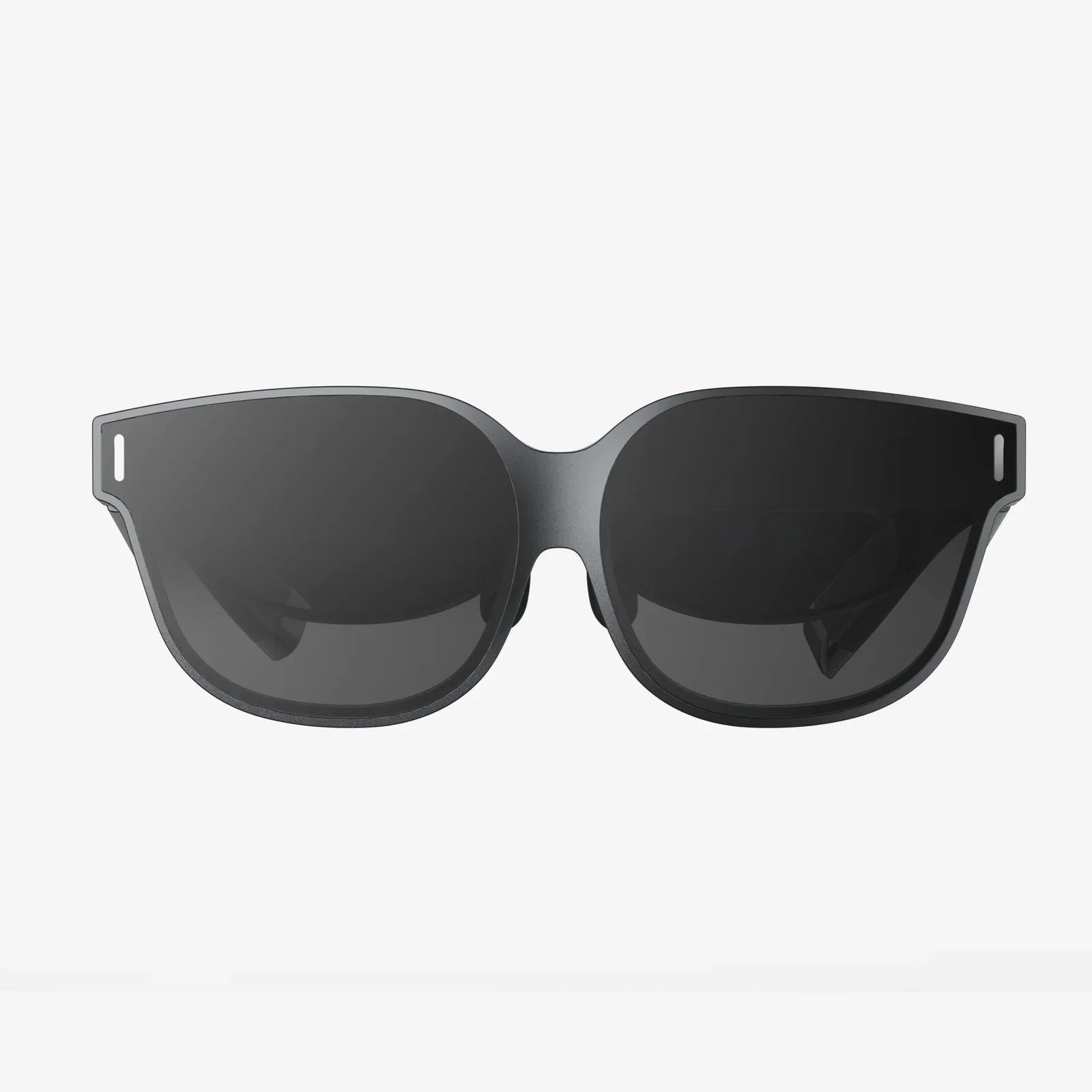
Imagine a world where your most trusted advisor, your creative collaborator, your navigator, and your translator is perched right on your face, seamlessly integrated into the one accessory you already wear every day. This isn't a scene from a science fiction film; it's the imminent reality heralded by the arrival of AI sunglasses. This new category of wearable technology is set to explode onto the consumer market, promising to blend the power of advanced artificial intelligence with the ubiquity and style of classic eyewear, fundamentally altering our relationship with information and the world around us.
Beyond Augmented Reality: A New Paradigm in Wearables
The journey of wearable tech has been a story of miniaturization and integration. We've moved from clunky virtual reality headsets that tethered us to powerful computers to sleek smartwatches that live on our wrists. Each iteration has brought technology closer to our bodies and our daily routines. AI sunglasses represent the next, and perhaps most significant, leap in this evolution. Unlike their predecessors, they are not primarily visual display devices. While some may incorporate micro-displays for augmented reality overlays, the core innovation lies not in what you see, but in what the glasses understand.
These devices are equipped with a sophisticated array of sensors—high-resolution cameras, microphones, inertial measurement units (IMUs), and more—that act as their eyes and ears. This constant stream of multimodal data is processed not in a distant cloud server with latency, but increasingly on the device itself, thanks to compact, powerful neural processing units (NPUs). This on-board AI is the brain, capable of real-time scene analysis, object recognition, speech processing, and language translation. The goal is context-aware computing: the glasses comprehend your environment and your needs within it, offering relevant information and assistance without you ever needing to reach for your phone.
The Architecture of Intelligence: How AI Sunglasses Work
To appreciate the marvel of AI sunglasses, one must understand the symphony of technology working in harmony within their slender frames.
The Sensory Suite
The foundation of any AI eyewear is its ability to perceive the world. This is achieved through a suite of miniature sensors:
- Cameras: These are not just for taking photos. They continuously capture the user's field of view, enabling features like real-time text translation (where text in the real world is recognized and translated instantly), object identification ("what model of car is that?"), and contextual information retrieval ("what are the reviews for this restaurant?"). Advanced computer vision algorithms parse this visual data to understand scenes, read signs, and recognize faces (with appropriate privacy controls).
- Microphones: An array of microphones allows for clear voice pickup, enabling voice assistant functionality even in noisy environments. Beamforming technology helps the glasses focus on the user's voice while filtering out background chatter, wind, and other noise. This is crucial for seamless voice commands and natural language interactions.
- Inertial Measurement Units (IMUs): These sensors, including accelerometers and gyroscopes, track the movement and orientation of the glasses. This helps the AI understand if you are nodding your head, shaking it, or looking at a specific object, adding another layer of contextual intent to your commands.
The On-Device Brain: Edge AI and Neural Processing
The critical differentiator for modern AI sunglasses is the shift from cloud-dependent processing to edge computing. Earlier prototypes would stream data to the cloud for analysis, causing delays, consuming significant battery life, and raising privacy concerns. Today's devices leverage specialized NPUs designed to run complex machine learning models directly on the device.
This "edge AI" is transformative. It means:
- Near-Zero Latency: Responses are instantaneous. Translating a street sign happens the moment you look at it. Asking a question yields an immediate answer, just like a natural conversation.
- Enhanced Privacy: Sensitive audio and visual data can be processed without ever leaving your device. Your personal conversations and surroundings don't need to be uploaded to a remote server, residing only temporarily in the device's secure enclave before being deleted.
- Reliability: Functionality does not depend on a strong or consistent cellular or Wi-Fi connection. You can get directions, identify plants on a hike, or translate a menu while completely offline.
The User Interface: Discreet and Intuitive
How do you interact with a computer that has no traditional screen or keyboard? AI sunglasses employ innovative and subtle interface methods:
- Bone Conduction/Audio: The primary output is often private audio delivered through miniature speakers or bone conduction technology, which transmits sound through the bones of your skull directly to your inner ear. This leaves your ears open to hear ambient sounds, which is crucial for safety and situational awareness, while allowing you to hear AI responses, navigation prompts, and translated conversations clearly and privately.
- Micro-LED Displays: For visual information, some models project a minimalist, monochrome display onto a specially designed lens. This can show simple notifications, navigation arrows, or transcribed text from a conversation, all within your peripheral vision without obstructing your view.
- Touch and Gesture Controls: The temples of the glasses often feature touch-sensitive pads for controlling volume, activating the assistant, or taking a photo. More advanced systems are experimenting with subtle gesture recognition, allowing you to control functions with a small finger movement near the frame.
A Day in the Life: Practical Applications and Use Cases
The theoretical capabilities of AI sunglasses are impressive, but their true value is revealed in practical, everyday scenarios that streamline and enhance daily life.
The Multilingual World Citizen
For travelers and global citizens, AI sunglasses act as a real-time universal translator. Imagine walking through a market in Tokyo. You look at a menu posted outside a restaurant, and the translated text appears in your peripheral vision or is read aloud in your ear. You order your food, and as the server speaks, their words are transcribed and translated in near-real-time, creating a fluid, conversational flow that truly breaks down language barriers. This technology has profound implications for business, travel, and cultural exchange.
The Enhanced Explorer and Learner
For the curious mind, the world becomes an interactive Wikipedia. Walking through a museum, you can gaze at a painting and quietly ask, "Who painted this?" and receive an immediate, detailed biography of the artist and the history of the piece. On a nature hike, you can look at an unusual flower or bird and get instant identification and information about its habitat. This creates a powerful tool for continuous, contextual learning, satisfying curiosity the moment it arises.
The Productive Professional
Hands-free productivity is a game-changer. A surgeon could access procedural guidelines or patient vitals without breaking sterility. A mechanic working on a complex engine could pull up schematics and instructional videos without putting down their tools. For any professional, the ability to record meetings, take notes, and set reminders through simple voice commands, all while keeping their hands and eyes focused on the task at hand, represents a significant leap in efficiency.
The Accessibility Revolution
Perhaps the most profound impact of AI sunglasses will be in the field of accessibility. For individuals with visual impairments, the glasses can describe scenes, read text aloud, identify currency, and recognize faces of approaching friends. For those who are hard of hearing, real-time speech-to-text transcription can be displayed on the lenses, turning every conversation into captioned dialogue. This technology has the potential to grant greater independence and access to information for millions of people.
Navigating the Minefield: Privacy, Security, and Social Etiquette
The capabilities of AI sunglasses are undeniably powerful, but they come with a host of serious ethical and social considerations that must be addressed head-on.
The Privacy Paradox
A device that records audio and video continuously is, by its very nature, a potent surveillance tool. The potential for abuse—both by individuals and by authorities—is significant. Manufacturers must implement robust, transparent privacy safeguards by design. This includes:
- Clear physical indicators (like an LED light) that signal when recording is active.
- Strong encryption for any stored or transmitted data.
- Easy-to-use controls that allow users to quickly disable sensors.
- A strict commitment to on-device processing for sensitive tasks, ensuring personal data never leaves the user's control.
Without these features, the technology risks creating a society where people feel they are constantly being recorded, chilling free expression and social interaction.
The Social Contract
The social acceptance of AI sunglasses is not a given. The etiquette of wearing them will need to be negotiated. Is it rude to wear them during a conversation with a friend? Should they be banned in certain private spaces like locker rooms, bathrooms, or negotiating rooms? Restaurants and businesses may set their own policies. Navigating this new social landscape will require a collective conversation about consent and appropriate use, much like the debates that surrounded the introduction of camera phones.
Security and Misinformation
The technology also presents security risks. Malware could potentially turn these devices into perfect spying tools. Furthermore, the ability to seamlessly manipulate reality through AR overlays, or to generate deepfake audio that appears to come from a trusted person, could be weaponized for fraud and the spread of misinformation. Ensuring the security integrity of these devices and developing ways to authenticate digital information will be an ongoing challenge.
The Road Ahead: Challenges and Future Visions
For AI sunglasses to move from a niche gadget to a mainstream success, several significant hurdles must be overcome. Battery life remains a primary constraint; powering advanced AI and sensors demands a lot of energy, and designers must balance performance with all-day wearability. The form factor is another challenge; the technology must become invisible, fitting into styles that people actually want to wear, from aviators to wayfarers, without looking bulky or geeky.
Looking further into the future, the convergence of AI sunglasses with other technologies is inevitable. Integration with broader smart home and IoT ecosystems will allow your glasses to interact with your environment seamlessly. Advancements in battery technology, such as solar-charging lenses or kinetic energy harvesting from movement, could solve power issues. We may eventually see direct neural interfaces that allow for control and communication through thought alone, making the technology even more intuitive and powerful.
The ultimate goal is not to create a distracting digital barrier between the user and the physical world, but to build a gentle, intelligent layer over it—one that enhances human perception and capability without overwhelming it. The ideal AI sunglasses will feel less like a computer and more like a natural extension of your own cognition, a silent partner that empowers you to navigate the world with more confidence, understanding, and connection. The future is not on your wrist or in your pocket; it's sitting right there on the bridge of your nose, waiting to open your eyes to a world of possibilities you've only just begun to imagine.
Share:
Extended Reality Examples: 10 Powerful Use Cases Shaping Our World
Extended Reality Examples: 10 Powerful Use Cases Shaping Our World