


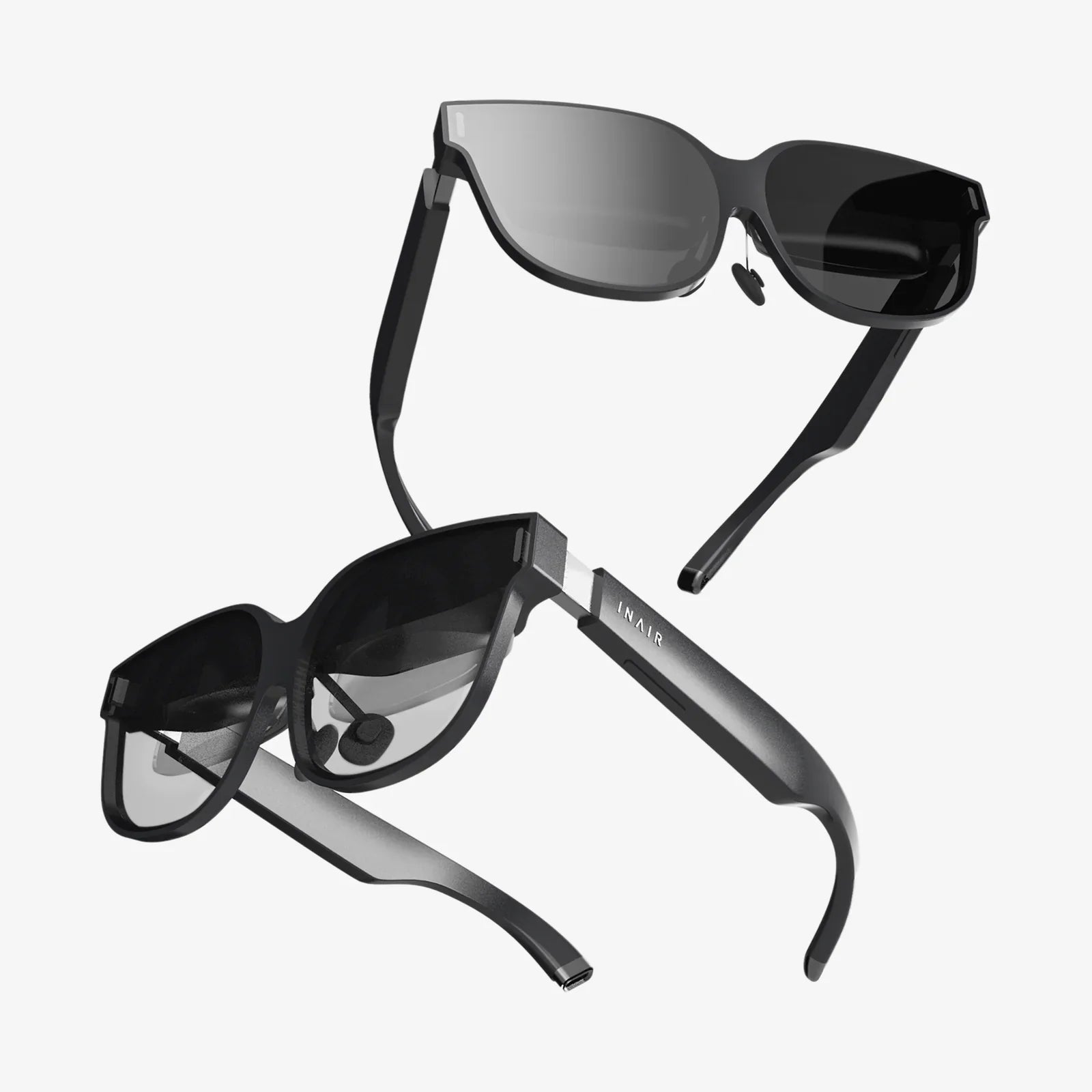
Imagine a world where your glasses don’t just help you see the world more clearly, but understand it, interact with it, and even change your perspective on it in real-time. This is the promise held within the seemingly simple phrase ‘AI take off glasses’—a technological leap that moves far beyond mere visual correction into the realm of dynamic, intelligent visual augmentation. We are standing at the precipice of a revolution in how we perceive and process information, where the line between the digital and the physical will not just blur, but become functionally irrelevant. This isn't about a product; it's about a fundamental shift in the human experience, powered by a silent, ever-present intelligence living right on the bridge of your nose.
Beyond Augmented Reality: The Dawn of Intelligent Vision
For years, the conversation around smart eyewear has been dominated by the concept of Augmented Reality (AR)—overlaying digital information onto our view of the physical world. While revolutionary, traditional AR can feel like a static layer, a heads-up display projected onto reality. The integration of sophisticated artificial intelligence, however, transforms this passive overlay into an active, contextual, and deeply personal interpreter of your environment. This is the core of the ‘AI take off’ concept.
These systems move beyond simple object recognition. Through the fusion of advanced sensors—high-resolution cameras, depth sensors, microphones, and inertial measurement units—they create a rich, multi-dimensional data stream of the user's environment. AI models, often running on a hybrid of on-device and cloud-based processors, analyze this data in real-time. This isn't just about identifying a chair; it's about understanding the context. Is the chair occupied? Is it in a meeting room, suggesting it’s part of a larger arrangement? Is it the user’s favorite chair at home? The AI constructs a semantic understanding of the scene, moving from pixels to meaning.
The Architecture of Intelligent Sight: How It Works
The magic of this technology is built upon a complex, interwoven stack of hardware and software, all miniaturized to fit within the elegant form factor of eyewear.
The Sensory Suite
The foundation is the array of sensors. Cameras capture the visual field, while LiDAR or time-of-flight sensors map depth and distance with incredible accuracy, creating a 3D point cloud of the environment. Microphones pick up audio cues, from spoken commands to ambient sounds like approaching traffic, providing another layer of contextual data. This multi-modal sensor fusion is critical; it allows the AI to cross-reference data types for a more robust and accurate understanding, much like the human brain does.
The Onboard Brain: Edge AI Processing
To ensure responsiveness and protect privacy, a significant portion of the AI processing happens directly on the device itself—a concept known as edge computing. Specialized neural processing units (NPUs) are embedded within the glasses' frame. These chips are designed for one primary task: to run complex machine learning models with extreme power efficiency. This allows for instantaneous reactions—like translating a street sign as you glance at it or identifying a product on a shelf—without the latency of sending data to the cloud and back. It also means sensitive visual and auditory data never has to leave your possession.
The Cloud Conduit
For more complex tasks that require vast datasets—such as searching for information across the entire internet, accessing a massive library of translated languages, or running extraordinarily large generative models—the glasses will seamlessly connect to cloud resources. The onboard AI acts as a smart gatekeeper, determining what can be handled locally and what requires the immense power of the cloud, all while managing the handoff to provide a seamless user experience.
A World Transformed: Practical Applications Across Industries
The potential applications for this technology are as vast as human endeavor itself, poised to transform every professional field and daily activity.
Revolutionizing Accessibility
This is perhaps the most profound and immediate impact. For individuals with visual impairments, AI-powered glasses can act as a powerful visual interpreter. They can read text aloud from any surface—menus, documents, computer screens—in real-time. They can describe scenes: ‘Your friend is waving from across the street,’ ‘There is a step down ahead,’ ‘The room contains a large table and five people.’ They can identify currency denominations or find lost items by recognizing their form. For those with hearing impairments, the glasses could transcribe conversations in real-time, displaying subtitles over the people who are speaking, effectively turning the world into a closed-captioned experience.
Supercharging Professional Workflows
- Healthcare: A surgeon could see vital signs and 3D anatomical guides overlaid directly on their patient during a procedure. A mechanic could see torque specifications and wiring diagrams superimposed on the engine they are repairing, with the AI highlighting the next step in the manual.
- Engineering & Design: Architects could walk through a physical space and see their digital blueprints come to life around them, visualizing structures before they are built. Factory technicians could receive real-time diagnostics and repair instructions by simply looking at a malfunctioning machine.
- Education & Training: A student learning to repair an engine could have instructions and safety warnings appear directly on the components they are handling. A medical student could practice procedures on a digital overlay before ever touching a real patient.
Redefining Social and Travel Experiences
Imagine traveling in a country where you don't speak the language. Your glasses could instantly translate street signs, menus, and conversations, displaying the translation naturally in your line of sight. They could provide historical context about a monument you're viewing or recommend a restaurant based on your dietary preferences and the live menu it just read. In social situations, they could help with recall, subtly displaying the name and key details of a person you’ve met before as you greet them.
Navigating the Inevitable Challenges: Privacy, Ethics, and Society
With such transformative power comes immense responsibility and a host of complex challenges that society must address proactively.
The Privacy Paradox
A device that sees and hears everything you do is the ultimate privacy challenge. The potential for constant, unauthorized surveillance—by individuals, corporations, or governments—is a terrifying prospect. The solution lies in a core architectural principle: privacy by design. This means data should be processed locally whenever possible. When cloud processing is necessary, it must be anonymized and encrypted. Users must have absolute, granular control over what data is collected and how it is used. Features like a physical shutter for the cameras or a clear, audible indicator when recording are not just features; they are ethical necessities.
The Algorithmic Bias Blind Spot
AI models are trained on data, and that data can contain human biases. An object recognition system trained primarily on images of light-skinned individuals may fail to accurately recognize features of darker-skinned people. A translation AI might struggle with regional dialects or non-binary language. If these glasses are to be a tool for everyone, their underlying AI must be trained on exceptionally diverse and representative datasets and continuously audited for biased outcomes.
The Social and Cognitive Impact
What happens to human memory and attention when we can instantly recall every fact and face? Will we become overly reliant on this external intelligence? Furthermore, the constant stream of notifications and information could lead to cognitive overload and a further erosion of our ability to be present in the moment. The design of these systems must prioritize user well-being, with features that encourage breaks, filter non-essential information, and allow for moments of pure, unaugmented reality.
The Future Lens: Where Do We Go From Here?
The current state of the technology is advancing at a breakneck pace, but the true ‘take off’ moment hinges on several key developments. Battery technology and power efficiency remain significant hurdles; the AI brain must sip power, not guzzle it. The development of more advanced display technologies, like holographic waveguides, is crucial to creating bright, high-resolution images that are visible in all lighting conditions without bulky hardware. Perhaps most importantly, we need to develop intuitive and socially acceptable interfaces—think subtle gesture control, eye-tracking, and advanced voice recognition—to move beyond the awkwardness of touchpads on temples or speaking aloud to your glasses in a quiet room.
Looking further ahead, the endpoint of this trajectory is a move from augmented reality to mediated reality. Instead of just adding a layer, the AI could actively alter your perception—filtering out visual clutter to help you focus, enhancing certain colors for the colorblind, or even providing a calming filter for someone experiencing sensory overload. The glasses would become less of a tool and more of a seamless extension of your own cognitive and perceptual system.
The journey toward true ‘AI take off glasses’ is not merely a path of technological innovation; it is a societal conversation. It demands collaboration between engineers, ethicists, policymakers, and users to build a future where this powerful technology enhances humanity without diminishing our privacy, our autonomy, or our essential human experience. The goal is not to replace our view of the world, but to deepen it, to make it more accessible, understandable, and ultimately, more magical. The spectacles of the future won’t just be worn on the face; they will be woven into the very fabric of how we live, work, and connect, offering a glimpse into a world where our reality is limited only by our imagination.
Share:
Virtual Display Headset: The Invisible Revolution in Personal Computing
Artificial Intelligence Discovery: The New Scientific Revolution Reshaping Our World