


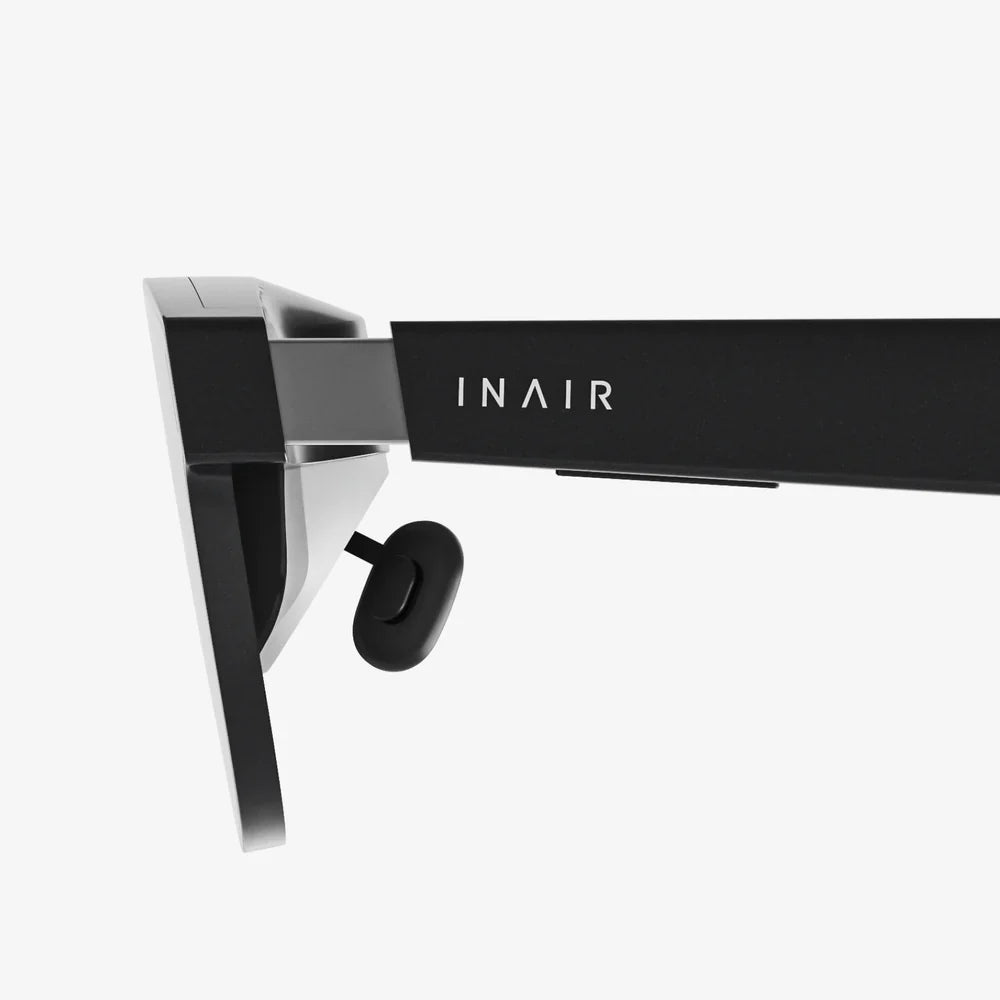
Imagine stepping off a plane in a bustling foreign market, the air thick with aromas and a cacophony of unintelligible speech. Instead of fumbling with a phrasebook or a smartphone app, you simply adjust a sleek device over your ears. You make eye contact with a vendor, and as they speak, their words are seamlessly transformed in near real-time, flowing into your ears in your native tongue. You reply, and they hear you in theirs. This is not a scene from a science fiction novel; it is the rapidly approaching reality promised by the AI translator headset, a device set to revolutionize human interaction on a planetary scale.
The Architectural Marvel: How It All Works
At its core, an AI translator headset is a symphony of advanced technologies working in concert. The magic begins with high-fidelity microphones that are specifically engineered for noise cancellation and beamforming. This allows the device to isolate the speaker's voice from background chatter, traffic noise, and wind, a critical first step for accurate transcription.
This captured audio is then processed by an onboard speech-to-text (STT) engine. Early translation devices relied on cloud-based processing, sending audio snippets to remote servers for interpretation. The modern paradigm, however, is shifting powerfully towards edge computing. By leveraging specialized neural processing units (NPUs) within the headset itself, the audio is transcribed to text locally on the device. This eliminates latency—the dreaded delay between speech and translation—and ensures functionality even in areas with poor or non-existent internet connectivity.
The transcribed text is then passed to the heart of the system: the neural machine translation (NMT) model. Unlike older statistical methods, NMT uses vast artificial neural networks to understand context, idiom, and nuance. It doesn't translate word-for-word; it translates idea-for-idea. It understands that "it's raining cats and dogs" is about heavy precipitation, not pets falling from the sky. These models are trained on immense corpora of text—everything from literary works and legal documents to social media posts—allowing them to handle a surprising degree of linguistic subtlety.
The final step involves a text-to-speech (TTS) engine that vocalizes the translated text. The best systems now employ expressive TTS that can convey tone, cadence, and even some emotional inflection, moving beyond the robotic monotone of the past. This entire chain—capture, transcribe, translate, speak—is now being compressed into a fraction of a second, creating the illusion of a fluid, natural conversation.
Beyond the Hype: Tangible Applications Reshaping Industries
The potential applications for this technology extend far beyond the tourist trying to order a coffee. They are poised to become indispensable tools across numerous sectors.
Redefining Global Business and Diplomacy
In the world of international business, the ability to communicate without intermediaries is transformative. Negotiations, once hindered by the slow process of human translation, can occur with a new pace and directness. Subtle cues, often lost when filtered through a third party, are preserved. A business executive can walk a factory floor in another country and speak directly with engineers and line workers, fostering a deeper understanding of operations and building rapport that was previously impossible. On the diplomatic stage, while formal proceedings may still use human interpreters for their unparalleled nuance, informal back-channel discussions and working groups could be greatly accelerated, potentially easing tensions and fostering collaboration.
Revolutionizing Travel and Cultural Exploration
Travel will be fundamentally altered. Guided tours will become infinitely more accessible, allowing a single guide to lead a group of tourists from a dozen different countries. The deep, spontaneous connections that are the holy grail of travel—conversations with a local artisan about their craft, sharing stories with a family in a rural village, debating politics with students in a café—will become achievable for anyone, not just polyglots. It democratizes the experience of cultural immersion, removing the language barrier that so often keeps travelers confined to tourist bubbles.
Transforming Healthcare and Public Services
Perhaps one of the most critical applications is in healthcare. In emergency rooms and clinics, accurate communication is a matter of life and death. An AI translator headset can allow a doctor to quickly and accurately diagnose a patient who speaks another language, understanding their symptoms and medical history without dangerous misunderstandings. It can help social workers, police officers, and emergency responders provide effective aid and ensure rights are understood, bridging critical gaps in public safety and social services.
The Human Factor: Navigating the Challenges and Ethical Quandaries
Despite the exciting promise, the path to a universally fluent world is not without its significant obstacles and profound questions.
The Nuance Problem: Can AI Truly Capture Soul?
Language is the soul of a culture. It is laden with idiom, historical context, humor, and poetry that often defy literal translation. The deepest cultural concepts—like the Portuguese "saudade" or the German "Schadenfreude"—require paragraphs of explanation. Can an algorithm ever truly grasp and convey this depth? There is a risk of a "flattening" of language, where rich, idiosyncratic speech is reduced to a sterile, functional exchange. The art of conversation, the playful ambiguity, and the shared struggle of communicating across a language barrier—which can itself be a bonding experience—might be lost.
Privacy and Data Security: Who Is Listening?
These devices are potent data collection tools. They process incredibly intimate data: every conversation, every business negotiation, every confidential medical consultation. The questions of where this data is stored, how it is used, and who has access to it are paramount. Could conversations be mined for advertising purposes? Could they be subpoenaed by governments? Robust, transparent encryption and clear data policies that prioritize user privacy are not optional features; they are the absolute foundation of trust required for this technology to succeed.
The Socioeconomic Divide: A Tool for All or a Luxury for Few?
Initially, the most advanced models will carry a premium price tag. This risks creating a world where seamless global communication is a luxury afforded only to wealthy travelers, multinational corporations, and powerful governments. If the technology does not become widely accessible, it could inadvertently widen existing global inequalities rather than close them. The goal must be to make the technology as ubiquitous and affordable as the smartphone, ensuring it serves as a bridge for all of humanity, not just an elite few.
The Fate of Human Interpreters and Language Learning
The rise of this technology sparks a valid concern about the future of human translators and interpreters. While AI will undoubtedly handle an increasing share of routine, functional translation, the role of the human expert will evolve, not disappear. They will be needed for high-stakes diplomacy, complex literary translation, sensitive legal contexts, and for curating and improving the AI systems themselves. Furthermore, the incentive to learn another language might diminish for some. Yet, others may argue that by lowering the initial barrier to communication, these devices could actually spark a greater interest in other cultures, motivating people to learn languages more deeply, not less.
The Road Ahead: From Babel to Brilliance
The evolution of the AI translator headset is moving at a breathtaking pace. Future iterations will likely incorporate augmented reality (AR) displays, projecting live captions into the user's field of vision during a conversation. Translation capabilities will expand to cover thousands of language pairs, including regional dialects and even ancient or endangered languages in an effort to preserve cultural heritage. Accuracy will continue to improve as models are trained on more diverse data sets, and latency will be reduced to near-zero.
The ultimate goal is a world where the device itself fades into the background. The technology will become smaller, more powerful, and more intuitive, eventually integrating into everyday wearables like earbuds or glasses. The focus will shift entirely from the tool to the conversation, from the technology to the human connection it enables.
The dream of a universal translator has captivated humanity for generations, a symbol of our deepest desire to understand and be understood. The AI translator headset is not a perfect realization of that dream—it may never fully capture the poetic soul of every language. But it is a monumental step forward. It is a powerful tool that promises to reshape economies, redefine travel, and bring us closer as a global community. The tower of Babel is falling, and in its place, we are building something far more brilliant: a world where no voice goes unheard, and no idea is lost in translation.
This isn't just about understanding words; it's about unlocking a million conversations that were once impossible, fostering empathy across continents, and discovering that in the quiet hum of a translated sentence, we can find our shared humanity. The next time you hear a language you don't understand, don't hear a barrier—hear a future conversation waiting to happen.
Share:
Top 10 AI Innovations Reshaping Our World and Future
2D to 3D Software: The Ultimate Guide to Transforming Your Designs