


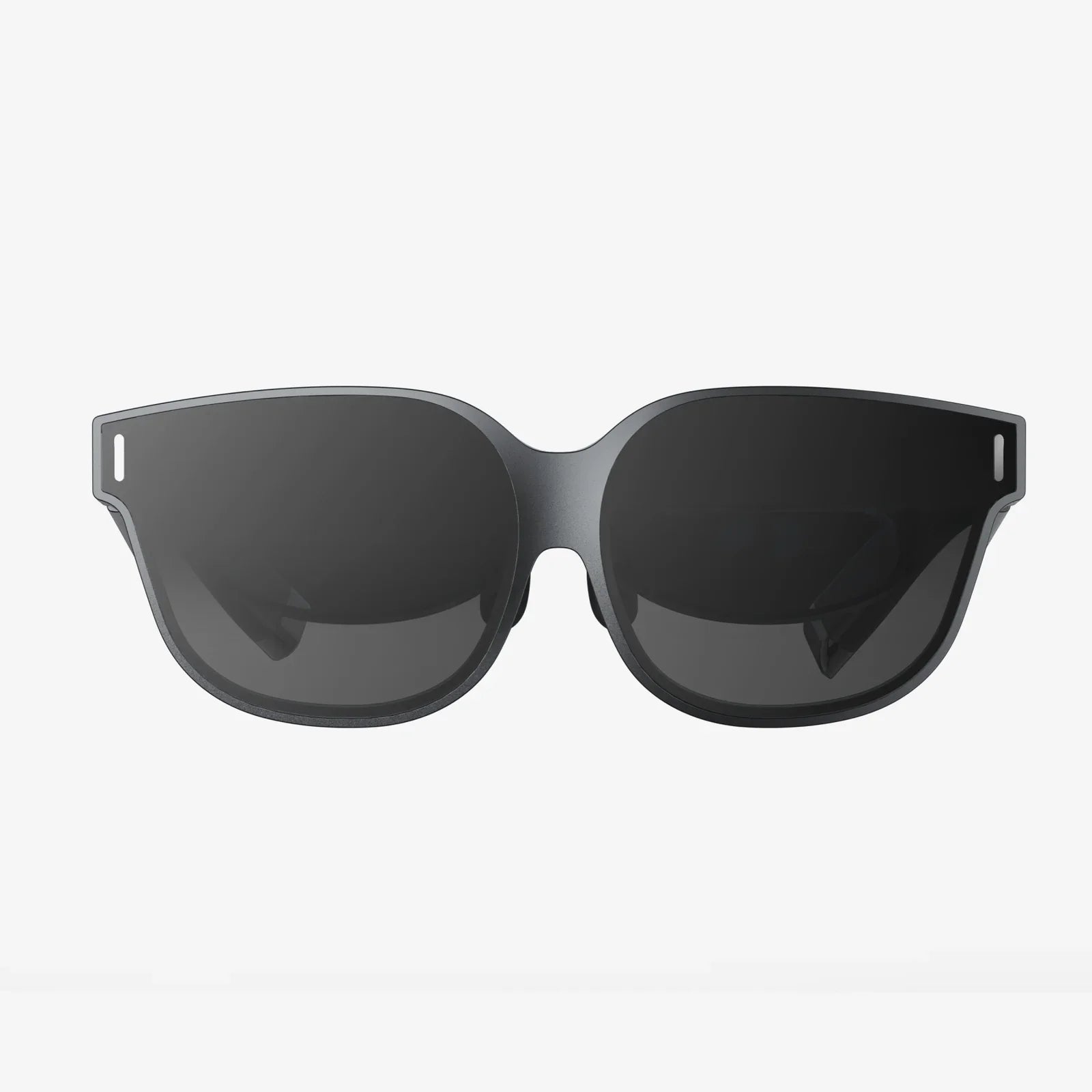
Imagine a world where the digital and physical realms don’t just coexist but are seamlessly, intelligently intertwined. A world where information doesn’t live on a screen in your hand but is intuitively overlaid onto your environment, accessible with a glance and a command. This is no longer the stuff of science fiction. The convergence of three transformative technologies—Artificial Intelligence, Virtual Reality, and advanced optics—is birthing a new class of device: AI VR smart glasses. This isn’t just another gadget; it’s the foundation for the next great computing platform, poised to revolutionize how we work, connect, learn, and perceive reality itself.
The Trifecta of Transformation: Defining the Core Technologies
To understand the profound impact of this fusion, we must first dissect its core components and appreciate how they elevate one another.
Artificial Intelligence: The Invisible Brain
Artificial Intelligence is the critical catalyst, the intelligent engine that makes everything else possible. Early augmented reality efforts were often clunky, requiring predefined markers or offering little contextual awareness. AI changes everything. Through machine learning and computer vision, the glasses can perceive, interpret, and understand the world in real-time.
- Scene Understanding: Advanced neural networks can identify objects, people, text, and spatial geometry. The glasses don’t just see a table; they understand it’s a table, can estimate its dimensions, and know a coffee cup is sitting on it.
- Natural Language Processing (NLP): Voice becomes the primary interface. AI-powered NLP allows for conversational, context-aware commands. You can ask, "Where did I put my keys?" and the glasses, remembering what they "saw" earlier, can highlight them on the sofa.
- Predictive Assistance: AI anticipates your needs. If you look at a complex piece of machinery, it might automatically pull up the relevant schematic. If you’re reading a foreign language menu, it can offer a real-time translation overlay.
- Avatar Creation & Expression: In social VR spaces, AI can generate realistic, emotive avatars that mirror your facial expressions and eye movements in real-time, creating a profound sense of presence.
Virtual Reality: The Immersive Canvas
While often associated with fully enclosed headsets, VR technology is crucial for smart glasses in two key ways. First, it provides the foundational tracking technology—inside-out positional tracking, accelerometers, gyroscopes—that allows the glasses to understand their precise location and orientation in space. This is non-negotiable for stable digital overlays. Second, the same high-resolution, high-refresh-rate micro-displays developed for VR are being miniaturized for glasses. These displays project light directly onto the retina or through waveguides, creating crisp, bright images that appear to exist in the real world. The goal is a form factor that can switch between augmented reality (digital overlays on the real world) and full virtual reality (complete immersion in a digital environment) seamlessly.
Smart Glasses: The Gateway to Perception
The hardware itself is the marvel of miniaturization. This is where the physical meets the digital. It encompasses advanced micro-optics, like holographic waveguides or birdbath lenses, that bend light to project images onto the user’s retina. It includes a suite of sensors: high-resolution cameras for world sensing, depth sensors (like LiDAR) for mapping environments, microphones for voice input, and heart rate sensors for biometric data. All of this is packaged into a form factor that aims for the social acceptability and comfort of regular eyeglasses. This is the ultimate challenge: making the powerful technology disappear, leaving only its magical capabilities visible to the user.
Beyond Novelty: Transformative Use Cases Across Industries
The true measure of this technology lies not in its specs but in its utility. The applications are as vast as human endeavor itself.
Redefining the Workplace and Productivity
The concept of the office and the factory floor will be fundamentally altered. For remote workers, instead of a wall of monitors, they could have virtual screens positioned around their home office, accessible from any chair. Colleagues from across the globe could appear as life-like holograms in your living room for a collaborative design session, manipulating 3D models together in mid-air. For field technicians, AI VR glasses can provide hands-free, interactive schematics, highlight malfunctioning components with arrows, and stream a live feed to a remote expert who can annotate directly onto the technician’s field of view. This reduces errors, improves training, and drastically cuts down on site visits.
Revolutionizing Education and Training
Learning will shift from passive absorption to active experience. Medical students will be able to practice complex surgical procedures on hyper-realistic virtual patients, with AI providing real-time feedback on their technique. History students won’t just read about ancient Rome; they will walk through a digitally reconstructed Forum, witnessing speeches and daily life unfold around them. Mechanics-in-training could see the internal workings of an engine superimposed over the physical block, understanding fluid dynamics and part interaction in a way a textbook could never convey. This is experiential learning at its most powerful.
The Future of Social Connection and Entertainment
Social media will evolve into "socio-spatial" computing. Instead of scrolling through a feed, you might meet a friend's photorealistic avatar in a virtual cafe to watch a movie on a giant screen that doesn't exist in your physical apartment. Concerts and sporting events could be experienced from the best seat in the house, from the comfort of your home, with the ability to see and cheer alongside friends as if you were there together. Gaming will explode beyond the TV, turning your entire home into a level, with AI-driven characters that understand your environment and react intelligently.
Enhancing Daily Life and Accessibility
The assistive potential is staggering. For individuals with visual impairments, the glasses could highlight curbs, identify obstacles, read signs aloud, and recognize faces, providing a new layer of environmental awareness. For anyone, navigating a new city becomes intuitive, with directional arrows painted onto the sidewalk. Shopping for groceries could involve seeing nutritional information and recipe suggestions floating next to products. The technology becomes a personalized assistant that perceives the world with you and for you.
The Inevitable Challenges: A Road Paved with Questions
For all its promise, the path to ubiquitous AI VR glasses is fraught with significant technical, social, and ethical hurdles.
The Technical Gauntlet
The holy grail is all-day wearability, which demands solutions to immense problems. Battery Life: Powering high-resolution displays, spatial tracking, and constant AI processing is incredibly energy-intensive. Breakthroughs in battery technology and ultra-low-power chips are essential. Processing Power: Some processing can be offloaded to a companion device or the cloud, but for latency-critical tasks like visual tracking, immense on-device processing is needed without generating excessive heat. Visual Fidelity: The displays must be bright enough to work in sunlight, with a wide field of view, high resolution, and the ability to comfortably blend digital light with real light. We are not quite there yet.
The Privacy Paradigm
This is perhaps the most significant societal challenge. A device that sees what you see, hears what you hear, and knows where you are is a privacy advocate’s nightmare. Continuous recording and environmental scanning raise profound questions.
- Who owns the data of the world that is scanned by these devices?
- How do we prevent constant, surreptitious facial recognition in public spaces?
- Can we ensure that private moments in a home are not accidentally streamed or recorded?
- How do we protect against malicious hacking of a device that is literally overlaying information onto a user’s reality?
Robust, transparent, and ethical data-use policies, and potentially new laws, will be required before these devices can be widely adopted. The concept of consent becomes blurry when a device is always on.
The Social Contract
Will society accept people wearing cameras on their faces everywhere? The specter of a world where people are mentally absent, engrossed in digital layers, raises concerns about further erosion of public social interaction. Etiquette norms will need to evolve. How do you know if someone is recording you? Is it rude to wear glasses during a conversation? These may seem like trivial concerns, but they are critical for the harmonious integration of technology into the fabric of daily life.
The Next Decade: From Prototype to Paradigm
The development of AI VR smart glasses will not be a single event but a gradual evolution. We will likely see a progression from today’s more limited devices to increasingly powerful and discreet ones. The first generation will be adoption-driven by specific enterprise and industrial use cases where the utility outweighs the cost and clunkiness. As the technology matures—becoming smaller, more powerful, and more affordable—it will trickle down to prosumers and eventually the mainstream market. The key inflection point will be when the technology achieves true optical transparency: glasses that look entirely normal but contain immense computational power within the frame. This is the goal towards which countless engineers and designers are tirelessly working.
We are standing at the precipice of a new era of computing. The journey from command-line interfaces to graphical user interfaces to touchscreens has been about making technology more intuitive, more natural, and more human. AI VR smart glasses represent the next, and perhaps final, step in this journey: an interface that requires no interface at all. It’s a shift from looking at a device to looking through it into a world augmented with intelligence. The potential to enhance human capability, bridge gaps of understanding, and unlock new forms of creativity is limitless. The challenges are equally vast, demanding careful thought and conscious design. One thing is certain: the world is about to put on a new pair of glasses, and nothing will look the same again.
Share:
How Long Does AR Last on Glasses: The Ultimate Guide to Coating Durability
Super AI Tools Are Reshaping Our World, Here's How and Why