


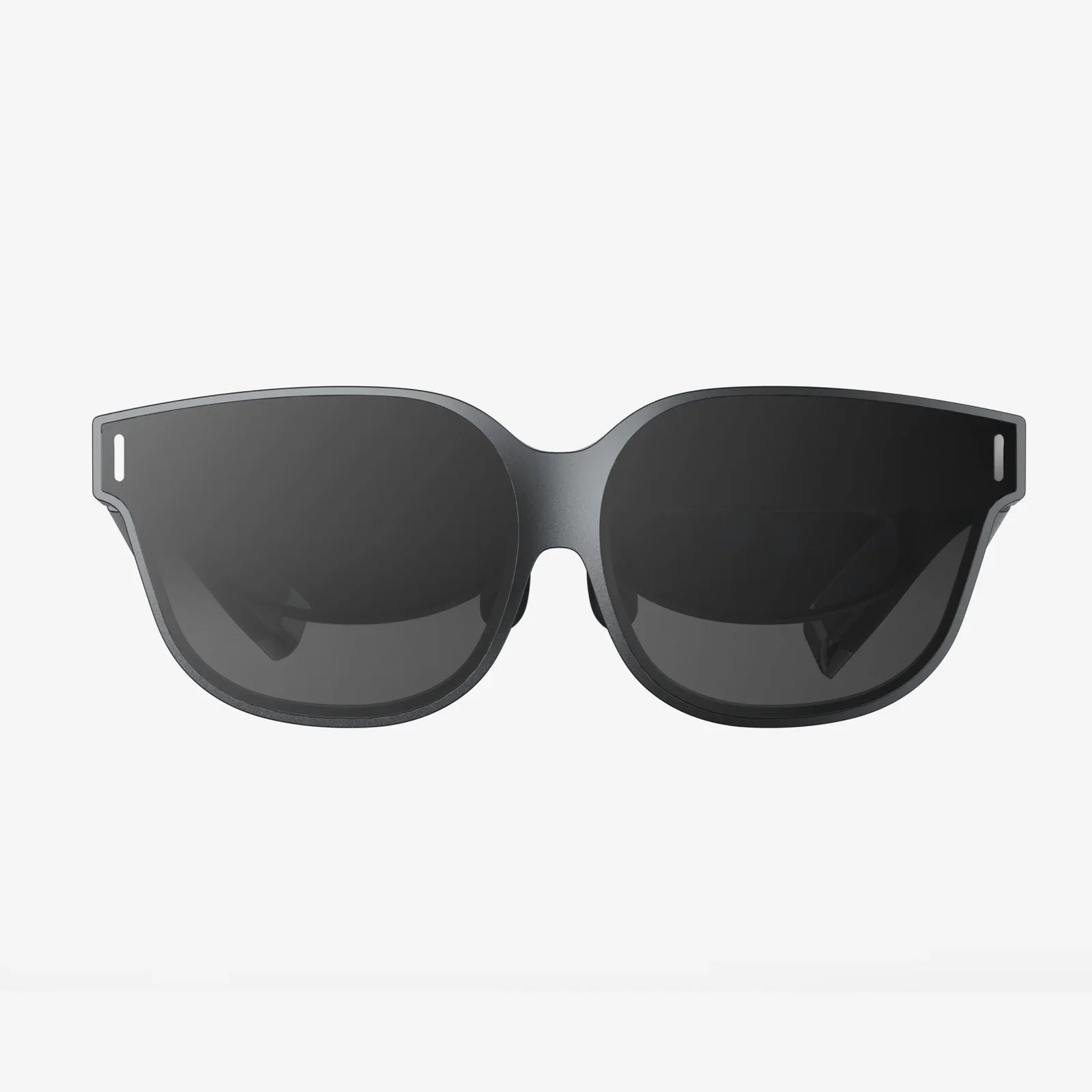
Imagine a world where digital information doesn’t live on a screen in your hand, but is seamlessly woven into the very fabric of your reality. Where directions float on the sidewalk before you, historical facts materialize beside ancient ruins, and a colleague’s avatar can collaborate with you on a complex 3D model from across the globe, all while you sip your morning coffee. This is not a distant science fiction fantasy; it is the imminent future being unlocked today by a revolutionary class of device: All In One AR glasses. This comprehensive exploration delves into the technology, applications, challenges, and profound societal implications of these wearable computers that promise to redefine our relationship with the digital and physical worlds.
The Architectural Marvel: Deconstructing the All-In-One Design
The term "All In One" is the critical differentiator. Unlike earlier augmented reality systems that relied on a tether to a powerful external computer or a smartphone for processing, All In One AR glasses are self-contained units. They represent a monumental feat of engineering miniaturization, packing an entire computing ecosystem into a form factor designed to be worn on the face. This independence is their superpower, granting users unparalleled freedom of movement and a more natural, immersive experience.
At the heart of these devices lies a sophisticated symphony of components:
- The Optical Engine: This is the core of the visual experience. Most systems utilize either waveguide technology or birdbath optics. Waveguides use microscopic gratings to pipe light from a micro-display into the user’s eye, allowing for sleek designs. Birdbath optics reflect light from a display onto a combiner lens that overlays the image onto the real world. The goal is to create bright, high-resolution, and wide field-of-view visuals that appear stable in the user’s environment.
- The Processing Unit: A miniaturized, high-performance system-on-a-chip (SoC) acts as the brain. It handles everything from rendering complex 3D graphics and running the operating system to processing data from a suite of sensors. This requires balancing immense computational power with extreme energy efficiency to ensure reasonable battery life without excessive heat generation.
- Spatial Mapping Sensors: An array of cameras, depth sensors (like time-of-flight sensors), and LiDAR scanners constantly scan the environment. They create a real-time, millimeter-accurate 3D map of the surrounding space, understanding the geometry of rooms, the location of surfaces, and the position of objects. This digital understanding of the physical world is what allows virtual objects to behave realistically—sitting on a table, occluding behind a couch, or bouncing on the floor.
- The Battery: Often the most significant constraint, the battery is a marvel of energy density. It must power all the other components for several hours of active use, leading to innovative designs that sometimes split the battery into a rear counterweight for better balance or into a small, pocketable pack.
- Interaction Paradigms: Without a traditional keyboard and mouse, All In One AR glasses employ intuitive input methods. These include voice commands, hand tracking (allowing users to pinch, select, and manipulate digital objects with their fingers), and responsive touchpads built into the temple of the glasses.
A World Transformed: Applications Across Industries
The true potential of All In One AR glasses is realized not in their specs, but in their transformative applications. They are poised to become the ultimate tool for contextual computing, delivering the right information at the right time and in the right place.
The Professional and Industrial Arena
This is where the ROI is most immediately evident. In manufacturing and field service, technicians can see schematic diagrams and animated repair instructions overlaid directly onto the malfunctioning machinery they are fixing, freeing their hands and drastically reducing errors and training time. Architects and engineers can walk through full-scale 3D holograms of their building designs, assessing spatial relationships and identifying flaws before a single brick is laid. In healthcare, surgeons could have vital signs, MRI scans, and guidance systems visible in their periphery during complex procedures, while medical students could learn anatomy by examining interactive, life-sized holograms of the human body.
Redefining Social Connection and Collaboration
All In One AR glasses promise to evolve remote work and socializing from a grid of faces on a screen to a shared presence in a virtual space. Imagine a design team across three continents standing around the same holographic prototype, making real-time adjustments with gestures. Or friends watching a virtual big-screen movie together on the ceiling of their respective living rooms, their avatars sharing the same digital space. This concept of "telepresence" could dissolve geographical barriers in a way video calls never could, fostering a deeper sense of shared experience and collaboration.
The Future of Entertainment and Everyday Life
For the consumer, the possibilities are boundless. Gaming will escape the television and invade the living room, with characters dueling on your coffee table and puzzles integrated into your home’s architecture. Navigation will become intuitive, with glowing path markers guiding you through complex airports or city streets. Live sports could be enhanced with player stats floating beside them and instant replays holographically reenacted on your coffee table. Even mundane tasks like cooking could be revolutionized, with a recipe’s steps and timers visually guiding you without ever needing to look down at a book or tablet.
Navigating the Obstacle Course: Challenges on the Path to Adoption
Despite the exciting potential, the path to ubiquitous adoption of All In One AR glasses is fraught with significant technical and social hurdles that must be overcome.
- Form Factor and Comfort: The ultimate goal is a device that is as lightweight, comfortable, and socially acceptable as a pair of standard eyeglasses. Current technology often requires trade-offs between performance, battery life, and size, resulting in devices that can be bulky. Achieving a socially normative look is crucial for all-day wear.
- Battery Life and Thermal Management: High-resolution displays and powerful processors are energy-intensive and generate heat. Delivering all-day battery life in a small form factor without the device becoming uncomfortably warm on the user’s face remains a primary engineering challenge.
- The "Killer App": While many compelling professional applications exist, the consumer market needs a definitive, must-have application that drives mass adoption. This was the role email played for the personal computer and the app store played for the smartphone.
- Privacy and the Social Contract: Devices with always-on cameras and microphones worn in public spaces raise profound privacy concerns. The potential for unauthorized recording, facial recognition, and data collection is significant. Establishing clear social norms, ethical guidelines, and robust legal frameworks is not just important—it is essential for the technology to be accepted. The world needs to answer the question: what is acceptable behavior for someone wearing a powerful sensor array on their face?
- Digital Division and Accessibility: There is a risk that this powerful technology could exacerbate existing social and economic divides. Ensuring it is accessible, affordable, and designed for the benefit of all, not just a privileged few, will be a critical challenge for developers and policymakers.
The Road Ahead: From Isolated Device to Connected Ecosystem
The future of All In One AR glasses does not lie in isolation. Their ultimate power will be unlocked as part of a broader ecosystem. They will seamlessly connect with our other devices—phones, laptops, smartwatches—acting as our primary, always-available interface. They will tap into cloud-based AI for immense processing power, allowing for more complex applications and real-time language translation displayed directly in our field of view.
We are moving towards a world of "ambient computing," where technology recedes into the background of our lives, available when we need it but invisible when we don’t. All In One AR glasses are the key to this world, offering a glimpse of a future where the line between our digital and physical lives is not just blurred, but erased, creating a new, unified reality limited only by our imagination.
The transition from smartphones to face computers is already underway, and it promises to be a shift more profound than the move from desktop to mobile. The ability to overlay our imagination directly onto our perception of reality will unlock new forms of creativity, solve previously intractable problems, and connect us in ways we are only beginning to comprehend. The era of staring into a handheld rectangle is drawing to a close; the age of looking out at a world infinitely enhanced and explained is dawning.
Share:
What to Do with Virtual Reality: A Deep Dive into the Limitless Possibilities of the Metaverse
What Is a Smart Terminal - The Connected Core of Modern Life