


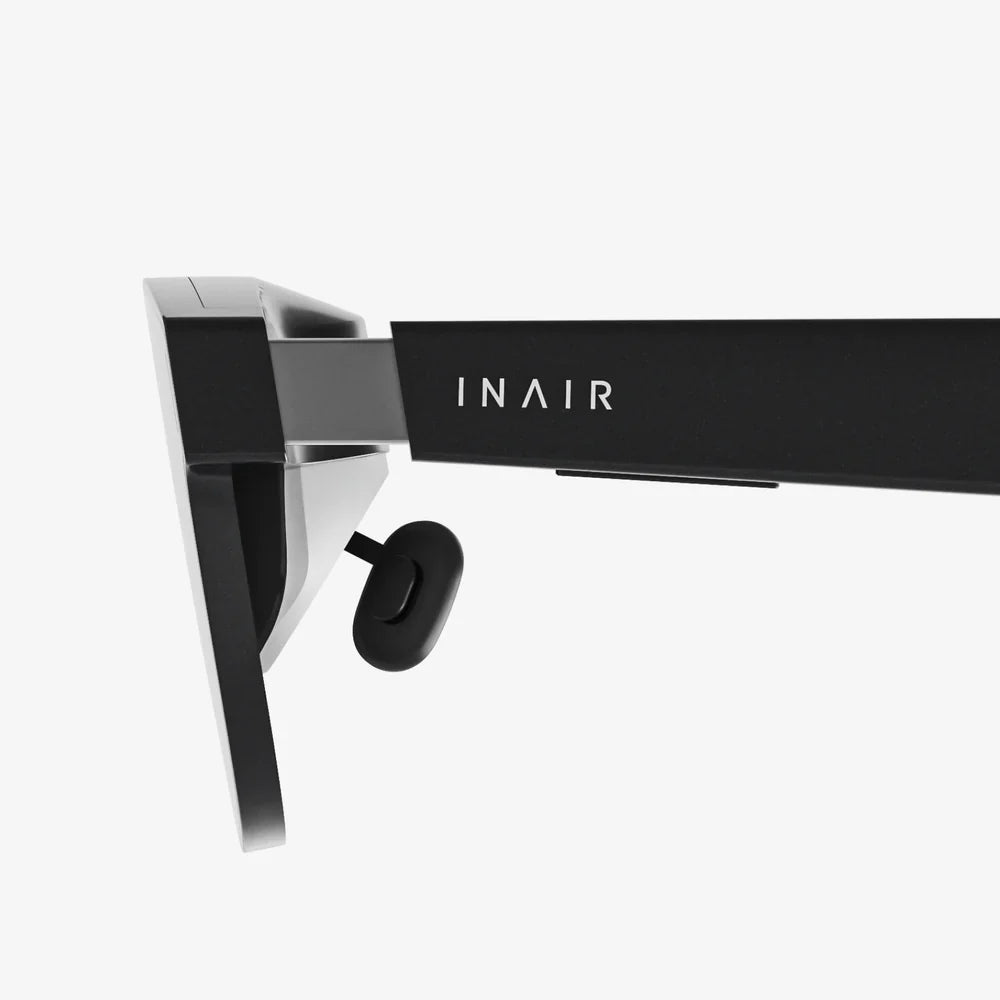
Imagine a world where your clothing doesn't just protect you from the elements, but actively regulates your body temperature; where a ring on your finger doesn't just signify a bond, but monitors your cardiac health in real-time; where a pair of glasses doesn't just correct your vision, but overlays a digital canvas onto the physical world. This is not a distant science fiction fantasy—it is the imminent future promised by the next generation of personal technology, a future defined by the alter wearable. This new class of device represents a fundamental shift from merely tracking our lives to actively enhancing and altering our human experience, seamlessly weaving technology into the very fabric of our existence.
Beyond the Wrist: Redefining the Form Factor
The journey of wearable technology began on the wrist. For years, the smartwatch and fitness band have been the undisputed champions of the category, offering a convenient screen and a suite of sensors. However, the concept of an alter wearable demands a radical departure from this singular form. The future is not one device, but many, each designed for a specific purpose, context, and part of the body, disappearing into our lives until they become indistinguishable from personal accessories or even our own skin.
We are already seeing the emergence of intelligent rings that provide continuous, clinical-grade sleep monitoring without the bulk of a wrist device. Smart fabrics are being developed that can harvest kinetic energy from movement to power small electronics, or change their insulating properties based on environmental conditions. Hearables, advanced versions of today's wireless earbuds, are evolving into sophisticated auditory computers capable of real-time language translation, immersive soundscapes, and enhanced hearing. The true alter wearable will be context-aware, knowing when to provide information and when to recede into the background, offering a truly ambient computing experience.
The Seamless Interface: Moving Beyond the Touchscreen
A device that aims to alter our interaction with the world cannot be tethered to a small, touch-sensitive screen. The next frontier for wearables is the development of intuitive, frictionless interfaces that leverage our most natural forms of communication. This means a significant advancement in voice control, moving beyond simple command recognition to understanding nuance, context, and emotion.
More profoundly, we are moving towards interfaces controlled by subtle biological signals. Electromyography (EMG) can detect electrical impulses generated by muscles, allowing for gestures to be made and detected without any visible movement—a flick of a wrist could control a presentation, a clench of a fist could answer a phone call. Similarly, electroencephalography (EEG) can read brainwave patterns, opening the door to devices that can gauge focus, meditation levels, or even initiate actions through thought. These biometrically-controlled interfaces are the key to making the alter wearable feel like a natural extension of the self, rather than a tool we must consciously operate.
Augmenting Human Capabilities: The Core Promise
While current wearables are excellent at quantification—counting steps, measuring heart rate, tracking sleep cycles—the alter wearable is defined by qualification. Its primary function is enhancement. This augmentation can be physical, cognitive, and sensory.
- Physical Augmentation: Exoskeleton technology, though currently in its industrial and medical infancy, points towards a future where lightweight, wearable frames can enhance strength and endurance, assist those with mobility impairments, or prevent injury in physically demanding jobs.
- Cognitive Augmentation: Imagine a device that acts as a perfect, external memory. It could record conversations, identify faces it has seen before, and provide real-time information recall, effectively functioning as a seamless extension of your own brain. It could nudge you with reminders based on your location and routine, or help manage cognitive load in high-stress environments.
- Sensory Augmentation: This is perhaps the most exciting frontier. Wearables could grant us new senses or heighten existing ones. Devices could translate ultraviolet light into a visible spectrum, allow us to "hear" data patterns as sound, or provide a constant directional compass feel. For individuals with sensory impairments, this technology has the potential to be truly life-altering, offering new ways to perceive and interact with the world.
The Invisible Guardian: Predictive and Proactive Health
The impact of the alter wearable on healthcare will be nothing short of revolutionary. Moving beyond reactive medicine, these devices will enable a continuous, predictive, and personalized health monitoring system. Embedded with a vast array of biosensors, they will constantly analyze sweat for biomarkers, use advanced photoplethysmography (PPG) to monitor blood pressure and blood oxygen saturation, and employ ECG to detect atrial fibrillation long before a patient feels symptoms.
This constant stream of personalized data will feed into sophisticated AI models that can identify subtle deviations from an individual's personal baseline, predicting potential health events—from the onset of a common cold to the risk of a diabetic episode or even a heart attack. The device would then not only alert the user and their healthcare provider but could also offer proactive recommendations, such as guiding breathing exercises to lower stress or reminding them to hydrate. This shifts the paradigm from sick-care to truly continuous, preventative health-care, empowering individuals with unprecedented insight and control over their own wellbeing.
The Data Conundrum: Privacy, Security, and Ownership
With great power comes great responsibility, and the power of an alter wearable is its deep, intimate, and continuous connection to our biological and behavioral data. The data collected is no longer just how many steps you took; it is a real-time map of your physiology, your location, your social interactions, and potentially even your emotional state. This creates a monumental challenge for privacy and security.
Who owns this data? The individual, the manufacturer, or the insurance company that might offer a discount for using the device? How is it stored, encrypted, and protected from malicious actors? Could this data be used for discriminatory practices by employers or insurers? The ethical framework for this technology must be built on principles of radical transparency, user ownership, and explicit, granular consent. Without robust and clear regulations, the very devices designed to empower us could become the ultimate tools for surveillance and control, creating a dystopian reality rather than an augmented one.
The Psychological and Social Impact
Integrating technology so deeply into our personal experience will inevitably reshape human psychology and social dynamics. The constant quantification of self could lead to new forms of anxiety or obsessive behaviors, a phenomenon sometimes called "quantified-self neurosis." If a device is always monitoring your stress levels, does it create a feedback loop that makes you more stressed about being stressed?
Socially, the widespread adoption of alter wearables, particularly visual ones like smart glasses, raises questions about consent and shared reality. Is it acceptable to record a conversation without the other person's knowledge? If everyone is filtering their reality through a personalized digital overlay, do we risk losing a shared, objective experience of the world? Navigating these psychological and social ramifications will be as important as overcoming the technical hurdles, requiring a broader cultural conversation about the kind of future we want to build.
The Path Forward: Challenges and Opportunities
The realization of the true alter wearable is contingent on overcoming significant technological challenges. Battery life remains a primary constraint; devices that are always-on and packed with powerful sensors will require revolutionary new energy solutions, whether through advanced battery chemistry, ultra-low-power chips, or ambient energy harvesting. Sensor accuracy and miniaturization must also improve dramatically to provide reliable, medical-grade data in a form factor that is comfortable and unobtrusive.
Furthermore, these devices cannot exist as isolated islands. They will need to function as part of a cohesive ecosystem, communicating seamlessly with each other and with other smart devices in our environment. Interoperability and open standards will be crucial to avoid a future of walled gardens and incompatible tech. The opportunity, however, is a world of enhanced human potential, democratized healthcare, and a more seamless integration of the digital and physical realms that empowers rather than distracts.
The era of the passive tracker is ending. We stand on the brink of a new age, defined by technology that doesn't just observe our lives but actively participates in shaping them. The promise of the alter wearable is a future where our tools are so intuitive, so personal, and so powerful that they cease to feel like tools at all, instead becoming invisible partners in unlocking a more capable, healthy, and connected human experience. The question is no longer if this future will arrive, but how carefully and consciously we will choose to build it.
Share:
Smart Glasses HUD News Today: The Invisible Revolution Reshaping Reality
AR Level Test: The Ultimate Guide to Unlocking Your Child's Reading Potential