


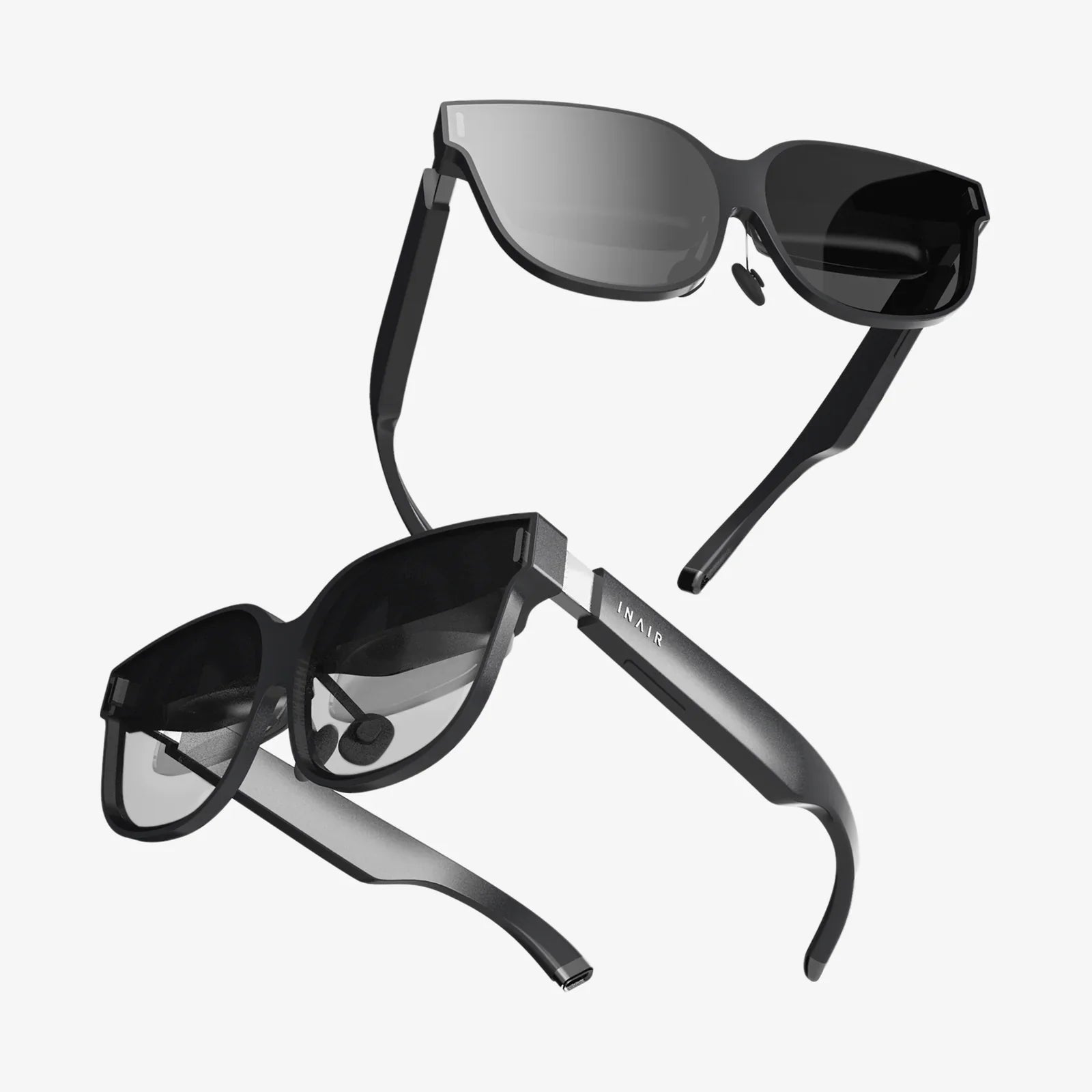
Imagine a world where digital information doesn’t live on a screen in your hand, but is seamlessly woven into the very fabric of your reality. Where directions appear as floating arrows on the street before you, where the name and history of a towering building overlay your vision as you gaze up at it, and where a recipe hovers conveniently next to your mixing bowl, hands-free. This is no longer the stuff of science fiction. This future is unfolding before our eyes, as truly amazing AR glass available technology transitions from prototype dreams to tangible, accessible reality. The era of augmented reality is dawning, and it promises to change everything.
Beyond the Novelty: The Core Technology Powering AR Glasses
To understand why the current generation of AR glasses is so revolutionary, it's essential to look under the hood. This isn't just about projecting a simple image; it's about creating a persistent, interactive, and context-aware digital layer that understands and responds to the real world.
The Magic of Waveguides and Photonics: At the heart of most advanced AR glasses are optical systems called waveguides. These are essentially transparent pieces of glass or plastic etched with incredibly precise nano-structures. They work by taking the light from a tiny micro-display (often located on the temple of the glasses) and piping it through the glass, bouncing it in a controlled manner until it's directed into the user's eye. The result is a bright, sharp digital image that appears to be floating in space several feet away, all while allowing the user to see the real world clearly through the lens. This complex feat of optical engineering is what makes a comfortable, glasses-form factor possible.
Spatial Mapping and Understanding: For digital content to feel like it's truly part of your world, the device must understand that world. This is achieved through a sophisticated array of sensors. Cameras, depth sensors (like LiDAR), and inertial measurement units (IMUs) work in concert to constantly scan the environment. They create a real-time 3D map of the room, understanding the geometry of surfaces, the distance to objects, and the position of the glasses within that space. This allows a virtual dinosaur to convincingly hide behind your real sofa or a digital sticky note to stay pinned to your physical refrigerator.
The Brain: On-Device AI and Processing: Interpreting all this sensor data and rendering complex graphics requires serious processing power. Modern AR glasses leverage powerful, miniaturized chipsets often enhanced with dedicated AI processors. This enables features like real-time object recognition (instantly identifying a product on a shelf), gesture control (navigating menus with a finger swipe), and persistent anchor points (ensuring your virtual art gallery stays precisely arranged in your living room, even if you leave and come back).
A World Transformed: Practical Applications Across Industries
The potential of AR glasses extends far beyond cool demos and gaming. They are poised to become indispensable tools, reshaping professions and enhancing daily life.
Revolutionizing the Workplace
Field Service and Manufacturing: A technician repairing a complex piece of machinery can see schematics, animated repair instructions, and torque specifications overlaid directly on the equipment they are working on. Their hands remain free, and they have instant access to expert knowledge, reducing errors and training time.
Healthcare and Medicine: Surgeons can visualize a patient’s anatomy from MRI or CT scans projected directly onto the surgical site, improving precision. Medical students can practice procedures on detailed, interactive holographic models. Nurses can have vital signs and patient information displayed in their periphery, allowing for more attentive care.
Design and Architecture: Architects and interior designers can walk clients through full-scale, holographic models of unbuilt structures. They can change materials, move walls, and adjust lighting in real-time, all within the shared space of the proposed building.
Redefining Everyday Life
Navigation and Exploration: Forget looking down at your phone. Turn-by-turn directions are painted onto the sidewalk, with arrows guiding your path. Look at a restaurant, and see its reviews and today's specials float beside its door. Traveling in a foreign city? See real-time translations of street signs and menus, making the world instantly more accessible.
Social Connection and Communication: Imagine video calls where the person you're talking to appears as a life-sized hologram sitting across from you at the table, able to share and manipulate 3D models as if they were physically present. This level of presence could revolutionize remote work and bring families separated by distance closer together.
Accessibility and Assistance: For individuals with visual impairments, AR glasses could highlight curbs, identify obstacles, and read text aloud from the physical world. For those with hearing impairments, they could provide real-time captions for conversations happening around them, making communication smoother and more inclusive.
Navigating the New Frontier: Challenges and Considerations
As with any transformative technology, the path forward is not without its hurdles. Widespread adoption will depend on how we address several key challenges.
Design and Social Acceptance: The first generation of AR glasses was often bulky, obtrusive, and socially awkward to wear. The race is on to make them indistinguishable from, or even more stylish than, traditional eyewear. They must be lightweight, comfortable for all-day wear, and offer prescription lens options. Social acceptance will follow functional, fashionable design.
Battery Life and Connectivity: Powering high-resolution displays, numerous sensors, and powerful processors is a significant challenge. Solutions include more efficient components, innovative battery designs distributed throughout the frame, and the potential for offloading intensive processing to a paired companion device, like a smartphone, for the foreseeable future.
The Privacy Imperative: This is perhaps the most critical challenge. Glasses with always-on cameras and sensors understandably raise privacy concerns. How do we prevent unauthorized recording? How is the vast amount of visual and spatial data collected, processed, and stored? Transparency from manufacturers is non-negotiable. Robust, user-controlled privacy features—like physical camera shutters, clear recording indicators, and on-device data processing that doesn't stream video to the cloud—will be essential for building public trust.
Digital Wellbeing: As information becomes ever-present, a new challenge emerges: digital overload and the potential to diminish our connection to the immediate physical world. The technology must be designed with intentionality, offering users clear controls to filter information, create focus modes, and simply disconnect, ensuring it enhances reality rather than overwhelming it.
The Dawn of Spatial Computing
AR glasses are the primary gateway to what the industry calls "spatial computing"—a paradigm where the computer ceases to be a destination and becomes an ambient, contextual assistant in our environment. It represents the third great wave of computing, following the mainframe and the smartphone. We are moving from interacting with a device to interacting with our entire environment through a device.
This shift is as profound as the invention of the graphical user interface or the transition from desktop to mobile. It will spawn entirely new industries, forms of entertainment, and ways of working and socializing that we are only beginning to imagine. The developers, designers, and storytellers who begin thinking in terms of 3D space, persistence, and context are the ones who will define the next decade of digital experience.
The barrier between our digital and physical lives is dissolving. The arrival of sophisticated, consumer-ready AR glasses marks a pivotal moment in human-technology interaction. This is not just an incremental upgrade; it's a fundamental reimagining of how we access information, connect with each other, and perceive our world. The tools to augment our intelligence, our abilities, and our reality are now moving from the lab to the mainstream. The question is no longer if this future will arrive, but how quickly we will adapt to it and more importantly, how we will shape it to be equitable, ethical, and truly human-centric. The amazing AR glass available today is just the first glimpse of a reality transformed, and the view is breathtaking.
Share:
artifical intelligence definition and its impact on modern life
AI Content Creation Tools News 2025: The Year Synthetic Media Became Indistinguishable