


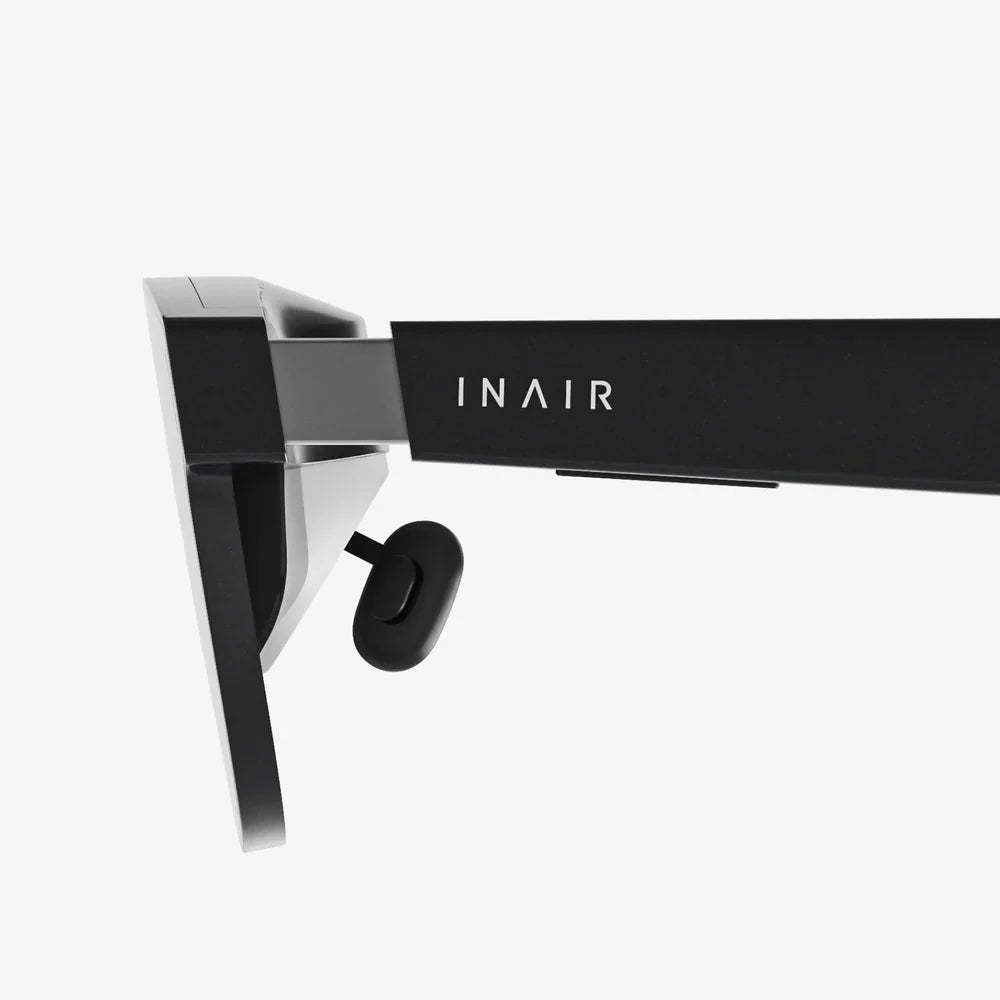
The digital world held its breath, the air thick with anticipation, as the virtual curtains prepared to rise on what many are calling the most significant technological pivot in a decade. This wasn't just another product launch; it was a portal into a new dimension of computing. The Android XR Event wasn't merely an announcement; it was a declaration of intent, a meticulously crafted vision of a future where the lines between our physical reality and the digital universe not only blur but dissolve entirely. For developers, creators, and users alike, the event signaled the beginning of a bold new chapter, promising to redefine how we work, play, and connect.
Decoding the Vision: Beyond the Hype
At its core, the Android XR Event was about laying a foundation. It was the moment a software giant, renowned for powering a global ecosystem of mobile devices, formally extended its reach into the three-dimensional space around us. The term "XR" or "Extended Reality" is the crucial umbrella here, encompassing the spectrum from Augmented Reality (AR), which overlays digital information onto our real world, to Virtual Reality (VR), which immerses us completely in a synthetic environment, and everything in between. The event's message was clear: the future is not solely AR or VR; it is fluid, adaptive, and context-aware.
The philosophical underpinning revealed was one of open collaboration and ecosystem building. Unlike walled-garden approaches, the vision presented was of a platform—a foundational operating system and a set of tools designed to be built upon by a vast array of hardware partners. This strategy aims to accelerate innovation and adoption by fostering diversity in headset design, form factor, and price points, ensuring the technology can reach audiences from enterprise and education to entertainment and everyday consumers.
The Technical Pillars: Building the Metaverse's Backbone
The announcements went far beyond lofty ideals, delving into the concrete technical architecture that will power this new wave of devices. Several key pillars emerged as the cornerstones of this ambitious project.
A Scalable and Performant Operating System
The heart of the initiative is a dedicated, open-source operating system built for spatial computing. This isn't just a modified version of a mobile OS; it's engineered from the ground up to handle the immense processing demands of high-fidelity graphics, precise positional tracking, and low-latency sensor input. The system is designed to be scalable, capable of running on everything from lightweight AR glasses focused on efficiency and all-day wearability to powerful VR headsets delivering cutting-edge, immersive experiences. This scalability ensures a consistent developer and user experience across a fragmented hardware landscape.
Seamless Device Interoperability
A recurring theme was the concept of a cohesive ecosystem. The platform is built to ensure that XR devices don't exist as isolated islands. Deep integration with the broader ecosystem of smartphones, tablets, laptops, and smart home devices was a major focus. Imagine starting a video call on your phone, seamlessly transferring it to your AR glasses as you walk around your home, and then shifting it to your VR headset for a immersive meeting in a virtual boardroom. This level of interoperability is a primary goal, breaking down barriers between device categories.
Powerful, Accessible Development Tools
Recognizing that developers are the lifeblood of any platform, the event highlighted a robust suite of software development kits (SDKs), APIs, and simulation tools. These resources are designed to lower the barrier to entry for creators, allowing them to build compelling XR applications without needing to become experts in complex computer vision or sensor fusion algorithms. Key features include advanced tracking for controllers and hands, spatial anchors that allow digital objects to persist in the real world across sessions, and support for high-performance 3D rendering engines. The emphasis is on empowering a new generation of spatial developers.
The User Experience: A Glimpse into the Future
How will this actually feel for the person wearing the headset? The Android XR Event painted a picture of an intuitive, helpful, and ultimately human-centric experience.
The interface moves away from traditional screens and into a concept of "spatial canvases." Instead of apps being confined to rectangles, they become interactive 3D objects or contextual overlays that can be placed, resized, and arranged around the user's environment. Your messaging app might appear as a subtle, translucent pane following your gaze, while a navigation tool could paint directions onto the sidewalk in front of you. The operating system will act as a spatial orchestrator, understanding the user's context—are they at home, in the office, on a busy street?—and surfacing the most relevant information and tools accordingly.
Input is also revolutionized. While controllers will have their place for gaming and precision tasks, the platform places a heavy emphasis on intuitive hand-tracking and voice commands. The ability to reach out and manipulate a digital object with your bare hands, or to simply speak to an AI assistant that exists in the space around you, promises a more natural and frictionless interaction model than tapping on a glass screen.
Challenges and Considerations on the Road Ahead
For all its promise, the path forward for this platform is fraught with significant challenges that the event acknowledged, either directly or implicitly.
The Hardware Hurdle
The success of this vision is inextricably linked to the hardware it runs on. Creating comfortable, socially acceptable, high-performance, and affordable headsets remains a monumental engineering challenge. Key issues like battery life, display technology (resolution, field of view, and brightness), and heat management must be solved to make these devices truly mainstream. The platform's scalability is a direct response to this, hoping that a diverse range of partners will tackle these problems from different angles.
The Privacy Imperative
XR devices are, by their very nature, data-collection powerhouses. They use cameras and sensors to map and understand the user's environment and, by extension, their most private spaces: their homes, their offices, and their daily routines. The platform must embed privacy and security into its core design philosophy. This includes clear user controls over data collection, robust on-device processing to minimize data sent to the cloud, and transparent policies about how this incredibly sensitive information is used. Building trust is not optional; it is a prerequisite for adoption.
Avoiding Digital Isolation
There is a valid societal concern that immersive technologies could further isolate individuals, encouraging them to retreat into private digital worlds. The most compelling demonstrations at the event, however, focused on connection and augmentation. The goal appears to be using XR to enhance our real-world interactions and productivity, not replace them. Striking this balance will be crucial for the long-term health and social acceptance of the technology.
The Ripple Effect: Implications Across Industries
The launch of this platform is not an isolated event in the tech world; it is a tremor that will be felt across numerous sectors.
- Enterprise & Productivity: Remote collaboration will be transformed. Architects and engineers could collaborate on 3D models as if they were in the same room, while field technicians could receive remote expert guidance with annotations overlaid directly onto malfunctioning equipment.
- Education & Training: Students could take virtual field trips to ancient Rome or dissect a virtual frog, while medical students could practice complex surgical procedures in a risk-free simulated environment.
- Healthcare: Surgeons could use AR overlays for vital patient data during operations, and therapists could use VR to treat phobias or aid in physical rehabilitation.
- Retail & Design: Imagine visualizing how a new sofa would look in your living room at full scale before you buy it, or customizing a car's interior in immersive detail.
The Android XR Event was the starting pistol for innovation in these fields and countless others, providing the tools to turn science fiction into practical application.
The echoes of the Android XR Event will reverberate for years to come, marking not an endpoint, but a vibrant and chaotic beginning. The blueprint is now public, the tools are being sharpened, and the race to build our mixed-reality future is officially underway. What we witnessed was more than software; it was the seed from which a new layer of our reality will grow, challenging us to reimagine the very nature of interaction itself. The door is now open. The only question that remains is what we will choose to build on the other side.
Share:
Game VR Controller: The Ultimate Guide to Immersive Interaction
Game VR Controller: The Ultimate Guide to Immersive Interaction