


- by wangfred
Android XR Smart Glasses News: The Next Frontier in Personal Computing Is Almost Here
- by wangfred
The whispers have become a roar. Across tech forums, industry analyst reports, and developer conferences, the persistent hum of Android XR smart glasses news is building to a crescendo, promising a future where the digital and physical worlds don't just coexist on a screen in your pocket, but are seamlessly woven together right before your eyes. This isn't about the niche curiosities of a decade ago; this is about the imminent arrival of a new platform, a new way of working, connecting, and perceiving the world, all powered by the ubiquitous might of Android. The next revolution in personal computing isn't a faster phone or a thinner laptop—it's a pair of glasses that can overlay the infinite potential of the digital realm onto the canvas of our reality.
For years, the concept of smart glasses was synonymous with bulky, awkward, and socially isolating headgear. Early iterations were engineering marvels but design failures, often requiring cumbersome external processing units and batteries, and marking the wearer as a tech outsider. The most significant piece of Android XR smart glasses news in recent years isn't about a single feature, but a collective industry shift: the relentless pursuit of normalization.
Modern prototypes and developer kits reveal a focus on minimalism and wearability. The goal is no longer to create a device that screams "technology" but one that whispers it. This involves monumental engineering challenges:
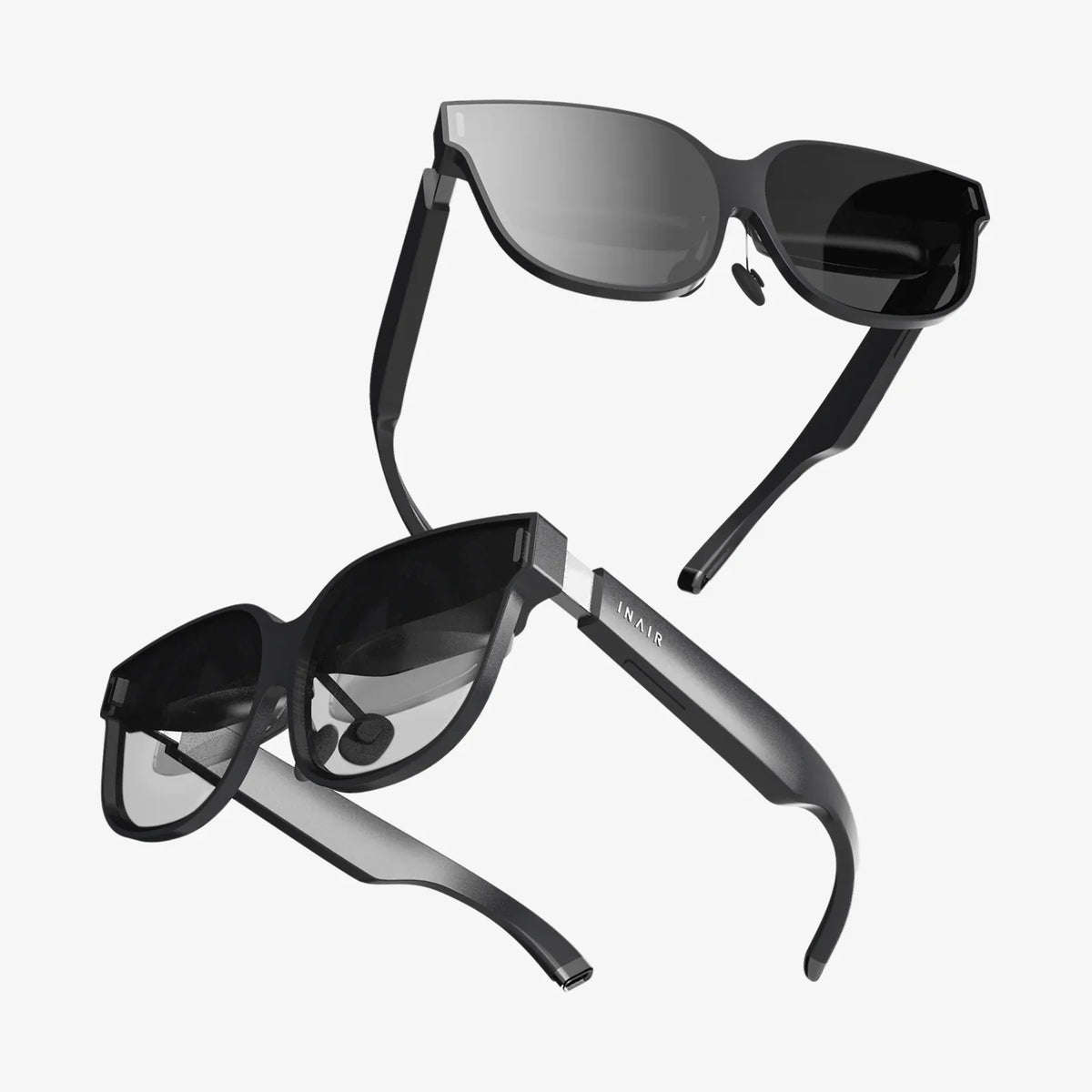
The result of this progress is a new generation of devices that increasingly resemble standard prescription eyewear. This shift from geek to chic is the foundational step for mass adoption. People will only wear technology they feel good in.
While other tech giants are building closed, proprietary ecosystems for their XR ambitions, the flood of Android XR smart glasses news points to a different, potentially more powerful, approach: an open platform. Leveraging Android as the core operating system for these devices is a strategic masterstroke that could accelerate development and adoption in ways a walled garden never could.
Imagine the entire global ecosystem of Android developers—numbering in the millions—suddenly empowered to build applications for a spatially-aware, hands-free interface. The creative potential is staggering. The existing tools and familiar programming environments, augmented with XR-specific APIs and libraries, lower the barrier to entry significantly. A developer who builds an Android app for a phone today could, with some additional learning, begin prototyping for smart glasses tomorrow.
This platform approach offers several key advantages:
This stands in contrast to more vertically integrated approaches. By betting on Android, the industry is betting on the innovative power of the collective, aiming to win through volume, variety, and software richness.
The question that always follows a new hardware category is: "What will I use it for?" The latest Android XR smart glasses news suggests the answer is not one single "killer app," but a constellation of transformative use cases that will redefine entire industries.
This is where the first major wave of adoption is likely to occur. For field technicians, an Android XR headset can overlay schematics, instruction manuals, and diagnostic data directly onto the machinery they are repairing, allowing them to work hands-free with expert guidance. For architects and construction managers, 3D building models can be superimposed onto physical construction sites, revealing pipes behind walls or verifying measurements against the plan. For logistics workers in massive warehouses, optimal picking routes and item information can be displayed, dramatically improving efficiency and reducing errors.
Imagine walking through a foreign city and having subtle directional arrows painted onto the sidewalk, with historical facts and restaurant reviews floating next to the buildings you pass. Your world becomes annotated. This goes beyond tourism; indoor navigation in complex spaces like airports, hospitals, or university campuses becomes intuitive. For individuals with visual impairments, auditory cues or highlighted pathways could be generated to make navigation safer and more independent.
The sterile video call of today could evolve into a shared spatial experience. Instead of talking to a grid of faces on a screen, you could have photorealistic avatars of colleagues or family members sitting on the couch next to you, watching a movie together as if you were in the same room. This sense of "telepresence" could fundamentally alter remote work and long-distance relationships, adding a layer of embodied social cues that are absent in current technology.
Your AI assistant transitions from a voice in a speaker or a pop-up on your phone to a constant, contextual companion. It can remind you of a person's name at a networking event as you look at them, translate street signs in real time, or warn you if your walking path is about to take you through a reported disturbance. It's a shift from pulling information out of a device to having it proactively presented to you within the context of your immediate need.
No analysis of Android XR smart glasses news is complete without a sober examination of the profound challenges they introduce. A device that has the potential to record audio and video continuously raises dystopian concerns that must be addressed head-on.
The concept of privacy in public will be radically tested. If everyone is wearing glasses capable of recording, how do we navigate consent? Will we need new digital etiquette and social norms—perhaps a visible indicator light that clearly shows when recording is active, or geofenced "no-recording" zones in sensitive areas? The potential for surreptitious surveillance is perhaps the single biggest societal hurdle.
Data security becomes paramount. The amount of personal and environmental data collected by these devices will be unprecedented—a literal record of your life from a first-person perspective. This data is a goldmine, not just for personalized services, but also for malicious actors. The Android platform's security models will need to be hardened to an extreme degree, with perhaps even local, on-device processing being the default for sensitive data to avoid it ever being transmitted or stored insecurely.
Finally, there is the challenge of distraction and reality dilution. Will we become so engrossed in the digital layers we add to the world that we disengage from the physical one? Will our shared reality fragment as everyone customizes their own perceptual experience? These are philosophical and psychological questions that we, as a society, will have to answer together as the technology matures.
The journey to mainstream Android XR smart glasses won't happen overnight. Early devices will be expensive, targeted primarily at developers and enterprise customers. Battery life will be a constraint, and the field of view of the digital display may still be limited. However, the trajectory is clear. With every iteration, the technology will become more powerful, more efficient, and more affordable.
The true tipping point will arrive when the glasses can do something so useful, so effortlessly, that it becomes inconceivable to leave home without them. It might be the ability to instantly recall every piece of information you've ever seen, or to have a real-time language translator making every conversation barrier-free, or to have a personal health monitor that can see subtle changes in your environment affecting your wellbeing.
The steady stream of Android XR smart glasses news is the prelude to this next computing revolution. It's a collaborative effort spanning chip manufacturers, display innovators, software developers, and fashion designers. They are not just building a new device; they are building a new layer of human experience, and it's being constructed on the open, adaptable, and powerful foundation of Android. The world is about to get a major upgrade, and it's all happening right before our eyes.
Imagine never having to choose between being present in the moment and accessing the information you need—the two will simply become one and the same. The next time you fumble for your phone to check a message, look up a fact, or get directions, consider this: a future is coming where that simple act will feel as archaic as using a rotary dial. The boundaries between our minds and the digital universe are dissolving, and the gateway won't be a screen we stare into, but a lens we look through, transforming every sidewalk, every room, and every interaction into a personalized, interactive portal. The revolution won't be televised; it will be illuminated, right there in the world around you.