


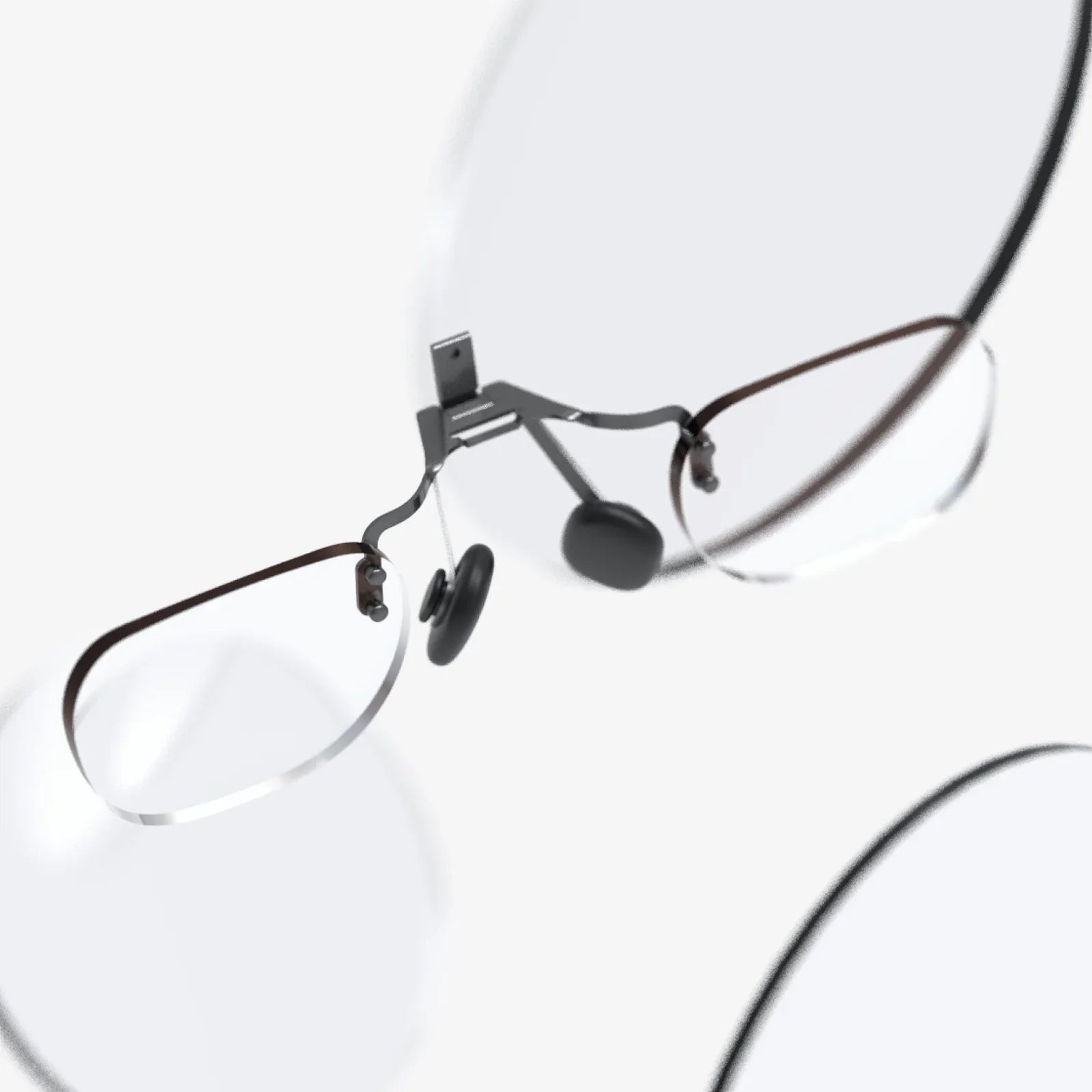
- by wangfred
Android XR VR Headset: The Ultimate Portal to Immersive Realities
- by wangfred
Imagine slipping on a sleek, unassuming visor and instantly stepping into a boundless digital universe—your living room transforms into a battlefield on a distant planet, a master sculptor’s studio, or the front row of a concert happening lightyears away. This is the promise, the sheer magic, held within the modern Android XR VR headset. No longer a fantastical concept from science fiction, this technology represents a powerful convergence of accessible mobile computing and breathtaking immersive experiences, poised to redefine our relationship with digital content forever. The journey beyond the screen starts here.
At its core, an Android XR VR headset is a marvel of technological synthesis. It leverages the robust, open-source Android operating system, a platform familiar to billions, and repurposes its immense processing power and graphical capabilities for a single, immersive purpose: virtual reality. Unlike systems tethered to powerful external computers, these devices often function as standalone units, with all necessary components—processor, memory, sensors, and displays—housed within the headset itself. This creates a uniquely portable and accessible gateway into VR.
The term 'XR,' or Extended Reality, is crucial here. It serves as an umbrella encompassing Virtual Reality (VR), Augmented Reality (AR), and Mixed Reality (MR). While our focus is on VR—a fully digital, immersive environment—the underlying Android architecture provides a flexible foundation. The same sensors that track your head movements to explore a VR world could, in theory, be used to overlay digital information onto your physical surroundings in an AR application, showcasing the inherent versatility of the platform.
Peeling back the plastic shell reveals a sophisticated array of components working in perfect harmony to craft a convincing illusion.
The primary windows into the virtual world are two high-resolution displays, one for each eye. These are typically Fast Switch LCDs or OLED panels, chosen for their rapid pixel response times to prevent motion blur. Their proximity to the eyes necessitates a critical component: specialized lenses. These Fresnel or pancake lenses focus the screen's image, widening the field of view and creating a sense of depth and scale. The quality of these lenses is paramount, directly impacting visual clarity, the size of the "sweet spot" (the area of perfect focus), and overall comfort.
For immersion to hold, the virtual world must respond to your every movement with imperceptible latency. Modern Android VR headsets achieve this through inside-out tracking. This system uses multiple wide-angle cameras mounted on the headset itself to continuously monitor the surrounding environment. By tracking the relative position of static features in your room, the headset's internal processor calculates its own location and orientation in real-time. This eliminates the need for external sensors or base stations, making setup effortless and use truly portable. This same technology also enables rudimentary hand-tracking, allowing you to use your natural gestures as controllers.
While hand-tracking is emerging, most experiences are designed around dedicated motion controllers. These are held in each hand and are also tracked by the headset's cameras. They feature analog sticks, buttons, and triggers, but their key innovation is haptic feedback. Subtle vibrations and triggers that resist your pull provide a tactile layer to interactions, whether it's feeling the recoil of a virtual weapon or the tension of drawing a bowstring. This physical feedback is a cornerstone of presence—the feeling of truly being in the virtual space.
The hardware is merely a vessel; its value is unlocked by the experiences it contains. The content library for Android-based VR is vast and diverse, accessible through a dedicated digital storefront.
Despite the incredible advances, the technology is not without its hurdles. Potential users should be aware of these factors.
Comfort and Ergonomics: A headset must be worn to be used. Weight distribution, facial interface materials, and strap design are critical. A poorly designed unit can cause neck strain, facial pressure, and general fatigue, pulling you out of the experience. This remains a key area of innovation.
Visual Limitations: While display technology has improved dramatically, the "screen door effect"—where the faint lines between pixels are visible—can still be an issue on some units. Furthermore, achieving perfect, human-like visual fidelity with a wide field of view requires immense processing power that mobile chipsets are still working towards.
Battery Life: As standalone devices, they are constrained by battery technology. Demanding games and applications can drain a battery in under two hours, which can interrupt longer sessions. This trade-off between performance, weight, and battery longevity is a constant engineering challenge.
Computational Constraints: While mobile processors are incredibly powerful, they cannot compete with the raw output of a high-end desktop computer. This means the graphical complexity of experiences on a standalone Android headset is generally less than that of its PC-tethered counterparts. Developers must expertly optimize their creations to run on this mobile hardware.
The trajectory of this technology points toward a future of even deeper integration and seamless immersion. We can anticipate several key developments.
Advances in chipset technology will continue to close the graphical gap with desktop VR, enabling more complex and visually stunning worlds. The integration of dedicated AI processing units will empower more intelligent environments and interactions. Varifocal displays and eye-tracking will solve current issues with visual comfort and depth perception, while also enabling foveated rendering—a technique that maximizes processing efficiency by rendering only the area you are directly looking at in high detail.
Furthermore, the line between AR and VR will continue to blur. Future headsets may use high-resolution cameras to pass through a video feed of your real environment, allowing digital objects to interact with your physical space in convincing ways. This mixed reality functionality, all powered by the adaptable Android platform, could transform the headset from a dedicated entertainment device into an all-day tool for work, design, and communication.
The ultimate goal is the same: to make the technology disappear. Lighter, smaller, more powerful, and more comfortable headsets will allow us to focus not on the device, but on the experience and the connections it fosters. The headset becomes not a piece of technology we use, but a portal we step through.
This isn't just about better games or novel ways to watch videos; it's about the next evolution of human-computer interaction. The Android XR VR headset democratizes this future, placing a universe of potential on our faces, powered by the same technology we carry in our pockets. It challenges us to dream of what we can build, explore, and share when the only limit is our imagination. The portal is open, and an entire reality is waiting for you to take the first step.
Share:
Internet Prescription Glasses: The Ultimate Guide to Buying Eyewear Online
Is VR Headset Bad For Eyes? An In-Depth Look at the Science