


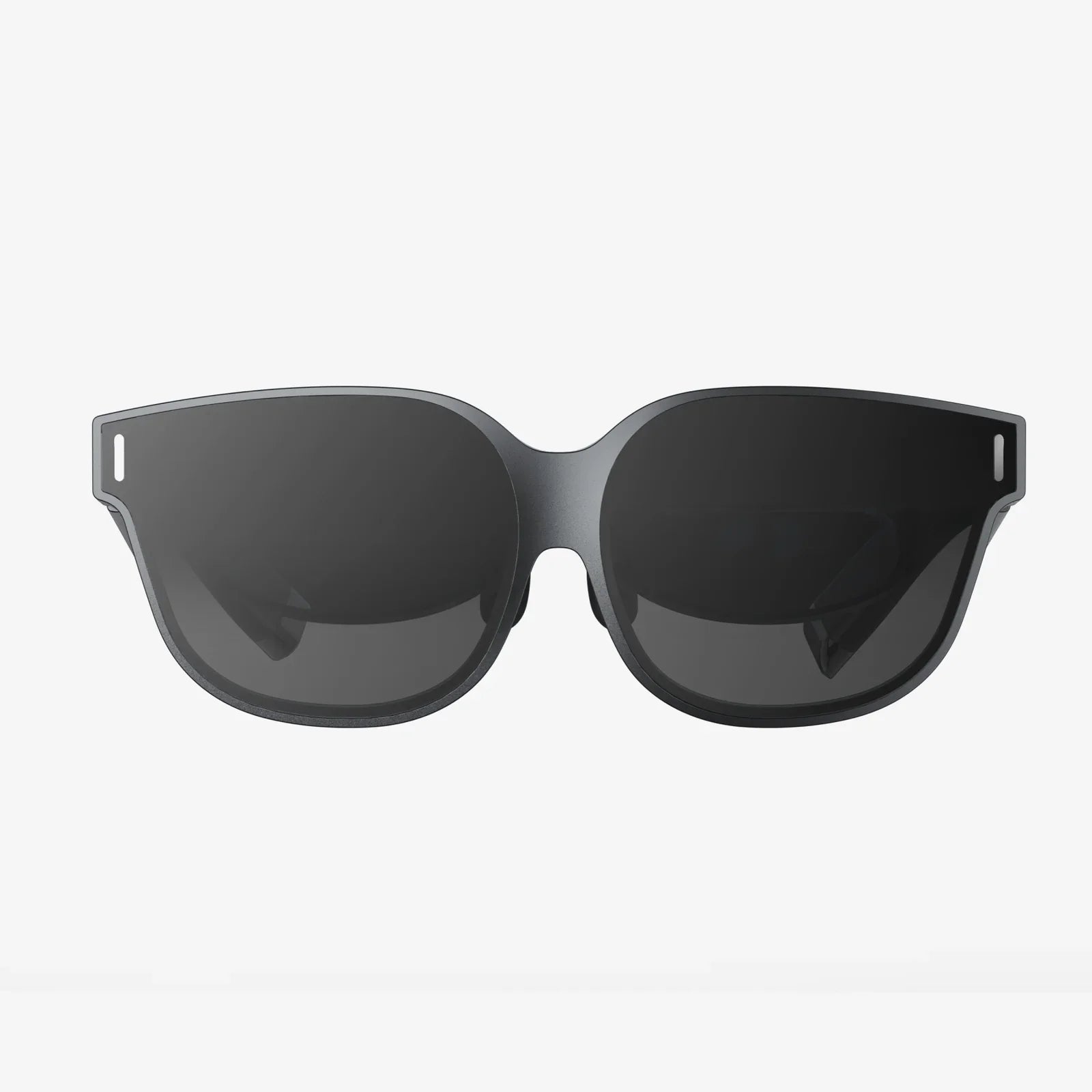
Imagine a world where the digital and physical seamlessly intertwine, where information overlays your vision, virtual meetings feel as tangible as face-to-face conversations, and immersive games transform your living room into a fantastical landscape. This isn't a distant sci-fi fantasy; it's the imminent future being built today, and at the heart of this revolution lies a powerful, open-source engine: Android XR. For anyone curious about the next wave of computing, understanding what Android XR is becomes not just interesting, but essential. It’s the key that will unlock a new dimension of human interaction with technology.
Deconstructing the Name: Beyond the Buzzwords
To grasp Android XR, we must first unpack its name. It’s a compound term, each part carrying significant weight.
Let’s start with Android. Most people recognize Android as the world's most popular mobile operating system, powering billions of smartphones and tablets. However, Android is much more than that; it is an open-source software stack and a comprehensive ecosystem managed by the Open Handset Alliance, with Google as its primary steward. This means it's a foundational platform that manufacturers and developers can use, modify, and build upon freely. Its core strengths lie in its flexibility, scalability, and massive global developer community.
Now, the second part: XR. XR stands for Extended Reality. It serves as an umbrella term that encompasses all combined real-and-virtual environments, including:
- Virtual Reality (VR): A fully digital, immersive experience that blocks out the physical world. Users typically wear a headset that transports them to a completely computer-generated environment.
- Augmented Reality (AR): An experience that overlays digital information—images, text, 3D models—onto the user's view of the real world. Think of navigation arrows on your car's windshield or a virtual dinosaur appearing in your park.
- Mixed Reality (MR): A more advanced form of AR where digital objects not only overlay the real world but can interact with it intelligently. A virtual character might jump onto your real-world sofa, or a digital ball could bounce off your physical wall.
Therefore, Android XR is not a single product or a specific headset. It is the strategic initiative and the underlying software framework that adapts the core Android platform to power a new category of devices: XR headsets and glasses. It provides the essential tools, protocols, and system-level support needed to create immersive experiences, much like Android OS does for smartphones.
The Architectural Pillars of Android XR
Building an operating system for immersive computing is fundamentally different from building one for a flat, 2D screen. Android XR introduces several critical architectural components to meet these unique demands.
1. A Radically New Interaction Model
Smartphones rely on touch. XR devices require a more nuanced and diverse set of inputs. Android XR is built to natively support:
- 6 Degrees of Freedom (6DoF) Tracking: This allows the system to understand not just the rotation of your head (like turning left or right, known as 3DoF) but also its precise position in space (moving forward, backward, up, down, side-to-side). This is achieved through a combination of cameras, sensors (gyroscopes, accelerometers), and advanced computer vision algorithms.
- Inside-Out Tracking: Unlike early VR systems that needed external sensors placed around a room, modern XR headsets use "inside-out" tracking. Cameras on the headset itself constantly scan the environment to map the space and track the headset's position within it, a feature core to Android XR's design.
- Hand Tracking and Controller Input: Android XR supports sophisticated input methods, from handheld motion controllers with haptic feedback to advanced computer vision that allows the system to see and understand your bare hands, enabling you to manipulate virtual objects with natural gestures.
2. The Passthrough Pipeline: Blending Real and Virtual
A cornerstone of compelling AR and MR is high-quality passthrough video. This is the technology that uses the headset's cameras to show the user the real world in real-time, upon which digital content is then composited. Android XR manages this complex pipeline with extreme emphasis on:
- Low Latency: Any delay between your head moving and the video feed updating can cause motion sickness. The Android XR stack is optimized to minimize this latency to imperceptible levels.
- Synchronization: The video feed from multiple cameras must be perfectly synchronized and then correctly aligned with the inertial measurement unit (IMU) data to avoid a disjointed and nauseating experience.
3. Environmental Understanding: The Spatial OS
For digital objects to feel like they truly exist in your space, the system must understand that space. Android XR incorporates features for:
- Spatial Mapping: Creating a 3D mesh of the environment, identifying floors, walls, ceilings, and other surfaces.
- Plane Detection: Identifying horizontal surfaces (like tables and floors) and vertical surfaces (like walls) where digital content can be placed.
- Scene Semantics: Going beyond simple geometry to understand the context of the environment—labeling a surface as a "desk" or a "couch." This allows apps to behave more intelligently (e.g., placing a virtual lamp on a detected table surface).
4. Performance and Power Optimization
Rendering two high-resolution displays at a high, stable frame rate (often 90Hz or higher) is incredibly demanding. Android XR must do this while also processing multiple camera feeds and running complex tracking algorithms. It requires deep integration with the device's hardware, including the GPU, to ensure a smooth, comfortable, and power-efficient experience.
Why an Open-Source Approach to XR Matters
The choice to base this new platform on Android is a strategic masterstroke with profound implications for the industry.
- Lowering Barriers to Entry: By providing a free, robust, and feature-complete software foundation, Android XR dramatically lowers the cost and complexity for hardware manufacturers to enter the XR market. They can focus their engineering resources on innovating on hardware—displays, optics, form factor—rather than building an entire operating system from scratch.
- Fostering a Vibrant Ecosystem: The massive existing community of Android developers can potentially transition to building for XR, leveraging their existing knowledge of Java, Kotlin, and Android development tools. This instantly creates a large potential talent pool for creating XR content.
- Preventing Fragmentation: While Android is known for its diversity, Google can use the licensing of key apps and services to establish a baseline of compatibility and quality. This ensures a consistent experience for users and a stable platform for developers, preventing the kind of wild fragmentation that could stifle the growth of the XR ecosystem.
- Rapid Iteration and Innovation: An open-source model means improvements from one manufacturer can benefit all others. The entire ecosystem can advance more quickly through shared development.
Android XR in Action: Potential Use Cases Reshaping Industries
The true power of Android XR is revealed in the transformative applications it will enable across various sectors.
Revolutionizing Workplace Collaboration
Imagine attending a design review where 3D models of a new product are placed on the conference table, and colleagues from across the globe can manipulate them as if they were physically present. Android XR can power the "spatial computing" platforms that make this possible, creating shared virtual workspaces that feel infinitely more collaborative and effective than a grid of video calls.
Transforming Education and Training
From medical students practicing complex surgical procedures on virtual anatomy to mechanics learning to repair new engines with step-by-step AR instructions overlaid on the physical machinery, Android XR provides the platform for safe, scalable, and deeply engaging experiential learning.
Redefining Social Connection and Entertainment
The next evolution of social media may not be a feed of photos but shared virtual spaces where you can watch movies, play games, or simply hang out with friends' avatars as if you're in the same room. Android XR's ability to handle these shared, persistent environments will be fundamental to building the social fabric of the metaverse.
Enhancing Daily Life with Contextual Computing
With sleek AR glasses powered by Android XR, your world becomes an intuitive interface. Navigation arrows appear on the sidewalk in front of you, the name and album of a song playing in a cafe pops up in your periphery, and you can translate a foreign menu just by looking at it. This shift from pulling a device out of your pocket to having contextually relevant information appear when you need it is the ultimate promise of ambient computing.
Challenges on the Horizon
The path forward for Android XR is not without its obstacles. The hardware needs to become smaller, lighter, more powerful, and more energy-efficient to enable all-day wearable glasses. Designing intuitive user interfaces for a 3D spatial environment is a completely new discipline that the industry is still inventing. Furthermore, critical questions around privacy, data security, and digital etiquette in a world where cameras are always-on and environments are constantly being scanned must be addressed head-on by the ecosystem.
Ultimately, Android XR represents more than just a new operating system; it is the foundational bedrock for the next major computing platform. It is the bridge between the familiar world of apps and the uncharted territory of immersive experiences. By democratizing access to XR technology and unifying a fragmented landscape, it accelerates the entire industry toward a future where the lines between our digital and physical lives are not just blurred but erased, creating a new canvas for human creativity, connection, and productivity. The devices it powers will soon become as ubiquitous as the smartphone, fundamentally changing how we work, learn, play, and see the world around us.
Share:
AR Web Application: The Future of Immersive Experience is Browser-Based
3D Screen The Future of Visual Immersion is Here and It's Unbelievable