


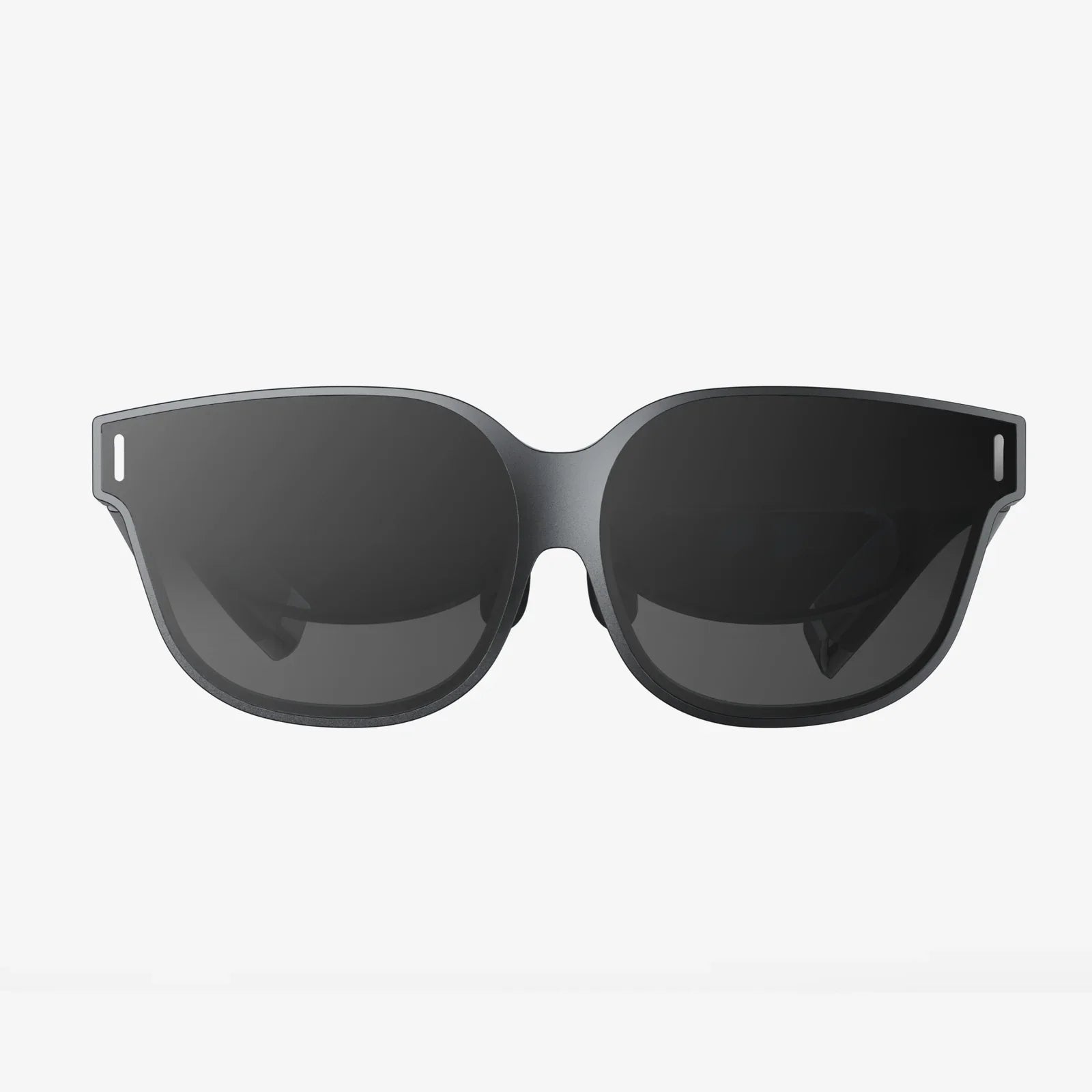
Imagine walking down a bustling city street, your face illuminated not just by the sun, but by a constellation of invisible lasers, infrared dots, and data-hungry cameras. Every storefront, every digital billboard, and even fellow pedestrians could be silently scanning, identifying, and profiling you without your knowledge or consent. This isn't a dystopian fantasy; it's the emerging reality of augmented reality (AR) and facial recognition technologies. But what if you could don a simple, elegant pair of spectacles and render yourself invisible to these digital eyes, reclaiming your anonymity and personal space? This is the powerful promise of anti AR glasses, a groundbreaking technology poised to become an essential accessory for the modern world.
The Unseen Digital Assault: Why We Need a Shield
To understand the necessity of anti AR glasses, one must first grasp the pervasive nature of the technologies they counter. Our world is increasingly saturated with devices designed to capture and interpret visual data.
- Facial Recognition Systems: Deployed by law enforcement, retailers, and even public venues, these systems map facial features to uniquely identify individuals in real-time, often linking to vast databases of personal information.
- Augmented Reality Platforms: Many AR applications, from social media filters to interactive advertising, rely on front-facing cameras to track user movements and overlay digital content onto the physical world. This process inherently involves capturing and processing your image.
- LiDAR and Infrared Sensors: Found in many modern smartphones, tablets, and autonomous systems, these sensors project thousands of invisible points of light to create detailed 3D depth maps of their surroundings, which includes you and your environment.
This constant, passive data collection creates a profound privacy crisis. It enables mass surveillance, sophisticated tracking of your movements and habits, and the non-consensual use of your biometric data. Anti AR glasses emerge not as a tool for paranoia, but as a fundamental right to choose when and how one is perceived in the digital realm.
Beyond the Invisible Cloak: The Science of Optical Countermeasures
Anti AR glasses are a marvel of optical engineering, employing sophisticated techniques to disrupt the specific wavelengths and patterns used by scanning technologies. They are not merely tinted lenses; they are precision instruments.
The Principle of Selective Reflection
At their core, these glasses function by featuring lenses coated with special, multi-layer thin films. These nano-coatings are designed to be highly reflective at very specific wavelengths of light—precisely those used by common facial recognition IR dots and LiDAR sensors. While remaining completely transparent to the human eye, they act like a mirror for the scanning beams, bouncing the projected light directly back to its source. This flood of reflected, noisy data overwhelms the sensor, preventing it from creating an accurate map or reading of your face.
Disrupting the Pattern: A Digital Smokescreen
Another primary method involves the use of subtle, patterned lenses. Some designs incorporate near-invisible concentric circles or other fine patterns printed onto the lens. These patterns are calibrated to interact with the grid of dots projected by sensors. They distort the returning light pattern in unpredictable ways, creating a form of visual "jamming." The receiving camera sees a garbled, nonsensical image instead of a clear facial map, effectively making you a ghost in its machine.
Complementary LED Technology
Some advanced models integrate miniature Light Emitting Diodes (LEDs) around the frame. These LEDs activate in the presence of a scanning attempt, emitting their own powerful burst of infrared light. This creates a "blinding" effect, saturating the scanner's sensor with a blanket of light and obscuring any useful data it might try to capture. This proactive approach ensures protection even against more persistent or powerful scanning attempts.
A Spectrum of Styles: From Subtle to Statement
Gone are the days when privacy tech meant bulky, obvious, and unsightly gear. Modern anti AR glasses are designed with aesthetics firmly in mind, allowing users to integrate privacy into their personal style seamlessly.
- The Classic: Timeless designs that resemble popular eyeglass frames, perfect for professional settings or everyday wear.
- The Modern Minimalist: Featuring thin metal frames and nearly invisible detailing, these offer protection without drawing attention to the technology itself.
- The Bold Statement: For those who want to make their stance on digital privacy known, designs with thicker frames and more distinctive shapes are available.
- Clip-On Solutions: Versatile options that can be added to existing prescription glasses, offering flexibility and convenience.
This focus on design is crucial. It transforms the glasses from a niche gadget into a mainstream accessory, democratizing digital privacy for everyone.
Who Stands to Benefit? The Wide-Ranging Applications
The user base for anti AR glasses is incredibly diverse, extending far beyond the tech-savvy privacy advocate.
- Journalists and Activists: Individuals working in sensitive environments or under oppressive regimes can protect their identity and the identity of their sources from unwanted surveillance.
- Corporate Executives and Employees: Safeguarding trade secrets and strategic discussions from industrial espionage, especially in high-stakes industries where visual data harvesting is a real threat.
- Celebrities and Public Figures: A tool to reclaim a sliver of private life, allowing for anonymous movement in public spaces without being automatically identified and tracked by paparazzi or fan-facing apps.
- The Everyday Consumer: Anyone concerned about being profiled by retailers, tracked by smart city infrastructure, or having their image captured without consent by strangers using AR applications.
- Legal and Healthcare Professionals: Those bound by strict confidentiality agreements can add an extra layer of security when commuting or in public spaces where client or patient privacy is paramount.
Navigating the Ethical and Legal Landscape
As with any powerful technology, anti AR glasses exist within a complex web of ethical and legal considerations. The very act of defeating surveillance systems, even for personal privacy, raises questions. Is it legal to wear them everywhere? Could they be misused? The legality varies significantly by jurisdiction. While wearing them in public is generally legal, doing so to commit a crime or in specific secure facilities would undoubtedly be illegal. The ethical argument, however, is strong: individuals have a right to defend their personal biometric data from non-consensual collection. These glasses represent a necessary counterbalance, a way for citizens to push back against the creeping normalization of perpetual surveillance and re-establish boundaries in the digital age.
The Future is Private: The Evolution of Counter-Surveillance Tech
The field of optical counter-surveillance is not static; it is a relentless arms race between data collectors and privacy defenders. The next generation of anti AR glasses is already on the horizon, promising even more sophisticated features. We can expect the integration of AI-powered micro-sensors that can detect the type and intensity of a scan and automatically adjust the countermeasures. Future materials science may yield lenses that can dynamically alter their reflective properties on demand, perhaps even becoming active only when a threat is detected. Furthermore, as biometric data becomes a more valuable and contested commodity, the demand for such personal protection will only grow, driving innovation and affordability.
The quiet hum of the digital world is a symphony of data exchange, but you don't have to be an unwilling participant. Anti AR glasses offer a simple, powerful, and increasingly stylish solution to an invisible problem, allowing you to step out of the spotlight and back into the shadows of your own life. They are more than an accessory; they are a statement, a tool, and a shield, empowering you to decide who gets to look back.
Share:
Looking Glass AR VR: The Future of Holographic Displays and Immersive Interaction
Looking Glass AR VR: The Future of Holographic Displays and Immersive Interaction