


- by wangfred
App Glasses: The Invisible Revolution Reshaping Our Digital and Physical Worlds
- by wangfred
Imagine a world where information doesn’t live on a screen you hold in your hand, but floats effortlessly in the space around you. Directions are painted onto the sidewalk, a recipe hovers above your mixing bowl, and a colleague’s avatar sits across from you at your kitchen table. This isn’t a distant science fiction fantasy; it’s the imminent future being built today, and it’s arriving on the bridge of your nose. The era of app glasses is dawning, promising to dissolve the barrier between our digital lives and physical reality, creating a seamless, contextual, and profoundly personal layer of computation over everything we see and do.
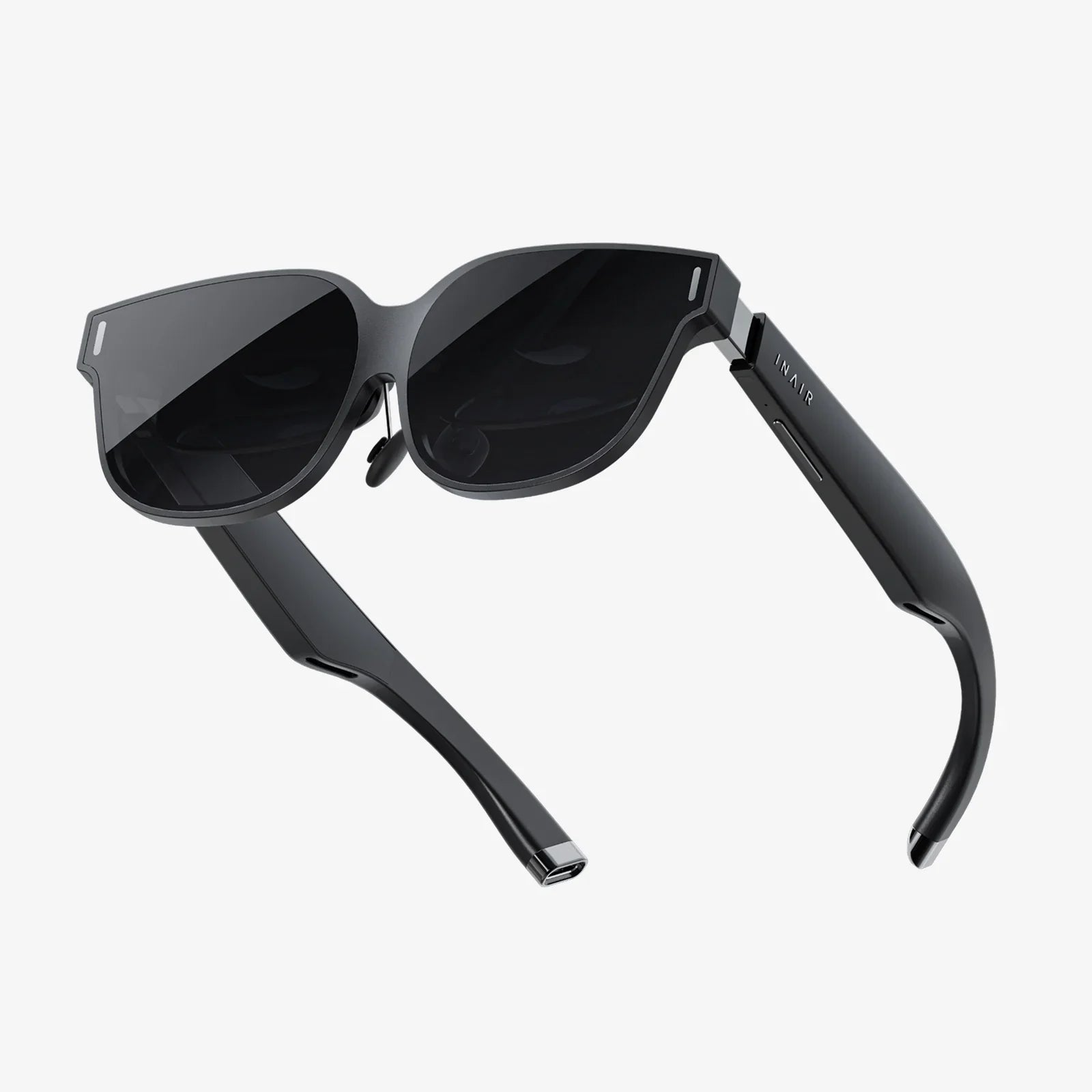
To understand the revolution, we must first move past the novelty of earlier attempts. App glasses are not merely smartphones strapped to your face. They represent a fundamental shift in human-computer interaction. At their core, they are wearable computers that use transparent displays—often called optical head-mounted displays—to project digital imagery onto the user’s field of view. This creates a mixed reality (MR) or augmented reality (AR) experience, where computer-generated elements coexist and interact with the real world.
The true power of these devices lies in their sensor suite. They are typically equipped with:
This combination of hardware is orchestrated by sophisticated software and, most importantly, the applications—the “apps”—that bring it all to life. These are not the grid-of-icons apps we know from phones, but contextual tools that appear when and where you need them.
The magic of app glasses is built upon several critical technological pillars that work in concert to create a convincing and useful experience.
This is the foundational layer. Before any app can function, the device must comprehend its surroundings. Through a process called simultaneous localization and mapping (SLAM), the glasses create a real-time 3D map of the environment. They understand the dimensions of a room, the location of walls, floors, and furniture. This spatial map is the canvas upon which all digital content is painted. It allows a virtual television to be convincingly “mounted” on your real wall or a digital character to hide behind your real sofa.
For the digital layer to feel like a permanent part of our world, it cannot reset every time you take the glasses off. Cloud anchors are digital coordinates that are saved and tied to specific locations in the physical world. This allows one user to leave a virtual note on a park bench, and another user, days later with a different device, to see it exactly where it was left. This persistence is crucial for collaborative apps and shared experiences, creating a kind of collective, augmented memory for spaces.
How do you interact with an interface that has no mouse or touchscreen? App glasses pioneer new forms of input:
While consumer applications capture the imagination, the most immediate and transformative impact of app glasses is occurring in the enterprise and industrial sectors. Here, the value proposition is clear: increased efficiency, enhanced safety, and reduced errors.
A technician arriving to repair a complex piece of machinery can be guided by app glasses. Instead of fumbling with a manual or tablet, schematics and instructions are overlaid directly onto the equipment. An expert located thousands of miles away can see what the technician sees and draw arrows and circles directly into their field of view to guide them through the repair process. This reduces downtime, empowers less experienced workers, and connects global expertise instantly.
Surgeons can have vital signs, ultrasound imagery, or 3D anatomical models projected into their vision without looking away from the patient. Medical students can learn anatomy by walking around a life-sized, holographic human body. During procedures, critical information like blood flow or tumor margins can be visualized in real-time, leading to greater precision and better patient outcomes.
An architect can walk through a physical construction site and see their digital building model perfectly aligned with the steel girders and concrete foundations, identifying clashes between design and reality before they become costly problems. Workers can see the planned path for electrical conduits or plumbing pipes directly on the bare walls in front of them, drastically reducing installation errors.
In massive distribution centers, workers equipped with app glasses can have the most efficient picking route displayed on the floor in front of them, with digital arrows guiding their path. When they arrive at a shelf, the exact item and quantity needed can be highlighted, streamlining the fulfillment process and minimizing mistakes in a high-pressure environment.
Beyond the factory floor and operating room, app glasses promise to subtly weave digital enhancement into the fabric of our daily routines.
This powerful technology does not arrive without profound challenges and questions that society must grapple with.
App glasses, by their very nature, are equipped with always-on cameras and microphones. The potential for intrusive surveillance, both by individuals and institutions, is unprecedented. The concept of consent in public spaces becomes murky. If someone is recording video of a concert through their glasses, are they also inadvertently capturing and identifying everyone around them? Robust digital ethics, clear regulations, and built-in privacy features—like obvious recording indicators and ethical data handling protocols—are not optional; they are prerequisites for public acceptance.
We developed social norms around smartphone use—putting them away during dinner, not using them while driving. A new etiquette will need to emerge for always-on wearable computers. How do you know if someone is looking at you or reading an email that only they can see? Will conversations feel genuine if one participant has a constant stream of information distracting them? Navigating these new social dynamics will be a gradual and likely awkward process.
If we thought the notifications on our phones were distracting, imagine them superimposed on your reality. The risk of a completely mediated existence, where we experience the world through a filter of digital content, is real. The companies that build these platforms will face a moral imperative to design for humanity—to create experiences that enhance reality rather than replace it, and to give users control over their attention and digital well-being.
The current generation of app glasses is just the beginning. The trajectory points toward devices that are increasingly smaller, lighter, more powerful, and eventually, indistinguishable from ordinary eyewear. The goal is to move from something you put on to something you forget you’re wearing.
Further out, the line between the device and the human may blur even further. Research into direct retinal projection and even more advanced neural interfaces suggests a future where the digital overlay is not projected onto a lens but beamed directly into our perception. The ultimate app glass may have no screen at all, instead interfacing directly with our brain’s visual cortex to create a perfect, high-resolution augmented reality that is perceptually identical to the real world.
This evolution will redefine our very concept of reality, community, and self. It will challenge our laws, our ethics, and our understanding of human connection. The path forward requires not just technological innovation, but a parallel and equally vigorous effort in philosophical and sociological exploration. We are not just building a new device; we are building a new layer of human experience.
The next time you instinctively reach for your phone to check a message, look up a fact, or find your way, picture a near future where that gesture is obsolete. The information you seek will already be there, integrated into your perception, a quiet whisper in your ear or a helpful ghost in your world. The revolution won’t be televised; it will be visualized, contextualized, and personalized, all through a pair of unassuming lenses that are quietly working to make the entire world your interface.
Share:
VR Experiences Are Redefining Reality and Reshaping Our World
VR Experiences Are Redefining Reality and Reshaping Our World