


- by wangfred
Apple AI Sunglasses The Next Frontier in Wearable Technology and Personal Computing
- by wangfred
Imagine a world where your most powerful computer isn't in your pocket or on your desk, but perched comfortably on your face, seamlessly blending the digital and physical realms before your very eyes. This is the tantalizing promise of Apple AI Sunglasses, a concept that pushes the boundaries of wearable technology into uncharted territory. It represents more than just a new gadget; it's a vision for the next fundamental shift in human-computer interaction, moving beyond the screen to a future where information, assistance, and imagination are overlaid directly onto our reality. The convergence of advanced artificial intelligence, sophisticated augmented reality, and minimalist design could culminate in a device that doesn't just compute but understands, anticipates, and enhances every moment of your day.
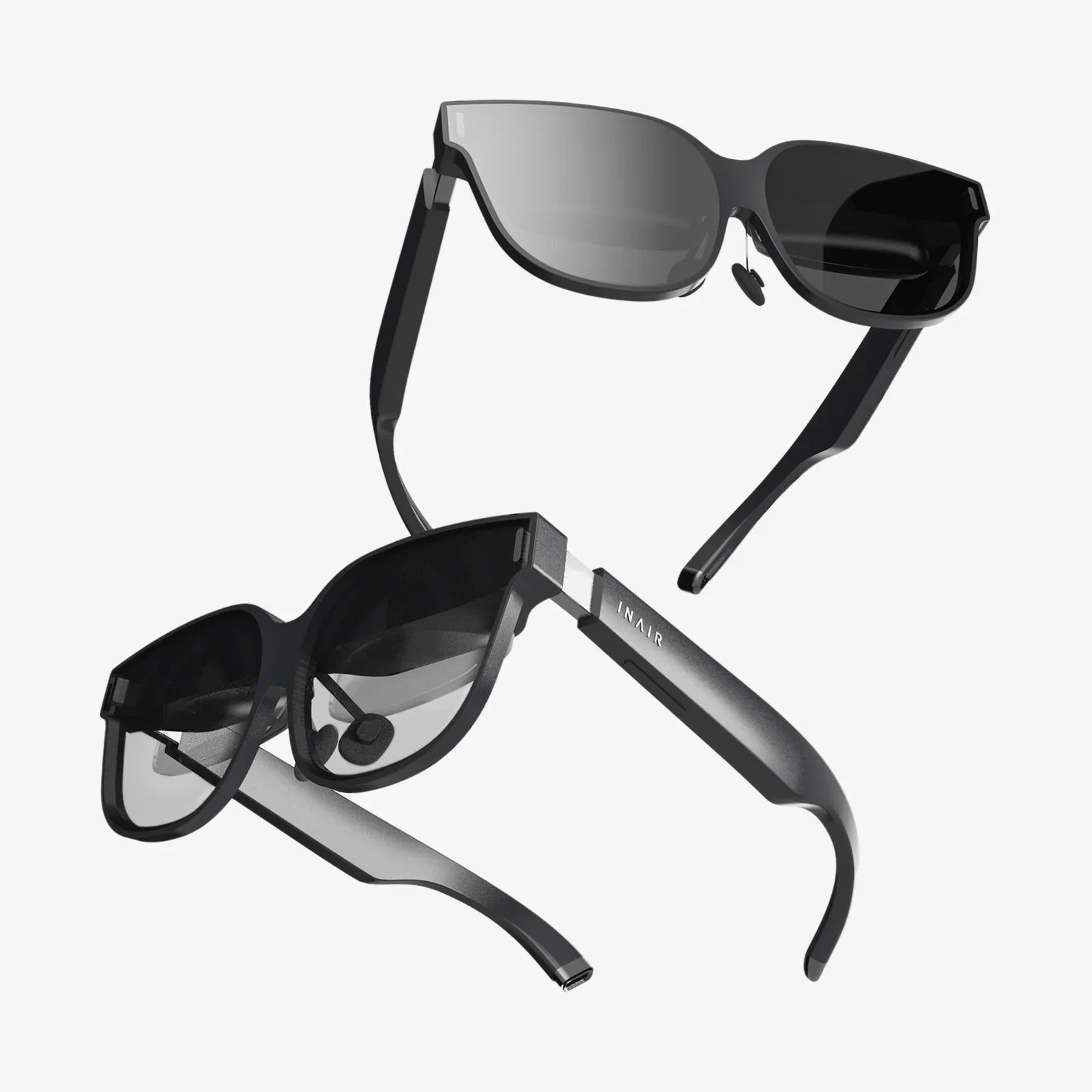
The greatest challenge, and potential triumph, of such a device lies in its design. For technology worn on the face, aesthetics are not secondary; they are paramount. The device must transcend its function to become a desirable fashion accessory, something people are proud to wear. This means moving beyond the bulky, geeky prototypes that have defined early AR headsets. The ideal form factor would likely resemble a pair of high-end sunglasses—lightweight, comfortable, and available in a variety of styles and lens treatments to suit personal taste. The technology would be invisibly embedded within the frames: micro-OLED displays projected onto the lenses, a spatial audio system hidden in the arms, and a constellation of tiny, powerful sensors discreetly integrated. The goal is not to look like a user of advanced technology, but simply to look good, with the technology serving as a hidden power within a familiar and socially acceptable form.
At the heart of these theoretical sunglasses would be a powerhouse of artificial intelligence, likely centered around an advanced Neural Engine. Unlike cloud-dependent AI, which requires a constant internet connection and raises privacy concerns, the core intelligence would operate on-device. This enables real-time processing with minimal latency, crucial for overlaying digital information onto a fast-moving physical world. This onboard AI would be contextually aware, processing data from its sensors—cameras, LiDAR, depth sensors, and microphones—to understand the user's environment and needs without constantly phoning home. It could identify objects, translate street signs instantly, provide navigation arrows painted onto the sidewalk, or remind you of a person's name at a networking event, all processed locally for speed and security.
How would one interact with a device that has no traditional screen, keyboard, or mouse? Apple AI Sunglasses would necessitate a revolution in user interface design, likely combining several intuitive input methods. Voice control, powered by an ultra-advanced Siri, would be a primary conduit, allowing for natural language commands and queries. Gesture recognition would allow users to manipulate virtual interfaces with subtle flicks of the wrist or finger movements, detected by inward-facing cameras. Perhaps most intriguing is the potential for gaze tracking—where you look determines what you interact with. A glance at a restaurant could bring up its menu and reviews; focusing on a specific part of a machinery could display a technical schematic. This creates a UI that is not only hands-free but also intention-based, responding to where your attention is focused.
While the AI provides the brain, Augmented Reality provides the eyes. AR would transform these sunglasses from a smart display into a window to a layered world. The applications are boundless. For navigation, instead of looking down at a phone, directions are superimposed onto the road ahead. For productivity, virtual screens can be arranged anywhere in space, turning a coffee shop table into a multi-monitor workstation. For education, a student could dissect a virtual frog or walk through a historical site seeing digital recreations of ancient ruins. For social connection, shared AR experiences could allow friends to play a virtual board game on a real table or leave digital notes and artwork for each other in specific locations. The physical world becomes a canvas for digital innovation.
Inextricably linked to this technology is the profound question of privacy. A device that sees what you see and hears what you hear is inherently powerful and potentially intrusive. The ethical development of such a product would require a privacy-first framework. Clear visual and audio indicators would be essential to inform others when they are being recorded. Data processing must be overwhelmingly on-device, with user opt-in required for any cloud sharing. The very concept of recording in public would need to be re-evaluated, potentially requiring new social contracts and even legislation. The company behind them would bear a massive responsibility to implement these features not as an afterthought, but as the foundational bedrock of the product, ensuring the technology empowers the user without eroding personal privacy.
The path to a consumer-ready product is fraught with technical hurdles. Battery life is a monumental challenge; powering such advanced compute and display technology in a glasses form factor would require energy densities far beyond current capabilities, potentially necessitating a companion battery pack in the early iterations. Thermal management—dissipating heat from a powerful chipset so close to the skin—is another significant engineering puzzle. Furthermore, the technology must be accessible, not just a luxury for the elite. Solving these problems will require breakthroughs in semiconductor design, materials science, and power management, likely evolving over several generations of hardware.
The potential of Apple AI Sunglasses extends far beyond a cool piece of tech. It represents a fundamental shift towards ambient computing, where technology fades into the background of our lives, assisting us contextually without demanding our constant attention. It’s a device that could restore a sense of presence, allowing us to look up at the world and each other, with digital information enhancing rather than interrupting our reality. It promises a future where the line between the digital and the physical finally blurs, not on a screen, but all around us, creating a world rich with information, connection, and magical possibilities, all viewed through the most personal of lenses: our own eyes.
Share:
How to Connect VR Headset to Laptop: The Ultimate Setup Guide
How Much Is The New VR Headset - A Deep Dive Into Pricing, Tiers, and True Cost