


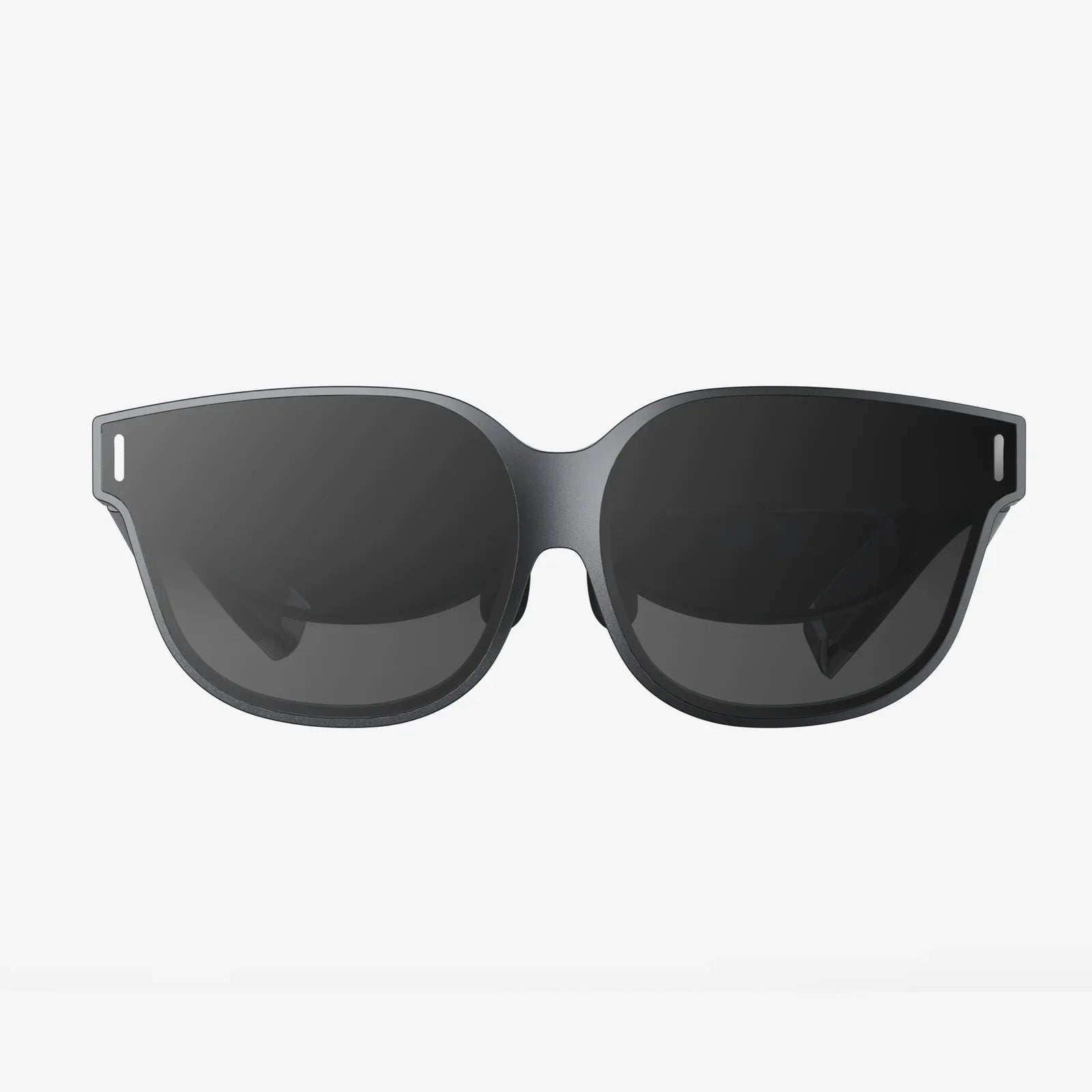
Imagine a world where digital information doesn't just live on a screen but is woven into the very fabric of your reality, where virtual objects cast real shadows and your living room becomes a portal to another dimension; this is the revolutionary promise held within the convergence of Apple's ambitious Mixed Reality, three-dimensional spatial mapping, and advanced Augmented Reality technologies.
The Architectural Pillars: MR, 3D, and AR
To understand the significance of this technological trifecta, we must first dismantle the acronyms and explore the core concepts individually before witnessing their powerful synergy. Mixed Reality (MR) represents the spectrum that encompasses the entire continuum between the completely real and the entirely virtual. It's not just Virtual Reality (VR), which immerses you in a fully digital environment, nor is it purely Augmented Reality (AR), which overlays digital information onto the real world. MR is the blend of both, where physical and digital objects co-exist and interact in real-time. This requires a sophisticated understanding of the user's environment, which is where three-dimensional mapping comes into play.
Three-dimensional, or 3D, sensing is the bedrock of this entire experience. It involves using a suite of advanced sensors, including LiDAR scanners, depth-sensing cameras, and sophisticated algorithms, to create a high-fidelity, real-time depth map of the surrounding world. This isn't a simple photograph; it's a computationally understood model of the space, complete with dimensions, surfaces, obstacles, and their relative positions. This digital twin allows the system to understand where the floor is, how far away a wall is, and the shape of the coffee table, enabling digital content to respect the physics and geometry of your room.
Augmented Reality is the visual and interactive layer that users experience. It's the practice of superimposing computer-generated perceptual information—images, data, 3D models, animations—onto the user's view of the real world. Until now, most consumer AR has been experienced through the camera on a smartphone or tablet. You point your device, and a dinosaur appears on your lawn or a new piece of furniture materializes in your living room. While impressive, this is a constrained, second-hand experience viewed through a small window. The next evolution is to liberate AR from the screen, projecting it directly into your field of vision through lightweight, high-resolution head-worn displays.
The Seamless Symphony: How These Technologies Converge
The true magic, and Apple's purported masterstroke, lies not in these technologies existing in isolation, but in their deeply integrated convergence. The system's advanced 3D sensors constantly scan and understand the environment. This rich spatial data informs the MR platform, which decides how virtual objects should behave within that space. Finally, high-resolution displays render the AR elements with stunning clarity, seamlessly blending them into the user's perception of reality.
This creates a form of spatial computing where the device understands and interacts with the space around it. A virtual screen for a video call can be pinned to your wall and remain there even if you walk away and come back. A digital chessboard can sit on your actual table, with pieces obeying the laws of gravity. You can design a piece of furniture in a 3D modeling app and then walk around the full-scale, photorealistic rendering of it in the center of your room, confident it will fit perfectly. This level of persistence and environmental interaction is what separates a true MR experience from the simpler AR of today.
Revolutionizing Industries Beyond Gaming
While immersive gaming is an obvious and thrilling application, the implications of this technology extend far beyond entertainment, poised to transform foundational industries.
Design and Architecture
Architects and interior designers will be able to step inside their blueprints and walkthrough building designs at a 1:1 scale before a single foundation is poured. Clients can experience a proposed space, adjusting materials, lighting, and layouts in real-time, making collaborative design an immersive, intuitive process.
Education and Training
Medical students can practice complex surgical procedures on detailed, interactive 3D holograms of human anatomy. Mechanics can see a layered, AR schematic overlaid on a real engine, identifying parts and following repair instructions hands-free. History lessons can transform into immersive recreations of ancient civilizations.
Remote Collaboration and Telepresence
The concept of a video call will be rendered obsolete, replaced by photorealistic spatial avatars of colleagues who can share a virtual workspace. Engineers on different continents could collaborate on the same 3D model of a new product as if they were standing next to each other, manipulating it with their hands.
Healthcare
Surgeons could use AR overlays during procedures to visualize critical data like blood flow or tumor margins directly on the patient. Therapists could use controlled immersive environments to treat phobias or PTSD, and assistive applications could help visually impaired users navigate complex spaces.
The Invisible Framework: Software, Developers, and the Ecosystem
A hardware device, no matter how advanced, is inert without a robust software ecosystem to bring it to life. The success of this platform will hinge on providing developers with powerful, intuitive tools to create these revolutionary experiences. A dedicated operating system built from the ground up for spatial computing is essential, one that manages resources efficiently to deliver high-fidelity graphics without overwhelming the processing unit or draining the battery.
For developers, this means access to robust software development kits that simplify the immense complexity of spatial tracking, 3D rendering, and user interaction. Frameworks that allow them to easily anchor digital content to the real world, create realistic physics and occlusion (where a virtual object can be hidden by a real-world couch), and design intuitive hand-and-eye-controlled interfaces will be critical. The creation of a dedicated digital storefront for distributing these applications will serve as the central hub for this new class of software, from professional tools to consumer experiences.
Navigating the Challenges: The Path to Mainstream Adoption
The path to mainstream adoption is fraught with significant technical and social hurdles that must be overcome. The first is hardware design. The device must be socially acceptable—lightweight, comfortable, and aesthetically pleasing enough for people to want to wear it for extended periods. It must solve the "vergence-accommodation conflict," a technical challenge where the eyes struggle to focus on virtual objects at different depths, which can cause strain and nausea. Battery life is another major constraint; delivering this level of computational performance is incredibly power-intensive.
Beyond the hardware, there are profound questions about the societal impact. How will these devices reshape social interaction if people are partially immersed in digital worlds during conversations? New paradigms for privacy and data security will be desperately needed, as these devices continuously capture detailed 3D maps of users' most intimate spaces—their homes. Establishing clear ethical guidelines and robust data protection measures from the outset will be non-negotiable for earning public trust.
A New Dimension of Human-Computer Interaction
This represents more than just a new product category; it is a fundamental shift in how humans interact with computers. We have moved from command lines to graphical user interfaces pointed to with a mouse, to direct touch manipulation on glass screens. The next logical step is an interface that requires no intermediary device at all—one you interact with using your hands, your eyes, and your voice in the boundless canvas of your own world.
This spatial computing platform has the potential to make technology more intuitive, more contextual, and more powerfully integrated into our daily tasks than ever before. It promises to augment human capability, not replace it, by putting information and tools exactly where and when they are needed, seamlessly. It’s about enhancing our reality, not escaping from it.
The fusion of high-fidelity 3D sensing, immersive Mixed Reality, and seamless Augmented Reality is not merely an incremental update; it is the foundation for the next great computing platform, one that will unlock creative, professional, and personal possibilities we are only beginning to imagine, forever changing our relationship with the digital universe.
Share:
When Should I Buy a VR Headset? The Ultimate Buyer's Guide
Best VR Goggles for iPhone 6 Plus: A Comprehensive Guide to Retro Mobile VR