


- by wangfred
AR Advanced Technology Inc. Is Pioneering the Next Industrial Revolution
- by wangfred
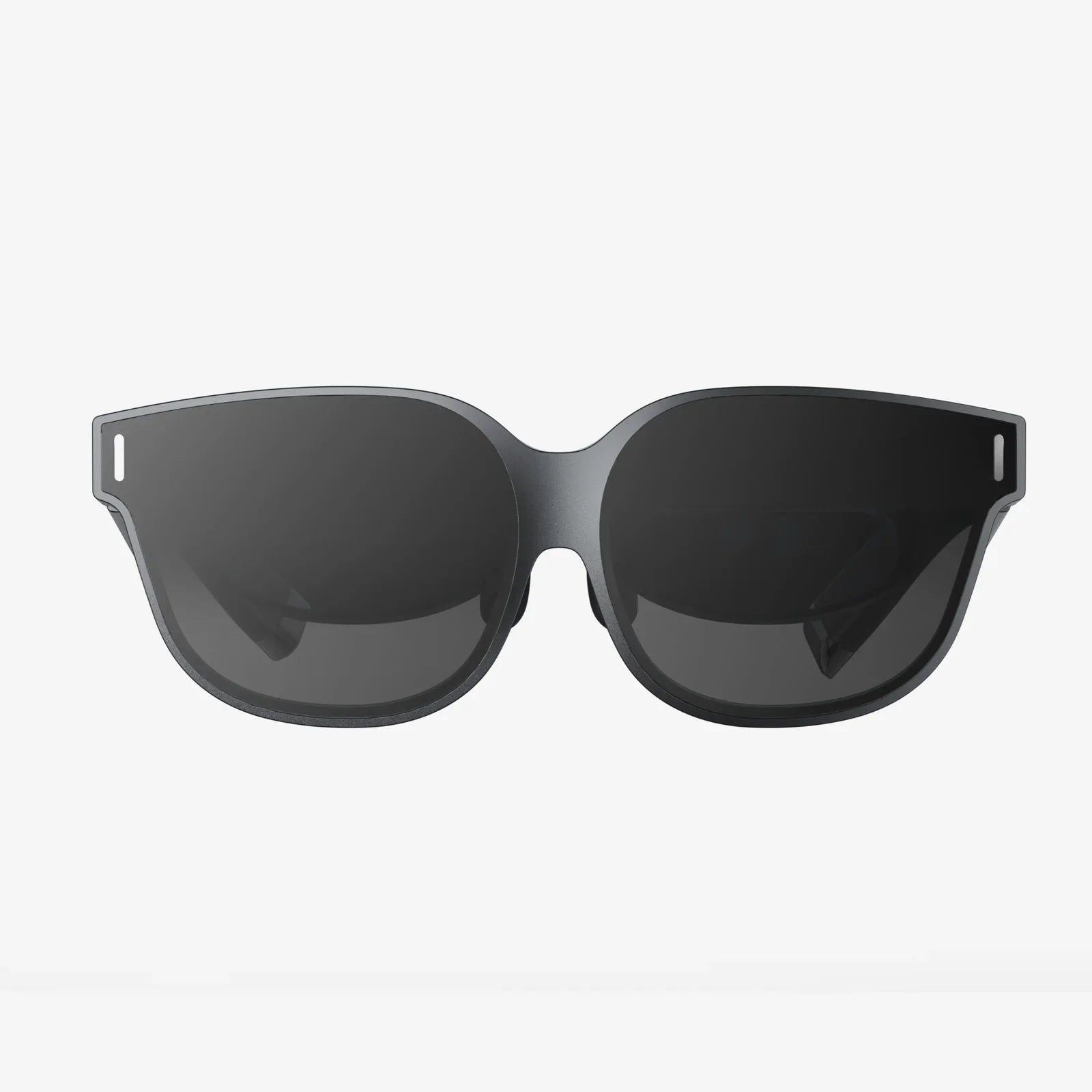
Imagine a world where a surgeon in one country is guided in real-time through a complex procedure by the world's leading expert, whose holographic hands appear right beside them. Envision a factory floor where a new technician, with no prior experience, can expertly assemble a intricate machine because digital instructions are overlaid directly onto the physical components. Picture an architect walking a client through a full-scale, interactive model of a building that hasn't even broken ground. This is not a distant science fiction fantasy; it is the tangible, transformative reality being built today by innovators like AR Advanced Technology Inc., a company positioned at the very forefront of the augmented reality revolution.
To understand the impact of a company like AR Advanced Technology Inc., one must first grasp the sophisticated technological pillars that make modern AR possible. This is not the simple face-filter or Pokemon-catching technology of a few years ago. Today's enterprise-grade AR is a complex symphony of hardware and software, demanding immense computational power and elegant design.
The first pillar is precise spatial mapping and understanding. Advanced sensors, including LiDAR, depth-sensing cameras, and simultaneous localization and mapping (SLAM) algorithms, work in concert to create a rich, digital twin of the physical environment. This allows digital objects to not only be placed in a space but to understand it—to occlude correctly behind real-world objects, to adhere to the laws of physics, and to persist in the exact same location even if the user walks away and returns.
The second pillar is seamless user interaction
The third, and perhaps most crucial, pillar is cloud connectivity and data integration. The true power of AR is unlocked when it becomes a window into an organization's live data. A maintenance technician's AR glasses can pull real-time sensor data from the equipment they are viewing. A designer's headset can stream the latest 3D model from a cloud server. This transforms AR from a isolated visualization tool into a connected nerve center, bringing the entire knowledge ecosystem of a company into the user's field of view, right when and where it is needed most. Perhaps the most immediate and dramatic impact of the technology championed by AR Advanced Technology Inc. is being felt on factory floors, construction sites, and in warehouses worldwide. Here, AR is solving critical problems of efficiency, accuracy, and safety, delivering a rapid and measurable return on investment. In complex assembly processes, workers are using AR-guided systems to eliminate errors. Instead of constantly glancing back and forth between a physical engine and a paper manual or a static screen on a cart, digital arrows, animations, and instructions are projected directly onto the work surface. This hands-free, context-aware guidance has been shown to drastically reduce assembly time, lower error rates to near zero, and significantly shorten the training period for new hires. A novice can perform like a veteran from their first day on the job. Predictive and routine maintenance is another area undergoing a revolution. A technician approaching a malfunctioning pump can see its service history, live performance metrics, and previous maintenance reports overlaid on their real-world view. When it's time to repair, the AR system can highlight the specific bolts that need to be removed and animate the correct disassembly procedure. This direct access to institutional knowledge prevents mistakes, reduces machine downtime, and empowers technicians to solve problems they previously would have needed to escalate to a specialist. Furthermore, remote expert assistance is breaking down geographical barriers. Using AR glasses equipped with cameras and microphones, a field worker can stream their point-of-view to a senior engineer located thousands of miles away. The remote expert can then draw annotations—arrows, circles, notes—that appear anchored to the real-world equipment in the field worker's display. This allows for instant knowledge transfer, enabling one expert to support dozens of field personnel, drastically reducing travel costs and solving critical issues in minutes instead of days. Long before a product is ever manufactured or a building is constructed, AR technology is reshaping the creative process itself. The fields of architecture, engineering, and product design are being utterly transformed by the ability to visualize and interact with 3D models at a 1:1 scale in the real world. Designers can place a full-scale prototype of a new car interior in an empty room and walk around inside it, assessing sightlines, ergonomics, and aesthetics in a way that is impossible on a computer screen. Architects and their clients can don headsets and stand on an empty plot of land, watching as a photorealistic rendering of their new home materializes around them. They can open virtual doors, change the virtual materials of the exterior siding in real-time, and truly experience the space, making informed decisions long before construction begins. This process not only saves enormous amounts of money that would have been spent on physical mock-ups but also fosters a deeper, more intuitive collaboration between creators and stakeholders. This collaborative power extends to global teams. Engineers from different continents can meet in a shared virtual space, interacting with the same 3D holographic model of a new component as if they were all in the same room. They can deconstruct it, measure it, and simulate its performance under stress, all while discussing and annotating in real-time. This shared context accelerates innovation, identifies potential design flaws early, and streamlines the entire product development lifecycle. The applications extend far beyond industry, into areas where the stakes are the highest: human health and skill development. In healthcare, AR is emerging as a powerful tool for both treatment and training, augmenting the skills of medical professionals and improving patient outcomes. Medical students are now using AR to learn anatomy, peeling back virtual layers of a holographic human body to study the relationships between muscles, organs, and the vascular system. This provides a depth of understanding that textbooks and even cadavers cannot match. Surgeons are using AR for pre-operative planning, overlaying CT and MRI scans onto a patient's body to visualize the precise location of a tumor or a critical blood vessel before making a single incision. In some pioneering procedures, this guidance is provided in real-time during surgery, giving the surgeon X-ray vision to navigate with unparalleled precision and safety. The paradigm for training and knowledge retention is also shifting. Instead of memorizing procedures from a manual, trainees can practice them in a safe, simulated environment that feels real. A mechanic can learn to repair a complex system without risking damage to million-dollar equipment. A firefighter can rehearse navigating a smoke-filled building. This experiential learning, powered by AR, dramatically improves skill acquisition, confidence, and retention, creating a more competent and prepared workforce across every sector. Despite its immense potential, the path forward for enterprise AR is not without significant hurdles. For widespread adoption, challenges around hardware must be addressed. Devices need to become lighter, more comfortable for all-day wear, offer longer battery life, and provide a visual fidelity that is indistinguishable from the real world, all while remaining affordable for organizations to deploy at scale. Furthermore, the creation of a robust and secure software ecosystem is paramount. This includes developing intuitive authoring tools that allow subject matter experts—not just software developers—to create AR experiences, and establishing universal standards to ensure interoperability between different devices and platforms. Perhaps most critically, as these devices collect vast amounts of visual and operational data, immense attention must be paid to data security and user privacy. Building trust through transparent policies and robust cybersecurity will be non-negotiable. Looking ahead, the trajectory points toward even deeper integration. The convergence of AR with Artificial Intelligence and the Internet of Things will create systems that are not just informative but predictive and prescriptive. Imagine glasses that can not only show you how to fix a machine but can also analyze its sounds and vibrations to predict its failure before it happens. Or an AI assistant in your field of view that can answer complex questions contextually, based on exactly what you are looking at. This is the inevitable future being built. The work of pioneers like AR Advanced Technology Inc. is not merely about creating a new gadget; it is about redefining the interface between humanity and information. By seamlessly blending the digital and physical, they are building a world where technology enhances our natural abilities, amplifies our intelligence, and empowers us to solve problems, create, and collaborate in ways we are only beginning to imagine. The next computing platform is not on your desk or in your pocket; it is all around you, waiting to be unlocked.Transforming the Industrial and Manufacturing Landscape
Revolutionizing Design, Prototyping, and Collaboration
Enhancing Human Capability in Healthcare and Training
Navigating the Challenges and Looking to the Future