


- by wangfred
AR Advanced Technology: Reshaping Reality and Redefining Human Experience
- by wangfred
Imagine a world where digital information doesn't live on a screen in your hand but is seamlessly woven into the very fabric of your reality. Where walking through a city reveals historical ghosts superimposed on modern streets, where complex machinery reveals its inner workings through transparent schematics, and where learning is a full-body, interactive adventure. This is not a distant science fiction fantasy; it is the imminent future being built today by AR advanced technology. This transformative force is poised to fundamentally alter how we work, learn, play, and connect, blurring the lines between the physical and digital realms in ways we are only beginning to comprehend.
At its heart, AR advanced technology is a sophisticated symphony of hardware and software working in concert to perceive, understand, and augment the real world. It's far more than just overlaying a graphic; it's about persistent, contextual, and interactive digital integration.
The true magic of modern AR begins with spatial computing. This is the capability of a system to understand the three-dimensional space around it. Through a combination of advanced sensors—LiDAR (Light Detection and Ranging), depth-sensing cameras, and inertial measurement units (IMUs)—the device constructs a real-time digital map of its environment. It doesn't just see a flat surface; it understands the geometry, contours, and dimensions of a room, the precise location of a chair, and the distance to a wall. This environmental understanding is the foundational canvas upon which all digital content is accurately and persistently placed.
SLAM is the critical algorithm that makes spatial computing possible. It's the process by which a device simultaneously maps an unknown environment and localizes itself within that map in real-time. As you move your device or wearable through space, SLAM continuously compares incoming sensor data with its existing map, adjusting its position and refining the environment's model. This is what allows a digital character to hide convincingly behind your real-world sofa or for navigation arrows to appear fixed to the pavement, guiding your steps accurately.
While sensors map the geometry, computer vision helps the system understand the content of the environment. Powered by machine learning and artificial intelligence, computer vision algorithms can identify and classify objects. The system doesn't just see a flat surface; it recognizes it as a "table." It doesn't just see a poster; it can read the text on it and understand its meaning. This layer of semantic understanding allows AR experiences to become truly context-aware. An AR manual can recognize a specific engine part and highlight the exact bolt that needs tightening. An AR shopping app can recognize a piece of furniture and show you how it would look in your living room, scaled perfectly to fit.
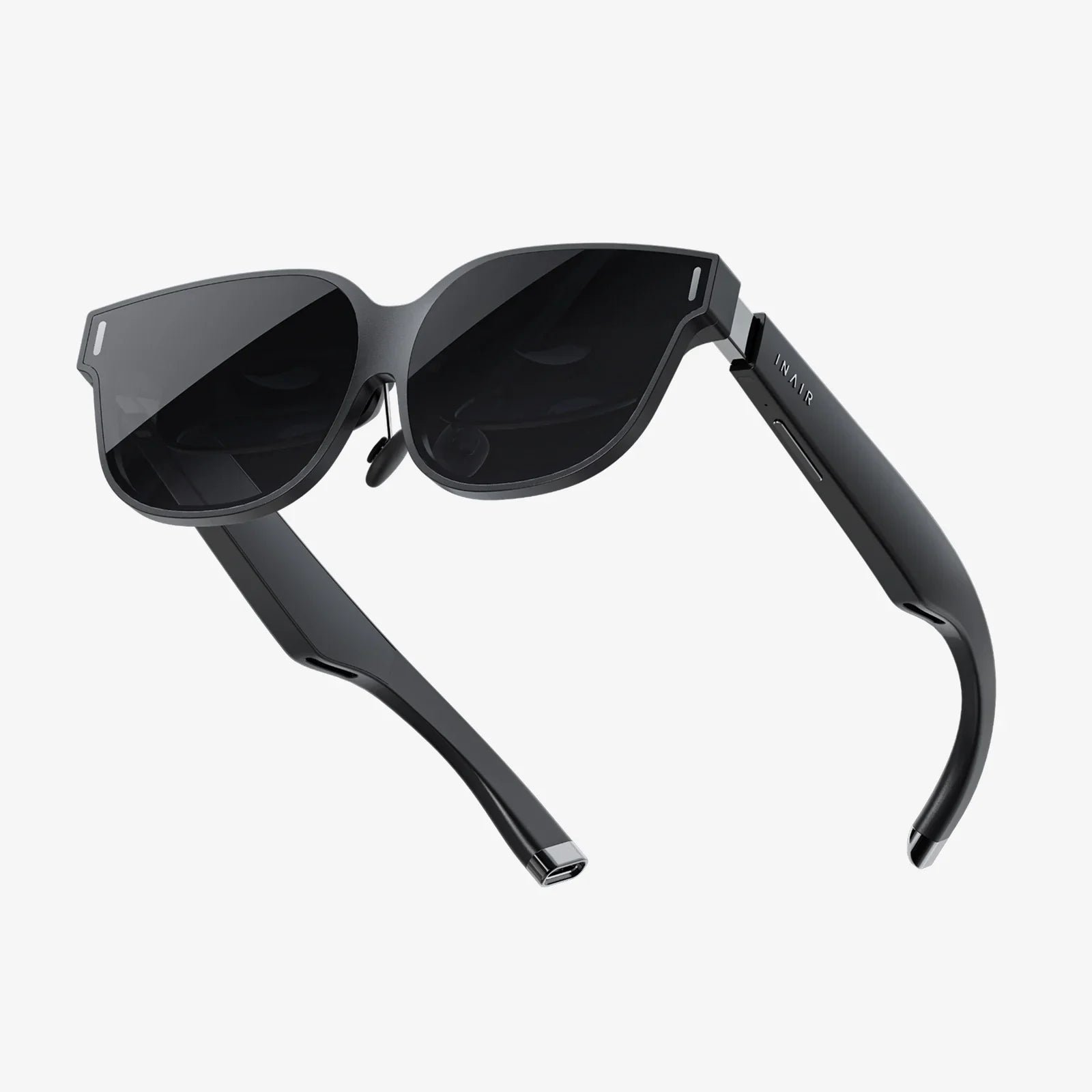
The final piece of the puzzle is delivering the digital overlay to the user's eyes. Currently, this exists on a spectrum:
While consumer applications often grab headlines, the most profound impact of AR advanced technology is currently unfolding within enterprise and industrial sectors, where it is solving real-world problems and delivering measurable ROI.
On the factory floor and in the field, AR is a game-changer. Technicians wearing AR glasses can see digital work instructions overlaid directly onto the machinery they are repairing. Complex wiring diagrams are projected onto the actual panels, eliminating constant glances back and forth at a paper manual or tablet. Remote experts can see what the on-site technician sees and annotate their real-world view with arrows, circles, and notes, guiding them through procedures from thousands of miles away. This drastically reduces errors, slashes training time, and minimizes downtime.
In the AEC industry, AR allows architects and engineers to step inside their 3D models long before a single foundation is poured. They can visualize building systems (electrical, plumbing, HVAC) clash-detected within the physical space of a construction site, identifying and resolving conflicts in the real world rather than on a screen. Clients can take a virtual walkthrough of their future home, experiencing the scale and flow of spaces at a 1:1 ratio, enabling informed changes before construction begins, saving immense time and resources.
The applications in medicine are both life-changing and life-saving. Surgeons can use AR overlays to visualize a patient's anatomy—such as tumors or critical blood vessels—superimposed directly onto their body during procedures, enhancing precision and improving outcomes. Medical students can learn anatomy through interactive 3D holograms of the human body. AR can also assist in complex vein visualization for nurses or provide guided physical therapy exercises for patients at home, ensuring they perform movements correctly.
AR is fundamentally bridging the gap between online and in-store shopping. Customers can "try on" glasses, makeup, or clothing virtually from their homes. They can see how a new sofa, television, or piece of art would look and fit in their actual living space, dramatically reducing purchase hesitation and product return rates. This "try-before-you-buy" paradigm is reshaping consumer confidence and the retail landscape.
Beyond practical applications, AR advanced technology is poised to reshape human behavior, social interaction, and our very perception of reality.
Education is transitioning from passive absorption to active exploration. Instead of reading about ancient Rome, students can walk through a digitally reconstructed Forum on their school grounds. Biology students can dissect a holographic frog or watch a human heart beat in intricate detail from every angle. This immersive, experiential learning caters to different learning styles and makes complex subjects intuitively understandable, fostering deeper engagement and retention.
AR promises a future of presence-aware collaboration. Colleagues across the globe could appear as holograms in your meeting room, able to interact with shared 3D data models as if they were physically present. Friends could watch a sporting event together on a virtual big screen "placed" in a park, sharing the experience despite being miles apart. This moves beyond flat video calls into shared spatial experiences, creating a stronger sense of connection and co-presence.
We are moving towards a world of "just-in-time" information. Looking at a restaurant could reveal its hygiene rating and today's specials. A historical monument could come alive with a narration from a historical figure. Navigating a foreign airport could have directional signs personalized to your gate number floating above the crowd. This constant, contextual data layer will make us more efficient and informed, effectively turning the entire world into an intuitive and interactive interface.
The path forward for AR advanced technology is not without significant hurdles and profound ethical questions that society must address.
An AR device that understands the world is, by its very nature, a powerful sensor platform—constantly capturing video, audio, and spatial data of its surroundings. This raises monumental privacy concerns. Who owns the data collected about a public space or a private individual captured incidentally? How do we prevent continuous surveillance? Establishing clear ethical guidelines, robust data anonymization practices, and "privacy by design" principles will be paramount to earning public trust.
There is a real risk that AR could exacerbate existing social and economic inequalities. High-cost hardware and required connectivity could create a new "AR divide," separating those who can afford this enhanced reality from those who cannot. Furthermore, designing interfaces that are accessible to people with diverse abilities is a critical challenge that must be central to development, not an afterthought.
As the digital and physical worlds merge, questions about perception and mental well-being arise. How will long-term exposure to a persistently augmented world affect our cognition, memory, and connection to unmediated reality? The potential for new forms of addiction, distraction (especially while driving or walking), and even reality-deception through malicious "deepfake"-style AR content are serious concerns that require proactive research and mitigation strategies.
The potential for AR as an advertising medium is staggering—and potentially intrusive. The dream of an ad-free physical space could vanish if every surface becomes a potential billboard vying for our attention. The battle for our visual field will intensify, necessitating the development of new norms, user-controlled filters, and perhaps even "digital zoning laws" to protect public spaces and individual attention.
The journey of AR advanced technology is just beginning. We are standing at the precipice of a shift as significant as the advent of the smartphone or the internet itself. This is not merely about putting a filter on the world; it is about building a new layer of intelligence and interaction onto reality itself. The choices we make today—in designing these systems, establishing ethical guardrails, and prioritizing human-centric applications—will determine whether this powerful technology becomes a ubiquitous force for good, enhancing human potential and connection, or a source of division and distraction. The future is not something we enter; it is something we create, and AR provides us with a entirely new set of tools to build it.