


- by wangfred
AR AI App: The Invisible Revolution Reshaping Our Daily Reality
- by wangfred
Imagine pointing your phone at a dense technical manual and having complex diagrams leap into three-dimensional life, with a patient, virtual expert guiding you through each component. Or walking through a foreign city where the signs not only translate instantly but the very streets whisper history tailored to your interests. This isn't a distant sci-fi fantasy; it’s the emerging reality being built today by the powerful convergence of Augmented Reality (AR) and Artificial Intelligence (AI) within the humble mobile application. This fusion is creating a new class of software so intuitive, so contextually aware, that it promises to dissolve the barrier between the digital and the physical, revolutionizing everything from how we work and learn to how we shop and navigate the world.
To understand the power of an AR AI application, one must first appreciate the unique capabilities each technology brings to the partnership. Augmented Reality overlays digital information—images, data, 3D models—onto our view of the real world through a device's camera. It provides the eyes and the canvas. Artificial Intelligence, particularly its subsets like machine learning and computer vision, provides the brain. It is the engine that understands, interprets, and makes sense of the visual and contextual data streaming in.
An application that uses only AR can place a digital couch in your living room, but it doesn't know if the room is a modern loft or a traditional study. An application with only AI might recognize that your living room is spacious and well-lit, but it can't visually demonstrate what a new piece of furniture would look like. An AR AI application does both simultaneously. It sees the room, understands its dimensions, lighting, and existing style, and then intelligently recommends and places virtual objects that are perfectly suited to that specific environment. This symbiotic relationship creates a feedback loop of continuous learning and adaptation, making the application smarter and more helpful with every use.
At the heart of every sophisticated AR AI application lies a complex suite of computer vision algorithms. This is the foundational technology that allows the application to perceive and decipher the world. It goes far beyond simple object recognition.
This advanced visual perception transforms the device from a passive camera into an active observer that comprehends the geometry and semantics of its surroundings.
The practical applications of AR AI apps are moving from captivating demos to core tools in critical sectors, delivering tangible value and solving real-world problems.
The try-before-you-buy paradigm is being completely redefined. Shoppers can now use an app to see how a pair of glasses fits their face shape, how a shade of lipstick complements their skin tone under different lighting, or how a new sofa fits the scale and color scheme of their living room. The AI doesn't just overlay the product; it analyzes the user's environment or features to make personalized recommendations—suggesting a larger rug because the one you're looking at is too small for your space, or a different frame style that better suits your face structure. This drastically reduces purchase hesitation and return rates, creating a more confident and satisfying consumer experience.
Education is shifting from passive absorption to active exploration. Imagine a medical student pointing their device at a textbook diagram of the human heart. An AR AI app can project a beating, interactive 3D model, allowing the student to peel back layers, see blood flow in real-time, and even perform a virtual dissection. The AI can act as a tutor, quizzing the student on components and providing corrective feedback. In industrial training, mechanics can look at an engine block and see internal parts highlighted, with animated guides overlaying the exact repair procedure, drastically reducing errors and accelerating the learning curve.
For technicians in the field, an AR AI app is like having a senior expert looking over their shoulder. By recognizing complex machinery, the app can overlay schematics, torque specifications, and step-by-step repair instructions directly onto the equipment. It can highlight potential problem areas, warn a technician if a part is being assembled incorrectly, and pull up the relevant historical maintenance logs. This augmented workforce is more efficient, makes fewer mistakes, and requires less specialized prior knowledge, as the intelligence is built into the application itself.
GPS brought maps to our phones; AR AI apps are now bringing maps to the real world. Instead of staring at a blue dot on a 2D map, users can simply raise their phone and see large, floating arrows projected onto the street, directing them to the next turn. Inside vast, complex spaces like airports, hospitals, or university campuses, these apps can provide intuitive guidance to your gate, a specific department, or a lecture hall. The AI understands your location with pinpoint indoor accuracy and can even provide contextual information—like pointing out landmarks or notifying you that your favorite coffee shop is just around the next corner.
For all its promise, the development and adoption of AR AI applications are not without significant hurdles. The very features that make them powerful also raise profound questions.
Privacy and Data Security: These applications are, by their nature, data-hungry. They process a constant stream of visual data from your surroundings, which could include sensitive information about your home, your location, and even the people around you. The question of where this data is processed (on the device or in the cloud), how it is stored, and who has access to it is paramount. Robust on-device processing and strong data anonymization policies are critical to building user trust.
Hardware Limitations and Accessibility: High-fidelity AR and complex AI models are computationally intensive, draining batteries and requiring powerful processors. While high-end devices can handle this, creating experiences that are accessible across a broader range of hardware remains a challenge. Developers must balance visual fidelity with performance to ensure a smooth and accessible user experience.
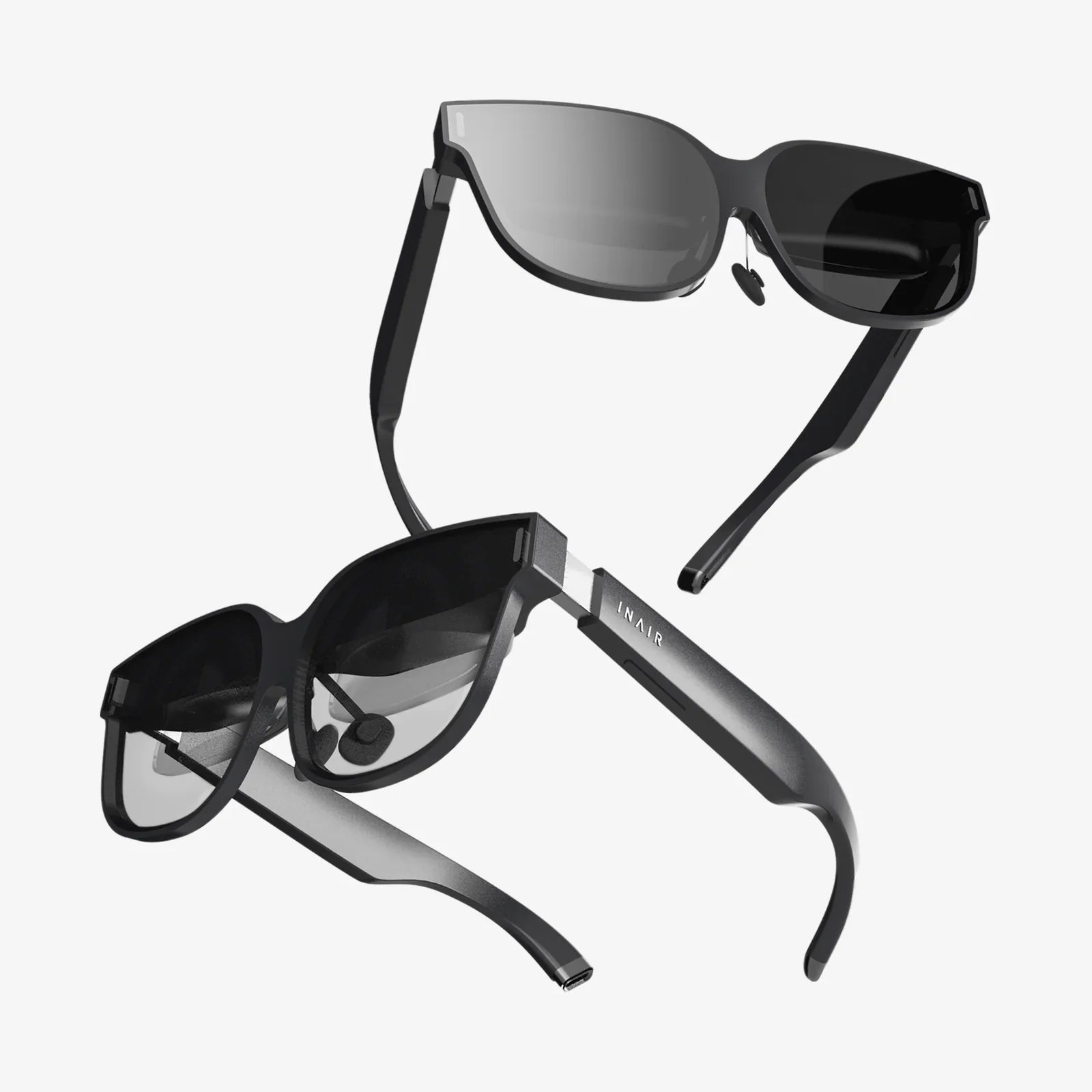
The Social Acceptance Hurdle: Waving a phone around in public to interact with an augmented world can still feel socially awkward. The dream of seamless, hands-free AR through smart glasses is on the horizon, but until that technology becomes mainstream and socially normalized, the full potential of AR AI apps will be somewhat tethered to the smartphone form factor.
The trajectory of this technology is clear: a move towards ever-greater contextual awareness and frictionless interaction. The next generation of AR AI apps will move beyond simple object recognition to full scene understanding. They won't just see a table and a chair; they will understand that it's a home office, that the user is likely working, and could proactively offer to dim the virtual blinds they placed last week to reduce screen glare.
Advancements in AI will lead to more natural and intuitive interfaces—conversational AI that you can talk to about the things you see, and generative AI that can create custom AR content on the fly. The line between application and operating system will blur, with AR AI becoming a fundamental, ambient layer of our digital lives, not something we open and close. It will be the invisible assistant that enhances our perception, augments our memory, and amplifies our abilities, seamlessly weaving digital intelligence into the fabric of our physical reality.
We stand at the precipice of a fundamental shift in human-computer interaction, one where our devices cease to be mere portals to a separate digital realm and instead become intelligent lenses that enhance our own reality. The AR AI app is the key that unlocks this world, transforming our smartphones from distractions into powerful extensions of our own eyes and minds, ready to reveal the hidden layers of information, story, and possibility that have been waiting in plain sight all along.
Share:
AI Attempt at AR: The Next Frontier in Blending Realities
Best Digital Experience Products: The Ultimate Guide to Transforming User Engagement