


Imagine pointing your device at a dense, technical manual in a language you don't understand and seeing it instantly overlaid with clear, animated instructions in your native tongue. Or walking through a historic city and watching phantoms of the past enact their stories right before your eyes on the very streets where they occurred. This isn't a scene from a science fiction novel; it is the palpable, emerging reality being forged at the intersection of Augmented Reality (AR) and Artificial Intelligence (AI)—a powerful combination so seamless and transformative it can only be described as AR AI Magic. This synergy is not merely an incremental improvement in technology; it represents a fundamental shift in the human-computer interface, moving us from a world of screens and commands to one of context, intuition, and ambient intelligence. We are on the cusp of an invisible revolution, one that will weave digital understanding directly into the fabric of our physical lives.
The Alchemy of Two Technologies: More Than the Sum of Their Parts
To understand the magic, we must first deconstruct its components. Augmented Reality, by itself, is a powerful tool. It superimposes digital information—images, text, 3D models—onto our view of the real world through devices like smartphones, tablets, or smart glasses. Its promise has been tantalizing for years, yet its early applications often felt like novelties: fun filters or simple games. The limitation was its blindness; AR could place a digital dinosaur in your living room, but it couldn't understand the room itself. It couldn't distinguish your couch from your coffee table, recognize the book on your shelf, or comprehend your actions.
This is where Artificial Intelligence enters as the catalyst. AI, particularly the subfields of computer vision and machine learning, provides the eyes and brain for AR. Computer vision algorithms enable the system to not just see the world, but to interpret it. They can identify objects, track surfaces, estimate depth, and recognize human poses and gestures. Machine learning models allow the system to learn from vast datasets, continuously improving its accuracy and understanding of complex environments. When these AI capabilities are integrated into AR, the magic begins:
- Intelligent Occlusion: The digital content doesn't just float in front of reality; it interacts with it. A virtual character can hide behind your real-world sofa because the AI understands the sofa is a solid object.
- Contextual Awareness: Point your device at a restaurant, and the AI can cross-reference what it sees with vast databases to overlay reviews, menus, and reservation links specific to that exact establishment.
- Persistent AR: AI allows digital objects to be "anchored" to specific locations with incredible precision, creating a shared, persistent digital layer over the world that multiple users can experience simultaneously.
This fusion transforms AR from a simple display technology into a responsive, intelligent, and contextual interface. The device ceases to be a tool we look at and becomes a lens through which we see a smarter world.
Weaving Spells in the Real World: Practical Applications of AR AI Magic
The theoretical potential of AR AI Magic is vast, but its true power is revealed in its practical, real-world applications that are already beginning to transform major industries.
Revolutionizing Education and Training
The classroom of the future is an interactive, immersive playground. Imagine a biology student pointing a tablet at a textbook diagram of the human heart. Instantly, a beating, interactive 3D model erupts from the page. The student can rotate it, zoom in to see blood flow through valves, and even "dissect" it layer by layer, all guided by an AI tutor that adapts the information to their learning pace. For complex technical training, such as learning to repair an engine, an AI-powered AR system can provide real-time, hands-free instructions. It can highlight the exact bolt to loosen, provide torque specifications, and even warn the trainee if they are about to make a critical error, drastically reducing learning curves and improving safety.
Transforming Retail and E-Commerce
The "try before you buy" paradigm is being redefined. AR AI Magic allows you to see how a new sofa would look in your actual living room, not just a blank space. The AI measures your room, accounts for lighting, and even suggests complementary pieces based on your existing decor. For fashion, you can virtually "try on" clothes, glasses, or makeup, with the AI accurately mapping the items to your body's dimensions and movements. This seamless blend of the digital and physical catalogs reduces purchase anxiety and returns, creating a more confident and satisfying consumer experience.
Enhancing Industrial and Field Work
For engineers, architects, and maintenance crews, AR AI Magic is becoming an indispensable tool. An architect walking through a construction site can see the building's blueprint overlaid perfectly onto the unfinished structure, identifying any deviations from the plan in real-time. A field technician servicing a complex machine can look at a component and instantly pull up its service history, operational manuals, and schematics, all hands-free. The AI can diagnose problems by analyzing visual and thermal data, guiding the technician through repairs step-by-step. This not only boosts efficiency but also empowers workers with superhuman knowledge and perception.
Redefining Navigation and Exploration
Forget looking down at a blinking dot on a 2D map. The future of navigation is arrows and directions painted onto the road itself, visible through your glasses or windshield display. The AI doesn't just know your location; it understands the geometry of the intersection, the height of the curb, and the flow of pedestrian traffic. For tourists, this extends to exploring cities. Gaze upon a monument, and biographies, historical events, and architectural details materialize in your field of view, curated by an AI that tailors the information to your interests.
The Wizard Behind the Curtain: The Complex AI Driving the Experience
The effortless magic experienced by the user is powered by staggeringly complex AI processes running often on-device or in the cloud. Key enabling technologies include:
- Simultaneous Localization and Mapping (SLAM): This is the core technology that allows a device to understand its position in an unknown environment while simultaneously mapping that environment's geometry. It's how your AR device knows where to place a digital object and keep it stable.
- Semantic Segmentation: This goes beyond SLAM. Instead of just seeing shapes and surfaces, the AI labels every pixel. It can distinguish a "wall" from a "window," a "tree" from a "person," and a "car" from a "street sign." This deep understanding is crucial for contextual interactions.
- Neural Radiance Fields (NeRFs): A cutting-edge AI technique that can create photorealistic 3D representations of scenes from a handful of 2D images. This could eventually allow us to reconstruct entire environments digitally with incredible fidelity, enabling hyper-realistic AR experiences.
- On-Device Machine Learning: To ensure responsiveness and privacy, more AI models are being designed to run directly on smartphones and AR glasses, processing data locally without needing a constant cloud connection.
These technologies work in concert to create a real-time, intelligent understanding of the world, forming the bedrock upon which the magical AR experiences are built.
Navigating the Enchanted Forest: Ethical Considerations and Challenges
With great power comes great responsibility, and AR AI Magic is no exception. This transformative technology raises critical questions we must address as a society.
- Privacy and Surveillance: An always-on, intelligent camera that constantly analyzes its surroundings is a privacy advocate's nightmare. The data collected—what you look at, for how long, your facial expressions, the layout of your home—is incredibly intimate. Robust frameworks for data ownership, consent, and anonymization are non-negotiable.
- The Reality Divide: Will a future where the affluent can afford AI-powered AR glasses that provide them with constant information and advantages create a new socio-economic chasm? Will we have a class of people living in an "augmented" reality and another stuck in the plain, un-enhanced one?
- Digital Addiction and Mental Health: If we thought smartphone addiction was a problem, consider a technology that is even more immersive and embedded into our perception. The potential for escapism, further erosion of attention spans, and the blurring of lines between real and virtual experiences could have profound psychological impacts.
- Misinformation and Manipulation: The same technology that can overlay helpful instructions could also be used to vandalize the world with digital graffiti, spread malicious misinformation tagged to real locations, or create deeply convincing and harmful deepfakes that play out in public spaces.
Confronting these challenges requires proactive collaboration between technologists, ethicists, policymakers, and the public to ensure this magic is used for good and its potential pitfalls are carefully mitigated.
The Incantation for the Future: What Lies Ahead
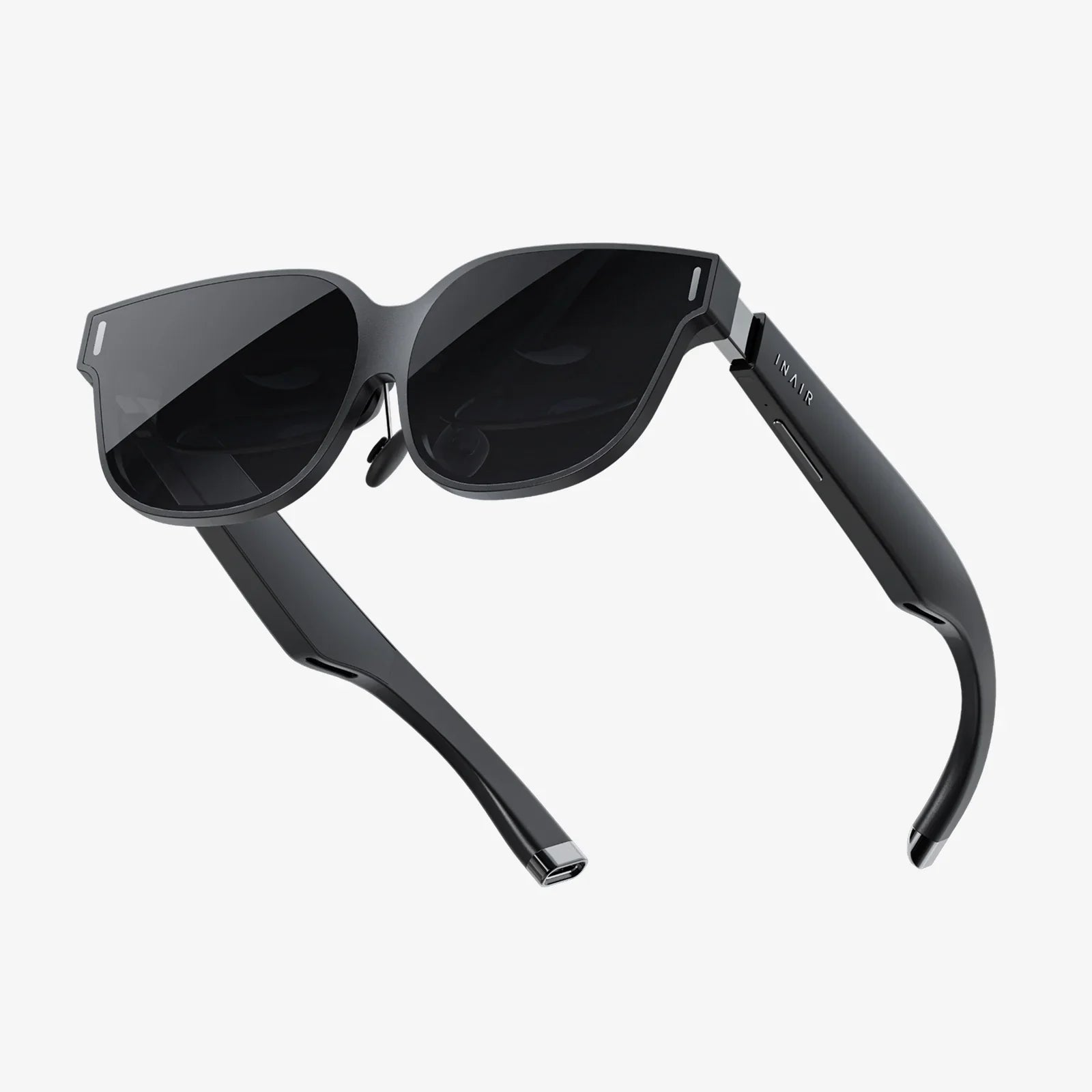
The current state of AR AI Magic, largely mediated through handheld devices, is just the beginning. The true paradigm shift will arrive with the maturation of wearable AR glasses—elegant, socially acceptable, and powerful. These devices will move the technology from something we hold to something we wear, making the magical layer of intelligence a constant, ambient part of our lives. We will move towards a world of ambient computing, where technology recedes into the background of our lives, anticipating our needs and providing information without a prompt, all while allowing us to remain present in the physical world. Further out, the convergence with brain-computer interfaces could eventually lead to experiences where the digital overlay is perceived directly, without any screens at all, truly blending the real and the virtual into a seamless conscious experience.
The journey ahead is long and fraught with challenges, but the destination is a world profoundly different from our own. It is a world where every physical object, every location, and every moment can be a gateway to deeper understanding, creativity, and connection. The magic is not in the technology itself, but in its potential to augment not just our reality, but our humanity. The incantation has been spoken; the future is beginning to materialize before our very eyes.
You've now glimpsed behind the curtain, understanding the powerful engines and profound implications of this technological alchemy. The question is no longer if this future will arrive, but how quickly we can adapt to its wonders and navigate its challenges. The line between science fiction and science fact is blurring, and the tools to reshape your perception of reality are closer than you think—will you be ready to see the world not just as it is, but as it could be?
Share:
Generative AI and AR Models: The Confluence Reshaping Reality and Creativity
Benefits of AR and VR in Retail: Revolutionizing the Shopping Experience