


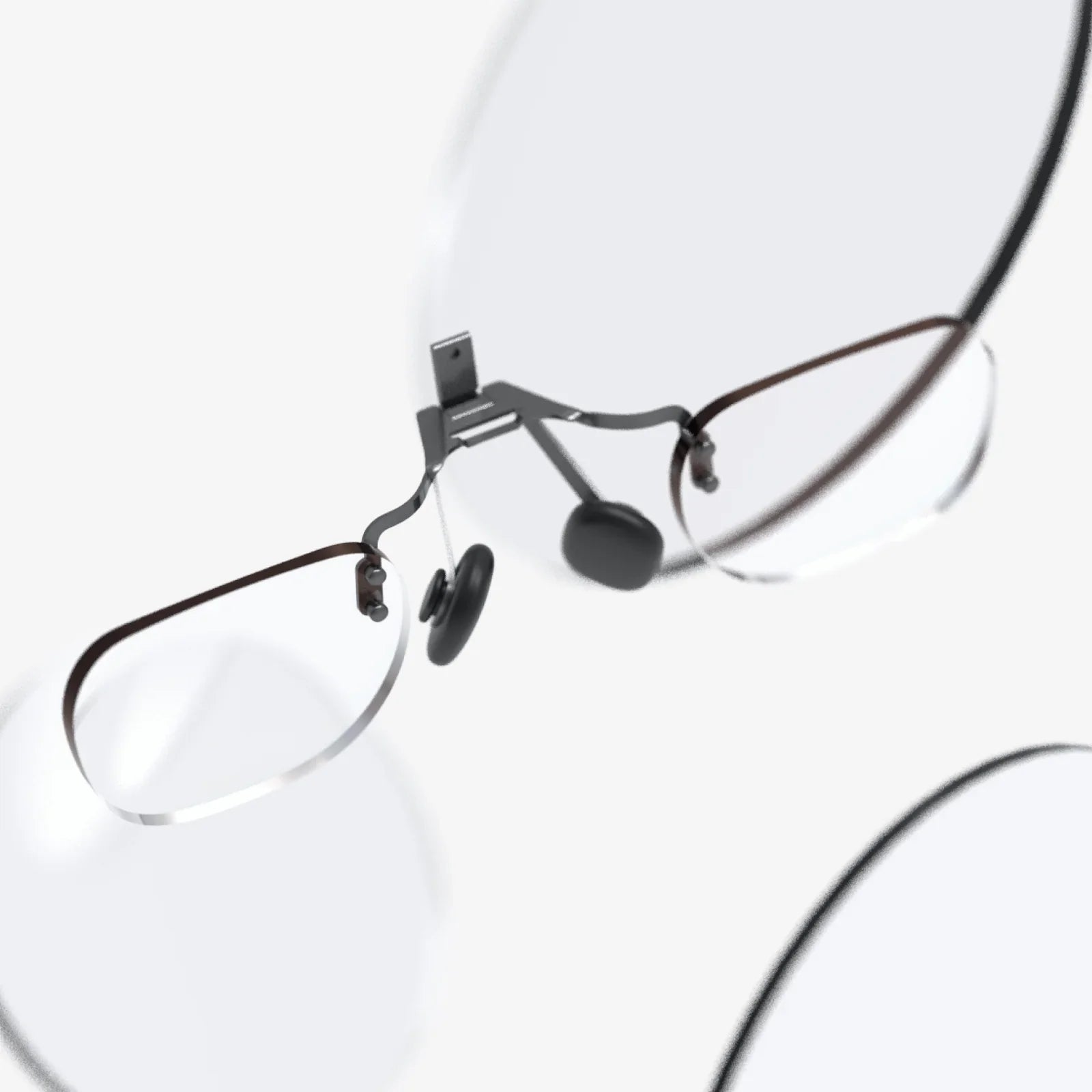
The digital frontier is expanding at a breathtaking pace, and at the very edge of this expansion, a revolution is being worn. Slip on a headset, and the world as you know it transforms, augments, or is completely replaced. This is no longer the stuff of science fiction; it is the burgeoning, multi-billion-dollar reality of the AR and VR headsets market, a sector poised to redefine human interaction with technology, information, and each other. The journey from clunky, expensive prototypes to sleek, accessible portals to new realities is a story of explosive growth, fierce competition, and limitless potential.
The Pillars of Growth: Why the Market is Exploding
The trajectory of the AR and VR headsets market is not a matter of chance; it is built upon a solid foundation of converging technological and societal trends. Several key factors are acting as powerful catalysts, propelling the industry from niche enthusiast circles into the mainstream consciousness.
First and foremost is the spectacular advancement in core technologies. Early headsets were plagued by low-resolution displays that created a distracting "screen door effect," cumbersome cables, and limited processing power that often resulted in latency-induced motion sickness. Today, we are witnessing a quantum leap. Display technology now offers high-resolution, fast-switching panels that deliver stunning visual fidelity. Inside-out tracking, which uses onboard cameras and sensors to map the environment without external beacons, has liberated users from complex setup procedures. Furthermore, the miniaturization of components, from processors to batteries, has enabled the development of standalone, untethered devices that offer unparalleled freedom of movement.
Secondly, the dramatic reduction in cost has been a critical democratizing force. As manufacturing processes have scaled and components have become more commoditized, the price of entry has plummeted. This has opened the market to a vast consumer base beyond deep-pocketed early adopters and large enterprises, making immersive experiences accessible for education, entertainment, and social connection.
Thirdly, the proliferation of compelling content and applications has created a powerful pull factor. The market is no longer hardware in search of a purpose. A thriving ecosystem of developers is creating rich, engaging experiences across every conceivable vertical. From blockbuster gaming titles and immersive cinematic experiences to sophisticated enterprise training simulations and revolutionary medical visualization tools, the software is finally matching the promise of the hardware.
Finally, the paradigm shift towards hybrid and remote work models has acted as a significant accelerant, particularly for the enterprise segment. Companies are investing heavily in these technologies to facilitate virtual collaboration, conduct immersive training for distributed teams, and visualize complex data and prototypes in 3D space, effectively shrinking geographical distances and creating new paradigms for productivity.
Navigating the Current Landscape: Standalones, Tethered, and Everything In Between
The modern AR and VR headsets market is not a monolith; it is a diverse ecosystem of devices segmented by their capabilities, target audience, and method of operation. Understanding these segments is key to understanding the market's dynamics.
Standalone VR Headsets have emerged as the volume leader in the consumer space. These all-in-one devices contain all necessary compute power, sensors, and batteries within the headset itself. They represent the pinnacle of accessibility and convenience, requiring no connection to a powerful external computer or console. Their untethered nature makes them ideal for room-scale experiences, fitness applications, and casual social interaction, effectively removing the final barrier to entry for millions of users.
Tethered PC/Console VR Headsets sit at the premium end of the market, delivering the highest-fidelity experiences available. By connecting via a cable to a high-end gaming computer or a dedicated games console, these devices offload the intense processing requirements to an external source. This allows for vastly superior graphics, more complex physics simulations, and deeper, more immersive environments. They are the domain of dedicated gamers and professionals for whom visual quality and performance are non-negotiable.
The Augmented Reality (AR) Smart Glasses segment, while still developing, holds perhaps the most transformative long-term potential. Unlike VR, which creates a fully digital environment, AR overlays digital information onto the user's view of the real world. Current consumer-focused models often prioritize style and everyday usability, offering features like navigation prompts, message notifications, and hands-free photography. The true enterprise-grade AR glasses, however, are designed for industrial and field service use, providing workers with real-time data, remote expert guidance, and complex schematics overlaid directly onto machinery.
Conquering the Masses: The Persistent Challenges
Despite the incredible progress, the path to ubiquitous adoption is not without significant hurdles. The industry must overcome several persistent challenges to achieve its full potential.
The issue of user comfort and ergonomics remains paramount. Even the most advanced headsets can be heavy, leading to neck strain during extended use. Finding the perfect balance between field of view, resolution, and device weight is a constant engineering challenge. Furthermore, a significant portion of the population still experiences cybersickness, a form of motion sickness caused by a disconnect between what the eyes see and what the vestibular system in the inner ear feels. Mitigating this through higher refresh rates, better tracking, and smarter software design is a critical frontier.
There is also the challenge of creating a "killer app" that transcends gaming. While gaming is and will remain a massive driver, for the market to achieve true mainstream scale, it needs applications that are indispensable to daily life. This could be a revolutionary social platform, a transformative educational tool, or an indispensable professional application that becomes as essential as a smartphone.
Finally, the specter of privacy and security looms large. These devices are data collection powerhouses, equipped with multiple cameras, microphones, and sensors that map our physical surroundings and track our movements and behaviors. Establishing robust, transparent frameworks for how this incredibly intimate data is collected, stored, and used is essential to building and maintaining public trust.
The Enterprise Arena: Where Business Gets Immersive
While consumer applications capture the most headlines, the enterprise sector is where AR and VR are already delivering tangible, high-value returns on investment. Businesses are leveraging immersive technology to solve real-world problems, increase efficiency, and reduce costs.
In training and simulation, VR provides a safe, controlled, and repeatable environment to practice complex or dangerous tasks. Surgeons can practice delicate procedures, pilots can train for emergency scenarios, and factory workers can learn to operate heavy machinery—all without any real-world risk. This not only improves competency but also drastically reduces training costs.
Design and prototyping have been revolutionized. Automotive and aerospace engineers can visualize and interact with full-scale 3D models of their designs long before a physical prototype is ever built. Architects and real estate agents can offer virtual walkthroughs of unbuilt homes or unfinished buildings, allowing for changes to be made in the design phase and giving clients a true sense of the space.
For remote assistance and collaboration, AR is a game-changer. A field technician wearing AR glasses can stream their point-of-view to an expert thousands of miles away, who can then annotate the technician's real-world view with arrows, diagrams, and instructions. This "see-what-I-see" capability slashes travel costs, resolves issues faster, and empowers less experienced workers.
Gazing into the Crystal Ball: The Future is Spatial
The future of the AR and VR headsets market is moving towards a more integrated, intuitive, and powerful vision of computing, often referred to as spatial computing or the metaverse.
The next major leap will be the widespread adoption of varifocal and light field technology. Current headsets have a fixed focal plane, forcing our eyes to focus on a single distance, which contributes to eye strain and a less natural experience. Varifocal displays will dynamically adjust the focal plane to match where the user is looking, mimicking real-world vision. Light field technology goes even further, projecting photons that replicate the way light behaves in the real world, creating a truly holographic and comfortable visual experience.
We are also on the cusp of a revolution in user interfaces. The future of interaction lies beyond controllers. Advancements in eye-tracking, hand-tracking, and haptic feedback will enable users to manipulate digital objects with natural gestures, receive tactile feedback, and control interfaces with their gaze. This will make the technology more intuitive and accessible, further blurring the line between the physical and digital realms.
Ultimately, the endgame may not be a headset at all, but something more akin to slimmed-down smart glasses that are socially acceptable to wear all day. These devices would seamlessly blend our digital and physical lives, providing contextual information, translating signs in real-time, and offering persistent augmented layers over our reality. The convergence of AR and VR into a single, versatile device that can switch between opaque and transparent modes is a likely destination, heralding the true dawn of the spatial computing era.
Imagine a world where your next business meeting takes place on a virtual beach, your child's history lesson is a walkthrough of ancient Rome, and your mechanic can see your car's engine through your eyes to guide you through a repair. This is the promise held within the sleek, increasingly powerful frames of AR and VR headsets. The market is not just selling hardware; it is selling tickets to new worlds, superpowers for our perception, and the foundational tools for the next great platform of human experience. The race to define this reality is on, and the stakes have never been higher—or more exciting.
Share:
VR Headset Glasses: The Invisible Revolution Reshaping Our Digital Lives
Virtual Glasses Prescription: The Future of Eyecare is Now