


- by wangfred
AR Android Phones: The Future of Mobile Interaction Is Here
- by wangfred
Imagine pointing your phone at a city street and seeing historical figures reenact events right before your eyes, or visualizing how a new sofa would perfectly fit into your living room before you even click 'buy.' This isn't a scene from a science fiction movie; it's the tangible, accessible reality offered by AR Android phones today. The fusion of sophisticated hardware and innovative software has unlocked a new dimension of interaction, transforming the humble smartphone from a flat screen into a dynamic window that overlays digital information onto our physical world. The journey into this augmented realm is not just about flashy gimmicks; it's a fundamental shift in how we compute, learn, shop, and play.
For augmented reality to feel seamless and convincing, it requires a symphony of advanced components working in perfect harmony. Modern devices are engineered with this specific purpose in mind, packing a powerful technological punch.
At the heart of any AR experience are the cameras. A single lens is no longer sufficient. High-resolution primary cameras capture the environment in vivid detail, while specialized depth-sensing cameras, such as time-of-flight (ToF) sensors, project invisible infrared dots onto surfaces. By measuring how long it takes for this light to bounce back, the phone can create a precise, real-time 3D map of the world, understanding the distance and contours of every object in view. This is crucial for placing a digital dinosaur on your carpet and having it appear to occlude correctly behind your coffee table.
Complementing the cameras is an array of sophisticated sensors. The inertial measurement unit (IMU), which includes a gyroscope and accelerometer, tracks the phone's precise orientation and movement through space at incredible speeds. This ensures that the digital overlay stays locked to a physical point, even if your hand shakes slightly. Finally, the computational heavy lifting is handled by the processor. Modern chipsets feature dedicated cores and processing blocks for AI and machine learning tasks, enabling real-time object recognition, surface detection, and spatial anchoring without draining the battery or causing the application to stutter.
A high-resolution, high-refresh-rate display is essential for rendering crisp, smooth digital objects that don't look out of place in the real world. Similarly, spatial audio uses advanced algorithms to make sounds appear to emanate from a specific point in your environment. Hearing a dragon roar from behind you in an AR game, with the audio shifting realistically as you turn your head, is a key part of selling the illusion and creating a deeply immersive experience.
Powerful hardware is useless without the software to orchestrate it. The ecosystem provides the essential frameworks that allow developers to build rich AR experiences.
This is the primary platform for building augmented reality experiences. It provides a suite of tools that handle the complex tasks required for AR, allowing developers to focus on creating engaging content. Its key features include:
One of the most significant barriers to adoption has been the need to download a dedicated application. WebAR shatters this barrier by delivering AR experiences directly through a web browser. By simply clicking a link, users can immediately access try-on features, interactive advertisements, or informational overlays without any installation. This drastically lowers the friction and opens up AR to a massive, instant audience.
While gaming often grabs the headlines, the most profound impact of AR is being felt across a wide range of professional and practical fields.
The retail sector has been revolutionized. Furniture retailers allow customers to place true-to-scale 3D models of sofas, lamps, and decor in their own homes to see how they look and fit. Fashion brands offer virtual try-ons for sunglasses, watches, and even makeup, using the front-facing camera to apply digital products to the user's live image. This reduces purchase uncertainty and minimizes returns, creating a more confident and satisfying shopping experience.
Textbooks are being brought to life. Students can point their devices at a diagram of the human heart and watch a beating, interactive 3D model emerge from the page. History classes can walk through ancient Roman ruins reconstructed on their school field. Medical students can practice complex surgical procedures on detailed holographic patients. This hands-on, visual learning style improves information retention and engagement, making education a truly immersive adventure.
Turn-by-turn navigation is being superseded by AR wayfinding. Instead of looking at a blue dot on a 2D map, users can hold up their phone and see large, floating arrows superimposed onto the real streets, directing them exactly which way to turn to reach their destination. This is incredibly useful in complex transportation hubs like airports or large university campuses, reducing confusion and making navigation intuitive.
Technicians in the field can use AR for remote expert guidance. A worker repairing a complex machine can share their live camera feed with an expert miles away. The expert can then draw digital arrows, circles, and annotations that appear directly in the technician's field of view, pointing precisely to the components that need attention. This saves time, reduces travel costs, and empowers less experienced workers to perform complex tasks.
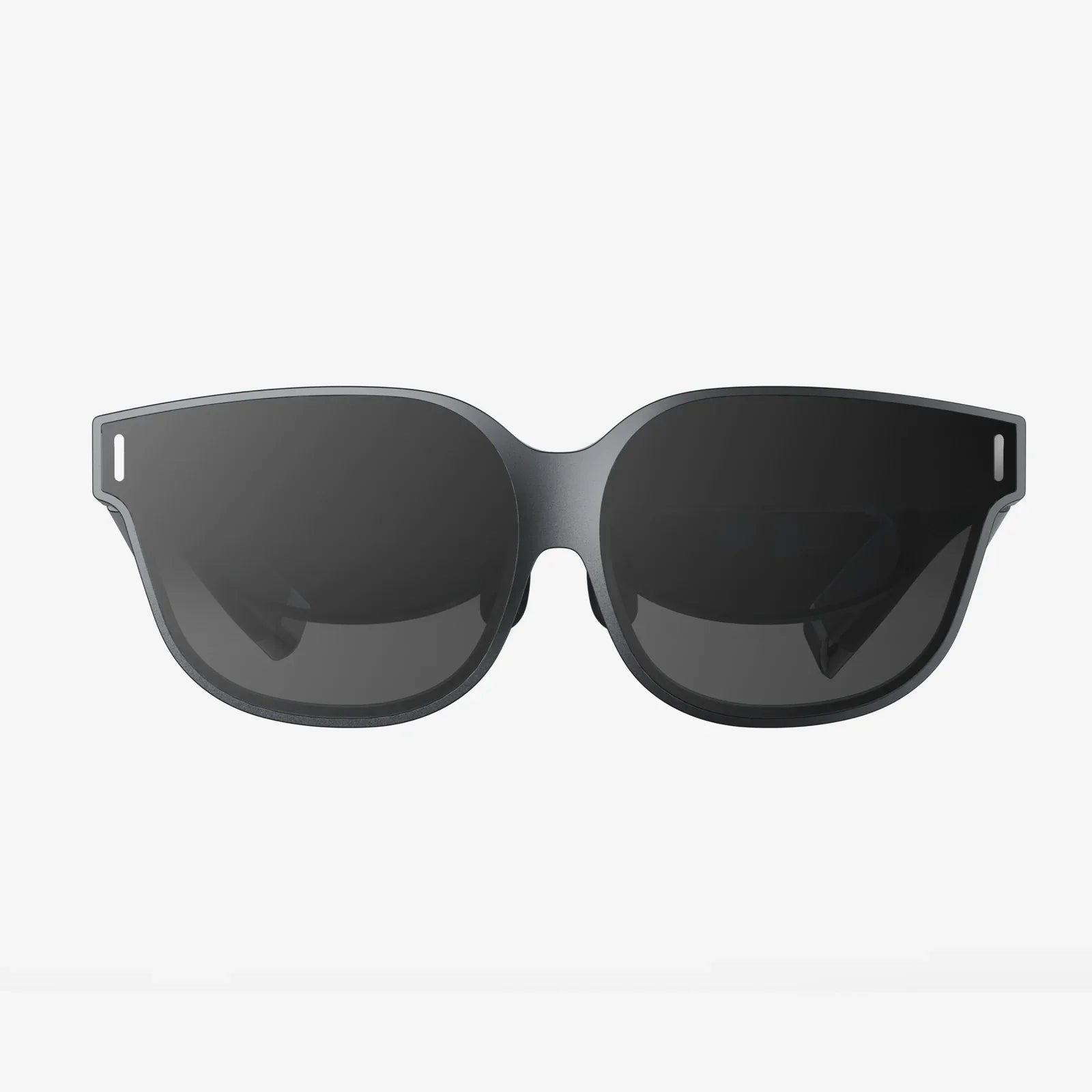
The current state of AR is impressive, but it is merely the foundation for a much more integrated future. The next evolution lies in wearable technology, like smart glasses, which aim to untether AR from the hand-held screen, offering a truly hands-free and always-available experience. These glasses would likely work in tandem with a powerful device, acting as a sleek display while the phone handles the intense computation. Furthermore, advances in 5G connectivity, with its high bandwidth and low latency, will enable more complex, cloud-rendered AR experiences that can be streamed seamlessly, reducing the local processing burden. AI will also play a larger role, moving beyond simple object recognition to truly understanding scenes and context, allowing for more intelligent and responsive digital interactions.
Despite the exciting progress, the path forward is not without its hurdles. Battery life remains a significant concern, as the constant use of cameras, sensors, and high-performance processors is incredibly power-intensive. Developers and manufacturers must continue to optimize for efficiency. There are also important questions around privacy and data security, as AR applications require extensive access to a device's cameras and sensors, collecting vast amounts of data about a user's environment. Establishing clear, transparent guidelines and user controls is paramount. Finally, for AR to become truly ubiquitous, it must overcome a period of being perceived as a novelty and prove its consistent, indispensable utility in everyday life.
The magic of AR Android phones lies in their ability to make the impossible feel intuitive and the digital feel physical. They are not just communication devices but portals to a layered world of information and imagination. As the technology continues to mature, becoming more powerful, efficient, and seamlessly integrated into our daily routines, the line between the digital and the physical will blur into irrelevance. We are standing at the threshold of a new era of computing, one where our environment becomes the interface, and our smartphones are the key that unlocks it. The world is about to get a whole lot more interesting.
Share:
VR Headset MercadoLibre: The Ultimate Guide to Buying Your Virtual Reality Headset on Latin America's Largest Marketplace
Best VR Headset Compatible with iPhone: Your Ultimate Immersive Guide