


- by wangfred
AR Attachments: The Digital Layer Reshaping Reality and Redefining Human Potential
- by wangfred
Imagine a world where your reality is not a fixed, immutable state but a dynamic canvas, waiting for a digital brushstroke. A world where the line between the physical and the digital doesn't just blur—it disappears, replaced by a seamless, interactive tapestry of information and experience. This is no longer the stuff of science fiction; it is the burgeoning reality being built today, piece by digital piece, through the power of AR attachments. These devices are not merely gadgets; they are portals, transforming our perception and unlocking human potential in ways we are only beginning to comprehend. The journey into this augmented world starts here, and it promises to redefine everything from how we work and learn to how we connect and create.
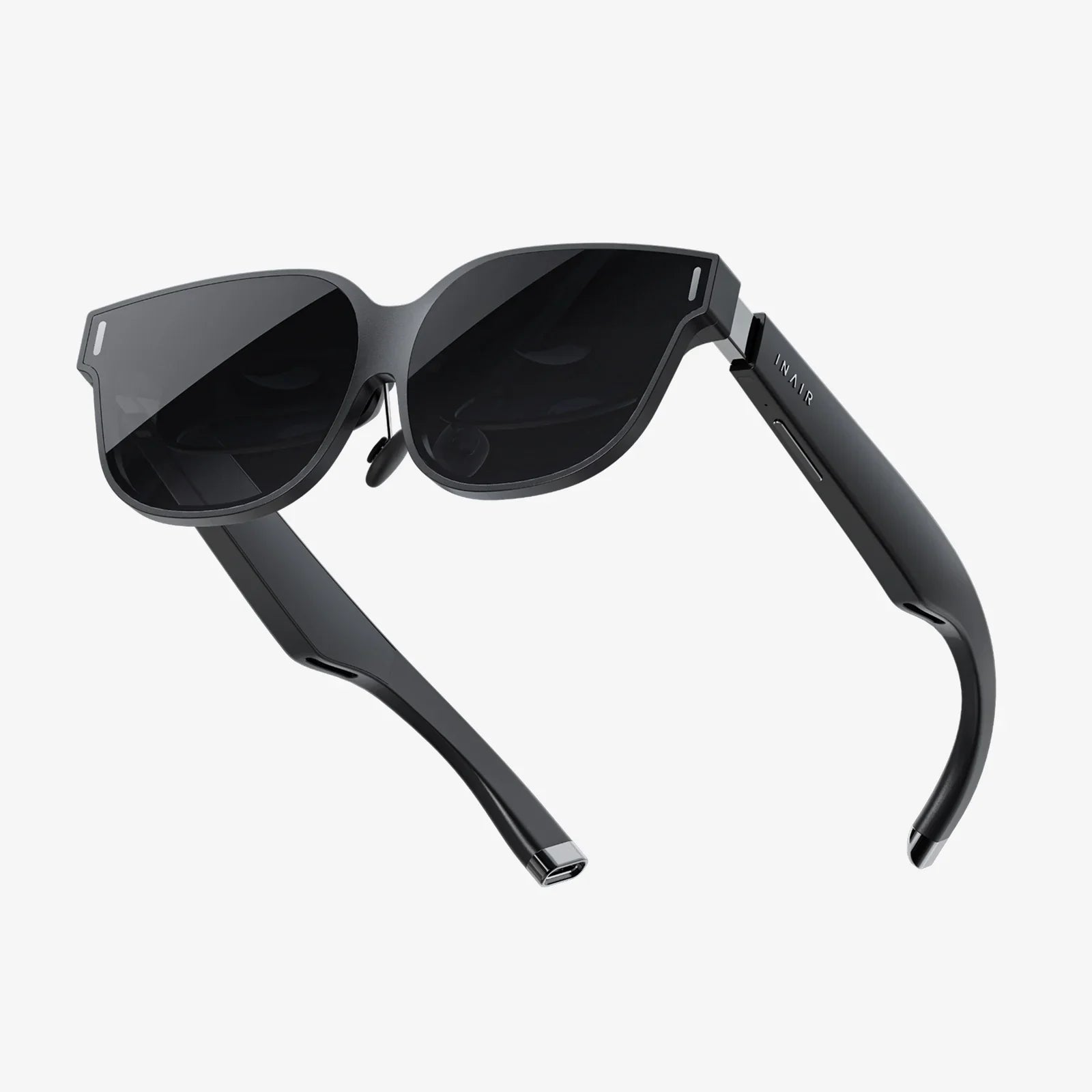
At its core, an AR attachment is any device that superimposes computer-generated sensory input—be it visuals, audio, or haptic feedback—onto a user's view of the real world. The magic lies in its ability to do this in real-time and in a spatially aware context, making the digital content appear as if it is part of the physical environment. This capability is powered by a sophisticated fusion of hardware and software working in perfect concert.
The critical hardware components include advanced optical systems that project images directly into the user's field of vision, often using waveguide or holographic lens technology to create bright, clear overlays without obstructing the real world. High-resolution cameras act as the eyes of the device, continuously scanning the environment. Inertial Measurement Units (IMUs), including accelerometers and gyroscopes, track the precise movement and orientation of the user's head. For more advanced spatial understanding, depth sensors (like time-of-flight cameras or LiDAR) map the environment in 3D, detecting surfaces, edges, and objects to allow digital content to interact with the physical world convincingly—a virtual ball can bounce on a real table, or a digital character can hide behind a real sofa.
This raw sensor data is meaningless without the brain of the operation: the software. Simultaneous Localization and Mapping (SLAM) algorithms are the true heroes. They process the camera and sensor data to simultaneously map the unknown environment and pinpoint the device's exact location within it. This creates a live digital twin of the space, enabling persistent placement of AR content. Machine learning and computer vision models further enhance this, allowing the system to recognize specific objects (like a piece of machinery), understand gestures, and even track a user's eyes to enable more intuitive interaction.
While consumer applications often grab headlines, the most profound and immediate impact of AR attachments is occurring in the industrial and enterprise sectors. Here, they are moving beyond conceptual pilots to become mission-critical tools, driving unprecedented gains in efficiency, safety, and accuracy.
In complex fields like manufacturing and field service, the value is immense. A technician performing maintenance on a intricate piece of equipment is no longer reliant on thick paper manuals or a laptop propped on a nearby crate. Through their AR attachment, they see a digital overlay directly on the machinery itself. Animated, step-by-step instructions highlight exactly which bolt to turn next. Critical warnings and torque specifications are displayed in their periphery. A remote expert, seeing exactly what the on-site technician sees through a live video feed, can draw digital arrows and circles directly into their field of view to guide them, drastically reducing travel costs and machine downtime. This is not a marginal improvement; it is a paradigm shift in knowledge transfer and task execution.
The architecture, engineering, and construction (AEC) industries are undergoing a similar revolution. Architects and clients can walk through a full-scale, holographic model of a building long before the foundation is poured, assessing spatial relationships and design choices in a way 2D blueprints could never allow. On the construction site, workers can see the planned layout of electrical conduits or plumbing pipes directly over the bare concrete, ensuring perfect alignment and eliminating costly rework. This digital layer acts as a universal set of instructions, seamlessly bridging the gap between design intent and physical reality.
AR attachments are poised to dismantle traditional pedagogical models, moving learning from a passive, abstract activity to an active, experiential one. The concept of a "digital textbook" will be completely reimagined. Instead of reading about the Roman Empire, history students can witness a historically accurate battle unfold on their classroom desk. Medical students can practice complex surgical procedures on hyper-realistic holographic patients, making mistakes and learning from them without any risk. This kinesthetic learning approach dramatically improves knowledge retention and skill acquisition.
This technology is the ultimate just-in-time learning tool. A musician learning a new song could see the finger placements for chords hover over their guitar. A chef could follow a recipe with each ingredient and measurement visually highlighted on their countertop. The barrier to acquiring new, complex skills is lowered significantly, democratizing expertise and empowering lifelong learning in a hands-on, engaging manner that was previously impossible.
On the consumer front, AR attachments promise to weave a layer of magic and utility into our daily lives. Navigation will evolve from looking at a blue dot on a phone screen to seeing giant, floating arrows painted onto the street, guiding you turn-by-turn. Social interactions will be enriched with shared digital experiences—watching a movie with a friend who lives across the country could feel like sitting together in a virtual cinema, complete with avatars and reactions.
Shopping will be transformed. The frustrating guesswork of online shopping will vanish as you can "try on" clothes, see how a new sofa fits in your living room, or visualize a new coat of paint on your walls with perfect accuracy. This drastically reduces purchase anxiety and product returns, creating a more confident and satisfying consumer experience.
This powerful technology does not arrive without significant challenges that society must proactively address. The most pressing concern is privacy. Devices with always-on cameras and microphones, continuously scanning and mapping our homes, offices, and public spaces, represent a unprecedented data collection vector. The question of who owns this spatial data, how it is stored, and how it might be used (or misused) by corporations or governments is paramount. Robust ethical frameworks and transparent, user-centric data policies are not optional; they are a prerequisite for widespread adoption.
Safety is another critical frontier. Distraction in the real world is a genuine hazard. While a head-up display can be less distracting than looking down at a phone, the potential for information overload or captivating digital content to draw a user's attention away from a critical real-world task—like crossing a street or operating a vehicle—must be meticulously engineered against. Furthermore, the long-term psychological and physiological effects of prolonged immersion in an augmented world are not yet fully understood, necessitating ongoing research.
Finally, the digital divide is a concern. As with any transformative technology, there is a risk that AR attachments could become a luxury that exacerbates social and economic inequalities. Ensuring equitable access and preventing the creation of an "augmented" class and an "un-augmented" class will be a crucial societal challenge.
The future trajectory of AR attachments points toward a more integrated, intuitive, and powerful experience. We are moving toward sleek, socially acceptable form factors—think everyday eyeglasses rather than bulky helmets. Advances in battery technology, processor efficiency (often leveraging edge and cloud computing), and display technology will be key to achieving this. The user interface will evolve beyond controllers and simple gestures to include more sophisticated voice commands and ultimately, direct neural interfaces that allow us to control the digital layer with our thoughts.
The true endgame is the creation of a pervasive spatial computing platform—an omnipresent layer of contextual computing that is always available but never obtrusive. This platform will underpin the nascent concept of the metaverse, not as a virtual world we escape to, but as a digital dimension richly integrated with our physical existence. It will become the primary way we interact with the vast ocean of digital information that defines our modern era, making it instantly accessible and actionable within the context of our immediate surroundings.
The promise of AR attachments is nothing short of a new human sense—a sense that allows us to perceive the digital heartbeat of our world. It is a tool for enhancing our cognition, extending our memory, and expanding our creativity. The challenges are real and must be met with wisdom and foresight, but the opportunity is breathtaking. We are not just putting a screen in front of our eyes; we are building the lens through which we will see, understand, and shape the future of reality itself. The next chapter of human-computer interaction is being written not on our desks, but in the world around us, and it is a story you will want to see for yourself.