


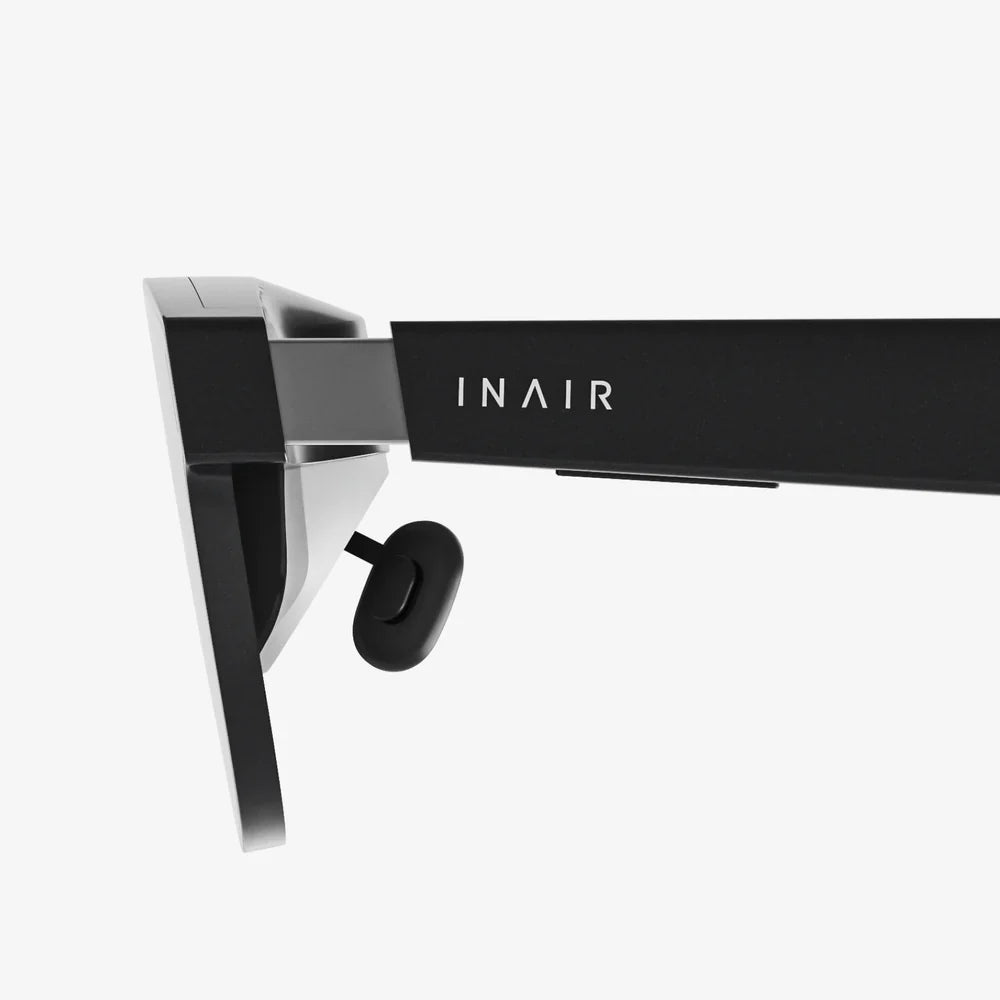
Imagine a world where digital information doesn’t live on a screen in your hand, but is seamlessly painted onto the canvas of your reality. Directions float on the pavement before you, the history of a landmark overlays its facade, and a virtual colleague sits on your living room sofa during a meeting. This is the promise of AR Brillen, a technology not of distant science fiction, but of our imminent future, poised to fundamentally reshape our perception of the world itself.
From Fantasy to Functionality: The Evolution of Augmented Sight
The concept of augmenting human vision is not new. For centuries, inventors and storytellers have dreamed of devices that could enhance or alter what we see. However, the journey from fantastical idea to functional prototype has been a long one, constrained by the limitations of technology. Early systems were bulky, expensive, and tethered to powerful computers, confining them to research labs and industrial applications.
The true catalyst for the modern era of AR Brillen was the smartphone revolution. The mass production of miniature sensors, high-density batteries, powerful mobile processors, and crisp micro-displays provided the essential building blocks. These components, refined for pockets, could now be reimagined for the face. This convergence of enabling technologies marked a critical turning point, shifting the development focus from if it was possible to how it could be made accessible, wearable, and truly useful for everyday life.
Deconstructing the Magic: The Core Technologies Inside AR Brillen
The magic of seeing digital objects coexist with the physical world is achieved through a sophisticated symphony of hardware and software. Understanding these components demystifies the technology and reveals the incredible engineering feat it represents.
Optical Systems: Projecting the Illusion
At the heart of any AR Brille is its optical system—the mechanism that delivers digital images to the eye. There are several competing approaches, each with its own advantages and trade-offs between field of view, image clarity, and form factor.
- Waveguide Displays: This is currently the leading technology for sleek, consumer-oriented designs. Light from a micro-projector is coupled into a thin, transparent piece of glass or plastic. This light is then "guided" through the material using a combination of diffraction gratings or reflective optics before being directed into the user’s eye. This allows for a relatively large virtual image to be presented while keeping the lenses remarkably thin and transparent.
- Birdbath Optics: This design uses a combiner—a partially reflective mirror—set at a specific angle in front of the eye. A micro-display, often an OLED screen, is positioned above or to the side. Its light is reflected off a curved "birdbath" mirror onto the combiner, which then superimposes it into the user’s field of view. This can offer vibrant colors and high contrast but often results in a slightly bulkier design.
- Retinal Projection: A more futuristic approach, this method involves scanning low-power laser light directly onto the retina. This can theoretically produce images with extreme depth of field and high brightness, even in direct sunlight, without the need for large lenses. However, it presents significant technical and safety challenges that are still being overcome.
Sensing the World: Cameras, LiDAR, and IMUs
For digital content to interact convincingly with the real world, the device must first understand that world in precise detail. This is the role of a suite of sensors.
- Cameras: Multiple cameras serve different purposes. Monochrome or RGB cameras capture the environment for visual processing and object recognition. Depth-sensing cameras, like time-of-flight sensors or stereoscopic setups, map the geometry of the space, measuring distances to surfaces to allow virtual objects to occlude correctly behind real-world furniture or walls.
- LiDAR (Light Detection and Ranging): This technology fires out grids of invisible laser dots and measures the time it takes for them to return, creating a highly accurate 3D point cloud of the environment in milliseconds. This enables rapid surface detection and spatial mapping, which is crucial for stable object placement and occlusion.
- Inertial Measurement Units (IMUs): These sensors, including accelerometers and gyroscopes, track the precise movement and rotation of the user’s head. This allows the digital content to remain locked in place in the real world, even as the user moves their head, preventing lag or drift that can cause nausea.
Processing Power and Connectivity
The data from these sensors is immense and must be processed in real-time. This requires immense computational power, which can be housed within the frames themselves or offloaded to a companion device, like a smartphone or a dedicated processing unit, via high-speed wireless connections like Wi-Fi 6E or future 5G/6G networks. This balance between onboard and offboard processing is key to balancing performance with battery life and device weight.
A World of Applications: Beyond Novelty and Gaming
While early demonstrations often focus on gaming and entertainment, the true potential of AR Brillen lies in their capacity to augment human capability across a vast spectrum of professional and personal activities.
Revolutionizing Enterprise and Industry
The enterprise sector is where AR Brillen are already delivering tangible value and a strong return on investment.
- Manufacturing and Repair: Technicians can have schematic diagrams, instruction manuals, or animated assembly guides overlaid directly onto the machinery they are working on. An expert located thousands of miles away can see what the on-site technician sees and annotate their field of view with arrows and notes to guide them through a complex procedure, drastically reducing downtime and errors.
- Healthcare and Medicine:
Surgeons can visualize patient data, such as MRI or CT scans, projected directly onto the patient’s body during procedures, acting as an X-ray vision tool for more precise incisions. Medical students can practice complex surgeries on detailed holographic anatomy models. They can also assist in remote patient diagnostics and provide visual guidance for physical therapy exercises.
- Logistics and Warehousing: Warehouse workers can see optimal picking paths displayed on the floor, with navigation arrows guiding them to items. Key information about inventory, such as quantity and location, can be visualized directly on shelves, streamlining the fulfillment process and reducing training time for new employees.
Transforming Daily Life and Social Interaction
In the consumer realm, AR Brillen promise to become the ultimate contextual computer, dissolving the barrier between us and the information we seek.
- Navigation and Exploration: Walking through a city, you could see historical facts about buildings, ratings for restaurants, and real-time public transport schedules overlaid on your surroundings. Turn-by-turn directions would be painted onto the street itself, making it impossible to get lost.
- Education and Learning: Imagine a biology student examining a holographic, interactive human heart, able to peel back layers and see blood flow in real-time. Or a mechanics student practicing an engine tear-down with a guided, virtual tutorial. Learning becomes immersive, interactive, and profoundly more effective.
- Social Connection and Telepresence: The future of communication may involve photorealistic avatars or even real-time 3D reconstructions of people. Instead of looking at a grid of faces on a flat screen, a family meeting could involve everyone’s lifelike hologram sitting around your table, making eye contact and sharing a sense of physical presence despite being continents apart.
Navigating the Obstacles: Challenges on the Road to Adoption
For all their promise, AR Brillen face significant hurdles that must be overcome before they can achieve widespread, mainstream adoption.
The Form Factor Conundrum
The ultimate goal is a device that is indistinguishable from regular eyewear—lightweight, comfortable, and socially acceptable to wear all day. Current technology often forces a compromise between performance and aesthetics. Achieving high-resolution, wide-field-of-view displays in a package that doesn’t look like a sci-fi prop remains the industry’s primary engineering challenge. Battery technology is also a key constraint, as powering all these components for a full day requires significant energy density without adding uncomfortable weight.
The Software Ecosystem and the "Killer App"
Hardware is nothing without software. A robust ecosystem of developers creating compelling, useful, and intuitive applications is essential. The industry is still searching for its definitive "killer app"—the must-have application that drives consumer desire in the same way the web browser drove the personal computer or touchscreens drove smartphones. This application needs to offer a value proposition so strong that it justifies wearing a computer on your face.
The Privacy Paradox
AR Brillen, with their always-on cameras and microphones, represent a profound shift in privacy dynamics. The potential for constant environmental recording raises serious concerns about surveillance, data collection, and consent. Who has access to the video feed? How is that data stored and used? Establishing clear, transparent, and user-centric privacy frameworks is not just a technical necessity but a societal imperative to prevent a dystopian outcome.
The Invisible Interface: A Glimpse into the Future
As these challenges are gradually surmounted, the long-term trajectory for AR Brillen is their eventual evolution towards an invisible interface. They will cease to be a "device" we think about and instead become a seamless extension of our perception—a permanent layer of contextual computing integrated into our lives. They could monitor our health in real-time, translate foreign languages instantly as we hear them, and act as a prosthetic for memory, recalling names and details we might forget. They have the potential to democratize information and expertise, bridge cultural and physical divides, and augment human intelligence itself.
The path from today’s prototypes to tomorrow’s ubiquitous platform is being paved now. The choices made by developers, policymakers, and society at large will determine whether this powerful technology becomes a force for isolation and distraction or for connection, understanding, and unprecedented human advancement. The world is about to get a new layer, and it will change everything.
Share:
PC to VR Headset: The Ultimate Guide to High-Fidelity Immersion
What Was the First Ever VR Headset - The Pioneers of Virtual Reality