


- by wangfred
AR Coding The Future of Interactive Development and Immersive Experiences
- by wangfred
Imagine a world where lines of code leap off the screen, where digital creations don't just live behind a glass pane but intertwine with your living room, your workspace, and the very world around you. This is the promise and the power of AR coding, a technological symphony that is rapidly moving from science fiction to everyday reality. It’s not just about viewing augmented reality; it’s about building it, about becoming an architect of a blended universe where the only limit is your imagination. The ability to code for augmented environments is unlocking unprecedented potential for creators, developers, and businesses, fundamentally altering our relationship with technology and setting the stage for the next great digital revolution.
At its essence, AR coding is the practice of writing software that generates and manages augmented reality experiences. Unlike virtual reality, which constructs a completely artificial digital environment, AR overlays computer-generated perceptual information onto the real world. This synthesis is achieved through a combination of sophisticated hardware—like cameras, sensors, and displays—and complex software written by developers. The code serves as the brain, instructing the device on how to perceive the environment, track surfaces and objects, understand spatial relationships, and then seamlessly render digital content that appears to coexist within the user's physical space.
The magic of a well-coded AR experience lies in its believability. It’s not just about superimposing a 3D model; it’s about ensuring that model interacts with its environment realistically. Does it cast a shadow consistent with the room's light source? Does it occlude correctly when a real-world object passes in front of it? Does it remain anchored to a specific point even as the user moves? These are all challenges solved through meticulous programming, leveraging a suite of technologies including Simultaneous Localization and Mapping (SLAM), plane detection, depth sensing, and gesture recognition.
Building a compelling AR application requires a foundation built on several key technological pillars. Understanding these is crucial for any developer venturing into this space.
This is the first and most critical step. The device must understand the geometry of the world around it. Through SLAM algorithms, the system uses data from cameras and inertial measurement units (IMUs) to simultaneously map an unknown environment and track the device's position within it. This allows the digital content to be placed on real surfaces like tables, floors, and walls. Coding for this involves working with APIs that provide point clouds, meshes, and identified planes, giving the digital world a physical context.
Once the environment is mapped, digital objects need to stay put. This is achieved through anchoring. An anchor is a fixed point in the real world that the AR system tracks relentlessly. Code is used to create these anchors—on a detected horizontal plane, on a specific image (image target), or even on a face. The robustness of the tracking, whether it's visual-inertial odometry or marker-based, determines the stability and realism of the AR experience. Poorly coded tracking leads to jittery, floating objects that break immersion instantly.
This pillar deals with the visual integration of the digital object. Rendering engines draw the 3D models, textures, and animations. However, advanced rendering involves more than just drawing; it involves occlusion, which ensures that real-world objects correctly block digital ones. For example, if a user walks between the camera and a virtual dinosaur, the user should obscure the dinosaur. This requires depth sensing technology (like LiDAR) and code that interprets this depth information to determine the order in which objects are drawn.
How does a user interact with this blended reality? Traditional touchscreen inputs are often insufficient. AR coding leverages a new paradigm of interaction: gesture recognition, gaze tracking, voice commands, and even device pose. Developers write code to interpret these inputs—defining a pinch gesture to select an object, a tap in the air to confirm an action, or a voice command to summon a menu. This creates a truly hands-free or intuitively controlled experience.
Thankfully, developers don't need to build the complex underlying AR technology from scratch. A range of powerful software development kits (SDKs) and platforms provide the necessary tools and APIs.
These toolkits abstract away the immense complexity of computer vision and sensor fusion, offering developers a higher-level interface to create AR experiences. They provide cross-platform support, allowing code to run on various devices with different capabilities. They include features for all the pillars mentioned above: environmental understanding, hit testing (determining where a ray intersects with the real world), light estimation, and cloud anchors for shared multi-user experiences. The choice of toolkit often depends on the target platform and the specific features required for the application, but they all share the common goal of making AR coding more accessible.
The value of AR coding extends far beyond novelty filters and mobile games. It is proving to be a transformative tool across numerous sectors.
AR coding is creating immersive learning experiences that were previously impossible. Medical students can practice surgeries on detailed, interactive holograms of human anatomy. Mechanics can see step-by-step repair instructions overlaid directly on the engine they are working on. History students can walk through a reconstructed ancient Roman settlement right in their classroom. This hands-on, visual learning dramatically improves comprehension and retention of complex subjects.
The "try before you buy" dilemma is being solved by AR. Customers can now use their smartphones to see how a new sofa would look in their living room, how a pair of glasses fits their face, or how a new shade of paint covers their walls. This reduces purchase hesitation and product returns, building consumer confidence. For furniture retailers, this application alone has become a critical sales tool, all powered by code that accurately scales and places 3D product models.
This is where AR coding delivers immense practical value. Field service technicians can wear AR glasses that display schematics and instructions while keeping their hands free to work. Warehouse workers can see navigational arrows on the floor guiding them to the next item to pick, optimizing logistics. Architects and construction managers can overlay digital blueprints onto a physical construction site to verify measurements and plans. This streamlines workflows, reduces errors, and enhances safety.
Beyond training, AR is assisting in live medical procedures. Surgeons can have vital signs, MRI data, or 3D guides projected into their field of view during an operation. This provides crucial context without needing to look away at a separate screen. It can also aid in patient education, helping doctors explain conditions and procedures using clear, interactive 3D models, leading to better patient understanding and outcomes.
Despite its potential, AR coding is not without its hurdles. Developers face unique challenges that require careful consideration.
Performance Optimization: AR applications are incredibly resource-intensive. They must process camera feeds, run complex computer vision algorithms, and render high-fidelity 3D graphics—all in real-time and ideally at 60 frames per second. Writing efficient, optimized code is paramount to prevent battery drain, overheating, and lag, which instantly shatter the illusion of AR.
Environmental Variability: The real world is messy, unpredictable, and poorly lit. Code must be robust enough to handle environments with low light, reflective surfaces, repetitive patterns, and constant change. An app that works flawlessly in a well-lit office might fail completely in a dimly lit backyard.
User Experience (UX) Design: Designing for AR is a new frontier. Traditional UI/UX principles don't always apply. Where do you place menus in a 3D space? How do you provide feedback for gestures? How do you avoid overwhelming or disorienting the user? Creating intuitive and comfortable experiences requires a deep rethinking of design principles and extensive user testing.
Privacy and Ethics: AR devices, by their nature, are constantly scanning and capturing data about their surroundings. This raises significant privacy concerns. Code must be written to handle this data responsibly, often processing it on-device rather than sending sensitive environmental data to the cloud. Developers have an ethical obligation to be transparent about data collection and usage.
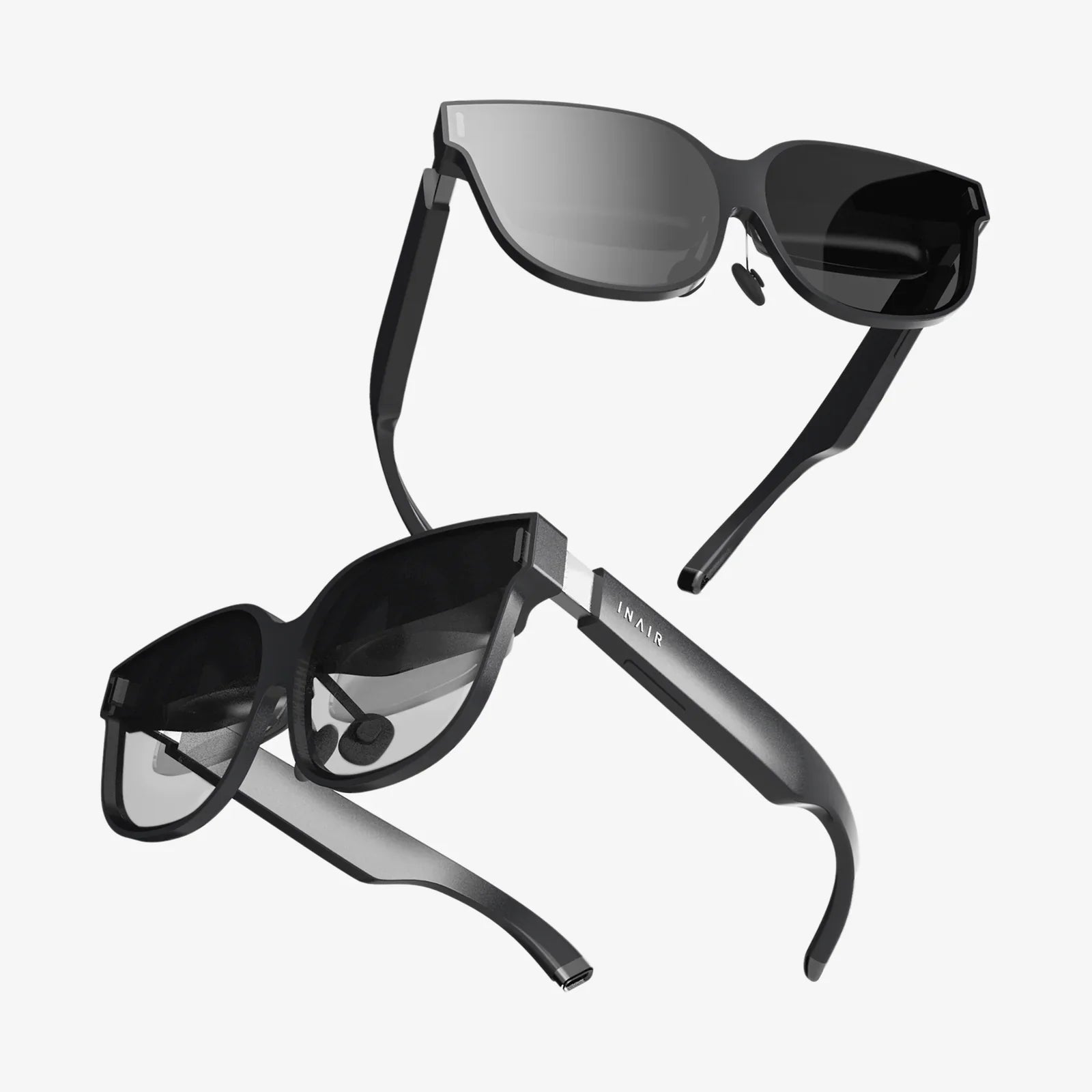
The future of AR coding is tied to the hardware it runs on. The current generation, largely reliant on smartphones, is just the beginning. The eventual widespread adoption of comfortable, powerful, and socially acceptable AR glasses will represent the true arrival of spatial computing. This will require even more advanced coding techniques for persistent world-scale experiences that are always available and context-aware.
We are moving towards a future where the digital and physical are inextricably linked. The "killer app" for AR might not be a single application but an entire layer of utility and information seamlessly integrated into our daily lives. The developers learning to code for this reality today are the ones who will build that future. They are the digital architects designing the interface through which we will one day work, learn, play, and connect. The demand for these skills is already skyrocketing, making proficiency in AR development one of the most valuable assets in the tech industry.
The barrier to entry is lowering every day. With increasingly powerful and accessible development platforms, a thriving community of creators, and a growing abundance of learning resources, there has never been a better time to start. Whether you're a seasoned developer looking to expand your skillset or a curious newcomer fascinated by the potential of blended reality, the world of AR coding is waiting. The tools are here, the opportunities are vast, and the future is quite literally what you will make of it. Dive in, start building, and begin overlaying your imagination onto the world around you.
Share:
AR Contact Lenses: The Invisible Revolution Bridging Our Digital and Physical Worlds
Next Generation VR: Beyond the Headset and Into the Future