


Imagine a world where information doesn’t live on a screen in your hand, but is seamlessly painted onto the fabric of reality itself. A world where a gentle, intelligent presence, attuned to your context and needs, can guide your hands through a complex repair, translate a foreign street sign in real-time, or bring a historical figure to life in the empty space of your living room. This is not a distant sci-fi fantasy; it is the emerging reality of the AR companion, an invisible revolution that is poised to fundamentally reshape the very nature of human-computer interaction and our experience of the world.
Beyond the Screen: Defining the Modern AR Companion
An AR companion is not merely an application; it is a sophisticated ecosystem of contextual intelligence. At its core, it is a digital entity, powered by artificial intelligence and rendered through augmented reality interfaces, that perceives, understands, and interacts with both the user and their physical environment. Unlike the virtual assistants of yesterday that were confined to smart speakers and phone screens, the AR companion is untethered and ambient. It sees what you see, hears what you hear, and processes this immense stream of data to provide timely, relevant, and often proactive support.
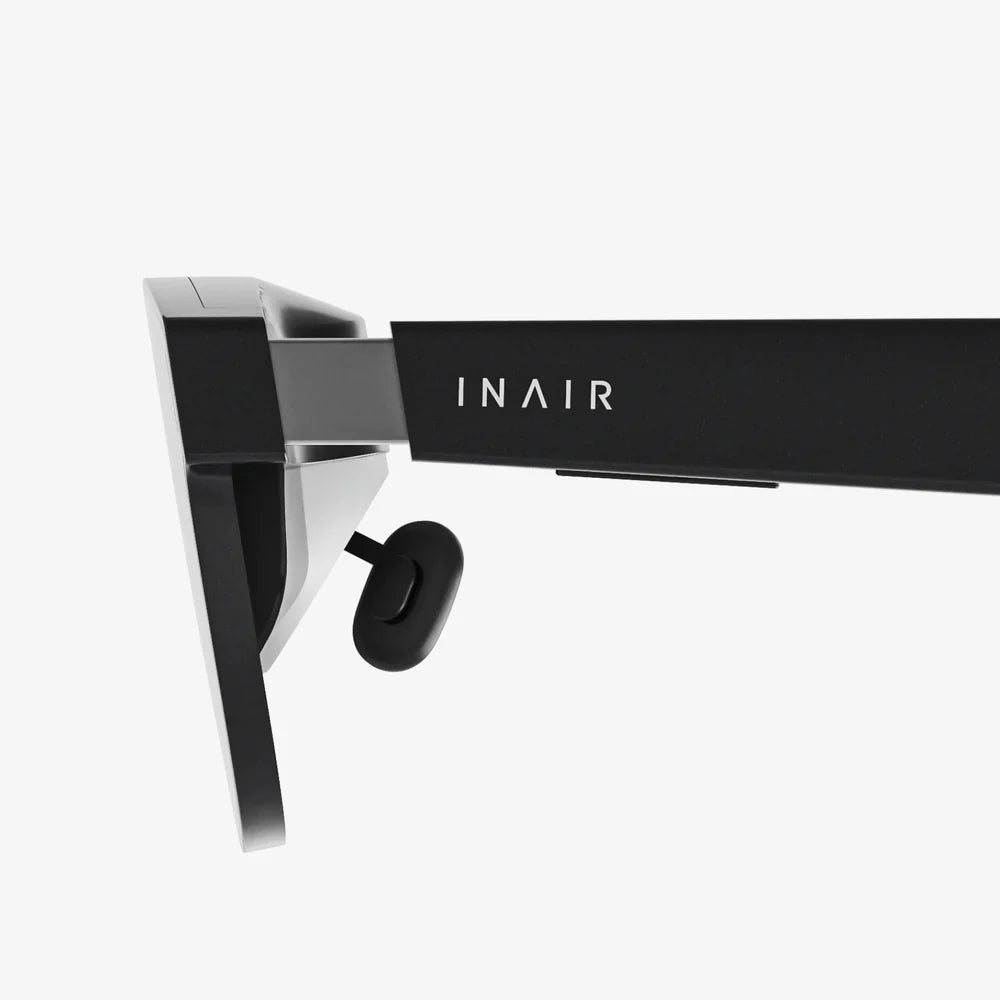
The technological bedrock of this companion is a trinity of advanced systems. First, sophisticated computer vision and spatial mapping allow it to construct a rich, three-dimensional understanding of the user's surroundings—identifying objects, gauging distances, and recognizing surfaces. Second, powerful artificial intelligence and machine learning algorithms enable it to interpret this visual data, understand natural language commands, learn from user behavior, and predict intent. Finally, the interface itself, delivered through sleek, increasingly socially-acceptable wearables like smart glasses, projects digital information—text, images, 3D models, avatars—onto the user's field of view as if it were a natural part of the world.
A Day in the Life: The Seamless Integration of an AR Companion
The true power of an AR companion is revealed not in a feature list, but in its seamless integration into the flow of daily life. It becomes a silent partner in productivity, an ever-patient tutor, and a bridge to deeper human connection.
The Professional Sphere: From the Workshop to the Operating Theater
In industrial and technical fields, the AR companion is a game-changer. A field engineer tasked with repairing a complex piece of machinery no longer needs to juggle physical manuals, laptops, and their tools. Their AR companion can overlay step-by-step holographic instructions directly onto the equipment, highlight specific components with digital markers, and even provide a remote expert with a first-person view to offer guided assistance from thousands of miles away. This "see-what-I-see" capability drastically reduces errors, training time, and downtime.
In healthcare, the implications are profound. Surgeons can have vital signs, 3D anatomical models from pre-op scans, and critical guidance superimposed onto their view of the surgical field, enhancing precision and safety. Medical students can practice procedures on hyper-realistic holographic patients, and nurses can use the companion to instantly access patient records and medication information hands-free, allowing them to focus entirely on care.
The Learning Revolution: Knowledge Overlaid on the World
Education will be transformed from a passive activity into an interactive, experiential journey. A student studying astronomy can have the AR companion project a accurate, to-scale model of the solar system into their classroom, allowing them to walk among the planets. A history lesson on ancient Rome can come alive as the companion reconstructs the ruins of the Forum around them. Learning a new language becomes immersive, with the companion translating labels on food products at the grocery store or subtitling a conversation with a native speaker in real-time. This contextual, kinesthetic learning fosters a deeper, more intuitive understanding that textbooks alone could never provide.
Social and Personal Connectivity: The Digital Third Place
The AR companion also redefines social interaction. It can act as a powerful memory aid, displaying the name and key details of a person you meet at a networking event just by glancing at them (with appropriate privacy safeguards, of course). For friends and families separated by geography, it can enable shared experiences that feel palpably real—watching a movie together on a virtual big screen, playing a board game on a real table, or simply having a conversation where a photorealistic hologram of your loved one sits on the couch across from you, creating a powerful sense of presence and co-location that video calls lack.
The Invisible Elephant in the Room: Privacy, Security, and Ethical Quandaries
This always-on, always-perceiving digital entity does not arrive without significant challenges. The most pressing concern is privacy. An AR companion, by its very nature, is a data collection device of unprecedented intimacy. It has the potential to record everything you see, everyone you meet, and every place you go. Who owns this data? How is it stored, processed, and used? Could it be accessed by third parties, governments, or malicious actors? The specter of a perpetual, automated surveillance state, either corporate or governmental, is a legitimate fear that must be addressed with robust, transparent, and user-centric data governance frameworks before widespread adoption can occur.
Furthermore, the technology raises deep ethical questions. How do we prevent the digital overlays of the AR companion from creating a new form of advertising pollution, cluttering our reality with unwanted spam? Could the constant flow of information lead to cognitive overload and a diminished capacity for focus and independent thought? There is also the risk of a new digital divide—between those who can afford advanced AR wearables and the rich experiences they enable, and those who cannot, potentially exacerbating existing social and economic inequalities.
The Road Ahead: From Tool to True Companion
The current state of AR technology is impressive, but it is merely the foundation. The future evolution of the AR companion lies in its transition from a responsive tool to a proactive, empathetic partner. This will be driven by advances in affective computing, allowing the AI to better read and respond to human emotion through tone of voice, facial expression, and physiological cues. The companion of the future may notice your frustration with a task and subtly adjust its guidance, or sense your curiosity about a piece of art in a museum and offer a story about its creation without being asked.
We are moving towards a world of ambient intelligence, where technology recedes into the background of our lives, working not as a distraction but as an enhancement. The ultimate goal is for the AR companion to feel less like a piece of software and more like a seamless extension of our own cognition—a digital layer that augments our memory, our perception, and our abilities without ever getting in the way.
The age of staring down at a glass rectangle is drawing to a close. The next great platform is the world itself, and the AR companion is the key that will unlock its full potential, transforming every blank space into a canvas for information, every object into a portal for knowledge, and every moment into an opportunity for enhanced understanding. The revolution won't be televised; it will be projected onto the world right before your eyes.
Share:
AI Transparency: The Critical Path to Building Trust in Intelligent Systems
Interactive Animation Examples: Engaging Users and Boosting Conversion