


- by wangfred
AR Compatible: The Essential Guide to Unlocking the Future of Immersive Technology
- by wangfred
Imagine a world where digital information doesn't just live on a screen but is seamlessly woven into the fabric of your reality. You look at a complex engine, and animated repair instructions materialize, guiding your every move. You walk through a city, and historical facts about the buildings around you float gently in your periphery. You try on a new piece of furniture in your living room before it’s even been built. This is the promise of Augmented Reality (AR), a technological revolution that is rapidly moving from science fiction to everyday utility. But this future isn't powered by magic; it's powered by a critical, often overlooked concept: AR compatible. This isn't just a technical checkbox on a spec sheet; it's the fundamental key that unlocks a universe of interactive, contextual, and profoundly useful digital experiences. The journey into this new dimension starts with understanding what it truly means for a device, an application, and an environment to be ready for AR.
At its simplest, AR compatible signifies that a device possesses the necessary hardware and software capabilities to run Augmented Reality applications effectively. It's a declaration that a platform can understand the physical world and superimpose digital content upon it in a stable, convincing, and interactive manner. This goes far beyond just displaying an image on a camera feed. True AR requires a sophisticated dance of sensors, processors, and algorithms working in perfect harmony.
The foundation of any AR compatible device is its hardware. Three core components form the essential trinity:
Hardware is useless without the software to command it. AR compatible also refers to a device's support for the major software development kits (SDKs) and frameworks that power AR applications. These toolkits provide developers with the standardized tools to build AR experiences without having to invent the underlying technology from scratch. They handle the complex tasks of environmental tracking, surface detection, light estimation, and more. Support for these platforms is a non-negotiable aspect of compatibility, ensuring a vast and diverse library of applications can run on the device.
When most people hear AR compatible, they think of their smartphone. And indeed, modern smartphones have been the primary driver of AR's popularity. However, the ecosystem is far more diverse, encompassing a spectrum of devices with varying levels of immersion and capability.
These are the most accessible AR compatible devices. Their ubiquity has democratized AR, allowing billions of people to experience it through their existing hardware. Using the device's camera and screen, they offer a "window-style" AR experience. While convenient and powerful, this form factor has limitations, primarily the need to hold the device up and the fact that the AR world is confined to the screen's borders, rather than all around you.
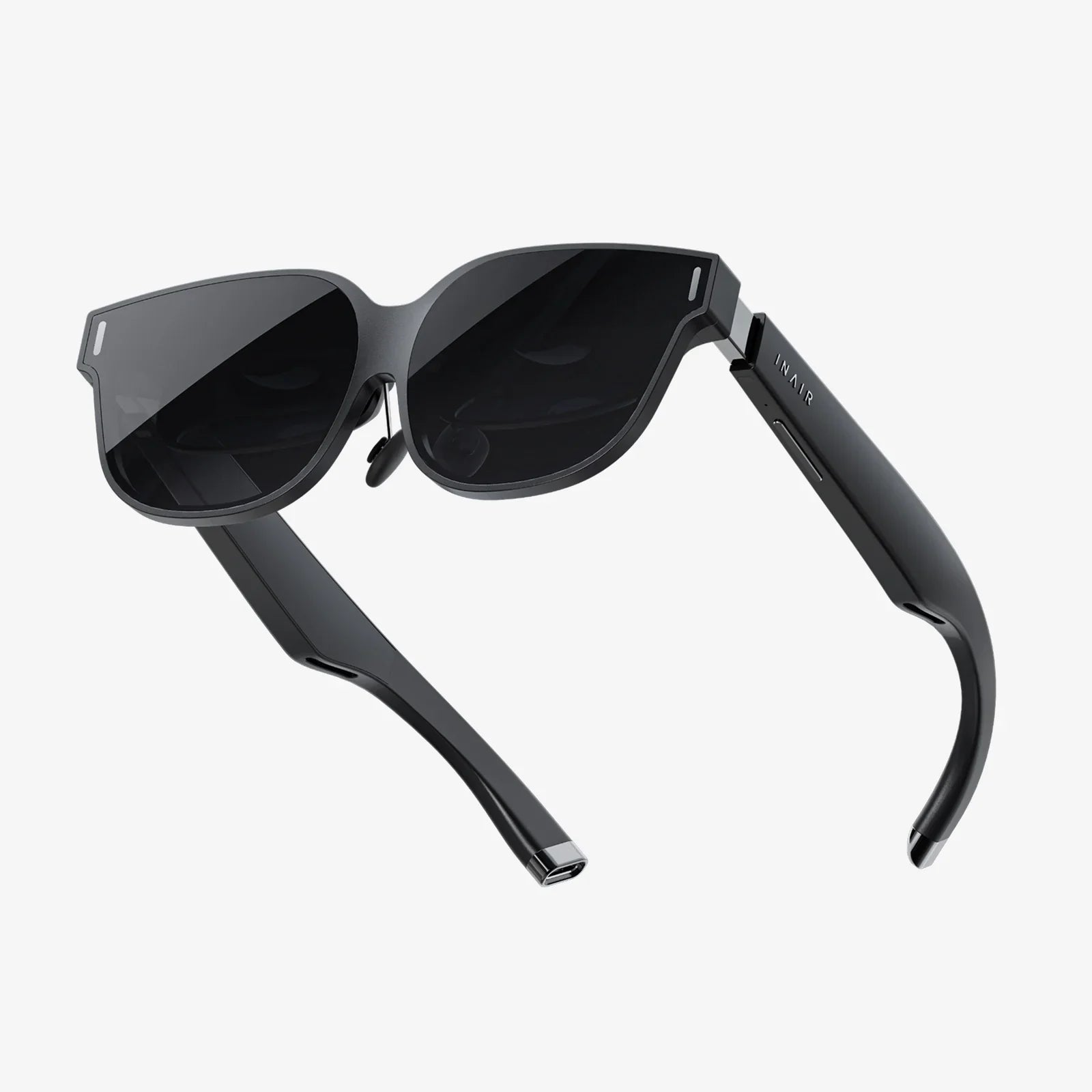
This category represents the ideal of AR—untethered, hands-free, and seamlessly integrated into your daily life. These glasses are fully AR compatible devices in their own right, packing sensors, processors, and transparent displays into a wearable form factor. They are designed to overlay information onto your natural field of view, allowing you to interact with digital content while still being fully present in the real world. This is where the concept of a spatial computer begins to take shape.
Some high-end AR systems offload the heavy processing to a connected computer or a companion smartphone. These tethered headsets often deliver the most powerful and graphically rich experiences, making them popular in enterprise and industrial settings. They prioritize performance over portability, offering expansive fields of view and highly precise tracking.
The true value of AR compatible technology is revealed not in tech demos, but in its practical applications across countless industries. It is solving real-world problems, enhancing human capability, and creating entirely new ways of working and learning.
On the factory floor, AR compatible devices are becoming indispensable tools. Technicians wearing AR glasses can see schematics, safety information, and step-by-step instructions overlaid directly on the machinery they are repairing. This "see-what-I-see" capability allows remote experts to guide on-site workers with digital annotations, reducing downtime and errors. In design and prototyping, engineers can visualize full-scale 3D models in a physical space, identifying potential issues long before a physical prototype is built.
In medicine, the stakes are high, and AR is proving to be a life-enhancing, and even life-saving, technology. Surgeons use AR compatible systems to visualize patient anatomy, such as CT scans or MRI data, superimposed directly onto the patient's body during procedures. This provides unparalleled guidance and precision. Medical students can practice complex procedures on detailed holographic models, and nurses can use AR to locate veins more accurately, improving patient comfort.
The "try before you buy" paradigm has been completely upended by AR. Shoppers can now use their AR compatible phones or tablets to see how a new sofa will look in their living room, how a shade of paint will change the mood of a room, or how a pair of glasses will fit their face. This drastically reduces purchase uncertainty and product returns, creating a more confident and engaging shopping experience from the comfort of home.
AR brings textbooks to life. Students can explore the solar system in their classroom, dissect a virtual frog, or walk through ancient historical sites reconstructed in stunning detail. This interactive, immersive form of learning boosts engagement and improves knowledge retention. In corporate training, employees can practice operating dangerous equipment or navigating complex software interfaces in a safe, virtual environment.
Despite its rapid progress, the journey towards universal AR compatible technology is not without its hurdles. Battery life remains a significant constraint for wearable devices, as the constant sensor use and graphics rendering are incredibly power-intensive. Designing socially acceptable and aesthetically pleasing glasses that people will want to wear all day is a monumental challenge for designers and engineers. Furthermore, issues of privacy, data security, and digital litter (leaving virtual objects behind in public spaces) are serious concerns that need to be addressed as the technology proliferates.
Looking forward, the trajectory is clear. AR compatible will evolve from a feature to a default expectation, much like GPS or a high-quality camera is today. We are moving towards a world of pervasive computing, where the digital and physical are inextricably linked. The devices will become smaller, more powerful, and more intuitive. The development of a robust "AR cloud"—a persistent, shared digital layer over the real world—will enable experiences that are collaborative and context-aware on a global scale. The keyword won't be about a device being AR compatible, but about an entire world being ready for the digital overlay.
The door to a blended reality is already open, and the key you need to step through might already be in your pocket or on your desk. Understanding the principles of AR compatibility is the first step to not just witnessing this transformation, but actively participating in it. The next time you see that label, you'll see it for what it truly is: an invitation to reshape your reality.