


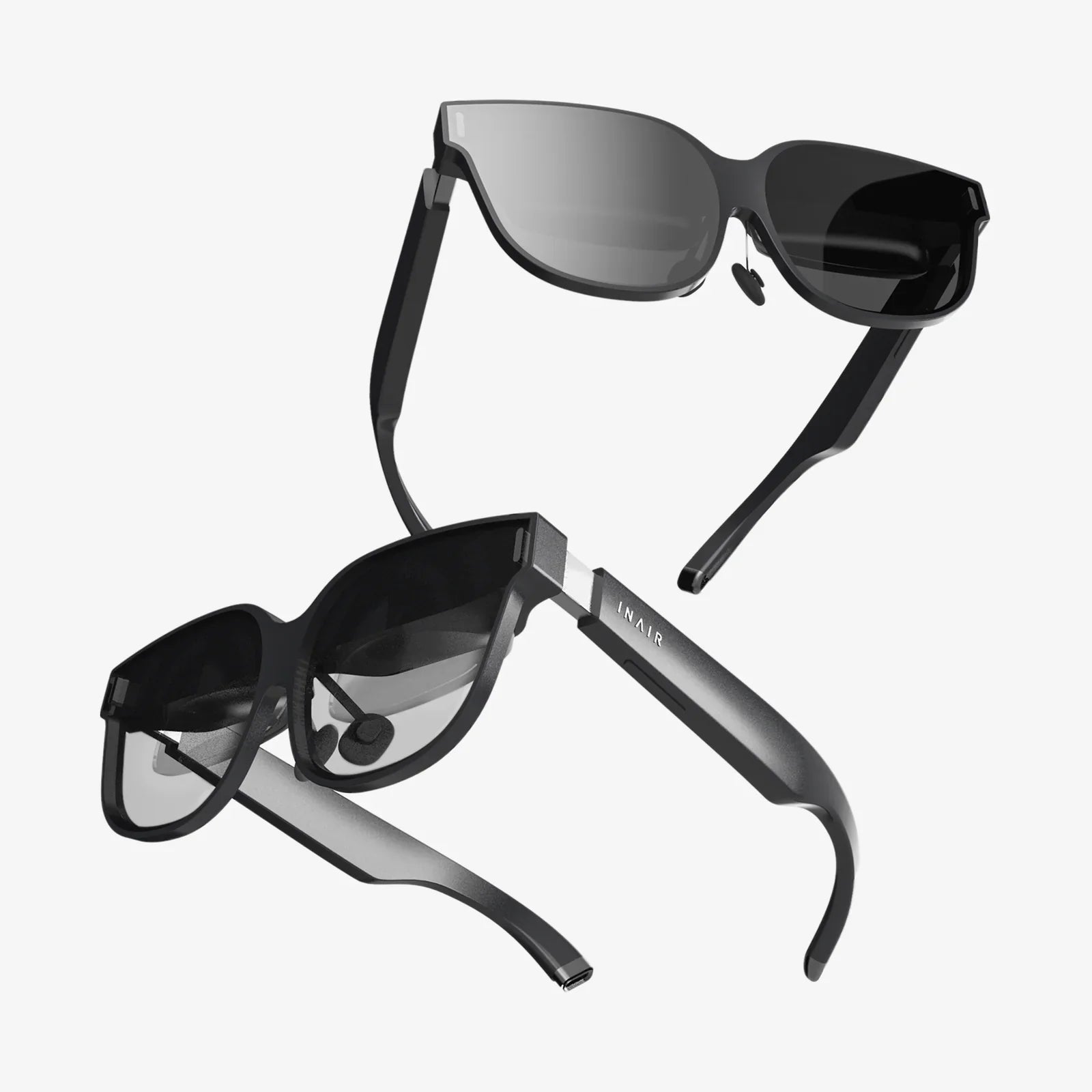
Imagine a world where information doesn’t just live on your screen but flows into your environment, where digital instructions overlay a complex machine, and historical figures seem to walk the very streets you’re on. This isn't a distant sci-fi fantasy; it’s the emerging reality powered by a transformative technological paradigm known as AR Connect. This invisible thread is beginning to weave together our digital and physical worlds, creating a seamless, interactive, and intelligent fabric of experience that promises to redefine everything from how we work and learn to how we play and connect. The age of isolated augmented reality experiences is over; the era of a connected, contextual, and collaborative augmented world is just beginning.
The Foundation: Beyond the Gimmick
For years, augmented reality was often perceived as a novel gimmick—a fun filter for social media or a fleeting gaming phenomenon. While these applications demonstrated potential, they were isolated and lacked persistence or context. The true power of AR is unlocked not by standalone applications, but through a robust framework of connection. This is the core of AR Connect: a sophisticated ecosystem where data, devices, and environments communicate in real-time.
At its simplest, AR Connect refers to the network and data protocols that allow augmented reality content to be persistent, multi-user, and context-aware. It’s what allows a digital sculpture placed in a town square to be seen and interacted with by countless people days later, all from their own devices. It’s the technology that enables a remote expert to see what a field technician sees and draw precise, annotated instructions directly onto their field of view, guiding them through a complex repair. This shift from isolated AR to connected AR is as significant as the move from standalone personal computers to the internet.
The Architectural Pillars of a Connected AR World
Building this seamless layer of intelligence requires several critical technological pillars to work in concert. The magic of a cohesive experience relies on a complex, hidden architecture.
1. Spatial Mapping and Shared Coordinate Systems
The first and most crucial step is for devices to understand and agree upon the physical environment. Through advanced sensors like LiDAR, cameras, and inertial measurement units (IMUs), AR devices create a detailed point cloud or mesh map of the space. This digital twin must then be synchronized across all connected devices. This shared coordinate system is the foundational canvas. When one user places a digital object at a specific GPS coordinate or, more accurately, relative to a specific physical feature like a wall or table, that anchor point is stored on a cloud service. When another user enters that space, their device downloads this shared spatial map, allowing it to precisely render the same object in the exact same location for everyone, creating a consistent shared experience.
2. Cloud Anchors and Persistent Data
This is the heart of persistence. Cloud services act as the arbiter, storing the digital anchors and the associated content. This ensures that the AR experience is not tied to a single device. The content lives in the cloud, associated with a location, and is summoned by any authorized device that requests it. This allows for experiences that can be created by one person and enjoyed by millions later, transforming public spaces into dynamic galleries or historical sites into living museums.
3. Real-Time Data Synchronization
For collaborative and interactive experiences, mere persistence isn’t enough. Data must flow instantly between users. This requires low-latency networking protocols. Imagine two architects in different countries manipulating the same 3D model of a building projected onto a table between them. As one rotates the model, the change must be calculated on their device, sent to the cloud, and instantly transmitted to the other user’s device, which then re-renders the model. This seamless, real-time synchronization is what makes collaborative AR feel magical and effortless, eliminating the feeling of lag or disconnect that would break the sense of shared presence.
4. Edge Computing and 5G
The computational demands of processing high-fidelity 3D graphics, running complex computer vision algorithms, and synchronizing data in real-time are immense. Offloading some of this processing to edge servers—computing resources closer to the end-user—reduces latency and conserves battery life on user devices. Coupled with the high bandwidth and low latency of 5G networks, edge computing enables rich, complex AR experiences that were previously impossible on mobile hardware, ensuring smooth, responsive interactions even in data-intensive scenarios.
Transforming Industries: The Practical Power of Connection
The theoretical framework of AR Connect becomes truly revolutionary when applied to real-world problems, offering tangible benefits across countless sectors.
Revolutionizing Manufacturing and Field Service
In industrial settings, AR Connect is a game-changer for efficiency and accuracy. A technician tasked with maintaining a complex piece of machinery can wear connected glasses that overlay a digital schematic directly onto the equipment, highlighting the specific component that needs attention. Step-by-step animated instructions can guide each movement. Crucially, a senior engineer located thousands of miles away can see the technician's live view, annotate it with digital arrows and notes, and provide expert guidance in real-time. This connected knowledge transfer slashes downtime, reduces errors, and empowers less experienced workers to perform complex tasks, all while capturing valuable data for training and process improvement.
Redefining Retail and E-Commerce
The try-before-you-buy concept is being supercharged. Customers can use their devices to see how a new sofa would look in their actual living room, with accurate scaling and lighting, thanks to persistent spatial mapping. Furthermore, retailers can place connected digital promotions in physical stores. Imagine pointing your phone at a product on a shelf and seeing not only its price and reviews but also a video demonstrating its use or a notification for a complementary item on promotion. This creates a deeply personalized and interactive shopping journey that blends the best of online and in-store retail.
Creating Immersive Learning and Training
Education moves from passive absorption to active exploration. Medical students can practice procedures on a shared, persistent holographic cadaver, collaborating and learning from each other's annotations. History classes can take a field trip to an ancient ruin and watch a connected AR experience rebuild the structures around them, populated by historical figures. This shared, interactive learning environment fosters deeper understanding and retention by connecting knowledge directly to context.
Building the Future of Remote Collaboration
Video conferencing is a poor substitute for physical presence. AR Connect offers a profound upgrade. Instead of staring at faces on a screen, remote teams can gather around a 3D holographic model of a new product design. They can walk around it, manipulate it together, point to specific features, and make changes that everyone sees instantly. This restores the nuance of non-verbal communication and spatial context that is lost in traditional remote work, making collaboration more natural, effective, and human.
The Human and Societal Implications
As with any powerful technology, the widespread adoption of a connected AR layer brings profound questions and challenges that we must navigate thoughtfully.
Privacy in a Mapped World
If our devices are constantly scanning and uploading detailed maps of our homes, offices, and public spaces, where does that data live? Who owns it? How is it secured? The concept of spatial data is a new frontier for privacy law. Robust encryption, anonymization techniques, and clear user consent protocols are not optional extras; they are fundamental requirements for building trust in this new paradigm. Users must have absolute control over what is scanned, stored, and shared from their personal environments.
The Digital Divide and Accessibility
Will AR Connect become a tool that empowers everyone, or will it create a new chasm between those who have access to the latest hardware and high-speed networks and those who do not? Ensuring that the benefits of this technology are accessible and affordable is crucial to preventing a new form of inequality. Furthermore, it presents a tremendous opportunity to build a more accessible world from the ground up, with digital overlays providing navigation for the visually impaired or real-time sign language avatars for the hearing impaired.
Curating the Shared Experience
Who gets to decide what digital content is placed in our shared physical spaces? If a city park becomes a canvas for AR, will it be cluttered with advertisements? Will public monuments be defaced with digital graffiti? Establishing digital zoning, content moderation policies, and culturally sensitive guidelines will be essential to maintaining the health and beauty of our augmented public sphere. This requires collaboration between technologists, urban planners, artists, and communities.
The Invisible Fabric of Tomorrow
The journey of AR Connect is just beginning. We are moving towards a future where this technology becomes like electricity—an invisible, indispensable utility that powers our interactions with the world. We will stop thinking about "using an AR app" and simply interact with a connected layer of intelligence that is always present, contextually aware, and seamlessly integrated into our daily flow. The boundary between the digital and the physical will not be erased, but will instead become a rich, interactive, and collaborative frontier. The devices themselves will fade into the background, becoming lightweight glasses or even contact lenses, and the focus will shift entirely to the experiences and connections they enable.
The potential is staggering, limited only by our imagination and our commitment to building this future responsibly. We are not just building new tools; we are weaving a new kind of reality. The thread is here. It’s time to connect.
Share:
Are VR Goggles Bad for Kids? A Deep Dive into the Digital Frontier
Are VR Goggles Bad for Kids? A Deep Dive into the Digital Frontier