


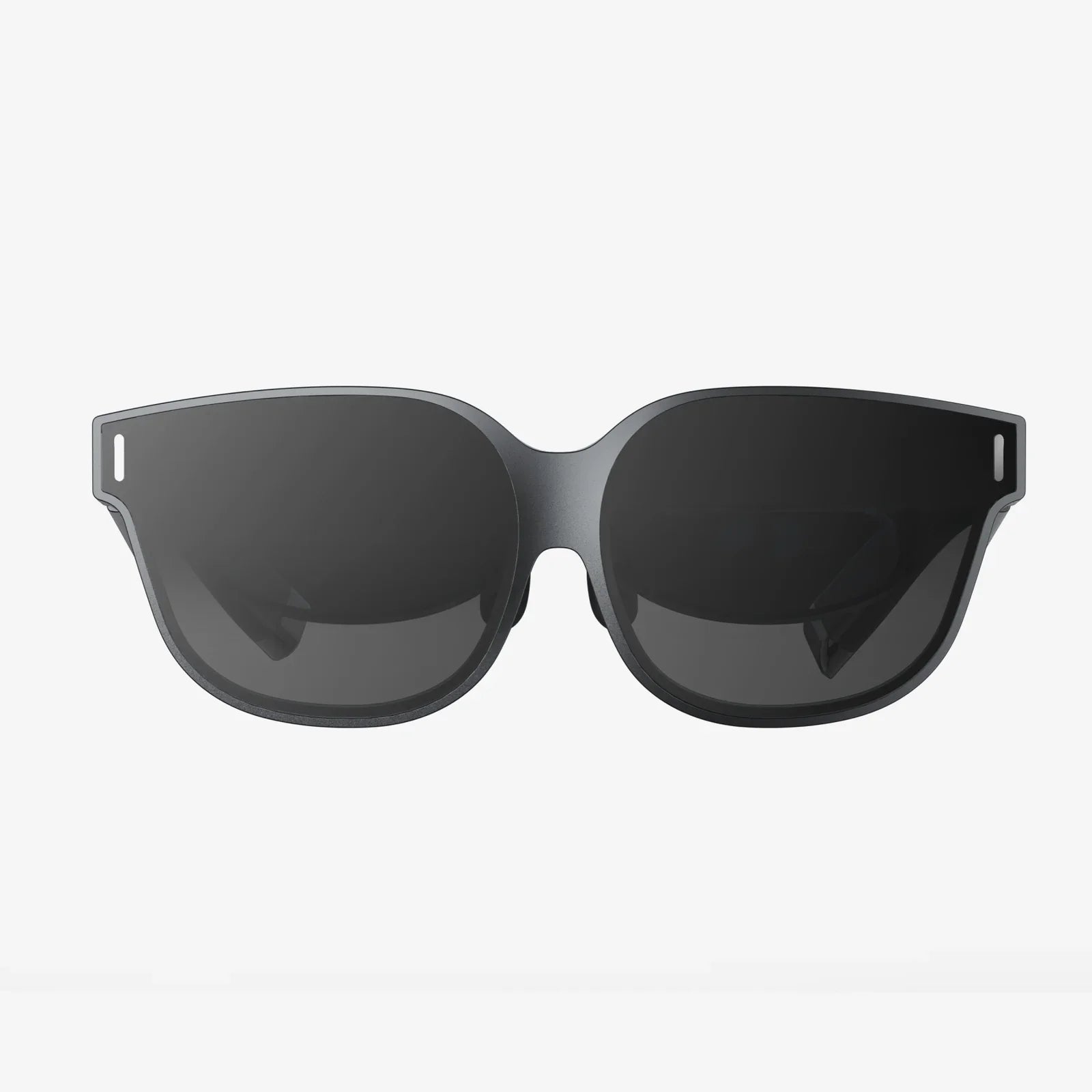
Imagine walking through a city where historical figures point out landmarks only they can see, where your grocery list floats beside the very shelves holding the items you need, and a loved one, thousands of miles away, appears to be walking right beside you, offering real-time commentary. This isn’t a scene from a science fiction novel; it’s the impending future being built today, not through clunky headsets or handheld screens, but through the most intimate and seamless interfaces we’ve ever conceived: augmented reality smart glasses and their even more revolutionary successor, AR contact lenses. This technological evolution represents a fundamental shift from consuming digital content to living within it, seamlessly blending the physical and digital worlds directly onto our field of vision.
The Evolutionary Path: From Glass to Polymer
The journey to this invisible computing paradigm began with a visible, worn device: the smart glass. For over a decade, tech pioneers have been iterating on the concept of eyewear that projects digital information onto lenses. These devices are the crucial stepping stone, the training wheels for a society learning to accept and interact with a persistently augmented world. They house the necessary hardware—micro-projectors, waveguides, sensors, cameras, and batteries—in a frames-based form factor.
Current-generation smart glasses are marvels of miniaturization. They utilize complex optical systems like diffractive waveguides or holographic optical elements to bend light from a tiny projector on the temple into the user’s eye, creating the illusion of digital screens floating in the real world. They pack in spatial audio speakers, beam-forming microphone arrays for clear voice commands, and an array of sensors including accelerometers, gyroscopes, and magnetometers to understand their position and orientation in space. This technological density allows them to overlay navigation arrows onto the street, translate foreign language signs in real-time, display notifications without pulling out a phone, and even facilitate complex guided tasks for field technicians or surgeons.
The Inevitable Convergence: AR Contact Lenses Emerge
While glasses represent a significant leap, they are still an external device. They can be forgotten, lost, or chosen not to be worn. They make a social statement and can create a barrier between the wearer and those around them. The logical, and arguably ultimate, endpoint of this technology is to remove the frame altogether and integrate the augmentation system directly onto the eye itself: the AR contact lens.
The development of AR contacts is arguably one of the most formidable engineering challenges of the 21st century. It requires a complete rethinking of everything we know about micro-electronics, power management, and biocompatible materials. The goal is to create a device that is safe, comfortable, and functional while being thinner than a human hair and soft enough to rest on the sensitive corneal surface. Researchers are exploring ultra-thin, flexible micro-LED displays, new types of transparent antennas for connectivity, and nano-scale sensors. The biggest hurdle remains power. Solutions being investigated include wireless charging via radio frequency (RF) harvesting, tiny bio-batteries that generate electricity from the user’s own tears (which contain ions like sodium and potassium), and photovoltaics that can charge from ambient light.
A Tale of Two Form Factors: Glasses vs. Contacts
For the foreseeable future, these two technologies will coexist, each serving different needs and overcoming the other’s limitations.
The Case for Smart Glasses
Smart glasses currently hold the advantage in raw computing power and capability. Their larger form factor allows for more processing muscle, larger batteries for longer use, and higher-resolution displays. They are the platform for high-fidelity, complex AR experiences—detailed 3D models for engineers, rich data visualizations for analysts, or immersive interactive tutorials. They are also a more socially familiar object; wearing glasses is already a normalized part of daily life for billions. For those who already require vision correction, smart glasses can simply integrate the prescription into the lens, offering a two-in-one solution. Their development is also iterative, building upon existing supply chains and manufacturing techniques for eyewear.
The Promise of AR Contacts
AR contacts promise something glasses never can: complete invisibility and total immersion. There is no device to put on or take off; the digital layer is simply always there if you want it to be. This eliminates the social awkwardness of wearing cameras on your face and enables augmentation in situations where glasses are impractical—wearing a helmet, swimming, or playing sports. They offer a truly panoramic field of view, unobstructed by the rims of frames. Their biometric sensing potential is also unparalleled. By resting directly on the eye, they can continuously and non-invasively monitor incredible amounts of health data—glucose levels from tear fluid, intraocular pressure for glaucoma patients, or even early signs of diseases through precise protein analysis. This could revolutionize preventative medicine.
Transforming Industries and Redefining Human Experience
The applications for this technology stretch far beyond novelty and entertainment, poised to redefine core aspects of society.
- Healthcare: Surgeons could see vital signs and 3D anatomical guides superimposed on their patient during an operation. Medical students could practice procedures on hyper-realistic virtual patients. For the general population, continuous health monitoring could provide unprecedented early warnings for countless conditions.
- Manufacturing and Field Service: A technician repairing a complex machine could see torque specifications, wiring diagrams, and a step-by-step guide layered directly onto the components they are working on, drastically reducing errors and training time.
- Education: History lessons could become immersive time-travel experiences. Chemistry students could safely manipulate virtual molecules. The very concept of a textbook or a whiteboard could be reimagined as an interactive, 3D canvas.
- Social Connection and Communication: The promise of a true "telepresence" could be realized. Instead of flat video calls, we could share virtual spaces, seeing life-sized, volumetric holograms of friends and family as if they were in the room, capable of making eye contact and sharing expressions. Real-time translation could become instantaneous and seamless, removing language barriers entirely.
The Thorny Path Forward: Challenges and Ethical Imperatives
This future is not without its profound challenges and risks. The development of this technology must be accompanied by a parallel and equally rigorous development of ethical frameworks and societal safeguards.
Privacy and Surveillance: The always-on, always-seeing nature of these devices, particularly contacts, presents a privacy nightmare. The potential for constant recording, facial recognition, and data harvesting is unprecedented. Clear norms and strict regulations must be established to prevent a dystopian future of perpetual surveillance, both from corporations and governments.
Data Security: The amount of personal, biological, and visual data these devices will collect is incredibly sensitive. Protecting this data from hackers is not just about preventing spam; it is about protecting the very essence of a user’s experience and biological identity.
Social Division and Accessibility: There is a real risk of creating a new digital divide—between those who can afford these advanced augmentations and those who cannot. Will AR-enhanced individuals have significant advantages in jobs, education, and social interaction? Ensuring this technology is accessible and equitable is critical to preventing a new layer of societal stratification.
Psychological and Physical Health: What are the long-term effects of constantly overlaying digital information on our visual perception? Could it lead to increased anxiety, an inability to be present in the moment, or a depreciation of the physical world? Furthermore, the safety of placing electronics directly on the eye must be proven beyond any doubt, requiring years of rigorous clinical testing.
A New Lens on Civilization
The transition from handheld screens to head-worn displays, and eventually to eye-integrated systems, is more than a simple upgrade in convenience. It is a fundamental rewiring of how humans perceive and interact with information and with each other. AR glasses are the bridge, the necessary and powerful precursor that is teaching us the language of spatial computing. But AR contacts represent the destination: a world where the digital and physical are so seamlessly fused that the technology itself disappears, leaving only the enhanced capability. Navigating this future will require more than just technical brilliance; it will demand a global conversation about the world we want to build. The goal is not to escape reality, but to augment it in a way that enhances our humanity, deepens our connections, and expands our understanding of the world, all through a lens we may soon forget we’re even wearing.
The line between the human user and the computer interface is set to vanish, not into the air, but directly onto the surface of our eyes. The race to own this ultimate platform is already underway in labs around the globe, and the winner will hold the key to the next—and perhaps final—frontier of personal technology. Get ready to see the world, and yourself, in a whole new light.
Share:
Different Types of AI: A Comprehensive Guide to the Intelligence Spectrum
Best 3D AI Tools: Revolutionizing Digital Creation in the Modern Era