


Imagine pointing your phone at a dusty, forgotten corner of your living room and seeing a perfect new bookshelf materialize, its wood grain detailed and its dimensions precise, as if it were already there. Or walking through a historic city and watching ancient structures rise around you, their stories unfolding at your feet. This isn't a glimpse into a distant sci-fi future; it’s the tangible, transformative power available right now on AR Core enabled devices, a technological leap that is quietly and fundamentally altering the very fabric of how we interact with information, our environment, and each other.
The Engine Behind the Magic: Understanding AR Core
At its core, the magic of augmented reality isn't about overlaying simple graphics. It's about understanding. AR Core is the sophisticated software platform that gives a device its spatial intelligence. It's the brain that allows a phone, tablet, or pair of smart glasses to perceive the world and place digital content within it in a believable, persistent way. This isn't a passive process; it's an active, real-time dialogue between the device and its environment.
The technology achieves this through a complex fusion of three key capabilities:
Motion Tracking
Using the device's camera and sensors, AR Core precisely tracks the device's position and orientation in real-time relative to the world. It identifies visually distinct features in your environment—corners of a table, a picture on a wall, a pattern on the floor—and uses them as anchor points. This is how a digital character can appear to hide behind your real-world sofa; the device knows exactly where the sofa is in space.
Environmental Understanding
AR Core doesn't just see points; it understands surfaces. It can detect horizontal planes like floors and tables, and vertical planes like walls and doors. This allows digital objects to sit convincingly on your coffee table or hang posters on your real walls. More advanced implementations can recognize specific shapes and objects, like a couch or a car, enabling even more immersive interactions.
Light Estimation
Perhaps the most subtle yet crucial element for believability is light. AR Core analyzes the ambient light in a room and adjusts the lighting of the digital object to match. It casts shadows in the correct direction and with the appropriate softness, and it adjusts the brightness and color temperature of the virtual object so it doesn't look like a bright, glaring cartoon superimposed on the real world. This seamless integration of light is what sells the illusion, making the digital feel physical.
Beyond the Gimmick: Real-World Applications Reshaping Industries
While fun filters and games were the entry point for many, the true value of AR Core enabled devices lies in their profound utility across countless sectors. This is where the technology transitions from a novelty to a necessity.
Revolutionizing Retail and E-Commerce
The days of guessing whether a new piece of furniture will fit in your space or match your décor are over. AR Core allows you to place true-to-scale 3D models of products directly into your home. You can walk around a virtual sofa, see how a new lamp casts light in the evening, or even "try on" watches and glasses. This drastically reduces purchase uncertainty and product returns, transforming the shopping experience from a transaction into an interactive preview of your future space.
Transforming Education and Training
Textbooks become living, breathing entities. Students can dissect a virtual frog on their kitchen table, explore the solar system in their classroom, or walk through a detailed, interactive model of the human heart. For complex industrial and medical training, AR provides step-by-step visual instructions overlaid directly onto machinery or anatomical models, reducing errors and accelerating the learning curve in high-stakes environments.
Enhancing Navigation and Wayfinding
Forget the tiny blue dot on a map. The next generation of navigation uses AR to paint directions onto the real world. Giant arrows appear on the road in front of you, and the name of your target café floats over its entrance. Inside large complex spaces like airports, hospitals, or shopping malls, AR wayfinding can guide you turn-by-turn, showing a path on the floor directly to your gate, your appointment room, or your desired store.
Empowering Design and Architecture
Architects and interior designers are using AR Core enabled devices to bring blueprints and 3D models to life on the actual construction site. They can visualize where walls will be built, how natural light will fall at different times of day, and identify potential design clashes before a single brick is laid. Clients can take a virtual walkthrough of their unfinished home, providing feedback on the flow and feel of the space in a way that 2D plans could never allow.
The Hardware Ecosystem: From Smartphones to Standalone Glasses
The democratization of AR has been powered by the smartphone. By leveraging the powerful processors, high-resolution cameras, and sophisticated inertial measurement units (IMUs) already in our pockets, AR Core turned billions of devices into portable AR windows. This ubiquity is its greatest strength, providing a massive, ready-made platform for developers to build upon and for users to experience.
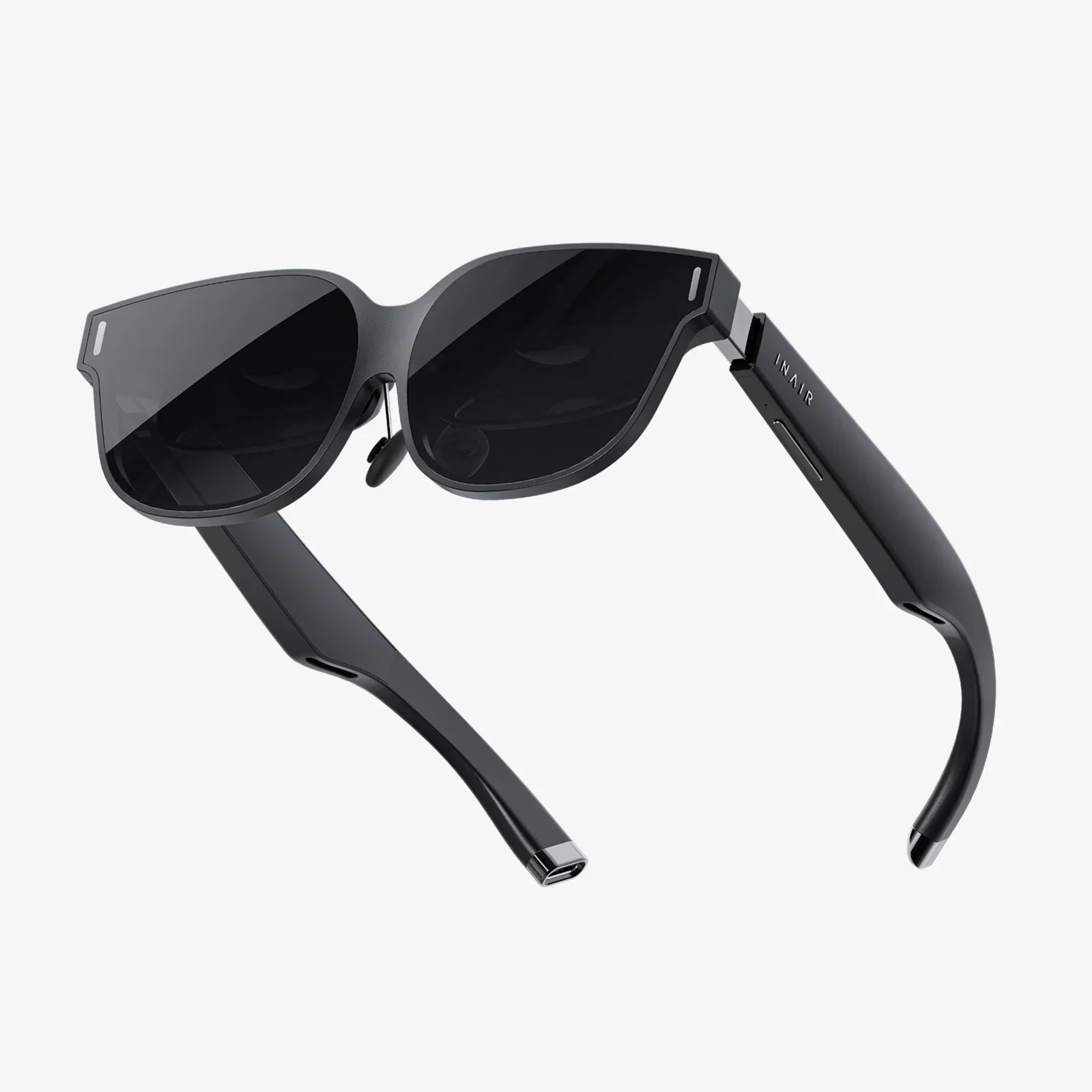
However, the future lies beyond the hand-held screen. The next evolutionary step for AR Core enabled devices is wearable technology, specifically smart glasses. While current-generation glasses often act as a secondary display for a smartphone, the trajectory is toward fully standalone AR glasses. These devices will integrate all the necessary compute power, sensors, and displays into a sleek, socially acceptable form factor. They will project information directly onto our retinas or use waveguides to blend digital light with the real world, offering a truly hands-free, always-available augmented experience. This shift will mark the moment AR moves from being an app you open to a persistent layer of reality you inhabit.
The Invisible Infrastructure: Connectivity and The Cloud
For AR to reach its full potential as a shared, persistent, and contextually aware medium, it cannot operate on the device alone. This is where cloud-based AR services, often working in concert with platforms like AR Core, become critical. Cloud Anchors allow multiple users to see and interact with the same digital object in the same physical space simultaneously, enabling collaborative design, multi-player games, and shared experiences. Furthermore, as the digital twins of cities and buildings are created, this vast spatial map will live in the cloud, allowing any AR Core enabled device to instantly understand its location and context at a massive scale, without needing to process everything locally.
Challenges and The Road Ahead
The path forward is not without its obstacles. For widespread adoption, especially in wearable form factors, significant hurdles around battery life, processing power, and thermal management must be overcome. Social acceptance is another key factor; how will we navigate public spaces when everyone is wearing computers on their faces? Privacy concerns are paramount, as devices that constantly scan and interpret our environments will require robust ethical frameworks and clear user controls to ensure trust.
Yet, the direction is clear. The convergence of 5G and eventually 6G connectivity, edge computing, increasingly powerful and efficient chipsets, and breakthroughs in display technology will relentlessly push AR into the mainstream. The line between the digital and the physical will continue to blur, not as a dystopian invasion, but as a thoughtful augmentation designed to enhance human capability and connection.
The revolution won't arrive with a loud bang, but with a quiet hum of processing power. It’s already happening on the device in your hand, transforming your world into a canvas for imagination, a tool for unparalleled efficiency, and a portal to experiences that were once confined to fantasy. The true potential of AR Core enabled devices is not just in what they show us, but in how they change what we can do—turning every space into an opportunity and every user into a creator of their own reality.
Share:
XR Devices Are Reshaping Reality: A Deep Dive into the Future of Immersive Technology
Web Based AR Platform: The Future of Immersive Experience is in Your Browser