


Imagine a world where digital information doesn't just live on a screen but is seamlessly woven into the fabric of your everyday life—where instructions float over a complex machine you're repairing, historical figures narrate their stories as you walk through a city, and your living room becomes a battlefield for epic, virtual adventures. This is no longer the stuff of science fiction; it's the tangible reality being built today by developers using powerful AR development platforms. These platforms are the engines of the next computing revolution, and understanding them is key to unlocking a future of limitless, interactive possibility. The journey from a groundbreaking idea to a polished, immersive experience begins with the critical choice of the right tools for the job.
The Core Components of a Robust AR Development Platform
At its heart, an AR development platform is a suite of software tools, libraries, and services designed to empower creators to build augmented reality experiences. While features vary, several core components are fundamental to any serious platform.
3D Engine and Rendering Pipeline
The 3D engine is the beating heart of the platform. It is responsible for creating the virtual world and overlaying it onto the real one with convincing fidelity. This involves complex mathematics for perspective, lighting, and shading. A high-performance rendering pipeline ensures that digital objects not only look realistic—responding to environmental light and casting shadows—but also that they do so without draining device batteries or causing lag, which is crucial for maintaining user immersion and preventing motion sickness.
Environmental Understanding and Tracking
For digital content to feel like it truly exists in your space, the platform must understand that space. This is achieved through a combination of technologies:
- Simultaneous Localization and Mapping (SLAM): This is the magic behind persistence. SLAM algorithms allow the device to map an unknown environment while simultaneously tracking its own location within that map. This is how a virtual pet can remember it's hiding behind your sofa even when you leave the room and return.
- Plane Detection: The ability to identify horizontal surfaces (like floors and tables) and vertical surfaces (like walls) is essential for placing content convincingly.
- Light Estimation: This process analyzes the real-world environment's lighting conditions and applies similar lighting to the virtual objects, making them blend more naturally instead of looking like brightly lit cartoons.
- Object Occlusion: A more advanced feature where virtual objects can be realistically hidden behind real-world objects, a key step towards photorealistic AR.
Cross-Platform Deployment Capabilities
The modern digital ecosystem is fragmented across operating systems and device types. A premier AR development platform provides robust tools to build an experience once and deploy it across a wide range of devices, from high-end smartphones and tablets to dedicated AR glasses. This is often achieved through game engines that act as intermediaries, handling the complexities of different hardware and operating systems so the developer can focus on the creative experience.
Cloud Services and Persistent AR
While many AR experiences are personal and ephemeral, the next frontier is shared and persistent AR. Cloud-based services enable this by storing the complex maps of environments, allowing multiple users to see and interact with the same digital objects in the same physical location simultaneously, even if they are there at different times. This is the foundation for multi-user games, collaborative design applications, and location-based storytelling that lasts for years.
Transforming Industries: The Practical Power of AR
The value of an AR development platform is realized through its application. Nearly every sector is being reshaped by the immersive experiences they enable.
Revolutionizing Retail and E-Commerce
The "try before you buy" paradigm has been supercharged. Customers can now see how a new sofa fits and looks in their actual living room, experiment with different paint colors on their walls, or virtually try on glasses, makeup, and clothing. This drastically reduces purchase uncertainty and product return rates, while providing an engaging, interactive shopping experience that boosts conversion rates and customer satisfaction.
Enhancing Industrial Maintenance and Manufacturing
On factory floors and in field service, AR is a game-changer for efficiency and accuracy. Technicians wearing AR-enabled devices can see digital work instructions overlaid directly on the machinery they are repairing. They can visualize internal components, follow animated assembly guides, and connect with remote experts who can annotate their real-world view in real-time. This reduces errors, slashes training time, and minimizes downtime for critical equipment.
Advancing Healthcare and Medicine
In healthcare, the stakes are high and the precision required is immense. AR development platforms are used to create applications for medical students to practice procedures on detailed, virtual anatomy. Surgeons can use AR to visualize a patient's anatomy, such as CT scans or MRI data, projected directly onto their body during procedures for improved guidance. This technology is also being used for physical therapy, patient education, and managing phobias through controlled exposure.
Reimagining Education and Training
Textbooks and static diagrams are giving way to interactive, 3D learning. Students can dissect a virtual frog, explore the solar system in the middle of their classroom, or walk through a historical site as it existed centuries ago. This experiential learning leads to dramatically improved knowledge retention and engagement, making complex subjects tangible and accessible.
Choosing the Right AR Development Platform: A Strategic Decision
With several powerful options available, selecting the right platform is a strategic decision that can make or break a project. The choice should be guided by a clear assessment of your project's specific needs.
Defining Your Project Scope and Target Audience
Start by asking fundamental questions: What is the core purpose of the experience? Is it for entertainment, enterprise, education, or marketing? Who is the end-user? Understanding whether you are building for consumers on mobile devices, industrial workers on specialized glasses, or medical professionals will immediately narrow your options. The technical proficiency of your target audience will also influence the complexity of the interactions you can design.
Assessing Technical Requirements and Team Skills
Evaluate the technical demands of your vision. Do you require the highest-fidelity graphics and physics, or is a simpler marker-based experience sufficient? Does your concept rely on multi-user collaboration or persistent cloud anchors? Then, take a hard look at your team's existing skill set. A team proficient in a particular game engine might find it most efficient to use that engine's integrated AR tools, while a web development team might gravitate towards web-based AR frameworks that leverage their JavaScript knowledge.
The Critical Factor of Hardware Compatibility
Your choice of platform is intrinsically linked to the hardware you intend to support. If you are targeting a broad consumer audience, your primary platform will be iOS and Android smartphones. In this case, you need a platform with excellent support for the core AR features on both operating systems. If your project is for an enterprise setting that uses a specific model of AR glasses, you must choose a platform that offers full compatibility and optimizations for that device.
Navigating the Development Workflow
Building an AR experience is an iterative process that blends technical skill with creative design thinking.
Prototyping and Iterative Design
Before writing a line of code, it's crucial to prototype the experience. Use simple shapes and basic interactions to test the core concept within the actual environment. Is the user flow intuitive? Does the experience feel compelling? This rapid, low-cost iteration saves countless hours of development down the line by identifying design flaws early. Constant testing on target devices is non-negotiable to ensure performance and usability.
Creating Optimized 3D Assets
The visual quality of an AR experience is paramount, but it must be balanced with performance. 3D models need to be optimized with efficient polygon counts, compressed textures, and well-designed materials to ensure they render smoothly. A stuttering experience quickly breaks immersion. Many platforms offer asset pipelines and guidelines to help developers strike this balance effectively.
User Experience (UX) in a Borderless Interface
AR UX is a nascent and challenging field. Designers must think beyond the rectangular screen. How does a user interact with a floating menu? How do you provide feedback in a 3D space? How do you guide a user's attention without traditional UI elements? Principles like minimizing on-screen clutter, using spatial audio for cues, and designing intuitive gestures are critical for creating comfortable and intuitive AR experiences that feel like a natural extension of reality, not a clunky application.
The Future Horizon: Where AR Development is Headed
The technology underpinning AR development platforms is advancing at a breathtaking pace, promising even more powerful and accessible tools.
The Integration of Artificial Intelligence and Machine Learning
AI is becoming deeply integrated into AR workflows. Platforms are beginning to offer pre-trained models for sophisticated scene understanding, allowing applications to not just see flat surfaces but recognize specific objects like chairs, computers, or cars. This enables context-aware applications that can interact intelligently with the environment. Furthermore, AI-powered tools are streamlining the creation of 3D assets from 2D images, which could dramatically lower the barrier to content creation.
The Path to Ubiquitous AR Glasses
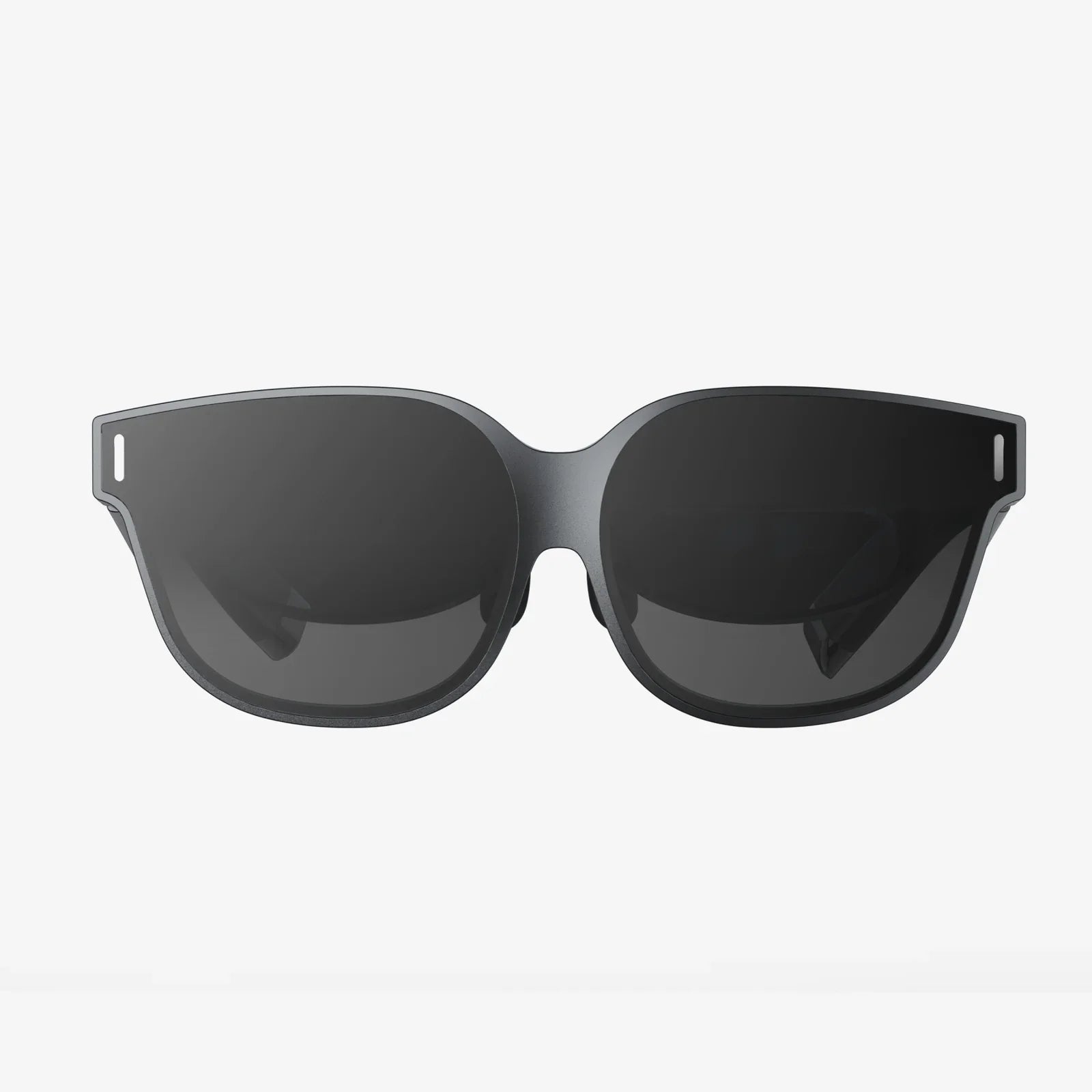
While smartphones are the current AR workhorse, the ultimate goal remains a pair of stylish, all-day AR glasses. The development platforms of today are already laying the groundwork for this spectacled future, tackling challenges like power consumption, thermal management, and creating interface paradigms for a hands-free, always-available world. The successful platform will be the one that provides a seamless path from mobile AR to true optical see-through glasses.
Democratization of AR Creation
As platforms mature, they are increasingly focused on democratization. This means creating more visual, node-based scripting tools that allow designers and artists with less coding experience to build complex interactions. The rise of web-based AR also lowers the barrier to entry, allowing users to access experiences instantly through a browser without downloading an app. This trend will unleash a new wave of creativity from a broader range of creators.
The digital and physical worlds are on a collision course, and the wreckage will be a new, augmented layer of reality that changes how we work, learn, play, and connect. The architects of this new world won't be armed with hammers and blueprints, but with code and creativity, powered by sophisticated AR development platforms. This isn't a distant future to await passively; it's an open frontier being mapped out right now. The tools are here, the possibilities are expanding daily, and the only question that remains is what incredible experience you will build to define it.
Share:
AR HUD News: The Augmented Reality Dashboard Revolutionizing Driving
AR HUD News: The Augmented Reality Dashboard Revolutionizing Driving